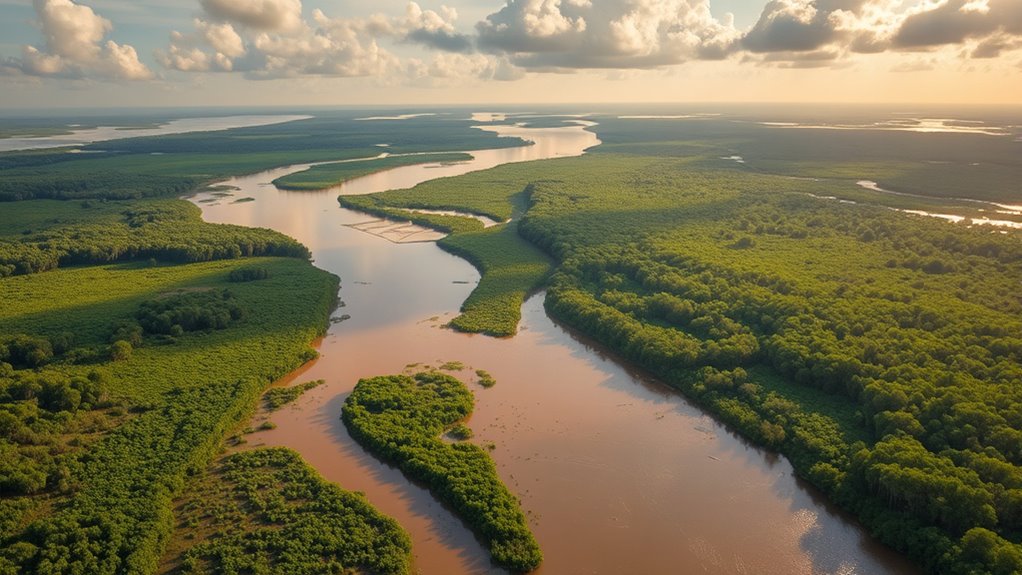

The Mississippi River‘s vast ecosystem hosts over 870 species of fish, wildlife, and plants, supporting both biodiversity and regional economies. Its wetlands, floodplains, and estuaries play crucial roles in sediment delivery, nutrient cycling, and habitat health. This interconnected system links inland waters to the Gulf of Mexico, sustaining migratory birds, endangered species, and local communities. By exploring further, you’ll uncover how human impacts threaten this remarkable ecosystem and what’s being done to protect it.
Key Takeaways
- The Mississippi River supports over 870 species of fish, wildlife, and plants, forming a vital ecological network.
- Its extensive floodplain, wetlands, and coastal habitats regulate floods, filter pollutants, and sustain biodiversity.
- The river’s ecological processes include sediment deposition and nutrient cycling, essential for coastal wetlands and aquatic life.
- Endangered species like the Pallid Sturgeon and Louisiana Black Bear highlight the river’s ecological importance.
- Human activities and climate change threaten habitats, necessitating conservation efforts to preserve this vast, interconnected ecosystem.
The Vast Biodiversity of the Mississippi River Basin
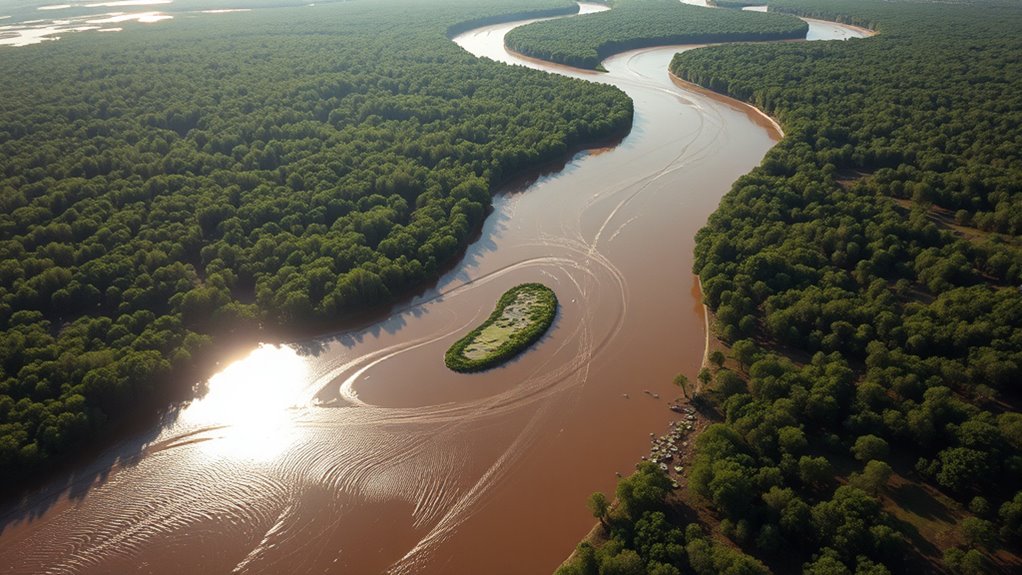
The Mississippi River Basin supports an astonishing diversity of life, with over 870 fish and wildlife species thriving within its vast landscape. You’ll find a rich mix of aquatic, terrestrial, and avian species, including dozens of rare, threatened, and endangered animals. In the upper basin, around 430 invertebrate taxa and 145 fish species inhabit the waters, supporting essential ecosystems. The Mississippi Flyway acts as a migration corridor for more than 325 bird species, with roughly 60 percent of North American migratory birds passing through. Key fish include catfish, walleyes, suckers, and garfish, which fuel the sport-fishing industry in Minnesota and Wisconsin. Endangered species like the Louisiana Black Bear and Pallid Sturgeon highlight the importance of protecting this incredible biodiversity. Promoting habitat conservation and restoring natural floodplains are vital strategies for maintaining the basin’s ecological health and resilience. Restoring wetlands and riparian zones also plays a crucial role in supporting diverse habitats and water quality. Additionally, biodiversity monitoring helps track the health of the ecosystem and guides conservation efforts. Recent studies emphasize that restoration projects have led to measurable improvements in species populations and habitat quality across the basin.
Geographic Scope and Unique Basin Characteristics

Spanning over 2,300 miles, the Mississippi River is the world’s fourth-largest river system, shaping a vast and complex ecosystem across North America. Its basin covers parts of 32 states and two Canadian provinces, draining over 41 percent of the U.S. landmass. This extensive network creates a dynamic landscape—from Minnesota’s wild-rice marshes to Louisiana’s coastal wetlands. The floodplain alone spans 13,900 square miles, hosting diverse habitats. The basin’s unique features include fertile soils from glacial history, rolling hills, and meandering river valleys. These characteristics support rich biodiversity and ecological processes. The basin’s geological history has played a crucial role in shaping its fertile soils and varied landscapes. Additionally, the basin’s ecological processes are vital for maintaining the health of this expansive environment. The basin’s floodplain plays a critical role in flood control, sediment deposition, and nutrient cycling, supporting a thriving ecosystem. The natural wetlands within the basin provide essential habitat for countless species and help filter pollutants from the water. Furthermore, efforts to conserve these wetlands are essential for preserving ecological balance and resilience. Here’s a snapshot of its key basin features:
| Aspect | Description | Significance |
|---|---|---|
| Length | 2,300+ miles | Largest floodplain ecosystem in the Northern Hemisphere |
| Drainage Area | 1.2 million square miles | Drains over 41% of the U.S. landmass |
| Floodplain Size | 13,900 sq miles (lower river) | Supports wetlands and diverse habitats |
Key Habitats and Vegetation Communities
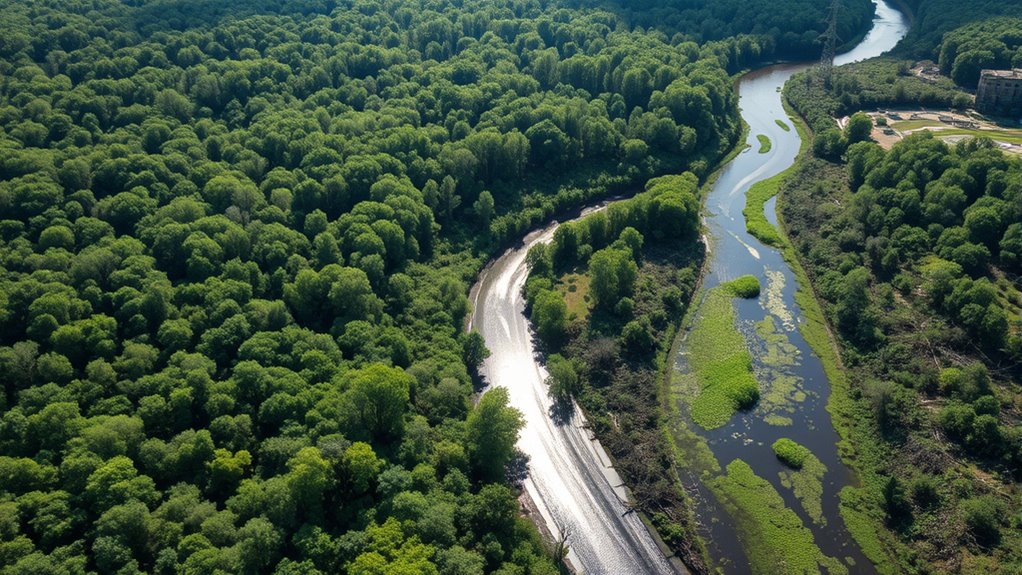
You’ll find a variety of aquatic vegetation types along the Mississippi River, including American Lotus, submerged plants, and water celery, which all support wildlife and water quality. The river’s forests are mainly composed of oaks, hickories, pines, and willows, creating diverse habitats for many species. Wetlands and marshes, like wild-rice marshes and sedge beds, provide essential cover and food sources, shaping the river’s vibrant ecosystems. Additionally, habitat diversity contributes to the overall health and resilience of the river system. The presence of native plant species further enhances the ecological stability and biodiversity of these habitats. Recognizing the importance of conservation efforts, ongoing initiatives help protect these vital ecosystems from threats such as pollution and invasive species.
Aquatic Vegetation Types
Have you ever wondered what kinds of aquatic plants sustain the Mississippi River’s diverse ecosystems? You’ll find five main aquatic vegetation communities here. American Lotus dominates some regions, providing cover and food for wildlife. Submersed plants, like pondweeds and watermilfoils, grow underwater, offering critical habitat for fish and invertebrates. Arrowhead plants thrive in shallow waters, creating dense mats that support waterfowl. Water Celeries dominate certain wetlands, offering food and shelter for numerous species. Wild-rice marshes and sedges flourish in nutrient-rich areas, attracting waterfowl and supporting fisheries. These plants help clarify water, stabilize sediments, and maintain ecological balance. Their presence is essential for supporting fish populations, wildlife habitats, and the overall health of the Mississippi River ecosystem. Proper aer purifier maintenance and vigilant filter replacement are vital for maintaining water quality and ecological health in surrounding habitats.
Forest Composition and Diversity
The forest communities along the Mississippi River are diverse and essential to the ecosystem’s health. These forests include a mix of oak, hickory, gum, hackberry, birch, loblolly pine, and willow species, forming critical habitats for wildlife. They provide food, shelter, and breeding grounds, supporting a rich array of species. The forests also influence water quality and help stabilize banks against erosion.
- Main forest types include upland hardwoods and bottomland hardwoods
- Riverbanks feature floodplain forests that adapt to seasonal flooding
- Forest composition varies from northern deciduous to southern pine-dominated zones
- These forests support threatened and endangered species, contributing to overall biodiversity
Your role in protecting these forests is essential for maintaining the river’s ecological balance.
Wetlands and Marshes
Wetlands and marshes along the Mississippi River form essential habitats that support a wide range of plant and animal species. These wetlands, including wild-rice marshes, sedges, pondweeds, and millets, provide abundant food and shelter, encouraging waterfowl and fish populations. The floodplain’s diverse vegetation community includes wild rice, arrowhead, water celery, and submerged plants, which help filter water, stabilize banks, and sustain ecosystems. Coastal wetlands in Louisiana delta serve as critical breeding grounds and protect inland areas from storm surges. These habitats also support endangered species like the Pallid Sturgeon and Louisiana Black Bear. Additionally, vetted products and conservation efforts play a vital role in maintaining the health of these ecosystems. However, climate change, agriculture runoff, and coastal erosion threaten these imperative ecosystems, risking loss of biodiversity and ecosystem services that benefit both wildlife and local communities. Recognizing the importance of wetland conservation is essential for protecting these valuable ecosystems from ongoing environmental threats.
Endangered Species and Conservation Challenges
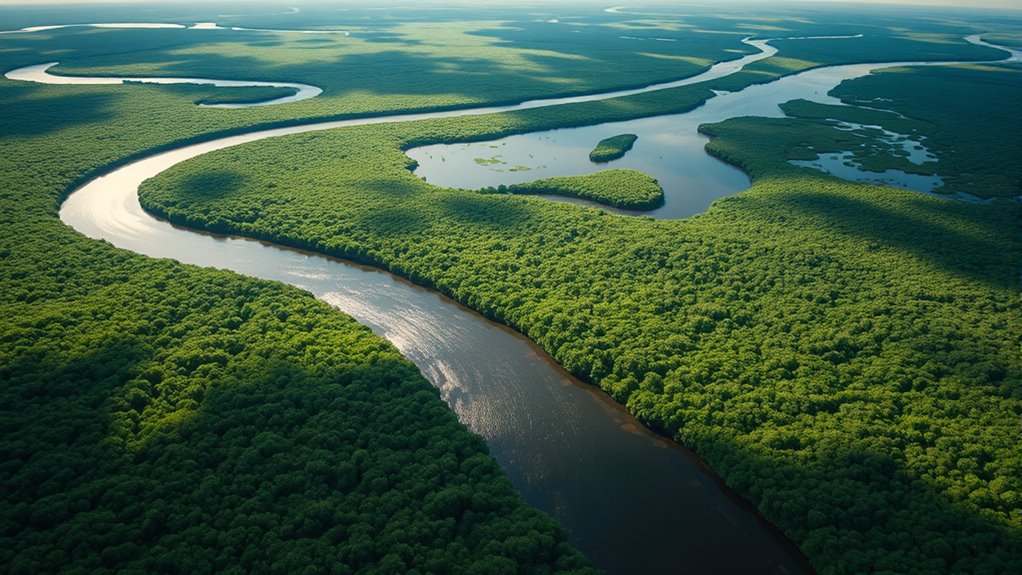
You need to understand how human activities threaten the survival of native species like the pallid sturgeon and Louisiana black bear. Pollution, habitat loss, and invasive species are significant challenges that endanger these animals. Addressing these issues is vital to conserving the Mississippi River’s unique biodiversity. Implementing protective mounting techniques can help preserve the integrity of textile art representations of these ecosystems, raising awareness and fostering conservation efforts. Moreover, engaging with hackathons that focus on environmental challenges can foster innovative solutions for habitat restoration and species preservation. Incorporating data privacy challenges into conservation strategies ensures responsible management of ecological data collected during these initiatives. Recognizing the importance of paint sprayer maintenance can also ensure the longevity of equipment used in habitat restoration projects, thereby supporting ongoing conservation work. Additionally, understanding the significance of payment processing can aid organizations in securing funding and donations crucial for conservation programs.
Threatened Native Species Preservation
Did you know that several native species in the Mississippi River basin face increasing threats that put their survival at risk? These species struggle against habitat loss, pollution, and invasive species. You can help by understanding their challenges, such as:
- Habitat destruction from agriculture and urban development
- Pollution from fertilizers and industrial runoff
- Competition and predation by nonnative species like common carp
- Climate change causing flooding, saltwater intrusion, and toxic algae blooms
- Ecosystem imbalance resulting from the decline of native species and the introduction of invasive species. Additionally, the decline of native species impacts the holistic health of the entire ecosystem, highlighting the importance of conservation efforts. Protecting these species requires targeted conservation efforts, habitat restoration, and pollution control. Without action, many native fish, mussels, and birds could vanish, disrupting the river’s ecological balance. Recognizing the importance of biodiversity can motivate more effective preservation strategies. Your awareness and support can make a difference in preserving the Mississippi’s unique biodiversity.
Human Impact on Wildlife
Human activities have considerably threatened the wildlife of the Mississippi River, especially endangered species like the pallid sturgeon, Louisiana black bear, and Higgins’ eye pearly mussel. Pollution from agriculture, urban runoff, and industrial waste degrades water quality, while dam construction blocks migration routes. Habitat loss from wetland drainage and urban development further endangers native species. Below is a table highlighting key conservation challenges:
| Threats | Affected Species | Conservation Efforts |
|---|---|---|
| Habitat destruction | Higgins’ eye pearly mussel | Wetland restoration |
| Pollution | Pallid sturgeon | Regulations on runoff |
| Overfishing | Various fish species | Fishing quotas and bans |
| Climate change | Louisiana black bear | Habitat preservation measures |
The Dynamic Landscape of Floodplains and Wetlands
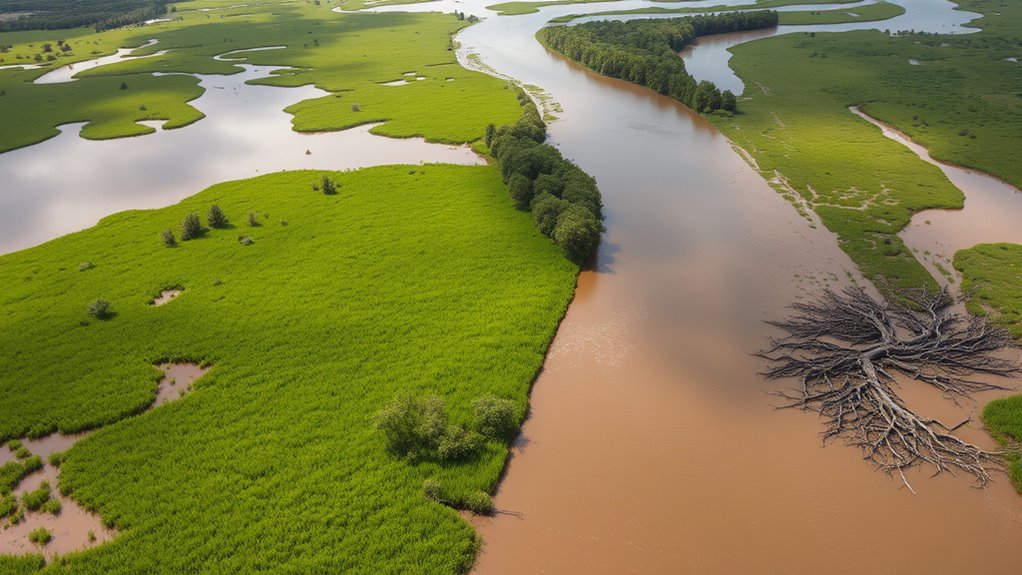
The floodplains and wetlands along the Mississippi River form a constantly shifting landscape that supports a rich diversity of plant and animal life. These dynamic areas act as natural buffers, absorbing floodwaters and filtering pollutants, while offering habitats for countless species. As water levels rise and fall, the landscape adapts, creating a mosaic of habitats essential for biodiversity. Your understanding of this variability reveals how crucial these wetlands are for ecological health and resilience.
- They host a variety of aquatic plants like wild rice, sedges, and pondweeds
- Floodplain forests include oaks, hickories, and willows, providing shelter and food
- Wetlands act as nurseries for fish and breeding grounds for waterfowl
- The shifting landscape sustains a complex web of life, adapting to seasonal changes
Ecological Threats and Human-Induced Pressures

Ecological threats and human-induced pressures are rapidly transforming the Mississippi River ecosystem, endangering its biodiversity and essential functions. Agriculture in floodplains contributes considerably to water quality issues, increasing nitrogen and phosphorus levels that fuel harmful algae blooms and hypoxic zones. Nonnative species like common carp threaten native fish populations by outcompeting them for resources. Climate change worsens these problems by altering precipitation patterns, causing more frequent flooding, and introducing pollutants from runoff. Rising sea levels lead to coastal wetland loss and saltwater intrusion, degrading habitats. Additionally, development activities drain wetlands and restrict natural river dynamics. These combined pressures threaten the river’s ecological balance, diminish habitat quality, and jeopardize the health of thousands of species that rely on this crucial ecosystem.
The Mississippi River’s Role in Supporting Economies
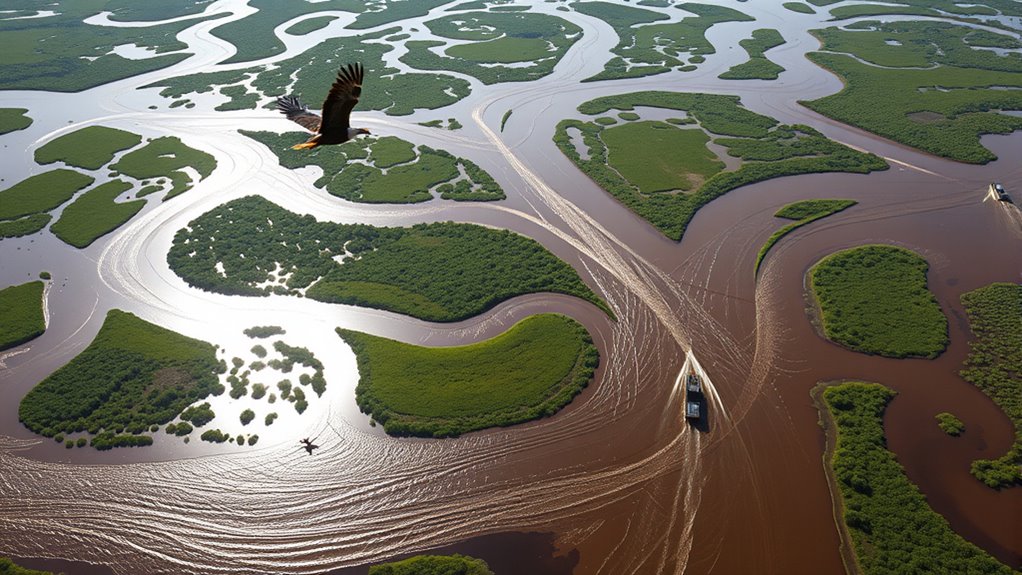
Have you ever considered how essential the Mississippi River is to regional and national economies? It supports industries like transportation, agriculture, and tourism, fueling economic growth across the U.S. and beyond. The river’s extensive shipping channels facilitate the movement of goods, reducing transportation costs and boosting trade. Its fertile floodplain boosts agriculture, providing crops like rice, soy, and corn. The river also attracts millions of tourists who enjoy fishing, boating, and wildlife viewing, generating significant revenue. Additionally, it supplies water for industry and municipal use, supporting jobs and development.
The Mississippi River fuels economies through shipping, agriculture, tourism, and water supply.
- Facilitates over 500 million tons of cargo annually
- Powers a multi-billion dollar fishing industry
- Drives tourism through recreation and wildlife viewing
- Supports agriculture that sustains local and national markets
Ecosystem Services Provided by the River System

The Mississippi River system delivers a wide range of essential services that sustain both ecosystems and human communities. You benefit from its freshwater for drinking, agriculture, industry, and recreation. Its wetlands filter pollutants, improve water quality, and provide critical habitat for countless species. The river’s floodplain manages excess water, reducing the risk of devastating floods and supporting diverse plant and animal life. You also rely on the river for transportation, enabling trade and commerce across the central United States. The rich biodiversity, including fish, birds, and wildlife, supports recreational activities like fishing and birdwatching, boosting local economies. Additionally, the river’s sediment deposits sustain fertile soils, ensuring productive agriculture. Overall, the Mississippi River’s ecosystem services are essential for environmental health, economic stability, and your daily life.
The Interconnected Web of River and Coastal Ecosystems
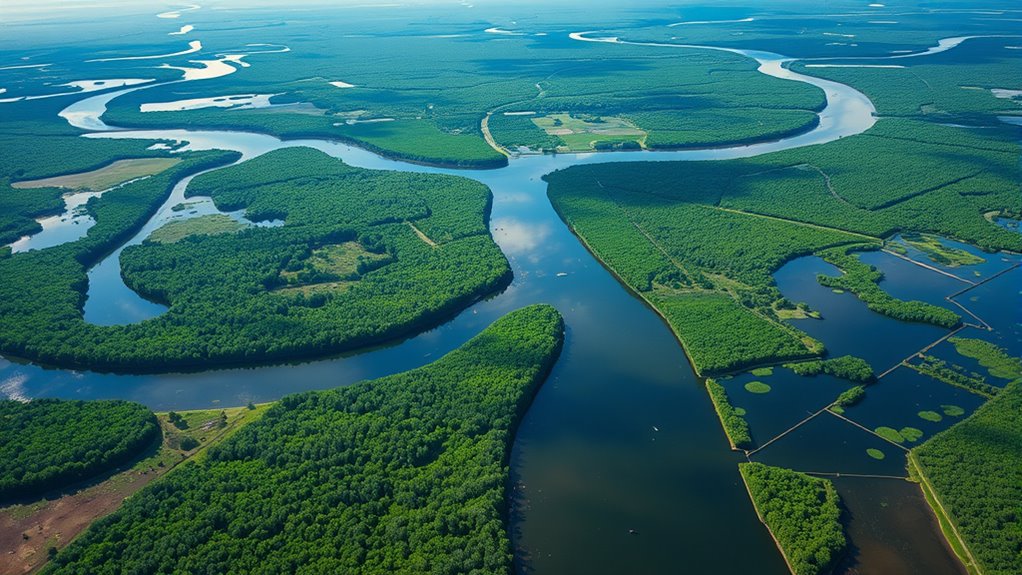
As the Mississippi River flows from its inland sources to the Gulf of Mexico, it creates a vast network that connects riverine and coastal ecosystems, forming a dynamic and interdependent system. This connection influences water quality, nutrient flow, and habitat availability across regions. The river delivers sediments, nutrients, and pollutants to coastal wetlands, shaping the health of estuarine habitats crucial for fish and bird species. These ecosystems support migration, breeding, and feeding grounds essential for biodiversity. Disruptions like pollution, sea level rise, and habitat loss threaten this balance, risking the collapse of interconnected habitats.
The Mississippi River links inland and coastal ecosystems, vital for water quality, habitat, and biodiversity.
- Sediment and nutrient transfer sustain coastal wetlands
- Migratory birds rely on both river and coastal habitats
- Pollution from agriculture impacts estuarine water quality
- Coastal erosion undermines habitat stability
Frequently Asked Questions
How Do Seasonal Changes Impact Biodiversity in the Mississippi River Basin?
Seasonal changes markedly impact biodiversity in the Mississippi River basin by altering water levels, temperatures, and food availability. During spring and summer, you’ll see increased fish and bird activity as they migrate, breed, and forage. Fall and winter bring lower water levels and colder temperatures, which can stress species and reduce habitat access. These shifts influence migration patterns, breeding cycles, and the overall health of aquatic and terrestrial ecosystems in the basin.
What Specific Conservation Efforts Are in Place for Endangered Species?
You’re likely to see targeted efforts tackling threats to threatened and endangered species. Conservation organizations collaborate with government agencies to create critical habitat protections, restore river flow, and regulate harmful activities. They implement innovative initiatives like breeding programs and habitat enhancement, aiming to bolster species like the Pallid Sturgeon and Louisiana Black Bear. These efforts focus on fixing fragile ecosystems, fighting fishing fears, and fostering future flourishing populations along the Mississippi’s mighty, meandering maze.
How Does Climate Change Influence River Flow and Habitat Stability?
Climate change impacts river flow and habitat stability by altering precipitation patterns, causing more frequent and severe flooding, and increasing droughts. You’ll see shifts in water levels, which threaten wetlands, forests, and aquatic habitats. Rising temperatures also promote toxic algae outbreaks and hypoxic zones, disrupting ecosystems. Additionally, sea level rise leads to coastal wetland loss and saltwater intrusion, further degrading habitats and challenging the survival of native species along the Mississippi River.
In What Ways Do Human Activities Alter Natural Floodplain Dynamics?
You can see that human activities, like agriculture and urban development, considerably alter floodplain dynamics. These actions increase runoff, sedimentation, and pollution, disrupting natural flooding cycles. Construction of levees and dams restricts floodwaters, preventing natural sediment deposition and habitat renewal. Draining wetlands for development reduces flood storage capacity, heightening flood risks and damaging ecosystems. Overall, these activities interfere with the river’s natural flow and its ability to sustain diverse habitats.
What Role Does the Mississippi River Play in Regional Climate Regulation?
You might not realize it, but the Mississippi River helps regulate regional climate by influencing local weather patterns. Its vast floodplain and wetlands absorb and store heat, moderating temperature fluctuations. The river’s evaporation adds moisture to the atmosphere, affecting rainfall and humidity. Additionally, its vegetation and wetlands act as natural buffers, reducing the impact of storms and floods, ultimately shaping the climate across surrounding areas.
Conclusion
As you reflect on the Mississippi River’s rich tapestry of life, remember it’s a delicate treasure that whispers stories of resilience and fragile beauty. By honoring its needs and protecting its future, you help guarantee this essential heart continues to nurture countless species and communities. Together, we can nurture its gentle flow and preserve its silent strength, so its enduring spirit remains a guiding force for generations to come.