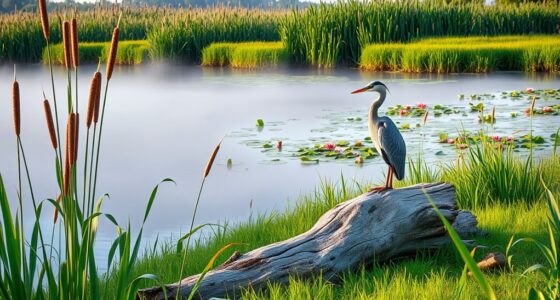
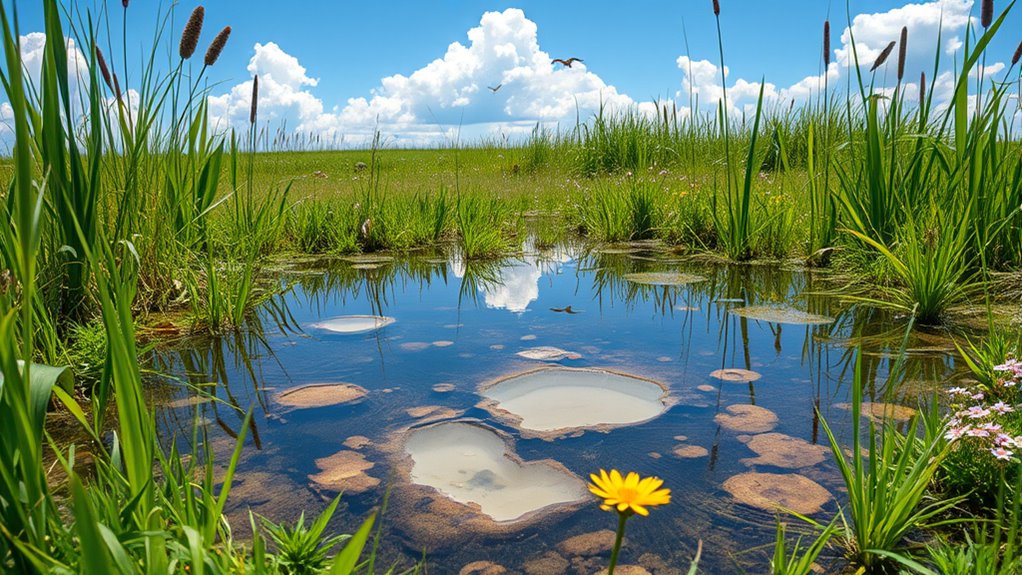
Prairie potholes are small but essential wetlands in North America formed by glacial activity thousands of years ago. They fill with meltwater, snow, and rain, creating habitats critical for wildlife, especially waterfowl breeding and feeding. Their water levels fluctuate, supporting diverse plants and animals while helping prevent floods. Protecting these wetlands is imperative for maintaining healthy ecosystems and abundant bird populations. If you want to discover how these tiny wetlands make such a big difference, keep exploring.
Key Takeaways
- Prairie potholes are vital breeding and feeding habitats for North America’s waterfowl and wetland-dependent wildlife.
- Their water level fluctuations create diverse habitats, supporting various species throughout different seasons.
- These wetlands help filter pollutants, regulate water flow, and maintain water quality essential for wildlife health.
- Prairie potholes serve as ecological connectors, supporting biodiversity and ecosystem resilience across the landscape.
- Protecting these small wetlands is crucial for sustaining regional bird populations and overall ecological stability.

Handbook for Restoring Tidal Wetlands (Marine Science)
As an affiliate, we earn on qualifying purchases.
As an affiliate, we earn on qualifying purchases.
The Formation and Geographic Scope of Prairie Potholes
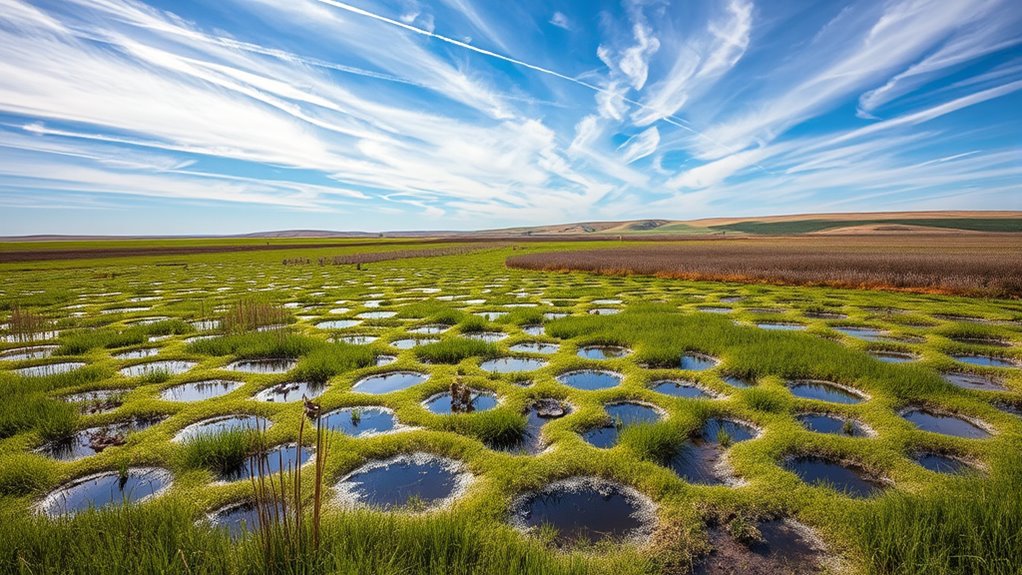
The formation of prairie potholes results from glacial activity during the Wisconsin glaciation around 10,000 years ago. As glaciers advanced and retreated, they carved out depressions in the landscape, creating kettles or potholes. These shallow basins filled with meltwater, forming the wetlands we see today. The Prairie Pothole Region spans about 700,000 to 800,000 square kilometers across parts of Montana, North Dakota, South Dakota, Minnesota, and Iowa in the U.S., as well as Alberta, Saskatchewan, and Manitoba in Canada. The flat terrain, combined with glacial deposits like lacustrine and fluvial sediments, shapes this landscape. Not all potholes hold water year-round; some are hydrologically isolated, while others connect to groundwater, influencing their water levels and ecological roles.
waterfowl habitat management tools
As an affiliate, we earn on qualifying purchases.
As an affiliate, we earn on qualifying purchases.
How Water Shapes These Unique Wetlands
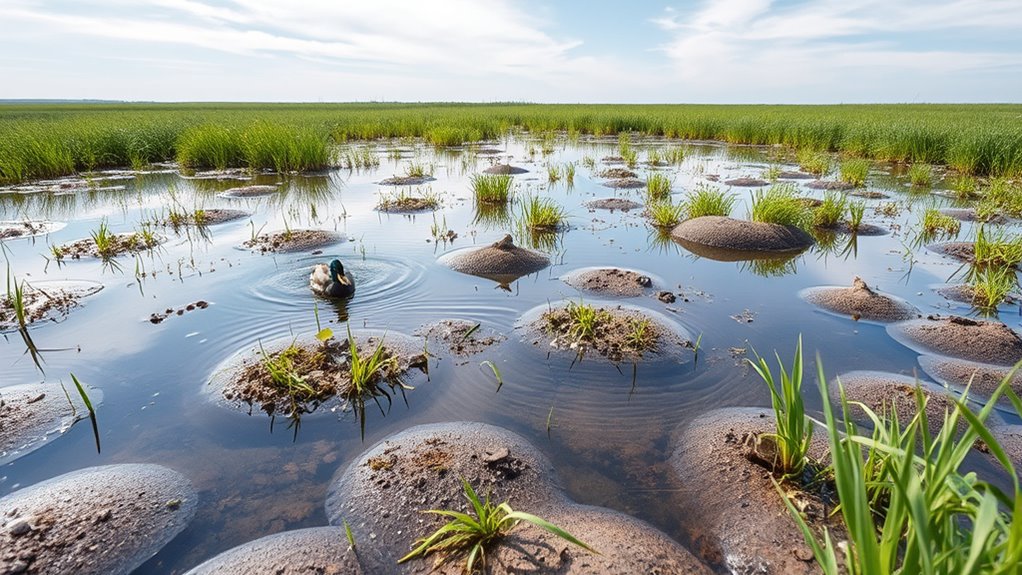
Water enters prairie potholes mainly from spring snowmelt, rain, and sometimes groundwater, shaping their size and duration. The wet-dry cycles cause wetlands to fluctuate, influencing plant and animal life that depend on them. These hydrological patterns determine the resilience of prairie potholes and their ability to support diverse ecosystems. Additionally, the renewable aspects of water sources help sustain these wetlands, making them vital components of the local environment. Regular influxes of water help maintain hydrological balance, which is essential for the health of these ecosystems.
Water Sources and Inputs
Spring snowmelt, precipitation, and groundwater inflows are the primary sources that supply water to prairie potholes, shaping their hydrology and ecological characteristics. Snowmelt from higher elevations provides a burst of water in spring, filling the potholes rapidly. Precipitation sustains them during dry periods, while groundwater inflows can prolong water presence in some wetlands. The combination of these inputs creates diverse wetland types, from ephemeral to semi-permanent. Variability in water sources influences wetland size, duration, and habitat quality for wildlife. The table below summarizes key water inputs:
| Water Source | Timing | Impact on Potholes |
|---|---|---|
| Snowmelt | Spring | Rapid filling, high water levels |
| Precipitation | Year-round | Maintains wetlands during dry periods |
| Groundwater | Variable | Extends wetland duration in some sites |
Additionally, the seasonal timing of these inputs plays a crucial role in determining the ecological dynamics within prairie potholes. Understanding how these water inputs vary over time is essential for predicting wetland responses to climate change and land use changes. Changes in water availability can significantly alter wetland ecosystems, affecting plant and animal communities.
Hydrological Cycles Dynamics
Hydrological cycles in prairie potholes are driven by a complex interplay of inputs and environmental conditions that determine their water levels and ecological characteristics. You’ll find that snowmelt in spring and seasonal rainfall are primary sources, causing potholes to fill rapidly. Some wetlands rely heavily on groundwater inflow, making their water levels more stable, while others depend solely on precipitation, leading to shorter wet periods. During dry spells, water recedes, exposing mudflats and affecting habitat availability. Wet-dry cycles fluctuate seasonally and annually, shaping plant and animal life. Hydrological connectivity among potholes is often limited but, when it occurs, it helps maintain water levels across larger areas. Overall, these cycles create dynamic environments that support diverse ecosystems and influence wetland resilience. Understanding hydrological connectivity plays a vital role in assessing the long-term health of these wetlands. Additionally, the hydrological cycles themselves are sensitive to climate variability, which can alter the frequency and duration of wet and dry periods, impacting the ecosystem stability of prairie potholes.
Impact on Wetland Resilience
The ability of prairie potholes to support diverse ecosystems hinges on their dynamic water levels, which directly influence their resilience. When water levels fluctuate, they create a range of habitats essential for breeding, feeding, and migration. These changes help wetlands recover from droughts and disturbances, maintaining their ecological functions.
- They buffer against floods by slowing surface runoff, reducing downstream risks.
- Variability in water depth prevents dominance of invasive species, supporting native plants.
- Hydrological connectivity between potholes promotes water exchange, boosting long-term stability.

RHS Companion to Wildlife Gardening
As an affiliate, we earn on qualifying purchases.
As an affiliate, we earn on qualifying purchases.
The Wildlife Thrive in Prairie Potholes
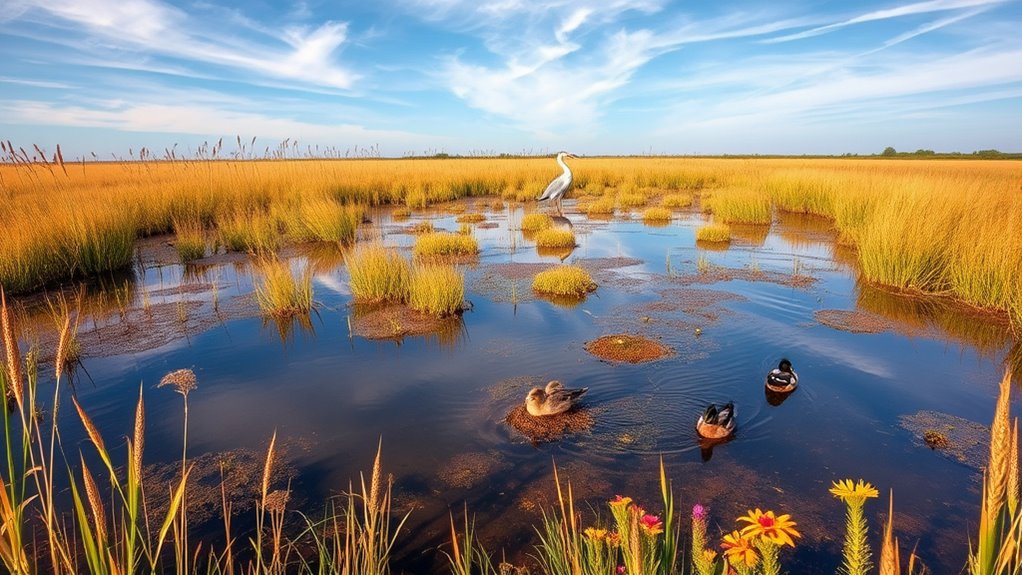
You’ll notice that prairie potholes support an incredible variety of wildlife, especially birds that rely on these wetlands for breeding and feeding. The diverse plant life provides essential cover and food sources for many species at different life stages. Because of this, prairie potholes are crucial habitats that sustain thriving populations of breeding birds and other wetland-dependent wildlife. These wetlands also serve as vital habitat connectivity that helps maintain ecological health across the landscape. Furthermore, their role in supporting ecological resilience ensures the stability of local ecosystems amidst environmental changes. Maintaining the health of prairie potholes is essential for biodiversity, which is vital for the sustainability of regional ecosystems.
Rich Bird Habitats
Why do prairie potholes support such a rich diversity of bird species? These wetlands provide a variety of habitats that meet the needs of many birds. The fluctuating water levels create seasonal breeding grounds, feeding sites, and resting places during migration. Their shallow waters are perfect for dabbling ducks, while surrounding grasslands attract songbirds and raptors. You’ll find that the mix of temporary and permanent wetlands supports different species year-round. The wetlands also offer abundant invertebrates and aquatic plants, fueling bird populations. Wetland diversity plays a crucial role in supporting this rich bird habitat. Additionally, the presence of seasonal water level fluctuations helps maintain habitat diversity necessary for various bird life cycles. Furthermore, the energy-efficient features of modern renewable technologies, like electric bikes, showcase how sustainable solutions can complement natural ecosystems, similar to how wetlands naturally sustain biodiversity.
Diverse Plant Life
Diverse plant life flourishes in prairie potholes, forming the foundation for thriving ecosystems. You’ll find a variety of herbaceous plants adapted to fluctuating water levels and wet conditions. Cattails, bulrushes, sedges, and water-smart grasses dominate many wetlands, providing shelter and food for wildlife. In drier periods, hardy prairie grasses and wildflowers like bluebells and wild indigo take over, creating a mosaic of habitats. These plants stabilize soil, filter pollutants, and support insects, which in turn attract birds and mammals. The variety of plant communities depends on water depth, hydroperiod, and soil type, resulting in a rich tapestry of vegetation. This diversity guarantees that prairie potholes remain resilient, offering essential resources for many species across different seasons. Plant diversity plays a crucial role in maintaining the health and stability of these wetland ecosystems. Additionally, the presence of diverse plant species encourages biodiversity, which is vital for ecosystem resilience and adaptation to environmental changes. Incorporating adaptive plant strategies ensures that these wetlands can better respond to environmental fluctuations.
Critical for Breeding
Prairie potholes serve as crucial breeding grounds for millions of waterfowl and wetland-dependent bird species. You’ll find these tiny wetlands teeming with life during nesting season, providing the perfect environment for raising young. Their shallow waters create safe, sheltered spaces where birds can lay eggs and rear their chicks undisturbed. The varied water levels and vegetation offer abundant food sources and cover, boosting reproductive success. Protecting these areas is vital, as they are vetted – Mother Baby Kids essential for sustaining healthy bird populations across North America. Without prairie potholes, many bird populations would struggle to reproduce successfully. These wetlands are essential for maintaining healthy bird communities across North America.

TELUHA Night Vision Goggles for Adults, Night Vision Binoculars with 5000mAh Rechargeable Battery and 32GB Card, 3" HD Screen for Wildlife Observation, Hunting and Security
Day & Night Vision with 4K Video Recording: Designed for low-light and pitch-dark environments, these night vision goggles…
As an affiliate, we earn on qualifying purchases.
As an affiliate, we earn on qualifying purchases.
Challenges Threatening These Vital Ecosystems
What are the main threats facing these crucial wetlands? You’ll find that agricultural expansion, urban development, and wetland drainage are the biggest dangers. As farmland spreads, many prairie potholes are filled or drained to make way for crops, destroying critical habitat. Urbanization encroaches on these wetlands, reducing their size and connectivity. Wetland drainage, often driven by land-use policies, further fragments the landscape. Climate variability also poses a challenge—droughts dry up wetlands, while heavy rains can lead to flooding or erosion. Additionally, pollution from pesticides and fertilizers harms water quality, affecting plants and animals. These combined pressures threaten the ecological integrity of prairie potholes, risking the loss of their biodiversity and their role in maintaining regional hydrology. Understanding the ecosystem functions of these wetlands emphasizes the importance of protecting them. Protecting these ecosystems requires urgent, sustained action. Recognizing the importance of wetland conservation can help mobilize efforts to preserve these vital habitats. Implementing protective measures that support native vegetation can enhance the resilience of these ecosystems against environmental stresses.
The Diversity of Wetland Types and Hydrologic Patterns

The wetlands within the Prairie Pothole Region exhibit a wide range of types and hydrologic patterns that shape their ecological roles. You’ll find ephemeral potholes that fill for days, seasonal wetlands lasting weeks or months, and semi-permanent or permanent bodies of water. Depth and hydroperiod determine how long water stays, influencing plant life and animal use. Some potholes are isolated above groundwater, drying out quickly, while others connect to groundwater, supporting more stable water levels. The geology—glacial till, lacustrine, or fluvial sediments—also affects water retention and flow. These variations create a complex mosaic of habitats, supporting diverse species and ecological functions, from breeding grounds to migration stopovers. Understanding the hydrologic patterns of these wetlands is essential for effective conservation and management. Recognizing how groundwater connectivity influences water stability helps inform restoration efforts and sustainable land use practices.
Why Protecting Prairie Potholes Matters for Our Environment

Protecting prairie potholes is essential because these wetlands play a key role in maintaining water quality, supporting biodiversity, and regulating water flow across the region. They filter pollutants, improve water clarity, and trap sediments, reducing downstream contamination. These wetlands provide necessary breeding and nesting habitats for millions of migratory birds and other wildlife, guaranteeing healthy populations and ecological balance. By slowing surface runoff, prairie potholes help prevent flooding and erosion, protecting surrounding landscapes. Preserving these wetlands also supports groundwater recharge, which is critical during droughts. Losing prairie potholes would threaten biodiversity, increase flood risks, and degrade water quality. Protecting them ensures the resilience of regional ecosystems and the benefits they provide to agriculture, wildlife, and communities alike.
Frequently Asked Questions
How Do Prairie Potholes Influence Regional Groundwater Recharge?
Prairie potholes influence regional groundwater recharge by capturing and holding surface water from snowmelt and precipitation. When these wetlands connect to groundwater sources, they allow water to seep down, replenishing aquifers. Their hydrological variability means some potholes contribute more consistently, especially those with groundwater inflow. By slowing runoff and promoting infiltration, prairie potholes play a crucial role in sustaining regional groundwater levels and maintaining overall ecosystem health.
What Roles Do Prairie Potholes Play in Flood Mitigation?
You can see that prairie potholes play a crucial role in flood mitigation by slowing surface runoff and absorbing excess water during heavy rains or snowmelt. These wetlands act like natural sponges, reducing downstream flooding risks. As water collects and is stored temporarily, it helps prevent overwhelming floodwaters, protecting communities and ecosystems. Their presence is vital for maintaining flood control and promoting a balanced hydrological cycle in the region.
How Do Wet-Dry Cycles Affect Plant Species Diversity?
Wet-dry cycles in prairie potholes are like a roller coaster, shaping plant diversity. When water recedes, drought-tolerant species thrive, while during wet periods, hydrophilic plants take over. This constant fluctuation prevents any single species from dominating, encouraging a mix of plants adapted to different moisture levels. As a result, you get a rich mosaic of plant life, boosting overall biodiversity and resilience in these wetlands.
Are Prairie Potholes Connected Hydrologically Across the Landscape?
You’ll find that prairie potholes are not often hydrologically connected across the landscape. Some interact during wet periods, exchanging water with neighboring wetlands, but many remain isolated. Factors like hydrologic connectivity depend on water levels, groundwater influence, and seasonal cycles. When connections do occur, they help sustain wetlands, but generally, each pothole functions independently, creating a diverse mosaic of isolated and occasionally linked water bodies across the region.
How Does Climate Change Impact the Longevity of Prairie Potholes?
Climate change shortens the lifespan of prairie potholes by altering precipitation and temperature patterns. You’ll see more frequent droughts and extreme weather, causing wetlands to dry up faster or remain flooded longer. Warmer temperatures increase evaporation, reducing water levels. These changes threaten the wetlands’ ability to support wildlife, disrupt breeding cycles, and diminish habitat availability. Ultimately, climate change makes it harder for potholes to sustain their essential ecological functions over time.
Conclusion
You might think these tiny prairie potholes are just small wetlands, but they actually play a big role in supporting wildlife and maintaining ecological balance. Some say they’re too insignificant to matter, yet research shows they’re vital for migratory birds and water filtration. Protecting these wetlands isn’t just about preserving nature; it’s about keeping the environment healthy for future generations. So, don’t overlook their small size—these potholes truly make a big difference.