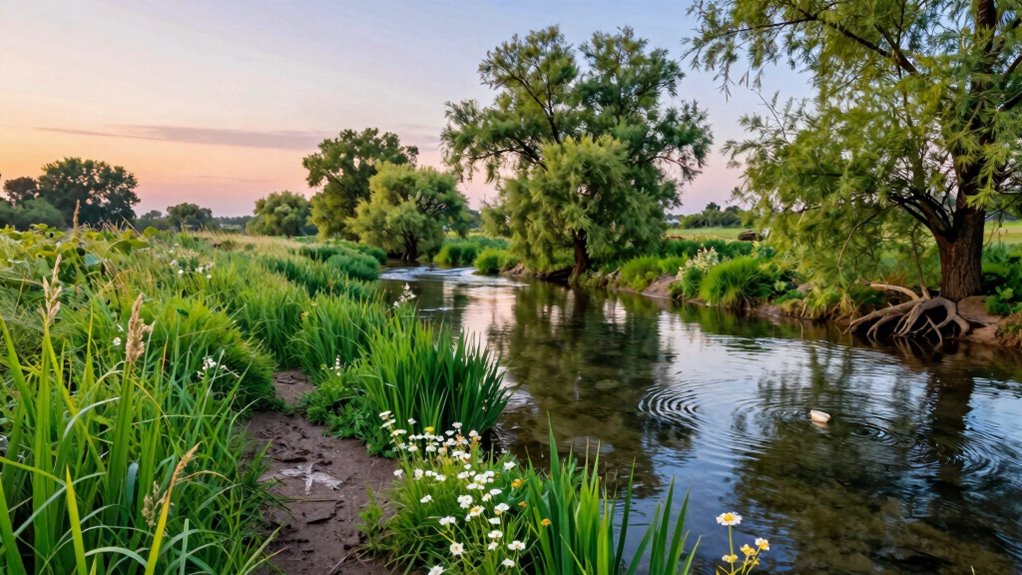

Riparian zones are essential ecosystems that support diverse plants and animals, helping maintain biodiversity and ecological balance. They filter pollutants from runoff, improve water quality, and prevent erosion with their dense roots. These zones also act as natural flood barriers, absorb excess water, and recharge groundwater, enhancing landscape stability. By protecting riparian areas, you’re supporting healthier environments and resilient communities—if you want a deeper understanding, there’s more to discover about their critical roles.

Prime made for students and young adults
- Fast, free delivery for dorm and study essentials
- Prime Video and Amazon Music included
- Member-only deals
Key Takeaways
- Riparian zones support biodiversity by providing essential habitat, shelter, and breeding grounds for various species.
- They naturally filter pollutants, maintaining water quality and protecting aquatic ecosystems from runoff contamination.
- Dense vegetation stabilizes soil, reduces erosion, and prevents sedimentation in water bodies.
- Riparian zones absorb excess water, mitigating floods and recharging groundwater supplies.
- They play a crucial role in ecosystem stability, regulating water flow and enhancing landscape resilience against climate impacts.
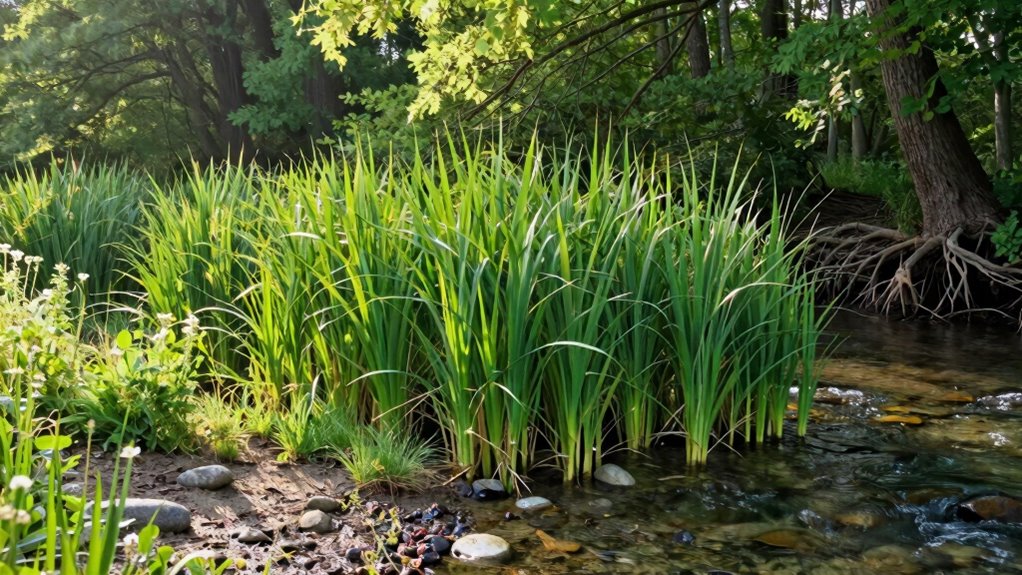
Riparian zones are some of the most essential areas in our ecosystems, lining the edges of rivers, streams, and lakes. These areas serve as critical wildlife habitats, supporting a diverse range of plants and animals that rely on the unique environment they provide. From amphibians and fish to birds and mammals, many species depend on riparian zones for food, shelter, and breeding grounds. You might not realize it, but these zones act as natural buffers, filtering pollutants and maintaining water quality, which benefits both wildlife and human communities downstream. Their lush vegetation offers cover and nesting sites, helping sustain populations and promote biodiversity in the surrounding landscape.
Riparian zones are vital habitats that filter pollutants, support biodiversity, and protect water quality.
Beyond supporting wildlife, riparian zones play a key role in erosion control. As water flows through these areas, the dense root systems of riparian plants stabilize soil and prevent it from washing away during heavy rains or high flows. This natural erosion control helps protect the banks of rivers and streams, reducing the risk of bank collapse and sedimentation in the water. When erosion is minimized, water clarity improves, aquatic habitats are preserved, and the overall health of the ecosystem is maintained. You might notice that in areas where riparian zones have been degraded or removed, streams become more prone to widening and becoming choked with sediment, which can threaten fish populations and disrupt the natural balance.
Healthy riparian zones also act as natural flood barriers, absorbing excess water during storm events and releasing it gradually. This slows down runoff and prevents sudden floods that could damage infrastructure or harm communities. Their ability to slow water movement also helps recharge groundwater supplies, keeping streams and wetlands healthy during dry periods. When these zones are intact and thriving, they contribute to a resilient landscape that can withstand climate variability and human impacts. Protecting these areas can also help mitigate the effects of climate change on local water resources. Recognizing the importance of riparian zones in landscape stability underscores their vital role in maintaining ecological balance. Additionally, maintaining healthy riparian zones can influence water flow patterns, which are crucial for sustaining aquatic ecosystems.
In essence, riparian zones are more than just the edges of water bodies. They are a cornerstone of ecological health, supporting wildlife habitats and controlling erosion in ways that benefit the entire watershed. Protecting and restoring these areas isn’t just an environmental concern—it’s a practical step toward safeguarding water quality, preventing erosion, and maintaining biodiversity for future generations. When you recognize their importance, you see how integral riparian zones are to the stability and vitality of ecosystems, making their preservation a shared responsibility.
native plants for riparian restoration
As an affiliate, we earn on qualifying purchases.
As an affiliate, we earn on qualifying purchases.
Frequently Asked Questions
How Do Riparian Zones Affect Local Climate Conditions?
You might not realize it, but riparian zones play a vital role in climate regulation and temperature moderation. They help stabilize local temperatures by providing shade and releasing moisture into the air, which cools the surroundings. These zones also reduce temperature extremes, creating a more comfortable environment for plants, animals, and people. By maintaining riparian zones, you support a healthier climate and a more resilient ecosystem.
Can Riparian Zones Recover After Severe Environmental Damage?
You can definitely help riparian zones recover after severe damage, but it’s a tall order. Urban encroachment and agricultural runoff often make recovery tricky, yet restoration efforts like planting native vegetation and controlling runoff can turn things around. It’s not a lost cause; with proper care and time, these crucial areas can bounce back, restoring their ecological functions and supporting local wildlife.
What Species Depend Exclusively on Riparian Habitats?
You might not realize it, but several species depend exclusively on riparian habitats, especially those that rely on wildlife corridors and vegetation diversity. Fish like salmon and certain amphibians, such as newts, depend entirely on these zones for breeding and shelter. Birds like kingfishers and herons also rely solely on riparian areas for feeding and nesting. Safeguarding these habitats guarantees the survival of these specialized species that can’t thrive elsewhere.
How Do Riparian Zones Influence Groundwater Recharge?
Riparian zones influence groundwater recharge by acting as natural filters, where groundwater passes through soil and vegetation, removing pollutants through groundwater filtration. They also stabilize banks, preventing erosion that could disrupt recharge processes. As water infiltrates the saturated soils in these zones, it replenishes underground aquifers. This natural process supports water availability, maintains healthy ecosystems, and sustains nearby communities by ensuring a steady groundwater supply.
Are Riparian Zones Effective in Filtering Pollutants?
Yes, riparian zones are highly effective in filtering pollutants. You benefit from pollution absorption as these areas trap and break down contaminants before they reach water bodies. Through plant filtration, vegetation along the banks actively absorbs nutrients, toxins, and sediments, reducing pollution levels. This natural filtering process is crucial for maintaining water quality, supporting aquatic life, and protecting ecosystems, making riparian zones essential for environmental health and water management.
Conclusion
You might think riparian zones are just the green borders of rivers, but they’re the silent guardians of our ecosystems. Like the heartbeat of a living organism, they pulse with essentiality, filtering pollutants and nurturing wildlife. Recognize them as nature’s delicate tapestries, woven with purpose and resilience. Protecting these crucial strips isn’t just about conservation; it’s about safeguarding the very arteries of life that keep our planet thriving and vibrant.
Fall Picks
fall essentials
As an affiliate, we earn on qualifying purchases.