
Families comparing educational science kits for kids are often deciding between variety and scientific focus. KiwiCo organizes age-based crates around science, engineering, art, and making, while MEL Science centers its kits on experiments that introduce chemistry, physics, and related ideas. The difference affects more than the project at the kitchen table: it shapes how much variety children get, how closely activities track a particular science topic, and how much adult help may be needed.

Prime made for students and young adults
- Fast, free delivery for dorm and study essentials
- Prime Video and Amazon Music included
- Member-only deals
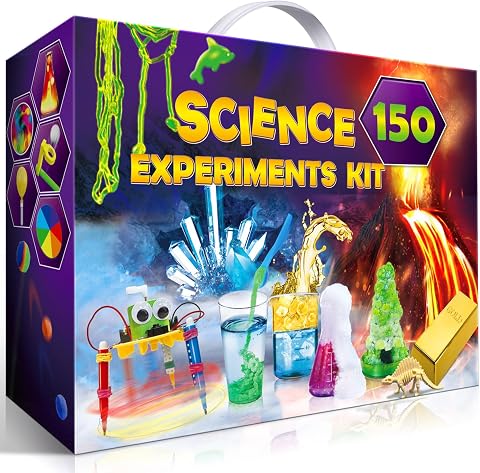
UNGLINGA 150 Experiment Science Kit for Kids – Chemistry Lab STEM Toys
- ✔ Brand: UNGLINGA
- ✔ Recommended age: 8 years and up
- ✔ Experiments: 150

Doctor Jupiter Preschool Science Kit for Kids Ages 3-5, Birthday Gift
- ✔ Brand: Doctor Jupiter
- ✔ Model: DJ Preschool Science
- ✔ Age range: 3 years and up
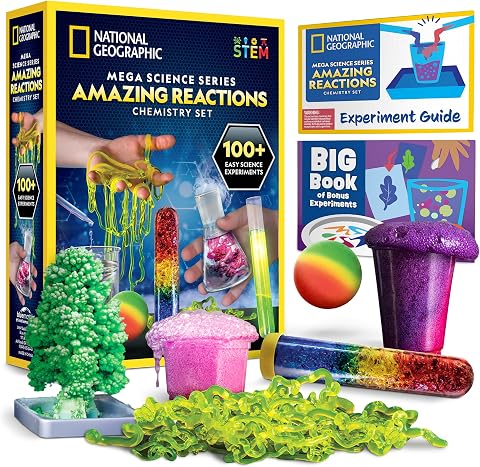
National Geographic Amazing Chemistry Set with 100+ Experiments Ages 8-12
- ✔ Brand: Blue Marble
- ✔ Sub-brand: National Geographic
- ✔ Set name: Amazing Chemistry Set
KiwiCo is the stronger starting point for families who want an age-matched mix of building and creative challenges. MEL Science is a better fit for children who are especially interested in experiments and for adults who want a more guided science experience. Neither subscription automatically suits every child: project difficulty, available space, supervision, and willingness to keep receiving kits all matter. Compare the activity style and learning support first, then decide whether the subscription cost earns its place in your household.
At a Glance
| Criteria | KiwiCo | MEL Science | Winner |
|---|---|---|---|
| Subject range | Broad STEAM range, with crates organized by age and theme | More concentrated on science subjects and experiments | A |
| Activity style | Mix of building, making, art, and science activities | Experiment-led activities, often centered on observing scientific effects | Depends |
| Age and interest fit | Several age bands and themed lines provide multiple entry points | Best suited to children drawn to hands-on science; check kit age guidance | A |
| Learning guidance | Project instructions and activities support independent making | Guided experiment content supports exploration of the science | B |
| Adult involvement | Varies by crate; younger children generally need more help | Can require adult supervision, especially with younger children or experiment materials | Depends |
| Convenience and materials | Recurring crates bring planned projects and materials | Recurring kits reduce the need to source each experiment separately | Tie |
| Value over time | More worthwhile when children use the variety across a subscription | More worthwhile when a child regularly wants science experiments | Depends |
UNGLINGA 150 Experiment Science Kit for Kids – Chemistry Lab STEM Toys
UNGLINGA’s 150 experiments span chemistry, physics, earth science and more, giving curious children room to move between topics instead of staying with one kind of activity. That wider scope is the reason we place it first overall: compared with National Geographic’s chemistry-centered set, it offers a more varied science sampler for a child whose interests are still taking shape.The illustrated, step-by-step manual is a practical strength for activities that use lab tools and kid-friendly materials. It can help children follow a sequence and connect what they do with what they observe. The kit is listed for ages 8 and up, so younger children may need an adult to guide setup and explain instructions. Families should also expect that some experiments call for household items that are not included, and certain chemistry projects can be messy.Choose this set when breadth is more valuable than a chemistry-only focus. National Geographic may suit a child who specifically wants bubbling solutions, color changes or crystals; UNGLINGA is the better fit when we want a wider tour across science topics. Its substantial activity count is appealing, but it does not remove the need to check each project’s materials before starting.
Pros:
- 150 experiments cover chemistry, physics, earth science and more.
- Illustrated, step-by-step manual supports independent following with adult guidance as needed.
- Includes lab tools and kid-friendly materials for hands-on activities.
- Offers broader subject variety than the chemistry-focused National Geographic set.
Cons:
- Some projects require household items that are not included.
- Certain chemistry experiments may be messy.
- Its stated age range of 8+ may not suit younger beginners.
Best for: Families with children ages 8 and up who want to explore several science subjects through guided activities.
Not ideal for: Younger children who need preschool-level activities, or families seeking a chemistry kit with every experiment’s materials supplied.
Bottom line: For an older child whose interests span multiple sciences, UNGLINGA offers the broadest guided exploration in this lineup, with some extra material gathering and cleanup to plan for.
“For an older child whose interests span multiple sciences, UNGLINGA offers the broadest guided exploration in this lineup, with some extra material gathering and cleanup to plan for.”
Doctor Jupiter Preschool Science Kit for Kids Ages 3-5, Birthday Gift
Doctor Jupiter is the age-specific pick for early science play: its activities introduce colors, bubbles, water, motion, sound and simple reactions to children ages 3 and up. Those concrete, sensory themes make it a different proposition from the two kits aimed at ages 8 and up. Rather than asking a young child to work through a broad lab-style program, it offers a starting point for noticing what changes when they mix, move or explore materials.The set lists more than 100 experiments, with a beaker, conical flask, cups, stirring sticks, a color-mixing tray, funnel and other components. Bright illustrated instructions and online activity access are described as guides for getting started. This may make the kit easier for a caregiver and child to use together, though “100+” should not be read as a promise that every project is a fully self-contained activity. The included small parts require close adult supervision, particularly around younger children.Compared with UNGLINGA and National Geographic, Doctor Jupiter gives up older-kid subject depth in favor of a preschool-oriented introduction. It is the clearest match for a young beginner; families shopping for a child ready for more involved chemistry or a broader tour of science should look to one of the 8+ kits instead.
Pros:
- More than 100 activities introduce approachable topics such as bubbles, colors and motion.
- Includes basic lab-style components such as a beaker, flask, cups and funnel.
- Illustrated instructions and online activity access support guided play.
- Its stated age range makes it the youngest-child option in this comparison.
Cons:
- Small parts require close adult supervision.
- The preschool-focused activities may feel too simple for older children.
- The supplied description does not specify that every experiment has all required materials included.
Best for: Caregivers looking for guided, sensory science activities to share with children ages 3 and up.
Not ideal for: Children ready for more advanced experiments, or households unable to supervise activities involving small parts.
Bottom line: For a preschooler’s first guided science activities, Doctor Jupiter is the most age-targeted choice, provided an adult stays involved throughout.
“For a preschooler’s first guided science activities, Doctor Jupiter is the most age-targeted choice, provided an adult stays involved throughout.”
National Geographic Amazing Chemistry Set with 100+ Experiments Ages 8-12
National Geographic’s Amazing Chemistry Set is the focused choice for a child drawn to bubbling solutions, color-changing reactions, glowing test tubes or crystal growing. Its described activities center on chemistry, unlike UNGLINGA’s mix of chemistry, physics and earth science. For a young scientist with a clear interest in reactions and lab equipment, that focus can be more useful than a broader set of topics.The kit supplies tools and materials for 15 core experiments, including test tubes, beakers and pipettes; a bonus guide adds 85 projects that use common household items. This division matters when planning: the advertised total describes both supplied core activities and further projects, not more than 100 experiments with all materials in the box. Compared with UNGLINGA, the chemistry identity is sharper, but families should check the project requirements and gather household supplies as needed.Listed for ages 8 and up, this set is less suitable for preschoolers than Doctor Jupiter, whose activities are designed around early sensory discovery. Younger children may also find some chemistry steps challenging. We’d choose National Geographic when chemistry is the draw and a child can follow the guidance with appropriate adult involvement—not when the goal is to sample many science fields or avoid extra prep.
Pros:
- Chemistry activities include bubbling, color-changing and crystal-growing projects.
- Supplied tools include test tubes, beakers and pipettes.
- Materials are provided for 15 core experiments.
- Bonus guide adds 85 projects using common household items.
Cons:
- The additional projects may require families to source household supplies.
- Some activities may challenge younger children.
- It is more chemistry-focused than the broader UNGLINGA kit.
Best for: Children ages 8 and up who are especially interested in chemistry reactions, crystals and lab tools.
Not ideal for: Preschoolers, children seeking activities across multiple science subjects, or families wanting all materials for every listed project supplied in the box.
Bottom line: For a child committed to chemistry, this set pairs a supplied core of hands-on projects with a longer household-supply guide, though families need to plan beyond the box.
“For a child committed to chemistry, this set pairs a supplied core of hands-on projects with a longer household-supply guide, though families need to plan beyond the box.”
As an Amazon Associate we earn from qualifying purchases.
Key Differences
The largest difference is the range of activities. KiwiCo is designed to serve several interests through age-based projects spanning building, art, engineering, and science. That variety can keep a child engaged when their interests shift, but a family seeking a deep run of experiments may find the broader approach less focused. MEL Science concentrates on science activities, which makes it the clearer fit when a child repeatedly asks how reactions, forces, or other scientific ideas work. Its focus is a strength only if that is the kind of project the child wants to do.
Guidance and participation also shape the experience. Both services package projects and instructions, but MEL Science’s experiment-led format gives the science explanation a more central role. KiwiCo’s activity-led crates can appeal to children who prefer to construct or create an object. Neither format means a child will always work alone: age, reading ability, materials, and the specific project affect adult involvement. Families should review the current kit descriptions and age guidance before subscribing, especially if supervision or household safety rules are a concern.
For value, the best choice is the one the child will actually use. A wider assortment can justify KiwiCo’s recurring cost for a child who likes changing project types; a science-focused child may get more from MEL Science’s narrower theme. Compare current subscription terms, shipping, and cancellation details, since prices and offerings can change. A one-off kit or gift may be a better trial than committing to a recurring delivery when interest is uncertain.
Detailed Comparison
Subject range (KiwiCo wins — moderate)
KiwiCo wins by a moderate margin for families who want breadth: its age-based crates cover a mix of STEAM interests, so a child can move between constructing, designing, and science activities. MEL Science is more concentrated on science. That focus is helpful for an experiment-minded child, but gives less protection against waning interest if the child mainly wants art or building projects.
Activity style (moderate difference)
This is a genuine fit decision rather than a universal win. KiwiCo tends to suit children who like making a tangible object or completing a design challenge. MEL Science suits children who enjoy carrying out experiments and observing what happens. The gap is moderate in practical terms: a child who likes the format is more likely to finish the activity, regardless of which subscription has the broader catalog.
Age and interest fit (KiwiCo wins — moderate)
KiwiCo has an edge for families looking to match a subscription to different ages and interests through its range of crates. MEL Science can be a better match for a child with a clear interest in science experiments, but parents should check the current age recommendation for the selected kit. The advantage is moderate: age labels help narrow choices, though a child’s reading, patience, and experience matter too.
Learning guidance (MEL Science wins — moderate)
MEL Science wins by a moderate margin for readers prioritizing explicit science learning, because experiment-led kits put the scientific idea and observation at the center. KiwiCo can also teach through making, testing, and building, but the balance varies by crate and may emphasize the finished project. Choose MEL when explanation through experiments is the goal; choose KiwiCo when learning through a wider range of hands-on challenges matters more.
Adult involvement (moderate difference)
Neither service can be declared the consistent winner without considering the specific kit and child. Young makers may need help reading directions, handling materials, or tidying up, while older children may manage more independently. This difference is moderate for busy households: check age guidance and activity details before ordering, and plan to participate when the project calls for supervision.
Convenience and materials (minor difference)
The services are broadly tied on convenience: a delivered project can save families from inventing an activity and sourcing every component. The exact contents and any household materials needed vary by kit, so inspect individual listings. The practical benefit is minor to moderate; a subscription is convenient only if deliveries fit the family’s schedule and there is space to store and complete projects.
Value over time (major difference)
Value depends on use, so neither wins across all households. KiwiCo earns its cost when a child uses the changing mix of projects; MEL Science earns its cost when science experiments are a recurring interest rather than a one-time novelty. The gap is major for a child who strongly prefers one format and minor when both would be occasional activities. Compare current prices and subscription terms before deciding to pay for recurring deliveries.
KiwiCo: Pros and Cons
Pros:
- Broad range of hands-on themes can accommodate changing interests
- Age-based crate options help families narrow the selection
- Suits children who like building and making as well as science
Cons:
- A broad mix may feel less focused for children who want science experiments every time
- The experience and level of adult help vary by crate
- Recurring deliveries can go unused if a child loses interest or falls behind
MEL Science: Pros and Cons
Pros:
- Science-first format suits children who want experiments and explanations
- A focused theme makes it easier to choose for a child with a clear science interest
- Delivered kits can reduce the work of sourcing experiment materials
Cons:
- Narrower subject focus may not fit children who prefer crafts or construction
- Some experiments may require adult supervision or preparation
- A subscription is poor value if the child only wants an occasional science activity
Who Should Choose What
Choose KiwiCo if:
- Your child enjoys switching among building, creative, engineering, and science activities.
- You want an age-based subscription with a broad range of project styles.
- You are unsure which STEAM topic will hold your child’s attention and value variety.
Choose MEL Science if:
- Your child regularly asks for experiments and wants science to be the main theme.
- You value guided exploration of scientific ideas more than a broad mix of making projects.
- You are comfortable checking the activity requirements and helping with supervision where needed.
Skip both if: Skip both subscriptions if your child is not asking for regular hands-on projects, you lack time or space to complete and store them, or you want only a single activity. Try a one-off kit, library program, or locally available science activity first.
Value for Money
Paying for recurring deliveries makes sense only when the child will use them consistently. KiwiCo’s value comes from variety: it can suit a household that wants a steady supply of different types of making and science projects. MEL Science is worth paying for when a child has sustained interest in experiments and the science focus matches what they want to learn. If that interest is uncertain, a single kit or a short commitment is a more sensible way to gauge fit. Check current pricing, shipping, and subscription terms before comparing total cost; the better value is the option that gets completed, not simply the one with more materials.
Final Verdict
For most families who are still discovering a child’s interests, start with KiwiCo: its broader project range is more forgiving when a child moves between building, creativity, and science. Choose MEL Science when experiments are already a strong, repeated interest and a science-centered experience is the point of the purchase. The deciding factor is project preference, not which subscription sounds more educational. Pay for KiwiCo’s variety if your child will use it; pay for MEL Science’s focus if experiments will keep them engaged. If neither kind of activity is likely to become a regular habit, skip the subscription and try a one-off project.
Frequently Asked Questions
Which is better for a child who loves experiments?
MEL Science is the more direct match because its kits focus on science experiments. Check the specific kit’s age guidance and activity requirements to see whether it suits your child and household.
Which subscription offers more variety?
KiwiCo offers a broader mix of project styles and themes. MEL Science is more concentrated on science, which can be an advantage when experiments are the main interest.
Do children need an adult to help?
It depends on the child’s age, skills, and kit. Younger children may need help with reading, setup, or supervision. Review the selected project’s instructions and safety guidance before starting.
Is a science kit subscription worth the cost?
It can be worthwhile when a child regularly completes the projects. Choose KiwiCo for recurring variety or MEL Science for sustained interest in experiments. If you’re unsure, try one kit before signing up for ongoing deliveries.