
Choosing a science kit for a child is less about finding the box with the most experiments and more about matching its format to how the child learns and what will keep them curious. A themed kit concentrates on one area, such as chemistry, geology, or electricity. A broad kit mixes activities from several areas of science, often to offer a little of everything.

Get school and study supplies delivered free — and shop member deals
- Fast, free delivery on millions of items
- Access to Prime Big Deal Days deals on October 6–7
- Prime Video, Amazon Music and more included
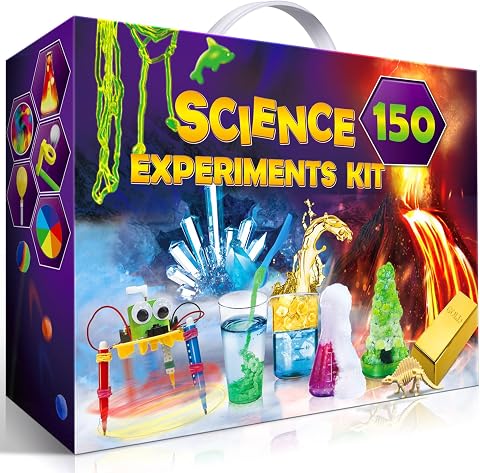
UNGLINGA 150-Experiment Science Kit for Kids
- ✔ Brand: UNGLINGA
- ✔ Experiment count: 150
- ✔ Recommended age: 8 years and up
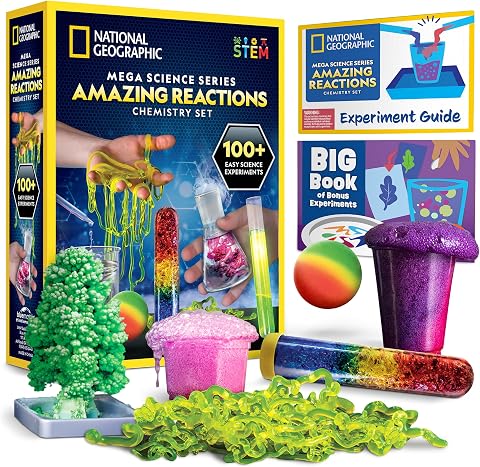
National Geographic Amazing Chemistry Set with 100+ Experiments
- ✔ Brand: Blue Marble
- ✔ Product line: National Geographic Amazing Chemistry Set
- ✔ Age range: 8 years and up

National Geographic Science Magic Kit with 100+ Experiments for Kids Ages 8–12
- ✔ Brand: National Geographic
- ✔ Developer: Blue Marble
- ✔ Experiment count: 100+
The real tradeoff is focus versus variety. A child who is already fascinated by crystals or chemical reactions may get more satisfaction from a kit that builds on that interest. A family buying a first kit, sharing it among siblings, or trying to find out which subjects appeal may benefit more from a multi-topic set. The comparisons below cover the practical differences that matter most: learning depth, range, guidance, age fit, setup, repeat use, and value. Product quality varies within both categories, so check the contents and age guidance of a specific kit before buying.
At a Glance
| Criteria | Themed science experiment kits | Broad, multi-topic science experiment kits | Winner |
|---|---|---|---|
| Subject depth | More activities around one subject; better for developing a specific interest | Usually introductory rather than in-depth across each subject | A |
| Experiment variety | Narrower range, with less chance of unrelated activities | More types of activities, such as chemistry, physics, or earth science | B |
| Learning path and instructions | Often easier to connect activities around a shared idea | Can feel less connected because activities span different topics | A |
| Age and interest fit | Strong fit when a child already likes the featured subject | Often suits beginners, mixed interests, or siblings sharing a kit | Depends |
| Setup and adult involvement | Depends on the kit; focused procedures can be easier to follow | Varies by activity; a larger assortment can mean more preparation | Depends |
| Repeat use | Can support follow-up questions and deeper exploration | May offer more unused activities, but components are not always reusable | A |
| Value | Worthwhile when the child will use the subject-focused activities | Potentially better cost per activity if the child completes many of them | Depends |
UNGLINGA 150-Experiment Science Kit for Kids
For families who want one kit to reach beyond chemistry, UNGLINGA offers the broadest stated subject mix in this lineup. Its 150 activities span chemistry, physics, earth science, and surface tension, making it a more rounded starting point than the National Geographic Amazing Chemistry Set, which concentrates on chemical reactions and crystal growing. That variety can help children follow changing interests without needing to switch immediately to a different kind of kit.The illustrated, step-by-step manual is an important part of the appeal: guided instructions can make a multistep activity easier for children to follow and give adults a clearer basis for helping. The kit also lists child-friendly lab tools and goggles, adding to the sense of a complete activity experience. Still, the 150 count should not be read as 150 fully supplied experiments. Some activities require household items, so we would expect occasional planning and gathering before getting started.Compared with the Science Magic Kit, UNGLINGA gives us more specific information about science topics, tools, and instruction. Its tradeoff is that a wide-ranging set may feel less focused than a dedicated chemistry kit for a child who mainly wants to mix solutions or grow crystals. We’d choose it for variety and guided exploration; we’d skip it if the child wants chemistry alone or if the family needs every activity’s materials to be included.
Pros:
- 150 activities cover chemistry, physics, earth science, and surface tension.
- Illustrated, step-by-step manual supports guided exploration.
- Includes child-friendly lab tools and goggles.
- Offers more subject variety than the chemistry-focused National Geographic set.
Cons:
- Some activities require household items that are not included.
- Its broad scope may be less satisfying than a focused chemistry set for children with one strong interest.
Best for: Children aged 8 and up who are curious about several science subjects and benefit from illustrated, guided activities.
Not ideal for: Families seeking a chemistry-only set or a kit that supplies every material for every listed experiment.
Bottom line: We recommend UNGLINGA as the most versatile choice here, provided families are comfortable supplying occasional household materials.
“We recommend UNGLINGA as the most versatile choice here, provided families are comfortable supplying occasional household materials.”
National Geographic Amazing Chemistry Set with 100+ Experiments
When a child is most interested in mixing, observing reactions, or growing crystals, this kit has a more focused chemistry identity than UNGLINGA’s multi-topic assortment. Test tubes, beakers, and pipettes give the activities a recognizable lab feel, while the stated age range of 8 and up makes its intended audience clear. The kit’s 100-plus activity plan also gives curious children ideas to revisit as their interest develops.We’d pay close attention to how that count is divided: materials are included for 15 experiments, while 85 additional activities use common household items. That arrangement can stretch the set’s activity menu, but it is not equivalent to having supplies ready for more than 100 experiments. Compared with UNGLINGA, this set is less varied by science subject and more explicit about chemistry equipment; compared with the Science Magic Kit, it gives us better detail about the tools and example activities.This is a sensible pick for a child who wants chemistry first and is happy to use kitchen or household supplies for follow-on activities. It is less convenient for families expecting a fully stocked box for every listed idea, or for kids who want earth science and physics alongside reactions. We’d also plan to review each activity’s instructions and gather any needed household materials before setting up.
Pros:
- Test tubes, beakers, and pipettes support hands-on chemistry activities.
- Includes materials for 15 experiments.
- Lists 85 additional activities using common household items.
- Names crystal growing and chemical reactions as activity themes.
Cons:
- Materials are supplied for only 15 of the 100-plus activities.
- Household-item activities require families to gather additional supplies.
- Its chemistry focus offers less subject variety than the UNGLINGA kit.
Best for: Children aged 8 and up who are especially interested in chemistry and enjoy using basic laboratory-style tools.
Not ideal for: Families who want most activities to come with dedicated materials, or children seeking a broad mix of science topics.
Bottom line: Choose this set for a chemistry-first child who values lab-style tools and does not mind sourcing household supplies for many activities.
“Choose this set for a chemistry-first child who values lab-style tools and does not mind sourcing household supplies for many activities.”
National Geographic Science Magic Kit with 100+ Experiments for Kids Ages 8–12
The Science Magic Kit is the most theme-led option in this comparison. Its science-meets-magic framing may appeal to children who respond better to surprising demonstrations than to a conventional lab theme, and the stated ages of 8–12 give families a defined audience to consider. With more than 100 experiments listed, it offers a broad activity promise, although the supplied details do not identify particular experiments or explain how many include their materials.That lack of detail matters when we compare it with the other two picks. UNGLINGA names four science areas and describes its illustrated manual and tools; the Amazing Chemistry Set specifies its test tubes, beakers, pipettes, and the split between supplied and household materials. Here, the theme and age range are clearer than the kit contents. Blue Marble is identified as the developer and provides U.S.-based customer support, which may be useful if a buyer needs product assistance, but it does not fill in the missing component details.We’d consider this kit when the magic angle is likely to motivate a child to explore, especially within the 8–12 age range. Before choosing it over UNGLINGA or the chemistry set, we’d want to confirm the included materials and instruction format from the current listing. It is a weaker match for buyers who need a predictable inventory of tools or who want to choose by a specific science subject.
Pros:
- Offers more than 100 experiments.
- Designed for a stated age range of 8–12 years.
- Science-and-magic theme may make activities feel approachable to children who enjoy surprises.
- Developed by Blue Marble, which provides U.S.-based customer support.
Cons:
- Available product details do not specify included tools or materials.
- The supplied information does not explain the activity topics or instruction format.
- Less transparent about materials than either UNGLINGA or the Amazing Chemistry Set.
Best for: Children ages 8–12 who are drawn to playful, magic-themed science activities and families who value U.S.-based customer support.
Not ideal for: Buyers who need detailed information about included tools, supplies, or the subjects covered before making a selection.
Bottom line: This is a theme-first alternative for ages 8–12, but we’d verify its contents before choosing it over the more clearly specified kits.
“This is a theme-first alternative for ages 8–12, but we’d verify its contents before choosing it over the more clearly specified kits.”
As an Amazon Associate we earn from qualifying purchases.
Key Differences
The biggest difference is what the kit asks a child to do with their curiosity. A themed set keeps returning to one subject, giving the child a chance to notice patterns, change variables, and ask follow-up questions. That continuity can make the activities feel like parts of a larger idea rather than isolated tricks. The payoff is strongest when the child already cares about the topic; if they do not, a narrow kit can lose its appeal quickly.
A broad kit is a sampler. It offers more chances to discover what a child enjoys, and the range can be useful when siblings have different interests. But more activities do not automatically mean more learning or more usable play. A box can include a long list of experiments that each need separate materials, adult help, or household supplies. Check whether the kit explains the science behind its activities and whether the listed experiment count reflects distinct projects rather than small variations.
Neither format wins on value for every household. A broad kit may offer a lower cost per listed activity, but only if the child actually completes them. A focused kit can be the better buy when its subject holds attention and its activities build on one another. Look at age recommendations, contents, replenishable materials, and cleanup requirements alongside the price. Those details often matter more than the number printed on the front of the box.
Detailed Comparison
Subject depth (Themed science experiment kits wins — moderate)
Themed kits win by a moderate margin for children who want to understand one area rather than sample several. A chemistry-focused set, for example, can repeat ideas such as mixing, observing changes, and comparing results across activities. That makes it easier to talk about what stayed the same and what changed. A broad kit may touch more disciplines, but most activities are designed as introductions, not a connected course.
In practice, choose focus when a child is already asking questions about a particular subject. Choose breadth when no clear interest has emerged yet.
Experiment variety (Broad, multi-topic science experiment kits wins — major)
Broad kits win by a major margin on range. They are more likely to include unrelated activity types, giving a child several routes into science. This is especially helpful for a beginner who is unsure whether they prefer building, mixing, observing, or testing. A themed kit has a narrower menu by design, though a well-designed one can still vary its procedures and outcomes.
The practical question is whether variety will keep this child engaged or scatter their attention. A child who likes trying something new each time may value the broad set; one who wants to master a favorite topic may not.
Learning path and instructions (Themed science experiment kits wins — moderate)
Themed kits have a moderate advantage when their activities are arranged to build on shared concepts. The child can revisit a subject and make connections across experiments. Broad kits may have clear instructions too, but the topics can jump from one field to another, so the learning can feel like a series of separate demonstrations.
This is not guaranteed by the box label. Read a sample instruction page or product description where available: look for explanations of why an experiment works, questions that prompt observation, and clear safety directions. If the child will work with limited adult help, those features matter more than whether the kit is themed.
Age and interest fit (moderate difference)
This is a draw that depends on the child. Broad kits can suit beginners or households with several children because they offer different kinds of activities. Themed kits can be a stronger match for an older child or a beginner with a specific passion. Age labels alone are not enough: reading demands, small parts, heat or liquid use, and the need for close adult supervision vary by product.
Match the kit to the child’s actual skills and interests, not only the recommended age. A younger child may enjoy observing and mixing with an adult; an older child may want to plan tests and record results.
Setup and adult involvement (minor difference)
There is no reliable category-wide winner; the difference is minor and product-specific. A focused kit may be simpler to organize because activities share a subject or similar materials. A broad kit may require switching between different procedures and gathering different household items. On the other hand, one complicated themed experiment can demand more supervision than several straightforward activities in a variety kit.
Check what is included, what must be supplied at home, how much cleanup each activity creates, and whether an adult needs to prepare anything in advance. These details determine whether a kit works for a quick afternoon or needs a planned activity session.
Repeat use (Themed science experiment kits wins — minor)
Themed kits have a slight advantage for repeat engagement if the child enjoys returning to the same subject and testing new questions. A child can compare results, change one part of an experiment, or explore a related idea. Broad kits may keep the first few sessions fresh through variety, but some activities are one-time demonstrations or use up included materials.
Check whether consumables can be replaced and whether activities can be repeated with common household supplies. Do not assume a high experiment count means the kit will support ongoing play.
Value (moderate difference)
Neither format is always the better value. Broad sets can cost less per listed activity, but that calculation only helps if the child wants to do many of them and the activities are genuinely distinct. A themed set may cost more per experiment yet provide a stronger payoff for a child who will complete the activities and continue exploring the subject.
Compare the usable contents, not just the advertised count. If most materials are single-use or require extra purchases, account for that when judging the total cost. Pay more for focus only when it matches an established interest or delivers better guidance and materials.
Themed science experiment kits: Pros and Cons
Pros:
- Builds continuity around a subject the child already enjoys
- Can encourage follow-up questions and deeper exploration
- Activities may feel more connected than a mixed-topic sampler
Cons:
- Narrow subject range can lose a child who is not interested in the topic
- May offer fewer chances to discover new areas of science
- A higher price is hard to justify if the child completes only a small part
Broad, multi-topic science experiment kits: Pros and Cons
Pros:
- Introduces more kinds of science in one purchase
- Good for beginners who have not settled on a favorite subject
- Can work for siblings or children with different interests
Cons:
- Activities may offer less depth in each subject
- A wide selection can feel disconnected or overwhelming
- The experiment count can overstate practical value if materials are limited or activities are not repeated
Who Should Choose What
Choose Themed science experiment kits if:
- The child already has a strong interest in a subject such as chemistry, crystals, or electricity.
- You want activities that revisit related ideas rather than provide a one-time sampler.
- The child is likely to ask follow-up questions and enjoy comparing results across experiments.
Choose Broad, multi-topic science experiment kits if:
- This is the child’s first science kit and you do not yet know which topics will hold their interest.
- You are buying for siblings or a group with varied preferences.
- Trying different styles of activity matters more than detailed study of one topic.
Skip both if: Skip kits that exceed the child’s reading or safety skills, require supplies you cannot provide, or offer little explanation beyond step-by-step demonstrations. A library activity book, simple household experiments with adult guidance, or a kit matched to a different age may fit better.
Value for Money
Paying more for a themed kit is worthwhile when the child has a real interest in its subject, the activities connect, and the instructions support more than following a recipe. In that situation, a focused set can provide better value even if it contains fewer experiments, because the child is more likely to finish the activities and return to the ideas.
A broad kit is often the safer value for a first purchase, particularly when the child’s interests are unknown or multiple children will share it. Still, do not treat a low cost per experiment as proof of a bargain. Check how many activities use the included materials, what must be sourced separately, and whether the child can repeat anything. If a kit is priced at a premium without stronger guidance, safer materials, or better repeatability, paying extra is hard to justify.
Final Verdict
For most first-time buyers, a broad, multi-topic kit is the safer starting choice: its variety gives a child more chances to find a favorite area, and it can serve a mixed-interest household. That recommendation changes when the child already has a clear passion. In that case, choose a themed kit; sustained interest and connected activities matter more than a larger experiment count.
The deciding factor is not which box advertises more projects, but whether its activities match the child well enough to be used. Choose breadth to explore, choose focus to build on an interest, and pay more only when the contents, instructions, and likely use support the added cost.
Frequently Asked Questions
Are themed science kits better for learning?
They can be better for building understanding of one subject because related activities give children chances to revisit ideas and compare outcomes. A broad kit can still teach effectively, especially when it explains the science behind each activity, but its lessons are more likely to span separate topics.
Is a broad kit better for a child’s first science experiment set?
Often, yes. A multi-topic kit lets a beginner try different styles of activity before settling on a favorite. Check the age guidance and actual contents, though: a large selection is not useful if the directions are hard to follow or the activities need materials you do not have.
How can I tell whether a kit is worth its price?
Look past the experiment count. Check what is included, whether supplies are reusable or replaceable, what household materials are required, how clearly the kit explains results, and how much adult preparation it needs. A smaller kit that suits the child may provide more practical value than a larger set they rarely use.
Should I choose a kit based on the child’s age or interests?
Use both, but check safety and skill requirements first. Age guidance can flag reading demands, small parts, and adult supervision, while interests help predict whether the child will stay engaged. A child should not be left to complete an activity independently unless the product directions and their abilities make that appropriate.
Halloween Picks
halloween
As an affiliate, we earn on qualifying purchases.