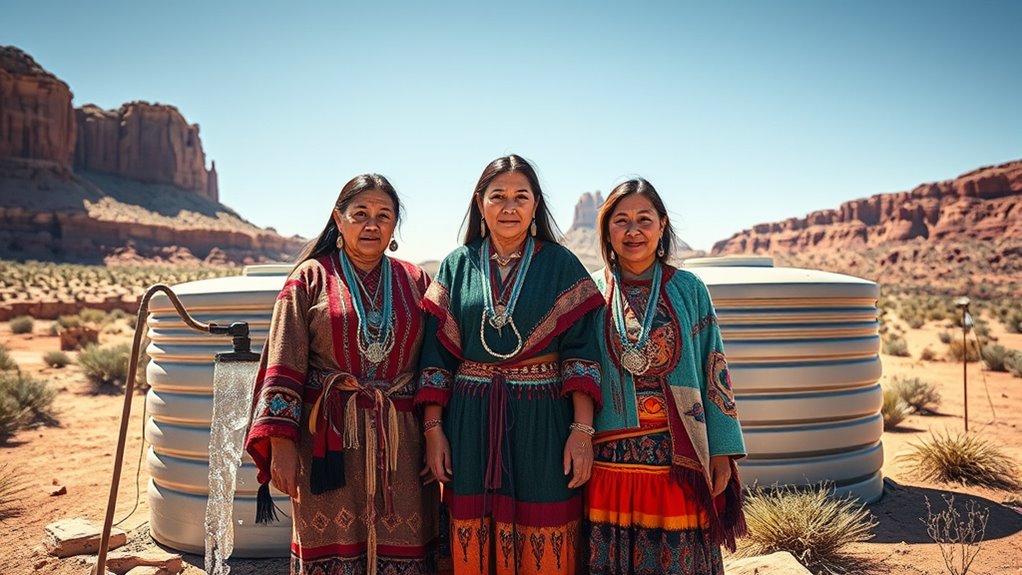

Navajo women are leading essential efforts to bring clean water to their communities, tackling a long history of exploitation, pollution, and infrastructure gaps. They organize protests, advocate for policy change, and develop local solutions like water systems to reduce daily hauling. Their leadership transforms water justice, especially during the pandemic when access becomes a health issue. To learn more about how these women are making a difference, explore the inspiring stories behind their actions and innovations.
Key Takeaways
- Navajo women lead grassroots organizations advocating for clean water rights and holding industrial polluters accountable.
- Women organize community protests, policy advocacy, and educational campaigns to improve water access.
- Female leaders like Darlene Arviso coordinate water delivery efforts to remote and underserved households.
- Women leverage cultural traditions and community engagement to empower residents and promote water conservation.
- Through activism and leadership, Navajo women are transforming the water crisis into sustainable solutions and environmental justice.

iSpring RCC7AK, NSF Certified, 75 GPD, Alkaline 6-Stage Reverse Osmosis System, pH+ Remineralization RO Water Filter System Under Sink, Patented Top-Mounted Faucet Design for Easy Installation
PATENTED DESIGN – The top-mounted fastener allows for easy countertop installation entirely from above, eliminating the hassle of…
As an affiliate, we earn on qualifying purchases.
As an affiliate, we earn on qualifying purchases.
The Water Crisis on the Navajo Nation
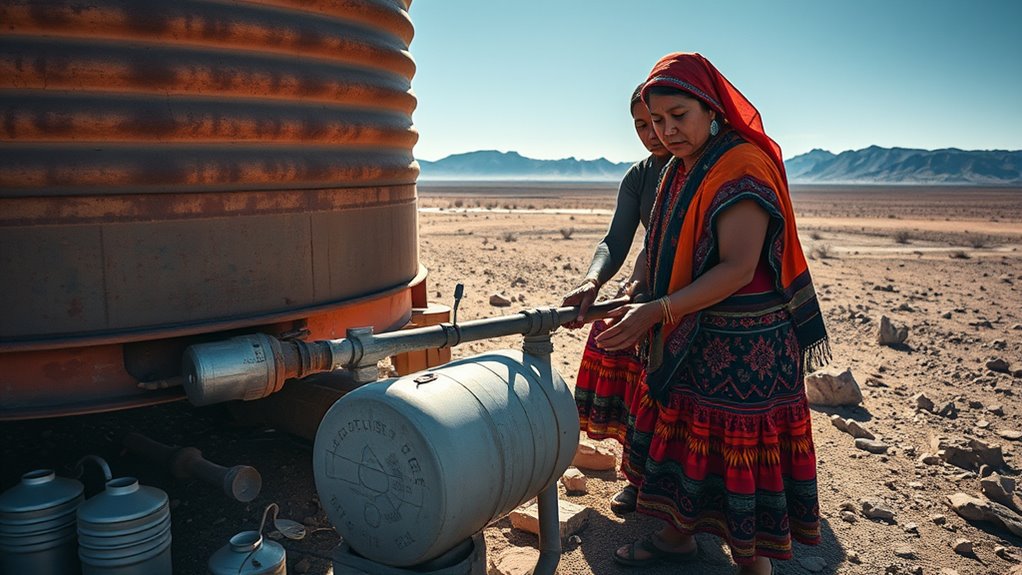
The water crisis on the Navajo Nation is a critical issue rooted in decades of exploitation and neglect. Nearly 40% of Navajo households lack access to clean, safe drinking water, and about one-third don’t have running water or toilets. Navajo residents are 67 times more likely than the average American to be without piped water or indoor plumbing. Many households resort to hauling water daily, using only about 50 gallons per person—much less than the state average. This scarcity reflects a history of resource depletion caused by mining, energy development, and forced relocations. Federal and tribal governments have systematically ignored water rights and needs, leaving communities vulnerable and underserved. The crisis continues to threaten health, safety, and cultural practices across the Navajo Nation. Addressing infrastructure deficits is essential to resolving this ongoing emergency.

WaterStorageCube BPA-Free Collapsible Water Container with Spigot, Food-Grade Camping Water Storage Carrier Jug for Outdoors Hiking Hurricane Emergency, Foldable Portable Water Canteen (2.6 Gal 2-pk)
FOOD-GRADE ODORLESS GREAT TASTE: PE plastic made with highest quality USA raw material. Environmentally friendly non-toxic, No BPA…
As an affiliate, we earn on qualifying purchases.
As an affiliate, we earn on qualifying purchases.
Historic Exploitation and Its Impact on Water Resources

You see how mining operations have drained and polluted Navajo water supplies, leaving communities with fewer resources. Displacement and forced relocations, like those from Black Mesa, disrupted lives and access to clean water. Systematic neglect by authorities has allowed these injustices to persist, deepening the water crisis on the Navajo Nation. Additionally, the lack of adequate infrastructure and calibration efforts have hindered efforts to restore and protect water sources for Navajo communities.
Mining’s Water Depletion
Decades of mining and energy development have severely depleted and contaminated water sources across the Navajo Nation. Major operations like the Black Mesa, Kayenta, and Navajo Generating Station used vast amounts of water, leaving many sources polluted or unavailable. These activities disrupted traditional water cycles, making it harder for communities to access clean water. The table below highlights key impacts:
| Mining Operation | Water Impact |
|---|---|
| Black Mesa mine | Depleted local aquifers, contaminated streams |
| Kayenta mine | Reduced groundwater flow, pollution concerns |
| Navajo Generating Station | Heavy water consumption, pollution from runoff |
| Relocations | Disrupted water access for affected communities |
| Federal neglect | Lack of mitigation, ongoing resource depletion |
Your community bears the legacy—water now scarce, contaminated, and harder to access, fueling ongoing struggles. Additionally, the depletion of water resources has impacted traditional water cycles, further exacerbating water scarcity issues in the region. These disruptions have also affected indigenous land rights, complicating efforts to restore water access and environmental health. Furthermore, ongoing water contamination from mining runoff continues to pose health risks to residents. The loss of water sources has also impacted local ecosystems, threatening biodiversity and natural habitats. Recognizing the impact of resource exploitation is crucial for developing sustainable solutions and protecting water rights for future generations.
Displacement and Relocation
Relocation has compounded water issues on the Navajo Nation, forcing communities off their ancestral lands and disrupting access to essential resources. You feel the loss as sacred sites and water sources disappear, replaced by mining operations and industrial sites. The forced moves have fractured social ties and made it harder to maintain traditional water practices. Inspirational quotes about fatherhood remind us of the importance of support and resilience in overcoming such adversity. – Up to 16,000 Navajos were relocated to accommodate mining, stripping them of their land and water rights – Mining and energy projects have depleted and contaminated remaining water sources – Systematic neglect by federal and tribal governments has worsened access and resource management. These relocations and industrial impacts continue to shape water scarcity today, leaving communities struggling to secure clean, reliable water supplies. The legacy of displacement creates ongoing challenges for water justice and community health.
Systematic Resource Neglect
How has systemic neglect by federal and tribal governments worsened water scarcity on the Navajo Nation? You see, for decades, these governments have failed to prioritize Navajo water needs, neglecting rights established through treaties. Mining operations like Black Mesa, Kayenta, and Navajo Generating Station drained and contaminated crucial water sources, leaving communities without safe access. Relocations forcibly moved Navajo families, disrupting traditional water systems and eroding resource management. Despite legal rights, authorities haven’t provided adequate infrastructure or funding to build reliable water systems, forcing families to haul water daily. This ongoing neglect perpetuates a cycle of vulnerability, health risks, and environmental degradation. Without recognition and action, Navajo communities remain trapped in a crisis fueled by historic exploitation and systemic indifference. Furthermore, environmental justice advocates highlight that addressing these issues requires acknowledging the systemic roots of water insecurity and implementing equitable solutions. Additionally, investing in community-led infrastructure can help restore sustainable water access and empower Navajo residents to manage their resources effectively.

Winisok 17 Inch Water Meter Key With 4 Way Multi-Functional Utilities Key, Enforced Rebar Water Shut Off Tool Wrench T-handle for Curb Main and Water Meters, Underground Stop or Waste Valves
【17-Inch Extended Length for Effortless Access】 – Our upgraded 17-inch water meter key features a 3/4-inch opening, giving…
As an affiliate, we earn on qualifying purchases.
As an affiliate, we earn on qualifying purchases.
Grassroots Movements Leading Change
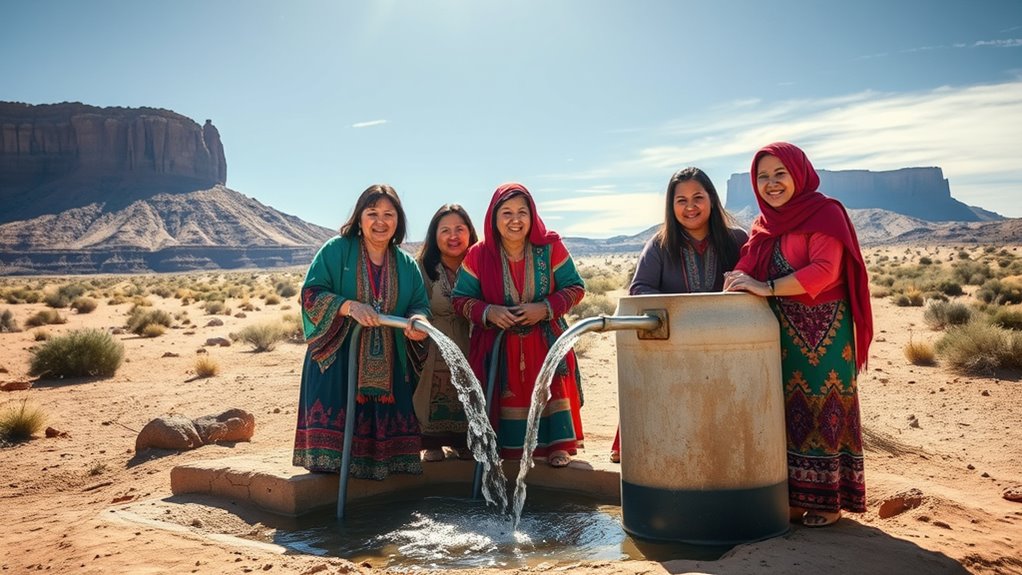
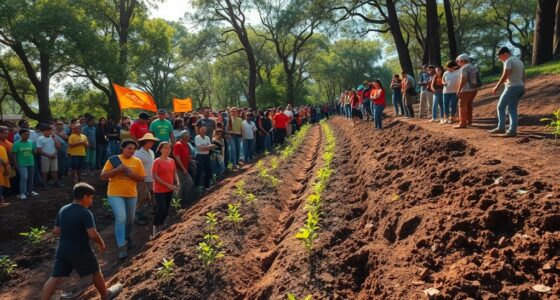
You see how community-led advocacy has pushed for the closure of harmful mines and industrial projects, showing the power of local voices. Protest actions and policy changes are often driven by grassroots groups demanding safer water access and environmental justice. Through education initiatives, these movements empower residents to stand up for sustainable solutions and hold authorities accountable. Additionally, understanding the divorce process in various states can help communities navigate legal challenges related to family and environmental issues. Recognizing the importance of community engagement can further strengthen these grassroots efforts and promote lasting change. Incorporating strategies to foster self-awareness can help community leaders better address local needs and challenges, ensuring more effective advocacy and sustainable outcomes. Furthermore, leveraging AI Bifurcation insights can enhance understanding of societal shifts caused by technological change, aiding communities in adapting to new realities and fostering environmental justice.
Community-Led Advocacy Efforts
Community-led advocacy has become a powerful force driving change on the Navajo Nation, as grassroots movements mobilize residents to fight for their water rights and environmental justice. You actively participate in community chapters that pass resolutions opposing harmful industrial projects, making your voice heard. You attend local meetings to advocate for sustainable water solutions and hold companies accountable. You also educate neighbors about environmental risks, empowering them to stand together. These efforts create a collective push for change, pressuring corporations and government agencies to prioritize Navajo water needs. By organizing protests, sharing information, and building alliances, you help sustain momentum for clean water access. Your community’s resilience and unified voice are transforming Navajo water advocacy into an unstoppable movement.
Policy and Protest Actions
Grassroots movements have become a powerful force in shaping policy and inspiring protest actions that challenge harmful industrial practices on the Navajo Nation. You can see this in the efforts of groups like Tó Nizhóní Ání, which successfully pressured authorities to close the Black Mesa and Kayenta mines, and the Navajo Generating Station. Community members rally, organize protests, and submit formal opposition to proposed projects like hydrogen pipelines, making their voices heard at local and federal levels. Women leaders, in particular, play a central role, advocating for environmental justice through marches, hearings, and direct action. These collective efforts hold corporations and government agencies accountable, pushing for policies that prioritize water rights, environmental health, and sustainable development for Navajo families. Additionally, leveraging water purification systems ensures access to clean drinking water amid ongoing environmental challenges. Recognizing the importance of water rights is essential for empowering communities to protect their resources and health for future generations. Moreover, understanding and addressing issues like contamination detection through community-led testing can further safeguard water quality. Strengthening AI security in monitoring water sources can enhance early detection of contaminants and prevent health risks.
Grassroots Education Initiatives
Organic education initiatives have become a crucial tool in empowering Navajo families to understand and address water access issues. You’re encouraged to participate in community workshops, where local leaders and women share vital information about water safety, conservation, and health. These grassroots efforts aim to: – Raise awareness about water contamination and rights – Train residents on sustainable water collection and storage – Mobilize communities to advocate for policy changes – Incorporate sound design techniques to effectively communicate key messages and inspire action sound design techniques. Engaging community members through effective communication strategies enhances the impact of these initiatives and fosters lasting change, especially by utilizing community engagement methods that build trust and participation. Building trust within the community is essential for the success of these educational programs and ensuring sustainable improvements in water access. Incorporating cultural awareness into these efforts helps ensure that messages resonate deeply and respect local traditions.

Introduction to Community and Public Health
As an affiliate, we earn on qualifying purchases.
As an affiliate, we earn on qualifying purchases.
The Role of Community Surveys in Understanding Water Needs
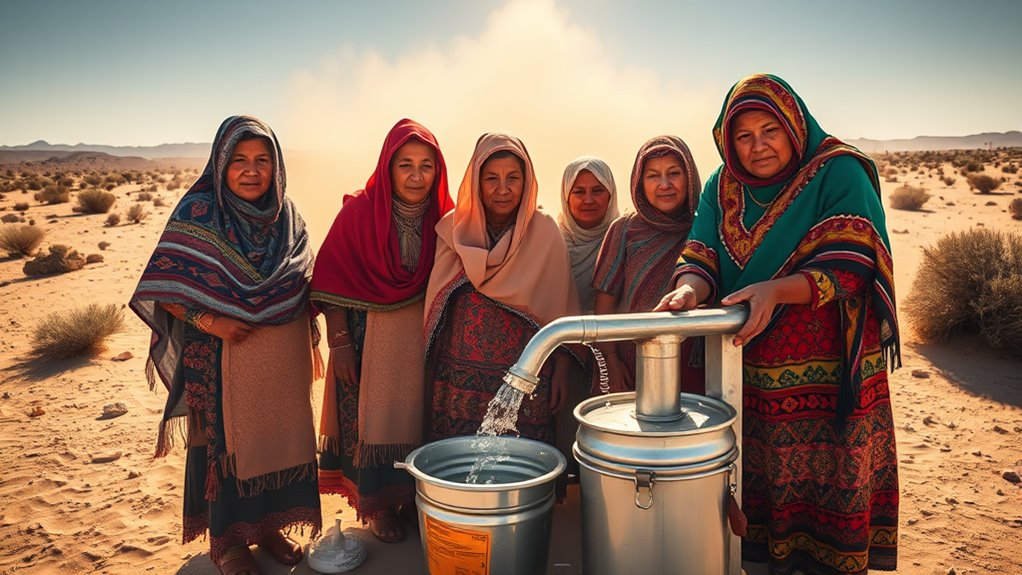
How do we accurately identify the water needs of Navajo households? Community surveys are essential tools. You, as a researcher or advocate, visit homes door-to-door, asking residents about their water sources, usage, and shortages. These surveys reveal critical details, like how many households haul water daily or lack running water altogether. You gather data on water quality concerns, frequency of outages, and the distance to water sources. This firsthand information highlights disparities and guides targeted solutions. For example, recent surveys showed that 73% of water-hauling families use minimal water, underscoring urgent needs. Understanding water access and the infrastructure gaps is crucial for developing effective interventions. By collecting accurate, community-specific data, you empower local voices, inform policy decisions, and prioritize projects that truly address Navajo water challenges.
Women as Pioneers in Water Advocacy
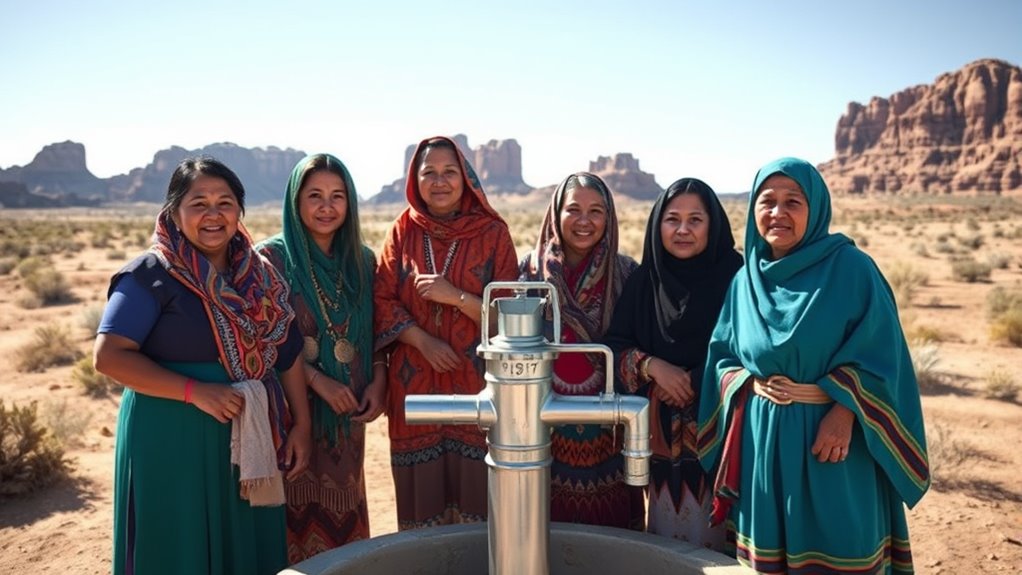
Women have emerged as essential leaders in Navajo water advocacy, driving change through community organizing, education, and hands-on efforts. You see them rallying neighbors, raising awareness, and taking direct action to improve water access. Their leadership often involves:
- Establishing grassroots organizations to push for policy changes and water rights.
- Educating communities about water conservation and health risks.
- Coordinating water deliveries and infrastructure projects to serve remote households.
These women challenge systemic neglect, hold authorities accountable, and inspire others to get involved. Their resilience ensures that voices often ignored are now central to shaping sustainable solutions. By leading with determination and compassion, they’re transforming the water crisis into a movement for lasting change.
Personal Stories of Navajo Women Water Warriors

Across the Navajo Nation, women like Darlene Arviso and Annie Begay shape the fight for clean water through their unwavering dedication. Darlene, known as the “Water Lady,” personally delivers water to families, ensuring they have access despite systemic neglect. She shares stories of mothers and elders who rely on her for daily needs, and her commitment inspires others. Annie Begay, at just 23, started projects to bring clean water to her community, organizing efforts that empower neighbors. Her passion drives change in places where infrastructure falls short. These women face obstacles head-on, blending grassroots activism with heartfelt service. Their personal stories highlight resilience, leadership, and the deep love for their communities—all crucial in the ongoing fight for water justice.
Innovative Solutions and Community-Led Initiatives

What innovative approaches are empowering Navajo communities to address water scarcity? You see, communities are taking charge through grassroots projects, sustainable technologies, and advocacy. They’re deploying low-cost water purification systems that use natural materials, making clean water accessible without expensive infrastructure. Community-led water management committees are developing local solutions, ensuring residents have a say. Additionally, solar-powered water pumps are providing reliable access in remote areas, reducing dependence on hauling. These initiatives are fueled by local leadership, with Navajo women leading the charge—educating neighbors, organizing water deliveries, and pushing for policy change. These innovative efforts demonstrate resilience and self-determination, transforming water access from a crisis into a community-driven movement toward sustainability and health.
The Pandemic’s Highlight on Water Insecurity
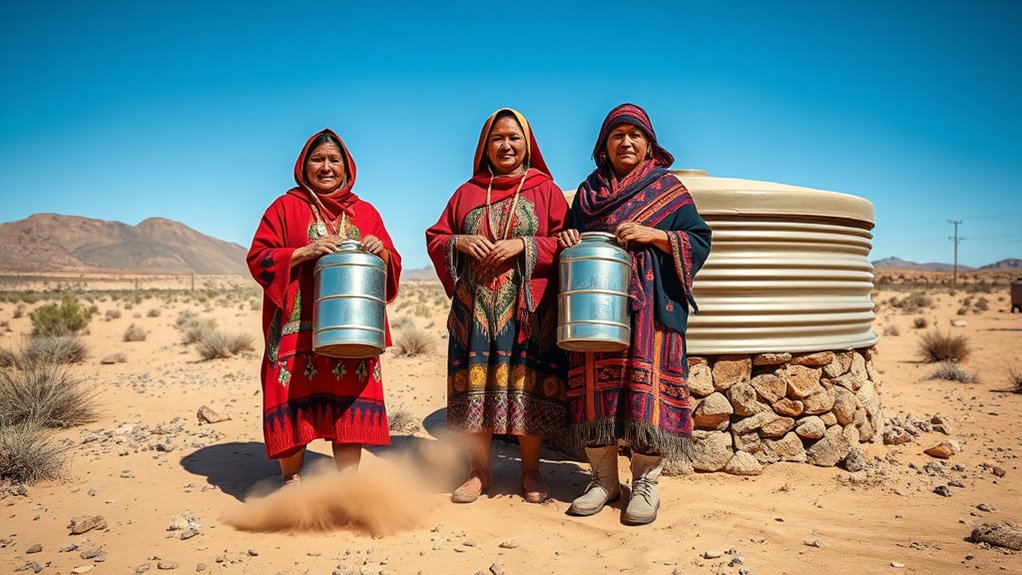
The COVID-19 pandemic brought longstanding water shortages on the Navajo Nation into sharp relief, exposing how critical access to clean water truly is for health and safety. With limited or no running water, many households struggled to follow health guidelines like handwashing and sanitation, increasing virus spread. Multigenerational homes compounded risks, making water scarcity a direct threat to lives. In response, the Navajo Nation formed the COVID-19 Water Access Coordination Group, rushing to install 58 transitional water points. These efforts aimed to reduce infection rates and protect vulnerable residents. The pandemic highlighted the urgent need for sustainable water infrastructure and reinforced the importance of community-led solutions. It also underscored how water insecurity directly impacts public health, emphasizing that access to clean water is essential for resilience in crises.
Building a Sustainable Future Through Women’s Leadership
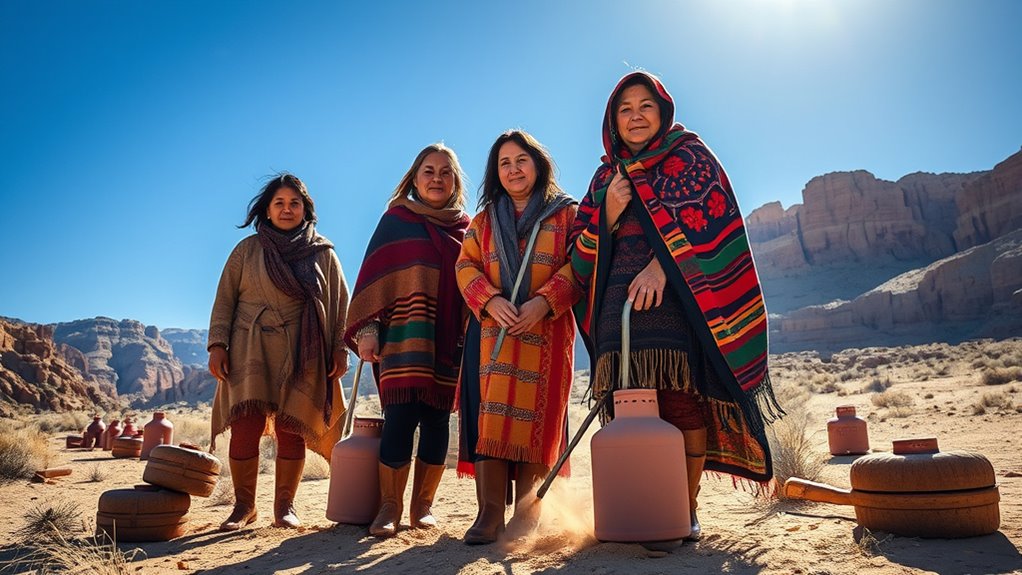
How can women’s leadership transform the future of water justice on the Navajo Nation? Women are driving change through innovative projects, community engagement, and advocacy. Their leadership fosters sustainable solutions that prioritize long-term water access. You can see this in action with efforts to:
Women’s leadership fuels sustainable water solutions and advocates for lasting access on the Navajo Nation.
- Develop local water systems that reduce reliance on hauling and industrial sources
- Educate communities about conservation, rights, and environmental health
- Advocate for policies that protect water rights and hold corporations accountable
Frequently Asked Questions
How Do Navajo Women Organize and Sustain Water Advocacy Efforts?
You organize and sustain water advocacy efforts by leading grassroots organizations, coordinating water deliveries, and educating your community about environmental issues. Women like Darlene Arviso and Annie Begay mobilize neighbors, advocate for policy change, and raise awareness about water rights. You also gather data, participate in surveys, and push for sustainable solutions. Your leadership keeps these efforts resilient, ensuring safe, reliable water access for Navajo families long-term.
What Challenges Do Navajo Women Face in Leadership Roles?
You face challenges like limited resources, systemic neglect, and cultural barriers that can hinder your leadership. Funding constraints and bureaucratic hurdles make it harder to sustain advocacy efforts. Additionally, balancing traditional roles with activism can be difficult, and sometimes community support isn’t enough. Despite these obstacles, your resilience and dedication drive change, inspiring others and pushing for policies that prioritize clean water access and environmental justice for your community.
How Do Grassroots Movements Influence Federal Water Policies?
Grassroots movements act like a powerful river carving canyons in federal water policies, forcing change through persistent flow. You see, by organizing community voices and raising awareness, you pressure lawmakers to prioritize Navajo needs. Your advocacy shines a light on neglected issues, turning policy landscapes into more equitable terrain. With each effort, you help reshape water access laws, making sure Navajo families receive the dignity of clean, safe water they deserve.
What Innovative Community-Led Solutions Are Being Implemented?
You can see Navajo communities implementing innovative solutions like door-to-door water delivery, community water stations, and surveys to identify needs. Women-led groups organize local projects, educate residents, and advocate for sustainable water sources. These grassroots efforts focus on building resilience, securing funding, and influencing policies, empowering residents to take charge of their water access. Your involvement can boost these initiatives and help create lasting change in Navajo water sustainability.
How Can External Supporters Assist Navajo Water Warriors Effectively?
You can support Navajo water warriors by funding infrastructure projects like solar-powered water systems, similar to successful pilot programs. Volunteer your skills in community education, helping spread awareness about sustainable water use. Advocate for policy changes that recognize water rights. Your active involvement, whether through donations, technical assistance, or raising awareness, empowers Navajo women-led initiatives to expand access and resilience, transforming their communities’ future.
Conclusion
Like a river carving its path through stubborn rock, Navajo women are forging new channels of change, bringing clean water where it’s been scarce for generations. Their resilience turns obstacles into opportunities, transforming despair into hope. With every well dug and community survey completed, they prove that even the smallest drops of effort can create a mighty flow of progress. Your support can help amplify these voices, ensuring the water warriors’ movement continues to grow and thrive.