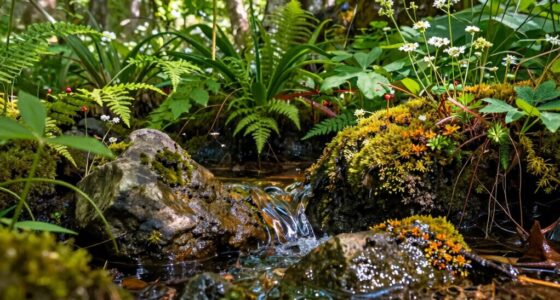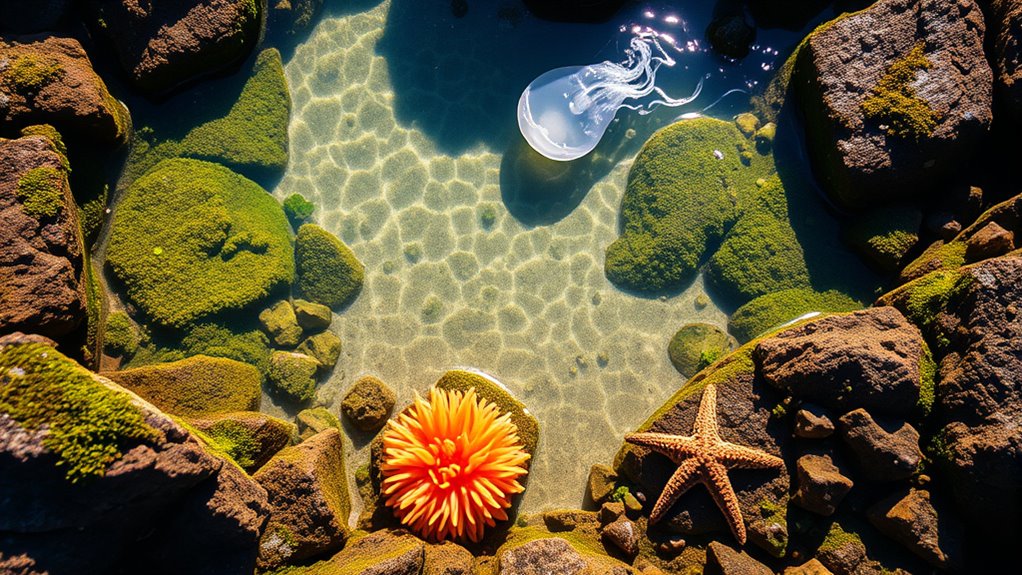

Tide pools are small, lively habitats formed along rocky coastlines where the ocean’s edge traps water during high tide. Here, you’ll find resilient creatures like snails, barnacles, sea stars, and colorful anemones, all adapted to survive waves, fluctuations in salinity, and temperature. These microhabitats support rich biodiversity, act as nurseries for young marine animals, and reveal nature’s incredible resilience. To uncover more about these fascinating ocean treasures, keep exploring what lies beneath their surfaces.

Prime made for students and young adults
- Fast, free delivery for dorm and study essentials
- Prime Video and Amazon Music included
- Member-only deals
Key Takeaways
- Tide pools are rich ecosystems where diverse marine organisms adapt to fluctuating conditions at the ocean’s edge.
- Creatures like sea stars, anemones, and mussels thrive by developing unique survival strategies such as tough shells and strong attachment.
- These habitats serve as nurseries for juvenile marine life, supporting the replenishment of coastal populations.
- Tide pools are natural laboratories for scientific research, offering insights into resilience and potential sources of novel compounds.
- Conserving tide pools preserves fragile species, promotes ecological balance, and fosters environmental awareness and education.
As an affiliate, we earn on qualifying purchases.
How Tide Pools Form and Their Unique Features

Tide pools form along rocky coastlines or within beach crevices where the ocean meets land. As the tides rise and fall, water gets trapped in depressions, creating small, seawater-filled basins. These pools can range from just inches to several feet deep and vary in size across the shoreline. The edges, often made of bedrock or boulders, hold water in place as the tide recedes, leaving behind an isolated aquatic environment. This process results in periodic immersion and exposure, which influences temperature, salinity, oxygen, and moisture levels. The rocky substrate provides a sturdy surface for marine plants and animals to attach, thrive, or hide. Tide pools are dynamic, ever-changing habitats shaped by tidal movements and physical features of the coastline. Understanding how these marine habitats form can deepen our appreciation for their ecological importance. The varying conditions within tide pools create a unique environment that supports diverse marine organisms, contributing to the overall health of coastal ecosystems. The physical features of the coastline, such as bedrock formations, play a crucial role in shaping the structure and stability of tide pools. Maintaining a positive energy and appreciating the unique marine life can enhance our understanding and connection to these fascinating ecosystems.
Challenges Faced by Marine Life in Tide Pools

Living in tide pools presents marine creatures with a constant struggle against harsh environmental conditions. During low tide, they face desiccation from exposure to the sun and dry air, risking dehydration. Temperature fluctuations can become extreme, challenging their ability to maintain stable internal conditions. Salinity levels often spike or drop unexpectedly, forcing animals and plants to adapt quickly or perish. Strong waves and turbulent water threaten to dislodge organisms, requiring them to cling tightly or hide in crevices. Predators, such as birds and crabs, have brief access during low tide, but when the tide rises, creatures must dodge larger predators and crashing waves. These relentless challenges demand remarkable adaptations for survival, shaping the tough, resilient communities found in tide pools. Additionally, some species develop specialized water retention mechanisms or shells to withstand desiccation and fluctuating conditions. Their ability to adapt rapidly to changing environments is crucial for their survival. Understanding the adaptations of tide pool inhabitants highlights the importance of marine resilience in sustaining life at the edge of the sea.
The Diverse Creatures That Call Tide Pools Home
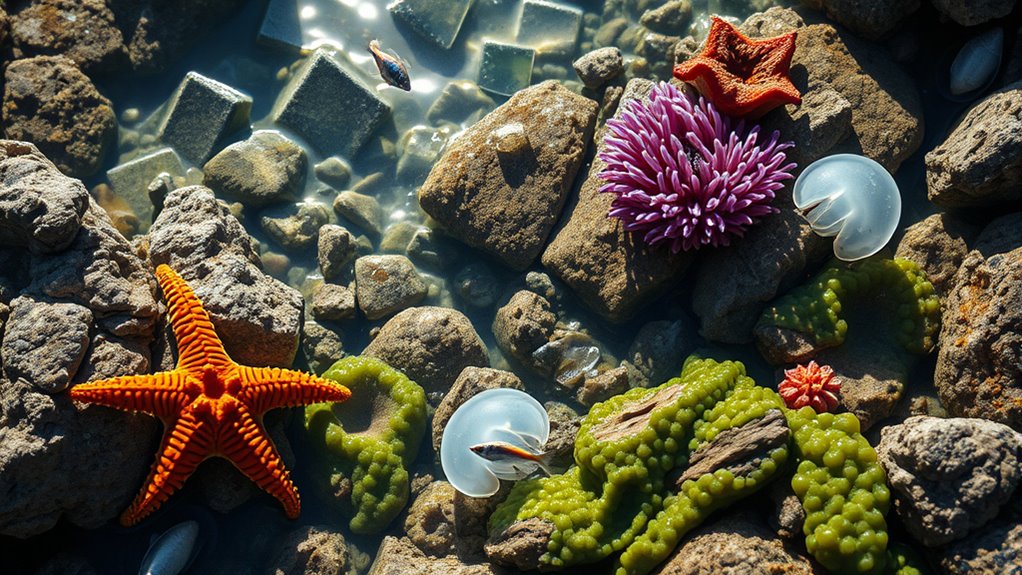
A variety of fascinating creatures thrive in tide pools, each adapted to survive the challenging conditions of this unique environment. You’ll find snails and barnacles firmly attached to rocks, their shells and cement helping them withstand wave action and desiccation. Mussels form dense beds, filtering water for nutrients. Sea stars and sea urchins move slowly across the substrate, grazing on algae and other small organisms. Anemones cling tightly, extending their tentacles to capture passing prey. Crabs and small fish scurry to hide among rocks and crevices, avoiding predators. Seaweeds and algae flourish in sunlight, providing oxygen and shelter. Many creatures have tough shells, sticky substances, or burrowing habits to endure exposure, making tide pools vibrant, resilient ecosystems full of adaptations. Interestingly, the prevalence of specific dog breeds often reflects their ability to adapt to various environments and lifestyles. Additionally, some tide pool inhabitants have specialized respiratory structures that enable them to breathe in fluctuating oxygen levels during low tide. For example, certain sea anemones possess cnidocytes that help in capturing prey and defending against predators. These respiratory adaptations are crucial for survival in the variable oxygen conditions characteristic of tide pool habitats.
Exploring the Different Zones and Microhabitats
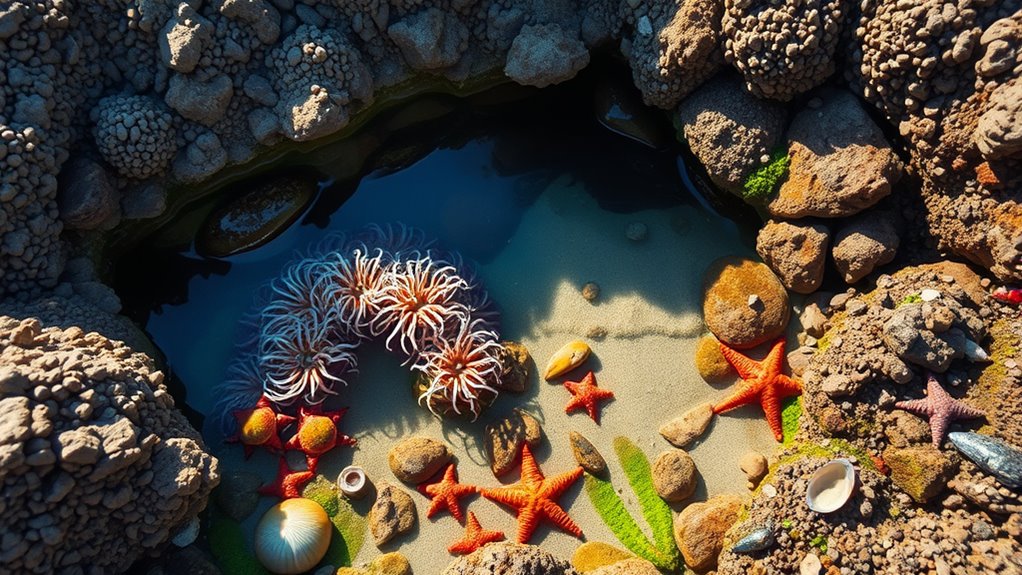
As you explore tide pools, you’ll notice that they are not all the same; instead, they form in various zones along the shoreline, each with distinct environmental conditions. The splash zone, rarely submerged, hosts hardy plants and lichens that tolerate exposure and salt spray. The high tide zone is covered only during high tides, so organisms here must survive long periods of exposure, often with specialized adaptations. In the middle tide zone, pools are submerged most of the time, supporting a mix of algae, barnacles, and invertebrates like mussels and sea stars. The low tide zone remains mostly underwater, providing a lush environment for diverse animals such as sea anemones, crabs, and fish. Microhabitats like crevices and beneath rocks further diversify ecosystems, offering shelter and unique niches for specialized species. Understanding the environmental gradients across these zones helps explain the distribution of different organisms and their adaptations to the varying conditions. Additionally, the availability of gold products like gold coins and jewelry in nearby shops can reflect local cultural influences, enriching the tide pool experience with a sense of history and value. Recognizing the signs of spoilage in marine environments can help protect these delicate ecosystems from human impact and pollution. Moreover, studying these zones can also reveal insights into species diversity, which is vital for conservation efforts.
The Ecological Significance and Human Connection to Tide Pools
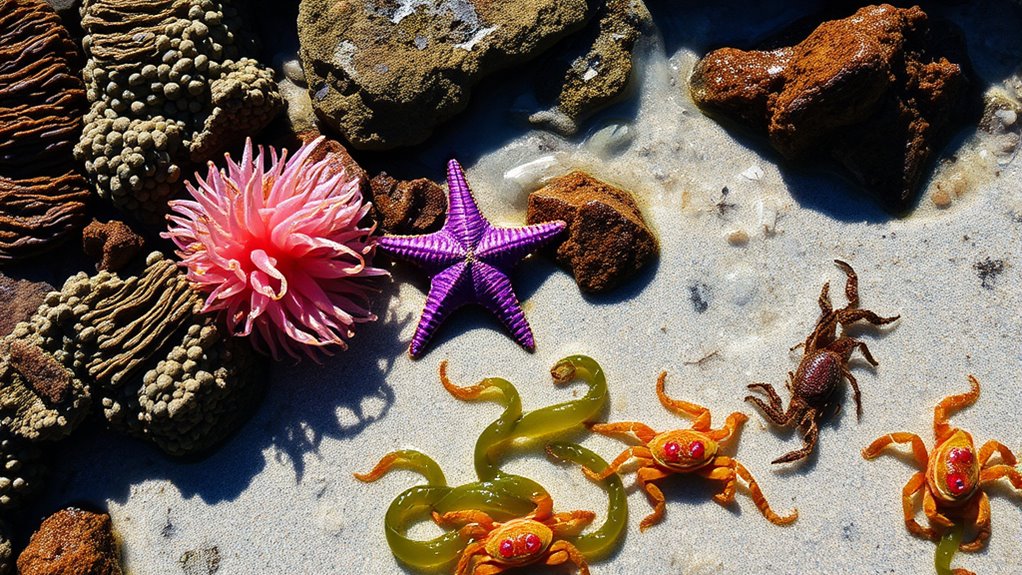
Tide pools hold immense ecological importance because they serve as vital hotspots of marine biodiversity and productivity. They provide essential habitats for many species, helping sustain local ecosystems and supporting food webs. These pools act as natural laboratories, offering opportunities to learn about marine life and ecosystem dynamics firsthand. Human connection to tide pools is strong—many enjoy exploring them, observing creatures, and appreciating nature’s resilience. Their accessibility makes them perfect for education and conservation efforts. Protecting tide pools helps preserve fragile species and maintains ecological balance. Additionally, they inspire curiosity and foster environmental stewardship. Their unique conditions allow species to adapt and thrive in fluctuating environments, demonstrating remarkable resilience and biological diversity. The diverse range of organisms found in tide pools also contributes to biotechnological innovations by providing unique compounds and biological processes for scientific research. They host diverse species adapted to survive in fluctuating conditions. Tide pools serve as nurseries for young fish and invertebrates. They inspire scientific research and biotechnological innovations. Conservation of tide pools supports broader coastal ecosystem health. They create lasting memories and connections with nature.
Frequently Asked Questions
How Do Tide Pools Recover After Environmental Disturbances?
When a tide pool experiences disturbances, you can help its recovery by ensuring minimal further impact. The ecosystem recovers through natural processes like regrowth of algae, re-establishment of invertebrates, and return of fish and other species. Protective measures, like avoiding trampling or removing debris, support these processes. Over time, the community rebalances as organisms recolonize, and the nutrient exchange with the ocean restores the health and diversity of the tide pool.
What Specific Adaptations Enable Tide Pool Animals to Survive Extreme Conditions?
You’ll find that tide pool animals have tough adaptations to survive extreme conditions. Many secrete adhesive substances or have hard shells to cling tightly and prevent desiccation. Others burrow under rocks or sand to avoid harsh surface exposure. Some tolerate fluctuations in salinity and temperature, while others can withstand crashing waves and predators. These specialized features help them endure the challenging environment of the intertidal zone, ensuring their survival amid constant change.
How Does Climate Change Affect Tide Pool Ecosystems?
You’ll find climate change impacts tide pool ecosystems by raising water temperatures, reducing oxygen levels, and altering salinity, which stresses marine life. These changes threaten species’ survival, disrupt food webs, and decrease biodiversity. You might notice fewer organisms thriving or shifts in community composition. As conditions become harsher, some animals and plants may struggle to adapt or migrate, risking the delicate balance that sustains these unique intertidal habitats.
Are Tide Pools Found in All Coastal Regions Worldwide?
You’ll find tide pools dancing along rocky coastlines in many parts of the world, but they’re not everywhere. These tiny seawater sanctuaries thrive in regions where the land meets the ocean’s whimsy—like North America, Europe, and parts of Asia and Australia. If the coast is rugged and exposed to the tides, chances are good you’ll see these miniature worlds, bursting with life and adventure.
How Can Visitors Help Protect Tide Pool Habitats?
You can help protect tide pool habitats by being respectful and careful during your visit. Avoid removing animals or plants, and never walk on or touch delicate organisms. Stick to designated paths, don’t disturb the environment, and take all trash with you. Educate others about the importance of these ecosystems, and support conservation efforts. Your mindful actions help ensure tide pools remain healthy and vibrant for future generations.
Conclusion
As you watch the sunlight dance on shimmering tide pools, you realize they’re like tiny worlds full of vibrant life. Each ripple and crevice holds a secret, a bustling microcosm teeming with colorful creatures. When you explore these edge-of-the-sea habitats, you connect with nature’s resilience and beauty. So next time you visit, take a moment to marvel at this underwater treasure trove, knowing you’re witnessing the magic that thrives at the ocean’s very edge.
Fall Picks
fall essentials
As an affiliate, we earn on qualifying purchases.