
A young activist’s persistent efforts, inspired by Milo Cress’s Be Straw Free campaign, can lead a city to ban plastic straws. By rallying community support, engaging local officials, and using social media to spread awareness, you can influence policy changes. Success stories from cities like Cairns show how youth-led initiatives make a real difference. If you keep exploring, you’ll discover how community efforts turn small actions into citywide environmental victories.
Key Takeaways
- A 10-year-old girl in Cairns launched a campaign inspiring the city to ban plastic straws.
- Her advocacy involved public outreach, community pledges, and engaging local businesses and officials.
- The campaign built grassroots support through school programs, social media, and community events.
- City officials responded by implementing a plastic straw ban, influenced by youth activism and community backing.
- The successful policy change demonstrated the power of youth-led initiatives in enacting environmental legislation.
The Spark Behind the Movement

What ignited the plastic straw ban movement was the remarkable initiative of a young boy named Milo Cress. At just nine years old in 2011, he started the Be Straw Free campaign to address plastic waste. Milo’s idea gained quick momentum as he rallied friends, schools, and local businesses to join his cause. His simple message emphasized how plastic straws contribute to pollution and how easy it is to refuse them. Milo’s passion caught the attention of community leaders and environmental groups, highlighting the widespread use of disposable straws—over 500 million daily in the U.S. alone. His grassroots effort showed that even a young voice could spark awareness and inspire action, setting the stage for broader change. Recognizing the importance of environmental awareness, his campaign demonstrated the power of youth-led initiatives in fostering sustainable habits. This movement also shed light on the significant impact small actions can have on reducing plastic pollution, proving that individual efforts can lead to community-wide change. Additionally, the rise of sustainable materials in products like reusable straws supports ongoing efforts to reduce single-use plastics.
Milo Cress and the Birth of Be Straw Free
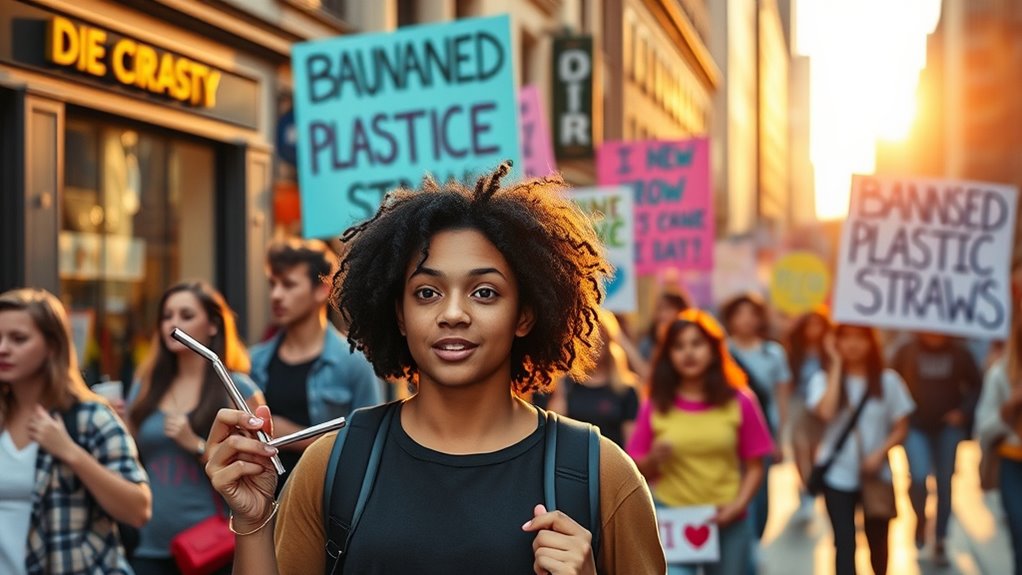
Milo Cress’s dedication to reducing plastic waste started with a simple idea that grew into a movement. At age nine, he launched Be Straw Free to challenge the widespread use of disposable plastic straws. His passion inspired others to pledge to refuse straws unless requested, raising awareness about plastic pollution’s impact. Milo’s efforts caught the attention of local communities and organizations, sparking policy changes and youth activism. The campaign demonstrated how a single voice could ignite a larger movement. To illustrate his impact, here’s a snapshot of his campaign’s milestones:
| Year | Action | Impact |
|---|---|---|
| 2011 | Launched Be Straw Free | Started youth-led straw reduction efforts |
| 2012 | Engaged local schools | Increased awareness and pledges |
| 2013 | Influenced local policies | Straw bans at community events |
| 2014 | Gained national attention | Expanded to other cities |
| 2015 | Inspired global campaigns | Worldwide youth activism |
This movement also highlights the importance of environmental awareness in shaping sustainable behaviors. Understanding mindful decluttering strategies can help communities better manage waste and reduce unnecessary consumption, reinforcing the importance of responsible environmental practices. Developing a clear understanding of color accuracy can further enhance the effectiveness of environmental campaigns by ensuring the visual materials are compelling and accurately represent the message. Additionally, fostering a sense of community engagement is essential to sustain long-term environmental initiatives and inspire collective action. Building collaborative efforts among youth and local organizations can amplify the campaign’s reach and foster ongoing environmental stewardship.
Building a Youth-Led Advocacy Network

Building a youth-led advocacy network requires strategic organization and collaboration among young activists committed to environmental change. You should start by connecting like-minded individuals who share your goals, creating a clear vision and shared mission. Use social media platforms to communicate, share ideas, and coordinate actions, making it easy to mobilize supporters quickly. Establish roles within your network, such as outreach coordinators, event organizers, and social media managers, to guarantee effective teamwork. Partner with local schools, community groups, and environmental organizations to expand your reach. Regular meetings and updates keep everyone engaged and aligned. Developing a strong communication strategy is essential for maintaining momentum and ensuring everyone stays informed. Building a supportive community helps foster motivation and resilience among activists. Creating a positive public image can also enhance your campaign’s credibility and influence. By building a strong, connected network, you amplify your voice, increase influence, and create a unified front to push for policy changes and shift public attitudes toward plastic reduction. Incorporating active listening and empathy into your outreach efforts can strengthen relationships within your network and with the broader community. Implementing necessary cookies ensures your website’s functionalities are maintained, supporting your advocacy efforts effectively.
Strategies to Engage Local Governments
Engaging local governments requires strategic outreach and compelling advocacy that resonates with policymakers and community stakeholders. To succeed, you need to present clear, data-backed reasons why banning plastic straws benefits the community and environment. Building relationships with local officials is essential; attend council meetings, participate in public comment periods, and offer solutions that align with their priorities. Utilizing public awareness campaigns can effectively demonstrate community support and influence policy decisions. Engaging community members in air quality improvements initiatives can also foster broader environmental responsibility and support for policy changes. Sharing success stories from other cities can provide compatibility insights that inspire effective strategies. Organize community events to demonstrate public support. Collaborate with environmental groups for joint advocacy. Provide cost-effective alternatives for local businesses. Use social media to amplify pressure and visibility. Recognizing the importance of specialized financial services can also help communities better understand and evaluate the options for funding and investment in environmental initiatives. Incorporating Gold IRA Rollovers into community financing plans can diversify funding sources and secure long-term investment in sustainability projects.
Success Stories From Cairns and Beyond

Success stories from Cairns and beyond demonstrate how youth-led advocacy can lead to meaningful change. In Cairns, a 10-year-old girl successfully campaigned for the regional council to ban plastic straws and support local businesses in shifting away from them. Her efforts inspired other councils, like Brisbane’s, to adopt similar policies at official events. Elementary groups such as “The Straw Girls” actively pushed for bans, gaining tentative support from authorities despite some resistance. These campaigns show that young people can influence local governments and foster community-wide shifts. Across different regions, schools, businesses, and communities have adopted straw-free pledges, reducing plastic waste and raising awareness. Moreover, hosting internal company hackathons can be an innovative way for organizations to develop creative solutions for environmental challenges, including plastic waste reduction. These successes highlight the power of youth activism to inspire policy changes and promote environmental responsibility at multiple levels. Additionally, such initiatives demonstrate how community engagement and collaborative efforts are essential for lasting environmental impact. Engaging youth in environmental advocacy has proven to be a highly effective strategy for fostering sustainable change and building future leaders committed to conservation. Furthermore, integrating education on eco-friendly practices into school curricula can amplify these efforts and ensure long-term community resilience. Utilizing innovative approaches like youth-led campaigns can further enhance the effectiveness of environmental initiatives and foster wider societal participation.
Measuring Impact: Reducing Plastic Straw Usage

Measuring the impact of plastic straw reduction efforts involves tracking changes in usage across various settings and evaluating how these shifts contribute to broader environmental goals. You can do this by monitoring data from restaurants, schools, and events that adopt straw-free policies. Comparing pre- and post-ban usage provides concrete evidence of progress. Additionally, tracking the number of pledges or commitments made helps gauge community engagement. You should also observe the reduction in plastic waste collected during cleanup drives. Finally, assessing media coverage and public awareness levels offers insight into how well the message is spreading. Incorporating data collection methods can enhance the accuracy of these measurements.
The Environmental and Cultural Significance of the Ban

You can see how banning plastic straws not only reduces pollution but also sparks a cultural shift toward environmental responsibility. This action amplifies the message that small changes matter and encourages communities to adopt sustainable habits. Ultimately, the ban’s symbolic power mobilizes public support and promotes broader conversations about plastic waste.
Environmental Benefits Amplified
The environmental benefits of the plastic straw ban extend beyond reducing waste; they serve as a powerful symbol that sparks broader eco-conscious behavior. When you see fewer straws, it reminds you that small actions can lead to significant change. This shift encourages communities to take on larger plastic reduction efforts, like cutting down on packaging or choosing sustainable products. As more people participate, the collective impact grows, helping protect marine life and ecosystems. Additionally, the ban highlights how targeted actions can influence corporate practices, prompting businesses to adopt greener policies. This ripple effect inspires ongoing environmental advocacy, making sustainability a shared priority.
- Reduces plastic waste in oceans and landfills
- Protects marine wildlife from ingestion and entanglement
- Encourages sustainable consumer habits
- Motivates businesses to innovate eco-friendly solutions
- Reinforces community commitment to environmental health
Cultural Shift Initiatives
Cultural shift initiatives surrounding the plastic straw ban have transformed environmental activism into a visible and socially accepted movement. By making straw reduction a shared goal, communities embraced a new environmental identity, encouraging collective responsibility. Social media campaigns like #StopSucking amplified this message, making eco-conscious choices trendy and accessible. Bans became more than policy; they became symbols of modern environmental values, inspiring businesses and individuals to adopt sustainable habits. Youth activism played a pivotal role, shifting public opinion and demonstrating that small actions can spark widespread change. This cultural momentum fostered a sense of pride and community around environmental stewardship, normalizing plastic reduction efforts and reinforcing the idea that collective effort can shape societal norms. The movement’s cultural impact continues to influence attitudes toward sustainability far beyond the initial goal.
Symbolic Power of Action
The plastic straw ban wields powerful symbolic significance by transforming a simple consumer choice into a visible act of environmental responsibility. It shows that small actions can carry big meaning, inspiring individuals and communities to prioritize sustainability. This movement encourages people to see their habits as part of a larger effort to protect oceans and wildlife. It also shifts social norms, making eco-conscious decisions more accepted and celebrated. The act of refusing a straw becomes a statement of values, fostering a culture of environmental activism.
- Turns everyday decisions into visible statements
- Highlights the importance of small, collective actions
- Inspires broader conversations on plastic pollution
- Reinforces social acceptance of eco-friendly habits
- Demonstrates youth-led influence on public attitudes
Overcoming Challenges and Resistance

You’ll encounter legal and political hurdles as officials weigh the environmental benefits against economic concerns and existing regulations. Public skepticism and resistance can also slow progress, especially when people see bans as inconvenient or unnecessary. Addressing these challenges requires clear communication and persistence to build support and overcome opposition.
Legal and Political Hurdles
Legal and political hurdles often slow down efforts to implement plastic straw bans, as officials and stakeholders weigh environmental benefits against economic and practical concerns. You might face resistance from businesses worried about costs or customer preferences. Local regulations can vary, making uniform policies difficult. Some politicians see bans as overreach or unnecessary interference. Lobby groups may oppose restrictions, citing economic impacts or personal freedoms. Legal battles over the authority to impose bans can delay progress. Additionally, political disagreements and competing priorities often stall decision-making. You’ll need to navigate these obstacles by building coalitions, presenting clear evidence, and addressing concerns directly. Overcoming such hurdles requires persistence, strategic communication, and a focus on the broader environmental and community benefits.
Public Skepticism and Resistance
Public skepticism and resistance often challenge efforts to implement plastic straw bans, as many people question their necessity or effectiveness. You might hear critics say that straws are a minor part of plastic pollution and that banning them won’t profoundly reduce environmental harm. Some believe the bans are more about image than impact, viewing them as virtue signaling rather than real solutions. Others worry about inconvenience, especially for people with disabilities who rely on straws. Local officials may hesitate to endorse bans, fearing backlash or political pushback. You’ll encounter resistance from businesses concerned about customer satisfaction or potential revenue loss. Overcoming this skepticism requires clear communication about the environmental benefits and emphasizing that small changes can lead to big impacts over time.
The Power of Social Media and Public Support

How has social media amplified the movement to ban plastic straws? It has turned local efforts into a national and global conversation. Platforms like Twitter, Instagram, and TikTok spread awareness quickly, making the issue visible and urgent. Hashtags like #StopSucking and #StrawFree gained momentum, encouraging others to join the cause. Social media also allows young activists to share their stories, rally support, and hold businesses and governments accountable. It creates a sense of community, showing that change is possible when many unite. This digital buzz influences public opinion and pressures officials to act.
- Viral campaigns boost awareness
- Youth voices gain prominence
- Businesses adopt eco-friendly policies
- Public accountability increases
- Global movement grows rapidly
From Local Action to Citywide Change

You can see how youth advocacy success often sparks wider policy changes when young activists persuade local councils to adopt straw bans or offer first policies. These strategies, like public petitions and community campaigns, demonstrate how grassroots efforts can influence citywide regulations. By building on local victories, communities can create momentum for broader environmental reforms across the entire city.
Youth Advocacy Success
Youth activism has proven to be a powerful catalyst for turning local concerns into citywide policy changes. Your efforts, like Milo Cress’s initial campaign, show how young voices can influence decision-makers. By organizing petitions, speaking at council meetings, and rallying community support, you helped push local governments to adopt straw bans. Your involvement demonstrated that even small actions can lead to big change.
- Mobilized peers through social media campaigns like #StopSucking
- Persuaded councils to endorse straw reduction policies
- Inspired schools and businesses to join pledges
- Created awareness about plastic pollution’s impact
- Showed that youth voices matter in shaping environmental policy
Your advocacy turned a simple idea into a citywide movement, proving youth can lead meaningful change.
Policy Implementation Strategies
Effective policy implementation transforms local straw reduction efforts into citywide change by combining strategic planning, stakeholder engagement, and clear communication. You start by building consensus among key players—restaurants, schools, businesses, and government officials—ensuring everyone understands the environmental benefits. Develop a phased approach, like starting with voluntary pledges, then progressing to formal bans or “offer first” policies. Use data to track progress and demonstrate success, which helps build momentum. Keep communication transparent by sharing updates and celebrating milestones. Engage the community through social media and public events to sustain support. Address resistance directly, explaining the environmental impact and emphasizing the ease of switching to alternatives. This strategic, inclusive process turns grassroots efforts into broad, enforceable citywide policies.
Frequently Asked Questions
How Did Youth Activism Influence Local Government Policies on Plastic Waste?
You see, youth activism directly influences local government policies by raising awareness and rallying community support. When young activists push for bans or policies, they persuade officials to act, like in Cairns or Brisbane. Your involvement through campaigns, petitions, and social media shows policymakers that environmental issues matter to their constituents. This pressure helps turn grassroots ideas into official regulations, making governments more responsive to youth-led environmental advocacy.
What Are the Environmental Benefits of Banning Plastic Straws Specifically?
You reduce plastic pollution by banning straws because they’re a highly visible symbol of single-use waste. Eliminating them helps prevent marine life harm, lowers landfill accumulation, and encourages people to rethink disposable plastics. Since straws are easy to substitute or refuse, your actions promote environmental awareness and behavior change. This small step can lead to broader reductions in plastic use, making ecosystems healthier and fostering sustainable habits in communities.
How Do Straw Bans Impact Businesses and Consumers Practically?
Straw bans make it easier for you to reduce plastic waste, encouraging eco-friendly habits. As a consumer, you’ll likely notice fewer plastic straws at cafes and restaurants, which may lead you to choose more sustainable options. For businesses, implementing straw-free policies can streamline operations, save costs on plastic supplies, and boost their environmental reputation. Overall, these bans promote greener choices without causing significant inconvenience, fostering a culture of sustainability.
Are Straw Bans Effective in Reducing Overall Plastic Pollution?
Straw bans can contribute to reducing plastic pollution, but their impact often depends on broader consumer behavior changes. By eliminating plastic straws, you help decrease single-use waste that harms marine life and ecosystems. While straws are a small part of overall plastic pollution, their bans raise awareness and encourage more responsible plastic use. When you support such policies, you’re helping foster a culture of environmental mindfulness that can lead to larger waste reductions.
What Role Do Social Media Campaigns Play in Environmental Advocacy?
Social media campaigns amplify your message and raise awareness about environmental issues. They help you connect with a broader audience quickly, encouraging more people to join your cause. By sharing impactful stories, images, and hashtags like #StopSucking, you inspire behavioral change and influence public opinion. These platforms also hold companies and governments accountable, making environmental advocacy more visible, engaging, and effective in driving policy changes and community action.
Conclusion
You see, your passion and persistence propel progress. By bravely bridging barriers and boldly battling backlash, you become a beacon for change. Your dedication demonstrates that determined decisions, driven by desire, can dismantle detriments and deliver a cleaner community. So, stand strong, stay spirited, and endeavor to spark similar shifts. Because when you champion change, you inspire others to act, amplifying awareness and advancing a more eco-friendly, empowered environment.