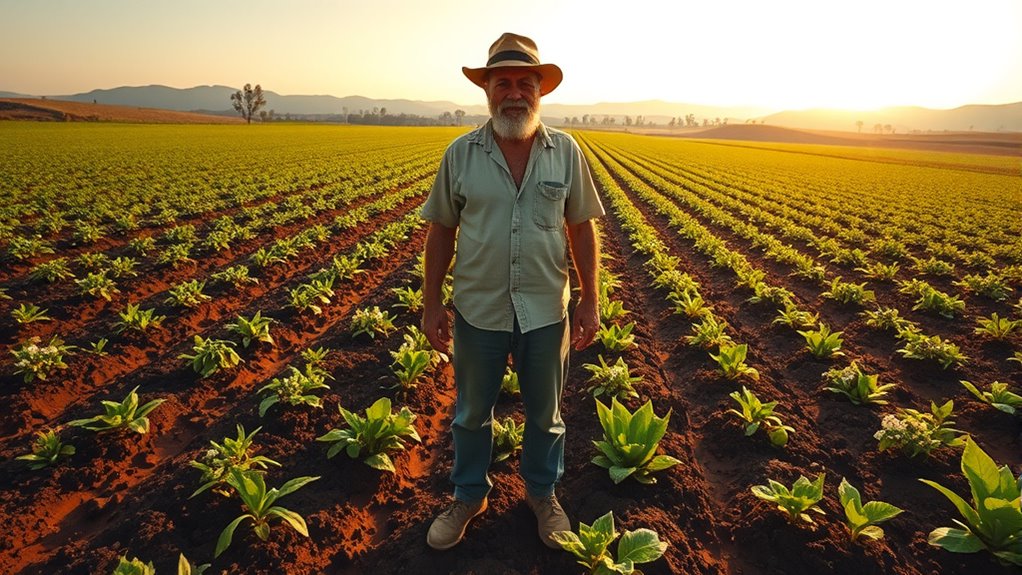

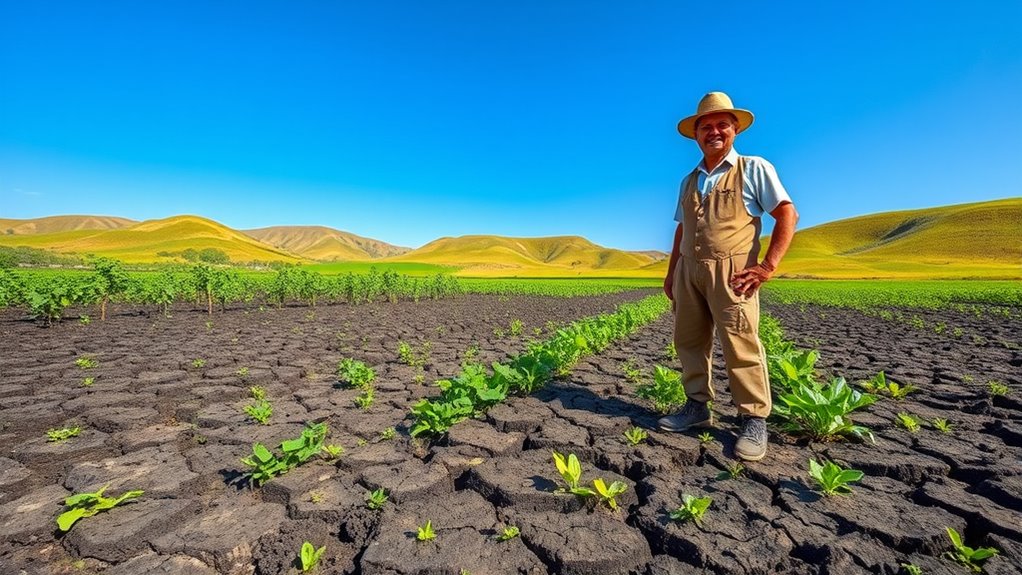
You can transform lifeless, degraded soil into lush farmland by recognizing early signs like crusted surfaces and poor plant growth. Adopt regenerative practices such as no-till farming, cover cropping, and integrating livestock to boost organic matter and nutrients. Plant trees and diverse crops to improve soil structure and resilience. Monitoring progress closely and adjusting strategies are key. Continuing this journey reveals how these methods turn dust into a thriving, vibrant ecosystem.
Key Takeaways
- The farmer recognized early signs of soil degradation, such as crusting and low organic matter, prompting targeted restoration efforts.
- Implemented no-till farming, cover cropping, and organic amendments like compost to rebuild soil structure and fertility.
- Used livestock manure and managed grazing to naturally enhance nutrient cycling and improve soil aeration.
- Promoted biodiversity through diverse planting, trees, and beneficial organisms, strengthening ecosystem resilience.
- Regular monitoring and adaptive management techniques accelerated soil regeneration, transforming barren land into productive farmland.
Recognizing the Signs of Degraded Land
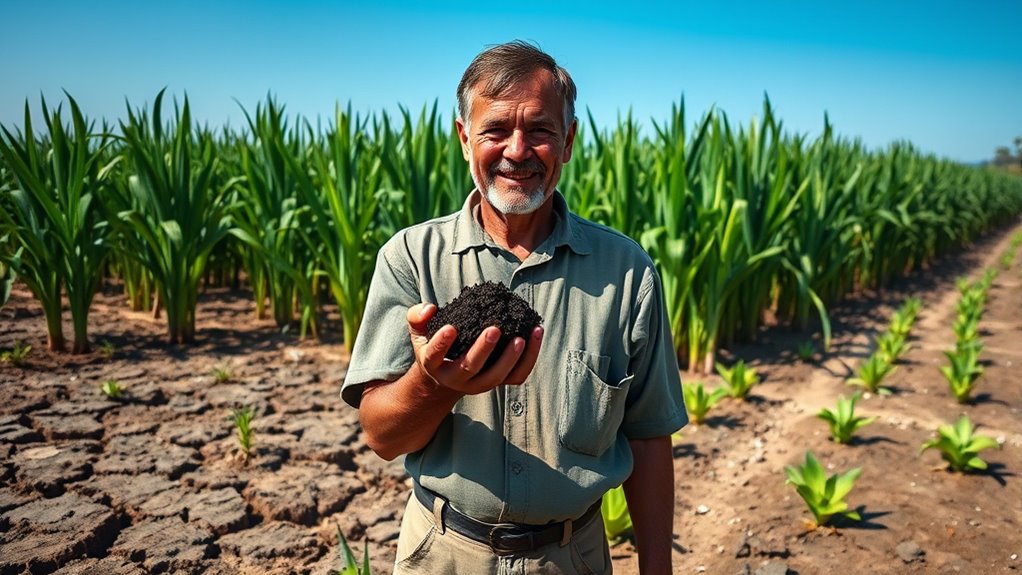
Degraded land often shows clear signs that your soil health is declining. You might notice a crusted surface that prevents water from soaking in or a lack of plant cover, leaving soil exposed to erosion. If plants struggle to establish or produce weak growth, it signals poor soil fertility or compaction. Gummy, patchy, or uneven soil structure can indicate low organic matter levels. You may also see increased runoff during rains or find that water drains too quickly, reducing soil moisture. A noticeable decrease in soil microbes or earthworms suggests disrupted ecosystems. These signs mean your land isn’t functioning properly, making it harder to sustain healthy crops. Recognizing these issues early allows you to take action and restore your soil’s vitality before damage becomes irreversible. Expert advice can help you identify and address these problems effectively. Additionally, incorporating organic soil amendments can accelerate soil recovery and improve overall fertility. Being aware of soil restoration techniques can further support your efforts to rehabilitate degraded land.
Adopting No-Till and Cover Cropping Strategies

Adopting no-till and cover cropping strategies is a powerful way to rebuild soil health and boost farm resilience. No-till farming reduces soil disturbance, allowing organic matter to accumulate and microbes to thrive. This improves water retention, enhances nutrient availability, and decreases erosion. Cover crops protect bare soil from weather damage, suppress weeds, and add organic matter when they decompose. They also support beneficial soil organisms and help sequester carbon. By maintaining a continuous cover, you foster a healthy, resilient ecosystem beneath the surface. These practices reduce input costs, improve water efficiency, and strengthen crop roots. Over time, they rebuild soil structure, increase fertility, and create a robust foundation for sustainable farming. Incorporating natural materials such as compost and straw further enhances soil regeneration. Recognizing the importance of soil microbiome health is crucial for sustainable land management. Additionally, advancements in electric bike conversion kits demonstrate how innovative technology can promote sustainable transportation options. Together, no-till and cover cropping transform degraded land into productive, resilient farmland.
Introducing Livestock to Enhance Soil Fertility
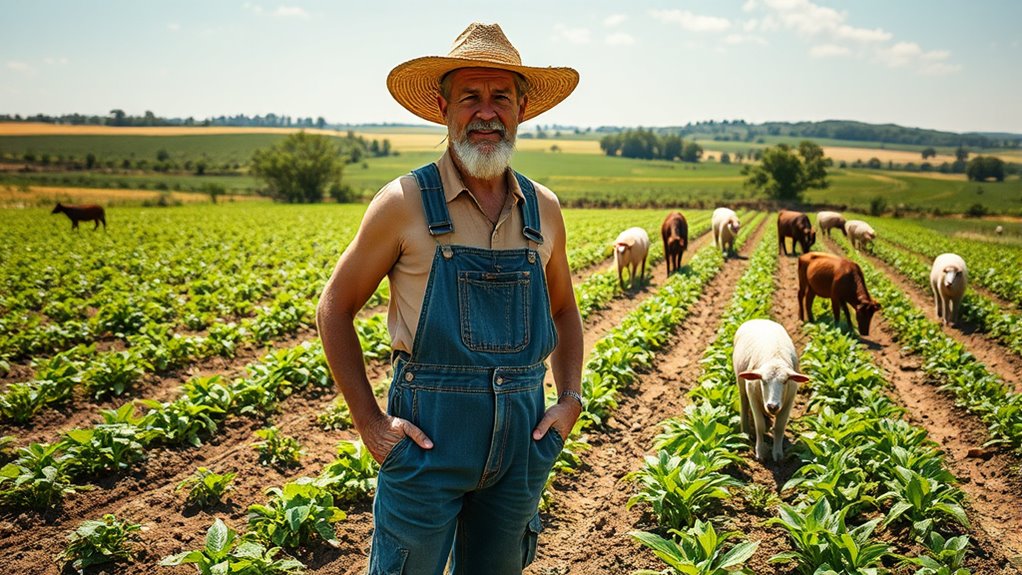
Introducing livestock into your land creates a natural fertilizer cycle, returning nutrients to the soil through manure. Their movement also aerates the soil, improving water infiltration and root growth. Plus, managed grazing boosts biodiversity, supporting a resilient and healthy ecosystem. Incorporating wall organization systems can further optimize space and promote a tidy environment for sustainable farming practices. Additionally, selecting dog names that reflect your farm’s personality can foster a stronger bond with your animals and enhance the farm’s identity. Regular monitoring of soil health and effective pasture management practices can help sustain these benefits over time. Implementing soil regeneration techniques can further accelerate the recovery of degraded land, ensuring long-term productivity and sustainability. Understanding local laws related to livestock and land use can also help prevent legal issues and promote compliance.
Natural Fertilizer Cycle
Adding livestock to your farm can naturally boost soil fertility through a dynamic fertilizer cycle. As animals graze, they deposit manure directly onto the land, enriching the soil with essential nutrients. Their movement helps incorporate organic matter, stimulating microbial activity and improving soil structure. Properly managed grazing ensures manure is evenly distributed, fostering a balanced nutrient cycle.
| Livestock Activity | Soil Benefits |
|---|---|
| Manure deposition | Adds organic matter and nutrients |
| Grazing | Stimulates plant growth and roots |
| Movement | Enhances aeration and soil mixing |
This cycle creates a sustainable loop: animals feed the land, which in turn produces healthier crops, supporting future livestock and farm vitality. Proper management keeps this system balanced, enriching the soil naturally and reducing dependence on synthetic fertilizers.
Soil Aeration Benefits
Have you considered how livestock movement naturally aerates soil, boosting its health and fertility? When animals graze and trample, they create tiny channels that improve air circulation within the soil. This process enhances oxygen availability for microbes and plant roots, which is essential for nutrient uptake and organic matter decomposition. As livestock manure is naturally deposited, it supplies nutrients directly to the soil, promoting microbial activity and organic matter buildup. The physical disturbance also reduces soil compaction, increasing water infiltration and retention. Over time, these effects lead to healthier soil structure, better root growth, and increased fertility. Properly managed grazing not only improves soil aeration but also encourages a vibrant, resilient ecosystem that supports sustainable farming and regenerates degraded land. Additionally, integrating Best Airless Paint Sprayers into land management practices can facilitate efficient maintenance and restoration efforts on large-scale farms. Moreover, understanding soil health principles can help farmers optimize grazing strategies for long-term productivity.
Biodiversity Through Grazing
Grazing livestock play a critical role in boosting soil biodiversity and fertility by continuously disturbing and enriching the soil ecosystem. Their movement promotes nutrient cycling, aerates the soil, and stimulates plant growth. Proper managed grazing encourages diverse plant species, which in turn supports a wide range of microbes and insects essential for soil health. You’ll see increased organic matter as manure and plant residues decompose, building a resilient soil structure. This process reduces erosion, improves water retention, and enhances carbon sequestration. Additionally, soil health principles highlight the importance of equitable resource sharing, which can be applied to managing grazing land to ensure sustainable and productive ecosystems. Incorporating meditative awareness into land management practices can further enhance the understanding of natural processes and promote harmony with the environment. Emphasizing sustainable practices helps maintain long-term soil vitality and ecological balance. Recognizing the role of regenerative agriculture can lead to more effective strategies for restoring degraded soils and supporting biodiversity.
Implementing Diverse Crop Rotations for Resilience

By rotating different crops, you can break pest and disease cycles that threaten your soil. This diversity also boosts soil fertility naturally, reducing your reliance on synthetic inputs. Plus, varying plant species encourages biodiversity, making your farm more resilient to environmental stresses. Implementing crop rotations can also optimize predictive analytics to better forecast crop yields and manage resources effectively. Additionally, diversifying crops can enhance soil health through natural nutrient replenishment and microbial activity. Incorporating soil microbiome diversity further supports nutrient cycling and plant growth, strengthening the overall resilience of your farmland. Recognizing the importance of integrated pest management can help in maintaining healthy crops without excessive chemical use. Developing a comprehensive financial management plan ensures the sustainability of your farming practices amid fluctuating market conditions.
Break Pest Cycles
Implementing diverse crop rotations is a proven strategy to break pest cycles and enhance farm resilience. By changing crops each season, you prevent pests from establishing a steady food source, reducing infestations over time. Rotations disrupt pest life cycles, making it harder for them to adapt and survive. This approach also encourages beneficial insects and natural predators to thrive, further controlling pests naturally. Additionally, understanding arcade game mechanics can help farmers manage their agricultural expenses and investments more effectively, ensuring financial stability as they adopt sustainable practices.
Enhance Soil Fertility
Diverse crop rotations are a powerful way to boost soil fertility and build resilience on your farm. By switching crops, you prevent pests and diseases from settling in, while also promoting healthy soil biology. Different plants have unique root systems and nutrient needs, which helps balance soil nutrients naturally. This reduces the need for synthetic inputs and enhances organic matter. Incorporate cover crops or legumes to fix nitrogen and protect against erosion. Use the following table to plan your rotations effectively:
| Crop Type | Benefits |
|---|---|
| Legumes | Fix nitrogen, improve soil health |
| Grains | Build organic matter |
| Cover Crops | Protect soil, suppress weeds |
| Root Crops | Break pest cycles, loosen soil |
Implementing these strategies keeps your soil alive, healthy, and productive.
Foster Biodiversity
Introducing a variety of crop rotations enhances farm resilience by creating a more dynamic and balanced ecosystem. When you diversify your crops, you disrupt pest and disease cycles, reducing reliance on chemicals. Different plants attract diverse beneficial insects and microbes that support soil health. Rotating crops also prevents soil depletion, maintaining nutrient balance naturally. Additionally, diverse plant roots improve soil structure and water retention. This resilience helps your farm withstand extreme weather and pest pressures.
- Break pest and disease cycles with different crops
- Attract beneficial insects and microbes
- Maintain soil nutrients naturally
- Improve soil structure and water retention
Integrating Trees and Perennials for Long-Term Health
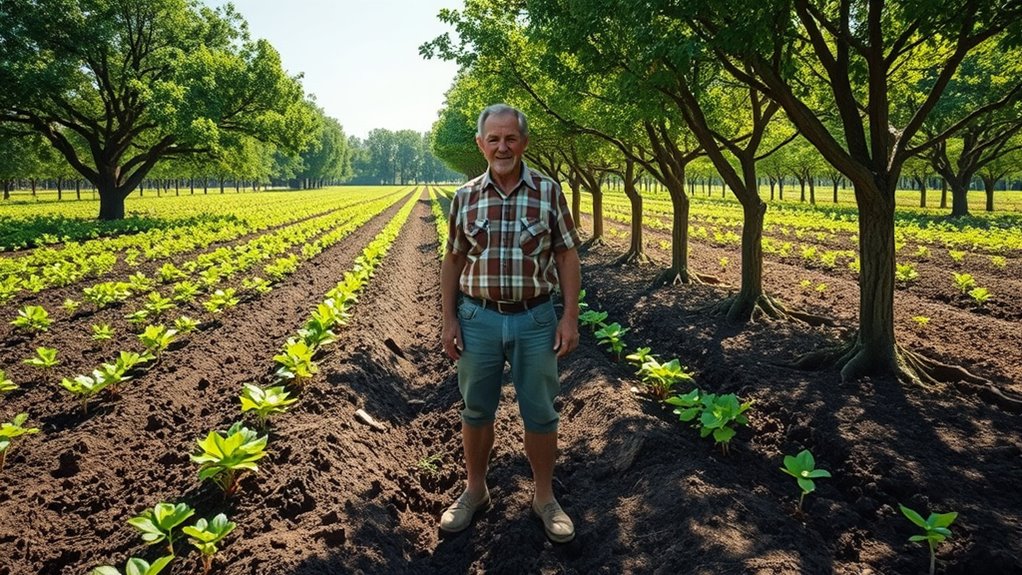
By integrating trees and perennial plants into your farming system, you create a resilient landscape that supports long-term soil health. Trees anchor the soil with their roots, reducing erosion and enhancing water retention. Perennials, with their deep root systems, continuously add organic matter, fostering microbial activity and building soil structure. These plants provide year-round cover, protecting soil from weather extremes and minimizing disturbance. Their presence encourages biodiversity, attracting beneficial insects and fungi that improve nutrient cycling. Additionally, trees and perennials sequester carbon both aboveground and within the soil, contributing to climate mitigation. This integrated approach creates a self-sustaining system that enhances fertility, stabilizes the land, and guarantees productivity for generations to come. It’s a crucial step toward regenerating and maintaining healthy, resilient farmland.
Monitoring Progress and Adjusting Practices
To guarantee your regenerative practices effectively improve soil health and farm productivity, continuous monitoring is essential. You need to track key indicators regularly to see what’s working and what needs adjustment.
- Conduct soil tests to measure organic matter, nutrient levels, pH, and microbial activity.
- Observe crop growth, root development, and plant health for signs of nutrient deficiency or stress.
- Monitor erosion patterns, water retention, and infiltration to evaluate soil stability.
- Keep detailed records of planting dates, cover crop success, and grazing schedules to identify correlations and optimize timing.
Transforming Dust Into a Thriving Ecosystem

Turning dust into a thriving ecosystem requires intentional management that rebuilds soil structure, enhances organic matter, and fosters microbial life. You start by reducing tillage, allowing soil to retain moisture and organic material naturally. Cover cropping shields the soil from erosion, adds organic residue, and promotes beneficial microbes. Incorporating animals through managed grazing introduces nutrients and aerates the soil, boosting microbial activity. Plant diverse crops in rotation to disrupt pest cycles and improve soil health, while integrating trees and shrubs strengthens ecosystems, reduces erosion, and sequesters carbon. These combined practices gradually transform barren dust into a vibrant landscape filled with life. As microbial communities grow and organic matter increases, your soil becomes more resilient, fertile, and capable of supporting lush plant growth that sustains both the environment and your farm.
Frequently Asked Questions
How Quickly Can Degraded Soil Show Signs of Recovery?
Degraded soil can start showing signs of recovery within a few months if you adopt regenerative practices like cover cropping, reduced tillage, and adding organic matter. You’ll notice improved water retention, increased biodiversity, and healthier plant growth relatively quickly. However, full restoration of soil health and organic matter levels may take several years, depending on the severity of degradation and your management efforts. Consistent practices accelerate recovery and build resilient soil over time.
What Are Common Mistakes When Transitioning to No-Till Farming?
Imagine planting your first no-till crop only to see poor germination and erosion. A common mistake is neglecting soil cover, leaving soil exposed to elements. You might also skip soil testing, leading to nutrient deficiencies. Failing to adapt equipment or rushing the changeover can disrupt soil biology. Take your time, maintain cover, and monitor soil health closely to guarantee a successful no-till shift that rebuilds your land sustainably.
How Do Livestock Specifically Improve Soil Microbial Diversity?
Livestock improve soil microbial diversity by adding organic matter from manure, which feeds beneficial microbes. Their movement aerates the soil, creating spaces for microbes to thrive. Grazing encourages plant growth, providing roots and exudates that support diverse microbial communities. Managed grazing helps balance nutrient cycling and reduces compaction, fostering a healthy, resilient soil ecosystem. This dynamic process boosts microbial diversity, ultimately enhancing soil fertility and plant health.
What Crop Rotation Combinations Best Support Soil Health?
You might think sticking to one crop is easiest, but the best crop rotations for soil health mix it up. Combine legumes like beans or peas to fix nitrogen, with deep-rooted crops like radishes to break up soil and improve structure. Follow with cover crops or small grains to boost organic matter. This diversity reduces pests, prevents erosion, and keeps your soil lively—proving that variety truly is the spice of healthy soil.
How Do Trees Contribute to Carbon Sequestration Beyond Shade?
Trees contribute to carbon sequestration beyond shade by actively capturing atmospheric carbon through their leaves and roots. When they grow, they store carbon in their wood, leaves, and root systems, which eventually transfers to the soil as organic matter when leaves fall or roots decompose. This process helps reduce greenhouse gases, improves soil fertility, and enhances overall farm resilience, making trees essential for sustainable land management.
Conclusion
Think of your land as a canvas waiting to be revived. With patience and the right practices, you can turn barren, dusty soil into a vibrant masterpiece. Every step you take—whether adopting cover crops, adding livestock, or planting trees—acts like a brushstroke that brings your farmland back to life. Stay attentive and flexible, and watch as your efforts transform dust into a lush, thriving ecosystem you can be proud of.