Divers are transforming shipwrecks into vibrant coral reefs by encouraging natural colonization processes and using innovative materials like eco-friendly concrete and 3D-printed structures. These artificial reefs quickly attract marine life, boosting biodiversity and supporting local fisheries. They also provide habitats for top predators and nursery grounds for juvenile fish. Balancing ecological health with tourism benefits is key. To discover how these efforts create thriving marine ecosystems and the technologies behind them, keep exploring further.
Key Takeaways
- Divers are transforming shipwrecks into artificial reefs by promoting coral settlement and marine organism colonization.
- Innovative materials like eco-concrete and 3D-printed structures accelerate coral growth on wrecks.
- Restoration efforts include cleaning and designing wrecks to optimize habitat complexity for marine life.
- Monitoring and management ensure invasive species control and ecological balance in reef development.
- These projects boost local tourism, fisheries, and conservation while creating vibrant underwater ecosystems.
The Ecological Significance of Shipwrecks as Artificial Reefs

Shipwrecks serve as essential artificial reefs that enhance marine biodiversity by providing complex habitats for a wide range of species. When you explore these submerged structures, you’ll notice how they attract reef fishes, top predators, and invertebrates, creating vibrant, bustling communities. Unlike rocky reefs, shipwrecks often host higher fish abundances and biomass, thanks to their intricate architecture. They support greater species richness and diversity, sometimes surpassing natural reefs in complexity. As they age, shipwrecks undergo succession, with invertebrates settling first, paving the way for larger organisms. These structures also serve as refuges at range edges for tropical fishes and support key species crucial for commercial and recreational fishing. In doing so, shipwrecks become vital components in sustaining healthy, productive marine ecosystems. Additionally, the development of artificial reef structures like shipwrecks can influence local conservation efforts and promote biodiversity resilience. Furthermore, these structures often attract marine organisms, contributing to overall ecosystem health and stability. Over time, their presence can also facilitate species recruitment, helping sustain populations in surrounding areas. The increased complexity of shipwrecks can also aid in habitat connectivity, which is crucial for the migration and dispersal of marine species. Research indicates that the structural diversity provided by shipwrecks enhances ecological resilience, enabling ecosystems to recover from disturbances more effectively.
Transforming Wrecks Into Biodiverse Marine Habitats

Transforming sunken wrecks into thriving, biodiverse habitats involves deliberate efforts to enhance their ecological value. You can support this by carefully selecting materials and designs that promote marine life colonization. Installing structures like coral tiles or additional substrates encourages coral attachment and growth. Managing invasive species is vital to prevent disruptions in native communities, so regular monitoring helps remove unwanted organisms. Promoting structural complexity creates microhabitats that attract a variety of species, from invertebrates to top predators. You can also facilitate nutrient flow and water circulation around wrecks to boost biological productivity. Using marine-friendly materials is essential for minimizing environmental impact and promoting healthy reef development. Additionally, implementing sustainable practices ensures that intervention efforts do not harm existing ecosystems. These targeted interventions accelerate natural succession, increasing biodiversity and fostering resilient marine ecosystems that benefit both wildlife and local communities. Incorporating ecological principles into restoration efforts helps maintain long-term stability and resilience of these habitats. Recognizing the importance of environmental impacts of human activities guides sustainable intervention strategies to protect marine biodiversity. Employing cost-effective measures can also help maximize the ecological benefits within budget constraints, ensuring long-term success of reef restoration projects.
From Rust to Reef: The Natural Recovery Process

When a sunken vessel remains undisturbed over time, natural recovery processes gradually transform it into a thriving reef. Marine organisms, like barnacles, corals, and algae, begin colonizing its surfaces, creating a complex habitat. Over months and years, these early settlers stabilize the structure, making it more hospitable for other species. Coral larvae settle on the wreck, and with favorable conditions, they grow and expand, increasing cover rates comparable to natural reefs. Metal and concrete materials foster rapid coral recruitment, often reaching significant coverage within a few years. As in natural reef systems, succession occurs: invertebrates establish first, followed by fish and larger predators attracted by the increasing complexity. This natural progression turns rusted metal into vibrant, living ecosystems, supporting biodiversity and ecological resilience. Additionally, understanding the vibrational energy of the environment can influence the speed and success of reef development, as positive energetic conditions promote healthier growth and diversity. Recognizing the importance of marine habitat health can further enhance conservation efforts and long-term reef sustainability. Moreover, the presence of home furnishings or other debris can sometimes aid in providing initial structure for colonization, although natural materials typically promote healthier reef development. Research indicates that the material composition of wrecks significantly impacts the types of marine life that colonize them, emphasizing the importance of materials in reef development.
Innovative Materials and Technologies in Coral Restoration
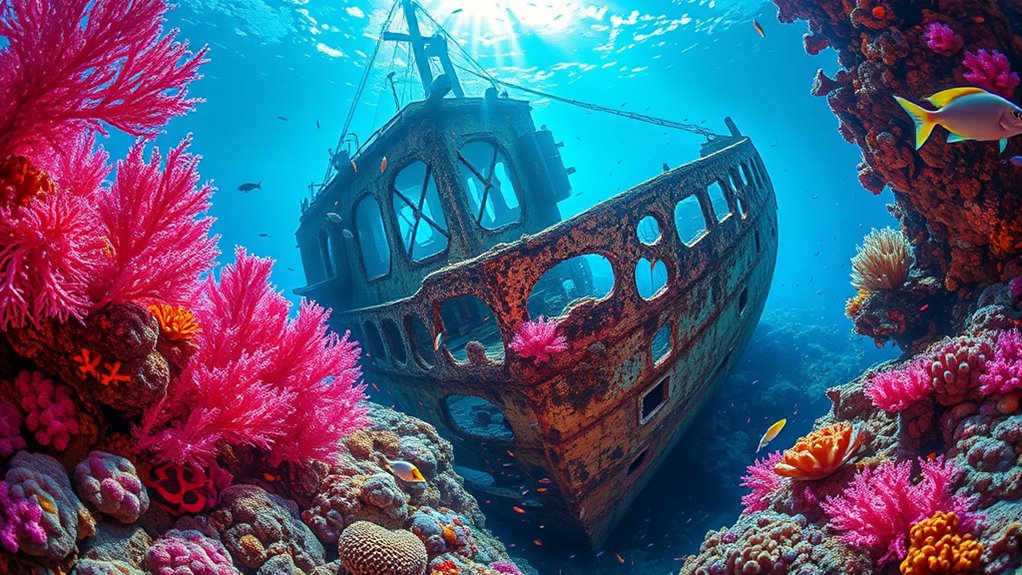
You can now explore how innovative materials like 3D-printed concrete structures are accelerating coral restoration efforts. These advancements allow for customized, rapid deployment of reef habitats that mimic natural formations. Additionally, eco-friendly construction materials reduce environmental impacts while providing durable surfaces for coral growth. The use of natural materials in design not only enhances the structural integrity but also supports the overall sustainability of restoration projects. Moreover, research supports the effectiveness of 16PF traits in selecting materials and methods that align with environmental resilience and project success. Establishing a financial settlement time limit can also facilitate timely funding and resource allocation for these environmental initiatives, ensuring project continuity and success.
3D Printing Innovations
Innovative materials and advanced technologies are revolutionizing coral restoration efforts by enabling the rapid and effective creation of artificial reef structures. 3D printing, in particular, allows you to produce complex, customized reef modules using materials like concrete, resin, and biodegradable composites. This technology offers precision in replicating natural reef textures and structures, which encourages coral attachment and growth. You can design reef modules tailored to specific ecological needs, speeding up deployment times and reducing costs. 3D printing also minimizes waste by using only the necessary material. Additionally, it opens opportunities for creating intricate microhabitats that support diverse marine life. Utilizing sustainable materials in 3D printing processes further reduces environmental impact and supports conservation goals. The ability to customize reef designs ensures that each project can meet unique ecological challenges. Moreover, emerging biodegradable composites facilitate the development of eco-friendly reef structures that naturally integrate into marine environments. The integration of advanced manufacturing techniques accelerates reef restoration, enhances structural resilience, and enables scalable solutions for rebuilding vibrant, functional coral ecosystems. Incorporating digital modeling allows for precise simulations of reef growth and environmental interactions, improving restoration success rates.
Eco-Friendly Construction Materials
Eco-friendly construction materials are transforming coral restoration by providing sustainable options that minimize environmental impact. You can now choose materials like eco-concrete, which uses recycled aggregates and reduces carbon emissions. These materials promote coral attachment and growth, accelerating recovery efforts. Metal and rock options, such as recycled steel or natural stone, offer durable, non-toxic surfaces that support diverse marine life. Some companies employ 3D printing techniques with biodegradable or low-toxicity concrete to create complex reef structures quickly and efficiently. By utilizing these innovative materials, you help reduce waste and avoid introducing harmful substances into marine ecosystems. This approach guarantees that artificial reefs are not only effective habitats but also environmentally responsible, supporting long-term coral health and resilience.
The Role of Artificial Structures in Supporting Marine Food Chains

Artificial structures like shipwrecks and artificial reefs play a crucial role in supporting marine food chains by providing essential habitats for a variety of marine organisms. These structures attract primary consumers such as plankton and small invertebrates, which feed on organic matter and algae that settle on surfaces. Larger herbivorous fish graze on these primary producers, while carnivorous fish hunt the smaller fish and invertebrates, maintaining balanced populations. Top predators, like sharks and large predatory fish, rely on these ecosystems for food and shelter. By offering diverse microhabitats, artificial structures foster complex community interactions and increase local biodiversity. This enhanced food web stability supports the overall health and resilience of marine ecosystems, ensuring that energy flows smoothly from primary producers to top predators. Recognizing the importance of ecosystem stability and animated films that touch hearts highlights how storytelling can also foster awareness and appreciation for environmental conservation efforts.

You need to be aware that shipwrecks and artificial reefs can unintentionally spread invasive species, disrupting local ecosystems. These species sometimes outcompete native ones, causing ecological imbalances and altering community structures. Managing these risks is vital to preserving the natural health of reefs and preventing long-term environmental damage. Additionally, implementing regulatory changes and monitoring strategies can help mitigate the spread of invasive species in private placement projects involving artificial reef development.
Invasive Species Spread
While shipwrecks and artificial reefs offer valuable habitats for marine life, they can also facilitate the spread of invasive species that threaten native ecosystems. These structures provide new surfaces for invasive organisms to settle and spread. You should be aware that:
- Invasive corals and corallimorphs can quickly establish on wrecks, outcompeting native species.
- Shipwrecks have helped dispersal of invasive cup corals along coastlines, like Brazil’s, for over a century.
- Both accidental sunken vessels and intentionally placed reefs can enable non-native species to colonize new areas.
- The presence of invasive species can cause phase shifts, transforming natural habitats into algae-dominated systems.
These invasions disrupt local biodiversity and threaten ecological balance, making careful monitoring critical.
Ecological Balance Disruption
Invasive species pose a significant threat to the ecological balance of artificial reefs and shipwreck habitats, often outcompeting native organisms and disrupting established communities. When invasive corals or other species settle on wrecks, they can alter local dynamics, leading to a decline in native biodiversity. These invaders may dominate space, change nutrient flows, and cause phase shifts from coral-dominated to algae-dominated systems. Shipwrecks can facilitate the spread of invasive species over long distances, especially if they remain undisturbed or are intentionally deployed. This disruption impacts ecosystem functions, reduces habitat complexity, and can undermine conservation efforts. Managing these risks requires careful monitoring, early detection, and targeted removal strategies to preserve the ecological integrity of artificial reefs and maintain balanced marine communities.
Economic Benefits of Wreck-Based Reefs for Local Communities
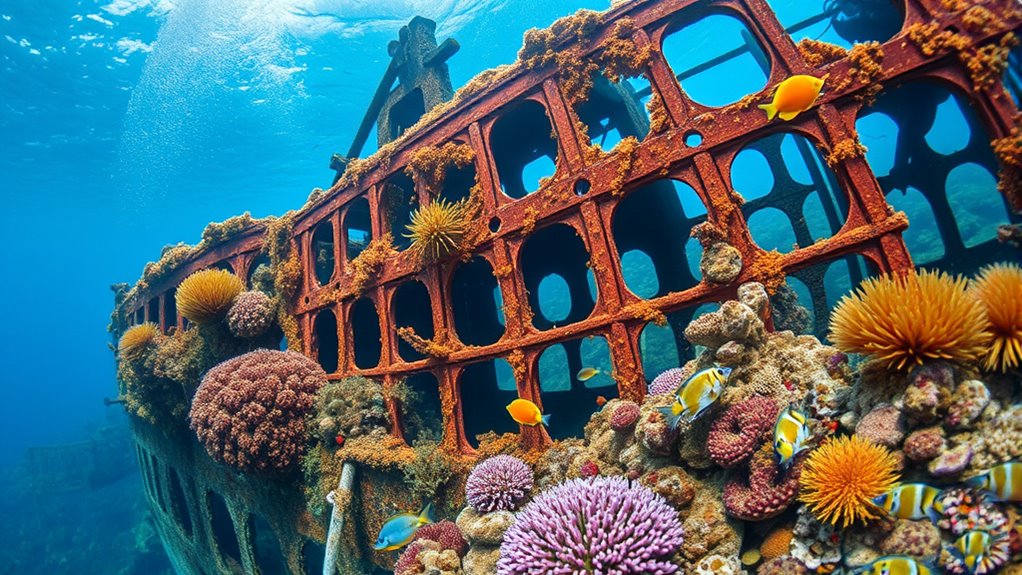
Wreck-based reefs offer substantial economic benefits to local communities by enhancing fishing and tourism industries. You can expect these reefs to:
- Attract more tourists, boosting local hospitality and service sectors.
- Increase fish populations, supporting both commercial and recreational fishing.
- Create jobs related to diving, boat tours, and reef maintenance.
- Generate revenue from dive charters and eco-tourism activities, making the area more financially sustainable.
Case Studies: Successful Shipwreck Rejuvenation Projects

You’ll see how some shipwreck projects achieve rapid coral cover growth, matching natural reefs within just a few years. These efforts also boost fish biodiversity, creating thriving ecosystems that support both conservation and local economies. Additionally, successful projects address invasive species control, preventing ecological shifts that could threaten reef health.
Rapid Coral Cover Growth
Successful shipwreck rejuvenation projects demonstrate that artificial structures can rapidly foster coral recovery, often matching natural reef growth rates within just a few years. You’ll notice that coral cover can increase at a rate of about 6% annually on these structures, comparable to natural reefs’ 9% growth. This quick recovery results from carefully designed substrates that support early colonizers. Here’s what makes it happen:
- The use of durable materials like concrete, rock, or metal provides stable surfaces for coral attachment.
- Strategic placement minimizes disturbances and optimizes light and flow conditions.
- Active management reduces invasive species that hinder coral growth.
- Regular monitoring accelerates adaptive efforts, ensuring coral cover reaches maturity faster.
These factors combine to transform wrecks into vibrant, thriving coral ecosystems in just a few short years.
Enhancing Fish Biodiversity
Have you ever wondered how shipwreck rejuvenation projects boost fish biodiversity? These artificial structures create complex habitats that attract various species, from small reef fishes to top predators. Well-designed wrecks offer shelter, breeding grounds, and feeding sites, increasing local fish abundance and diversity. For example, some projects have seen species richness rise by providing vertical and horizontal complexity. Here’s a quick look at key benefits:
| Benefit | Example Species | Impact |
|---|---|---|
| Habitat complexity | Snapper, grouper | Boosts shelter and breeding |
| Nursery grounds | Juvenile fish | Supports recruitment |
| Predator support | Sharks, large predators | Maintains balanced ecosystems |
These projects demonstrate how thoughtful design directly enhances fish biodiversity, supporting both ecological health and fisheries.
Combating Invasive Species
While shipwrecks and artificial reefs can restore habitats and boost biodiversity, they also pose risks by facilitating the spread of invasive species. To combat this, successful projects focus on targeted strategies:
- Pre-deployment cleaning: Removing biofouling and invasive organisms before sinking reduces initial risks.
- Material selection: Using non-invasive, local materials minimizes the chance of introducing new species.
- Monitoring programs: Regular surveys detect invasives early, allowing prompt removal.
- Rapid response plans: Quick action upon detection prevents invasives from establishing and spreading further.
These approaches help maintain ecological balance, prevent phase shifts, and protect native communities. By implementing strict protocols, divers and managers can turn shipwrecks into thriving, balanced ecosystems that resist invasive threats.
Future Directions: Monitoring and Enhancing Artificial Reef Ecosystems

As artificial reef ecosystems continue to expand and play a vital role in marine conservation and resource management, ongoing monitoring becomes indispensable to guarantee their effectiveness and sustainability. You should focus on tracking changes in fish populations, coral cover, and community composition over time, using advanced technologies like remote sensing, underwater drones, and autonomous sensors. Regular assessments help identify early signs of ecological imbalance, invasive species spread, or structural degradation. Enhancing these ecosystems involves optimizing reef designs, selecting resilient materials, and deploying innovative methods such as 3D printing for faster construction. By integrating adaptive management practices and data-driven strategies, you can improve habitat quality, support biodiversity, and ensure that artificial reefs continue providing ecological, economic, and conservation benefits for years to come.
Balancing Conservation and Recreation in Wreck-Based Marine Environments

Balancing conservation goals with recreational use of wreck-based marine environments requires careful planning and management. You need to contemplate how human activity impacts these ecosystems while allowing divers and tourists to enjoy them. Here are four key strategies:
Effective management balances marine conservation with recreational diving through strategic planning and responsible practices.
- Implement strict access controls to limit the number of visitors and reduce physical damage.
- Educate divers about ecological importance and responsible diving practices.
- Designate specific zones for recreation and conservation to prevent overlap and habitat disturbance.
- Monitor ecological health regularly to detect and address issues like invasive species or degradation.
Frequently Asked Questions
How Do Artificial Reefs Influence Local Fish Populations Long-Term?
Artificial reefs boost your local fish populations long-term by providing stable habitats that attract diverse species, including top predators and commercially important fish. They support higher fish abundance, biomass, and diversity, especially on complex structures like shipwrecks. Over time, these reefs act as nursery grounds, promote coral recovery, and help sustain fishing industries. Properly designed reefs can maintain ecological balance, ensuring healthy fish populations for years to come.
What Are the Main Ecological Risks of Shipwrecks Becoming Invasive Species Hubs?
You should be aware that shipwrecks can become invasive species hubs, spreading unwanted organisms like invasive corals and algae. These species can alter the native reef community, causing phase shifts to algae-dominated systems that harm biodiversity. Invasive species often hitchhike on wrecks, especially those from past wars or accidental sinking, and can disrupt ecological balance, making management and monitoring essential to prevent long-term ecological damage.
How Does Artificial Reef Design Affect Coral Recovery Success?
You should focus on designing artificial reefs with complex structures and stable materials like concrete, rock, or metal, as these promote faster coral recovery. Avoid overly simplified or unstable designs that can hinder coral attachment and growth. Incorporate features that mimic natural reef habitats to attract coral larvae and enhance resilience. Proper design directly influences how quickly and successfully corals establish, ensuring healthier and more vibrant reef ecosystems over time.
What Materials Are Safest for Creating Environmentally Friendly Artificial Reefs?
You’ll find that concrete, rock, and metal are the safest materials for creating eco-friendly artificial reefs. These materials promote rapid coral growth and support diverse marine life without introducing toxins. Notably, some companies even use 3D-printed concrete, accelerating reef deployment. When choosing materials, ensure they’re clean, non-toxic, and free from harmful chemicals to maximize ecological benefits and foster healthy, sustainable marine habitats.
How Are Divers Involved in Monitoring and Maintaining Shipwreck Reefs?
You actively monitor and maintain shipwreck reefs by conducting visual surveys, recording fish populations, and tracking coral growth. You help assess reef health, identify invasive species, and detect damage or degradation. Your involvement guarantees the reefs remain ecologically balanced and productive. Additionally, you may assist in removing debris or invasive species, and collaborate with scientists to gather data that guides future conservation efforts, supporting sustainable reef management.
Conclusion
Just like Neptune’s legendary treasures, these shipwrecks hold hidden ecological riches. By turning rusted relics into thriving coral reefs, you become part of a story that echoes Poseidon’s own domain of vibrant life. As you witness the rebirth of these underwater monuments, remember you’re helping craft a future where history and nature intertwine. Immerse yourself, and be a steward of this modern-day Atlantis, where every wreck tells a story of renewal and hope.