Eco-entrepreneurs are transforming communities by launching sustainable startups that improve waste management, expand clean energy access, and promote circular economies. They create jobs, boost local economies, and inspire residents to adopt eco-friendly habits. Through innovative technologies and supportive policies, these initiatives foster resilience and resource efficiency. If you keep exploring, you’ll discover how these green efforts are shaping vibrant, sustainable communities now and into the future.
Key Takeaways
- Eco-startups create jobs and stimulate local economies through sustainable industries like clean energy, waste management, and green construction.
- They promote community resilience by providing affordable, renewable energy solutions and decentralized power systems.
- Eco-entrepreneurs foster environmental awareness and responsible practices among residents and businesses.
- By developing innovative green technologies, startups help reduce urban pollution and improve overall quality of life.
- They strengthen community engagement through educational programs, participatory projects, and local green initiatives.
The Role of Green Innovations in Local Waste Management

Green innovations are transforming local waste management by making it more efficient, sustainable, and community-focused. You can see this in smart waste bins that automatically sort and compress organic waste, reducing volume by up to 80%. These bins help cut methane emissions from decomposing food scraps and organic materials. Some startups develop recycling robots using AI to improve sorting accuracy, increasing recycling rates and decreasing landfill waste. Community composting programs powered by innovative technologies turn organic waste into valuable compost, supporting local agriculture. Additionally, food waste reduction apps encourage households and businesses to minimize waste, saving resources and lowering environmental impact. These green solutions empower communities to manage waste responsibly, reduce pollution, and foster a circular economy—making waste management a shared, sustainable effort. Moreover, integrating sustainable practices into waste management processes can further enhance environmental benefits and community engagement. Studies show that AI-driven solutions significantly boost recycling efficiency and community participation. The adoption of advanced sorting technologies can optimize resource recovery and minimize contamination in recycled materials. Implementing community-based waste initiatives can strengthen local connections and promote collective responsibility for environmental health. Support services like entertainment and parks providers also adopt green practices, further promoting environmental responsibility at community leisure sites.
Transforming Housing and Urban Development Through Sustainable Technologies

You can revolutionize urban living by adopting eco-friendly building materials that reduce environmental impact and improve energy efficiency. Smart urban infrastructure integrates data and automation to optimize traffic, resource use, and pollution control, making cities more livable. Green housing initiatives focus on affordable, sustainable homes that lower carbon footprints and enhance community resilience. Incorporating natural materials such as wood and stone into construction can further promote eco-friendly development and support local ecosystems. Additionally, integrating hydrogen fuel cells in urban energy systems offers a clean and efficient energy source that can help achieve lower emissions and enhance sustainability in city environments. Furthermore, understanding the scientific aspects of sustainable technologies helps in designing more effective and innovative solutions for urban development, including the use of renewable energy sources to power these systems.
Eco-Friendly Building Materials
How are innovative building materials revolutionizing urban development? You can see it in the rise of eco-friendly options like recycled steel, bamboo composites, and hempcrete. These materials lower carbon footprints, reduce waste, and improve energy efficiency. For example, hempcrete offers excellent insulation, cutting heating and cooling costs, while recycled steel minimizes resource extraction. You benefit from faster construction times with 3D-printed sustainable components that generate less waste. Green materials also promote healthier indoor environments by reducing toxic emissions. Additionally, wall organization systems can be incorporated into sustainable housing designs to maximize space and functionality. Incorporating building regulation compliance ensures these innovations meet safety and environmental standards. Employing self-watering plant pots as part of green building landscapes can further enhance urban sustainability and promote urban greening initiatives. The integration of sustainable supply chains can also reduce the environmental impact of material sourcing. As a result, communities enjoy more affordable, resilient, and eco-conscious housing options. These innovations are transforming urban landscapes, making sustainable development accessible and scalable. Furthermore, understanding the importance of cost-effective materials can help stakeholders prioritize investments that yield long-term environmental and economic benefits. Your role as an eco-entrepreneur involves advancing these materials to create smarter, greener cities for future generations.
Smart Urban Infrastructure
Innovative building materials like recycled steel, bamboo composites, and hempcrete have already begun transforming urban landscapes by making construction more sustainable and efficient. These materials reduce environmental impact, lower costs, and speed up project timelines. You can leverage smart infrastructure solutions like sensor-enabled roads, adaptive street lighting, and integrated transit systems to enhance urban mobility and safety. Renewable energy integration, such as solar-powered public spaces and microgrids, further reduces reliance on fossil fuels. Smart water management systems help conserve resources while minimizing waste. Additionally, implementing safety standards and regulations ensures that urban infrastructure remains resilient and secure. Incorporating sustainable financing options can also accelerate the adoption of these technologies by providing necessary funding and incentives. Leveraging eco-friendly building materials can significantly decrease carbon footprints in urban development. Developing smart traffic management systems can optimize flow and reduce congestion, contributing to more sustainable cities. By adopting these technologies, you contribute to creating resilient, eco-friendly cities that improve quality of life and reduce emissions. Your efforts help turn urban areas into smarter, greener communities capable of adapting to climate challenges.
Green Housing Initiatives
Green housing initiatives are revolutionizing urban development by integrating sustainable technologies that reduce environmental impact and lower long-term costs. You can now build homes using innovative materials like recycled steel and low-impact insulation, which improve energy efficiency and durability. These projects often include solar panels, green roofs, and rainwater harvesting systems to minimize resource use. Additionally, incorporating recycled building materials further enhances sustainability and reduces waste during construction. The use of modular, 3D-printed components accelerates construction and reduces waste, making building processes more efficient and eco-friendly. Smart home systems optimize energy and water consumption, supporting sustainable living practices. Incorporating sustainable construction techniques can significantly reduce the carbon footprint of new housing developments. Community-focused designs promote shared spaces and local green infrastructure. Incentives and policies support affordable, eco-friendly housing options, with some projects leveraging innovative construction methods to speed up development and reduce costs.
Expanding Access to Clean Energy in Communities
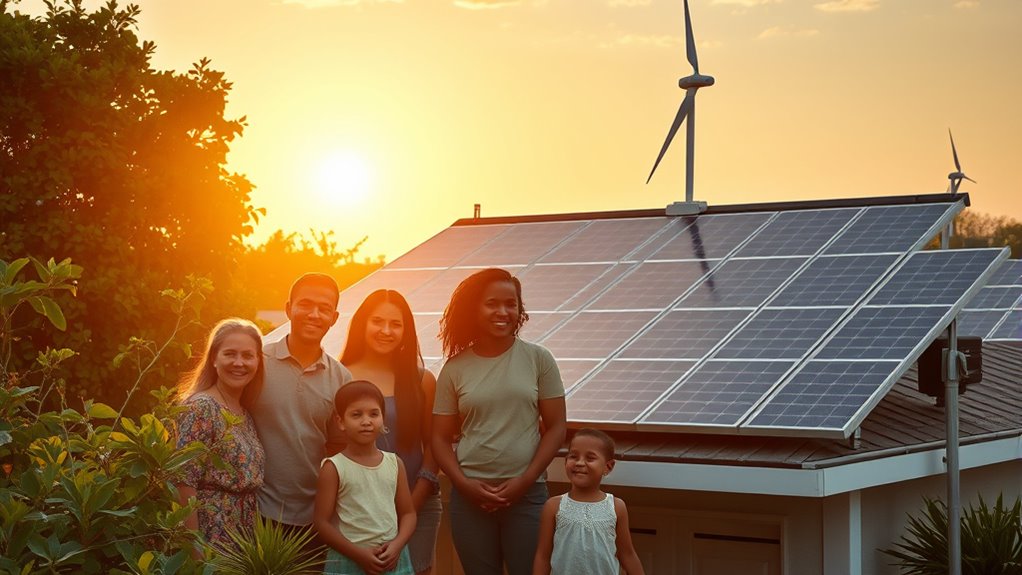
Expanding access to clean energy in communities is crucial for reducing reliance on fossil fuels and promoting sustainable development. By supporting local renewable projects like solar microgrids and community wind farms, you can help guarantee affordable, reliable power reaches underserved areas. Eco-entrepreneurs develop innovative solutions that lower energy costs and increase resilience, especially in remote or low-income regions. These startups often work with local stakeholders to tailor energy systems to specific needs, making clean energy more accessible. You might see mobile solar units or pay-as-you-go energy services empowering households and small businesses. Expanding access not only cuts emissions but also boosts local economies, improves health, and enhances social equity. Investing in battery technologies can further optimize energy storage and distribution. Additionally, implementing decentralized energy systems enables communities to generate and manage their own power more effectively. Your support accelerates the transition to a cleaner, more inclusive energy future for all communities.
Job Creation and Economic Growth Driven by Eco-Startups

Eco-startups are driving significant economic growth by creating new job opportunities across various sectors. As you engage with these innovations, you’ll find employment openings in areas like sustainable agriculture, clean energy, green construction, and waste management. These startups stimulate local economies by:
- Hiring skilled workers for green technology development and installation
- Supporting small businesses through supply chain partnerships
- Providing training programs to upskill workers for eco-friendly industries
- Attracting investments that generate additional employment opportunities
- Promoting resource efficiency practices that help communities reduce costs and environmental impact
This growth happens quickly, transforming communities into hubs of innovation and sustainability. Your involvement in eco-startups not only advances environmental goals but also fuels economic resilience. As these companies expand, they foster a more sustainable job market, ensuring long-term community prosperity.
Promoting Circular Economy Principles at the Community Level

Community-level initiatives play a essential role in advancing circular economy principles by encouraging residents and local businesses to reduce waste, reuse materials, and recycle more effectively. You can start by organizing local repair workshops, promoting sharing platforms, or establishing community composting programs. These actions help extend product lifespans, minimize landfill waste, and conserve resources. Supporting local businesses that prioritize sustainable packaging and upcycling further reinforces circular practices. Education campaigns can raise awareness about reducing single-use plastics and promoting responsible consumption. When you foster collaboration among residents, shops, and local authorities, you create a resilient network that champions resource efficiency. By actively participating in or initiating these efforts, you help build a community that values sustainability, reduces environmental impact, and benefits economically in the long run.
Overcoming Barriers to Adoption of Eco-Friendly Solutions

You’ll face challenges like policy uncertainties and regulatory hurdles that slow down adoption. Infrastructure gaps and high costs can also make eco-friendly solutions less accessible to communities and businesses. Addressing these barriers requires strategic efforts to streamline regulations and invest in sustainable infrastructure.
Policy and Regulatory Hurdles
While innovative eco-friendly solutions hold great promise, their widespread adoption often stalls due to policy and regulatory hurdles. You face complex, inconsistent regulations that slow progress and create uncertainty. Navigating these barriers requires persistence and strategic engagement. Key issues include:
- Lengthy approval processes delaying project launches
- Lack of clear standards for emerging technologies
- Resistance from established industries protecting incumbents
- Insufficient incentives for early adoption of green solutions
These obstacles limit scaling efforts and deter investment. You must work closely with policymakers, advocate for streamlined regulations, and demonstrate the benefits of your innovations. Overcoming these regulatory challenges is vital to unlocking broader community adoption and facilitating the transition to sustainable, eco-friendly solutions.
Infrastructure and Cost Challenges
Implementing eco-friendly solutions often hits a wall because of high infrastructure costs and logistical hurdles. You may find that building the necessary green infrastructure requires significant upfront investment, which can deter startups and communities from adopting new technologies. For example, renewable energy projects like solar farms or microgrids demand large capital and complex installation processes. Supply chains for sustainable materials can also be inefficient or limited, increasing costs and delays. Scaling these solutions often needs extensive planning and coordination, adding to expenses. Without affordable infrastructure, even innovative eco-solutions struggle to reach critical mass. Overcoming these barriers involves securing targeted funding, forming strategic partnerships, and developing modular, cost-effective systems that can be deployed quickly and reliably.
Success Stories From Regions Leading in Sustainability

Regions leading in sustainability are making remarkable strides by fostering innovative eco-startups that address local environmental challenges. These areas serve as models, demonstrating how targeted support and vibrant ecosystems accelerate green innovation. You’ll find success stories like Europe’s thriving greentech scene, fueled by hubs like EIT and Climate KIC, and Germany surpassing the UK in venture investments. In the US, rapid growth in climate tech startups is transforming communities through clean energy and sustainable agriculture. Latin America’s shifting funding landscape highlights emerging regional hubs, such as Mexico overtaking Brazil. These regions prioritize:
Regions excelling in sustainability drive green innovation through targeted support and vibrant ecosystems.
- Supporting local innovation through dedicated funding
- Building collaborative ecosystems
- Promoting scalable green technologies
- Encouraging policies that reduce barriers
Their achievements showcase the power of regional leadership in creating sustainable futures.
Policy and Regulatory Support for Local Eco-Initiatives
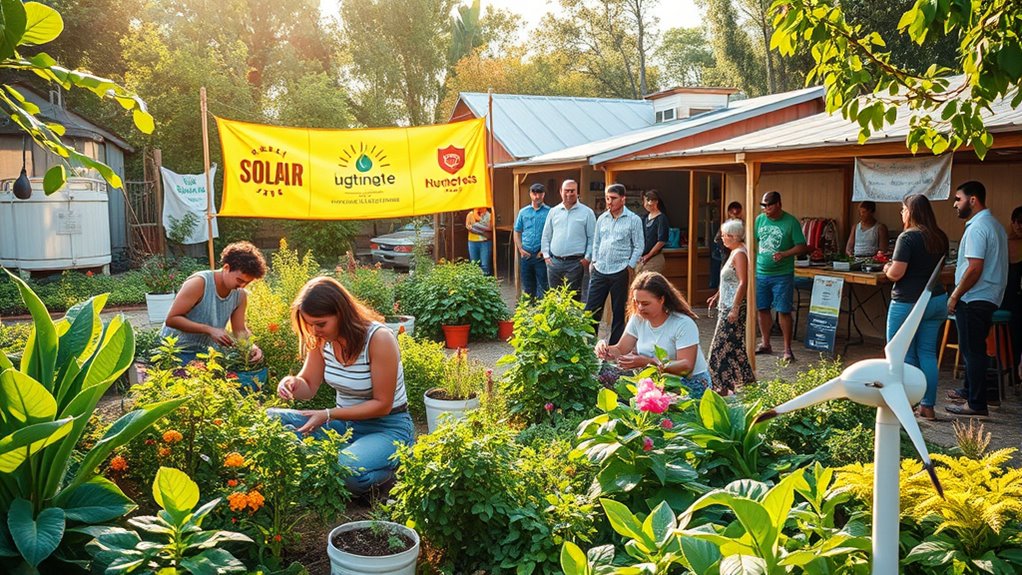
Policy incentives can substantially accelerate local eco-initiatives by making sustainable solutions more accessible and appealing. When regulations are streamlined, entrepreneurs face fewer hurdles, allowing innovations to reach communities faster. Consider how targeted support and simplified processes can unleash the full potential of green startups.
Policy Incentives Boost Adoption
Government incentives and supportive regulations play a crucial role in accelerating the adoption of local eco-initiatives. They lower barriers, motivate innovation, and encourage community participation. By offering tax benefits, grants, or subsidies, policymakers make sustainable projects more financially viable. These incentives:
- Encourage startups to scale eco-friendly solutions quickly
- Promote investment in green technologies and infrastructure
- Create a competitive edge for local businesses adopting sustainability
- Foster public awareness and engagement in eco-initiatives
As a result, communities see faster deployment of renewable energy, waste reduction, and green building projects. Policy support not only boosts adoption but also builds momentum for long-term environmental benefits. Your local government’s proactive stance can turn eco-entrepreneurship into a community-wide movement.
Streamlined Regulatory Processes
Streamlined regulatory processes can considerably accelerate the deployment of local eco-initiatives by reducing administrative delays and simplifying compliance requirements. When policies are clear and permits are easier to obtain, you can bring sustainable projects to life faster, maximizing community impact. Simplified approval procedures reduce costs and barriers, encouraging more entrepreneurs to innovate and invest in green solutions. Governments that implement flexible yet effective regulations create an environment where eco-startups can scale quickly and adapt to changing needs. Additionally, clear guidelines foster transparency, build trust, and ensure projects meet environmental standards without unnecessary red tape. As a result, communities benefit from quicker access to renewable energy, waste management innovations, and green infrastructure, ultimately making sustainability initiatives more feasible and widespread.
How Community Engagement Amplifies Sustainability Impact
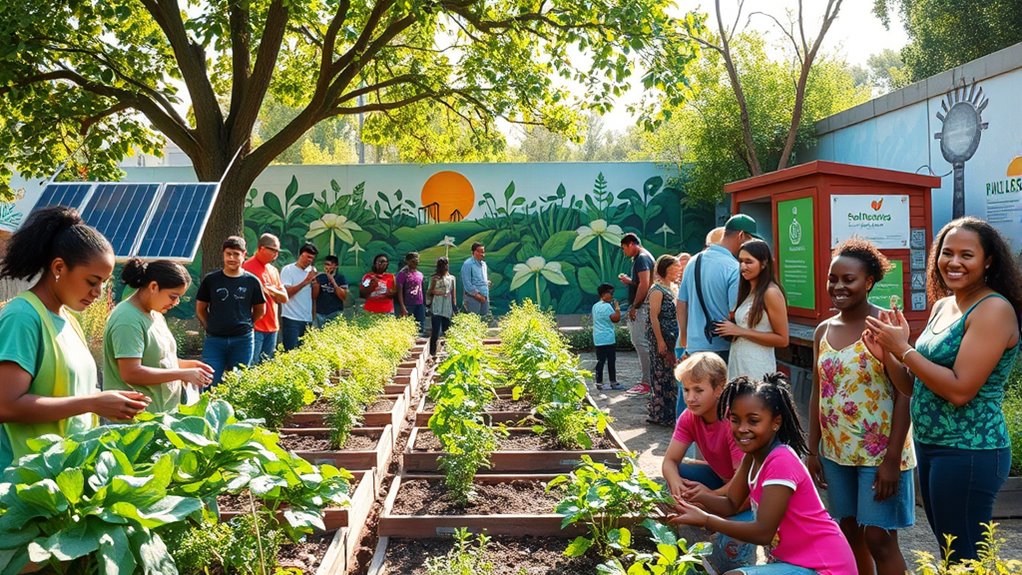
Community engagement plays a crucial role in amplifying the impact of sustainable initiatives by fostering local ownership and participation. When you involve residents in decision-making, you build trust and guarantee solutions meet real needs. This collective effort accelerates adoption and sustains momentum. To maximize impact, focus on:
- Educating residents about environmental benefits
- Encouraging local leadership in projects
- Creating opportunities for hands-on participation
- Building partnerships with community organizations
Future Trends Shaping Eco-Entrepreneurship and Community Well-Being
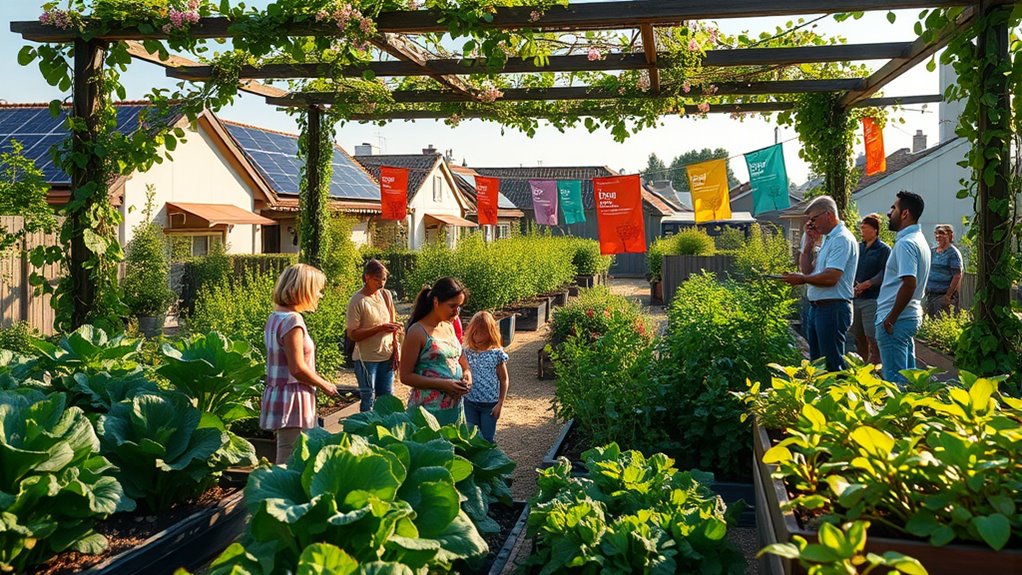
Emerging trends in eco-entrepreneurship are poised to transform how communities achieve sustainability and well-being. You’ll see increased adoption of innovative technologies like AI-driven recycling, smart energy grids, and cultivated foods, which boost resource efficiency and reduce environmental impacts. Investment in early-stage climate tech startups will continue to grow, fueling scalable solutions tailored to local needs. Circular economy principles will become central to community planning, promoting resource reuse and waste reduction. You can expect stronger policy support and public-private collaborations that streamline green infrastructure development. Additionally, regional ecosystems will leverage data and digital platforms to identify opportunities and address climate risks more effectively. These trends will empower communities to build resilient, sustainable future-proof environments, fostering healthier, more equitable living conditions for all.
Frequently Asked Questions
How Do Eco-Startups Measure Their Community Environmental Impact?
You can measure your eco-startup’s community impact by tracking specific metrics like waste reduction, energy savings, and emission decreases. Use tools like smart sensors and data analytics to gather real-time info on resource use and pollution levels. Conduct surveys to understand community feedback and engagement. Regularly compare your data against environmental benchmarks or goals to see how effectively you’re reducing your community’s carbon footprint and fostering sustainability.
What Funding Sources Support Local Sustainable Startup Initiatives?
You can find funding from government grants and subsidies that support green projects. Venture capitalists are increasingly investing in early-stage climate tech startups, providing vital growth capital. Crowdfunding platforms also enable community members to support local sustainable initiatives directly. Additionally, impact investors focus on projects with measurable environmental benefits. Local banks and development agencies may offer loans or incentives to encourage eco-friendly business development, helping turn your sustainable ideas into reality.
How Do Startups Collaborate With Local Governments for Sustainability?
You partner with local governments through joint initiatives, grants, and policy advocacy, creating a tapestry of sustainable change. Picture community meetings where ideas bloom, and your startup’s innovations become part of city planning. You collaborate on green infrastructure projects, renewable energy programs, and waste reduction campaigns, turning visions into tangible actions. This synergy helps build resilient, eco-friendly communities, where your efforts are woven into the fabric of local development and environmental stewardship.
What Challenges Do Eco-Entrepreneurs Face in Scaling Community Projects?
You face significant challenges when scaling community projects, such as securing consistent funding, maneuvering complex regulations, and gaining public trust. Market adoption can be slow due to policy uncertainties and infrastructure gaps. Competition for venture capital is fierce, especially beyond early stages. Balancing rapid innovation with environmental compliance and operational costs also demands careful planning. Overcoming these hurdles requires persistence, strategic partnerships, and clear communication of your project’s long-term benefits.
How Do Community Members Participate in Sustainable Startup Programs?
You’re invited to join the movement—your participation can shape a sustainable future. Community members get involved by volunteering, supporting local green initiatives, and sharing knowledge. You might attend workshops or invest in eco-friendly startups, creating a ripple effect. Your voice matters in shaping policies and demanding sustainable solutions. Together, your active engagement fuels innovation, accelerates change, and guarantees community-led progress toward a greener, healthier environment for all.
Conclusion
You see the power of green innovations transforming waste into resources, sustainable tech revitalizing neighborhoods, clean energy powering futures, startups creating jobs and boosting economies, circular principles shaping communities, success stories inspiring change, policies supporting growth, and engagement amplifying impact. Together, these efforts weave a vibrant tapestry of sustainability, community resilience, and shared prosperity. By embracing eco-entrepreneurship, you become part of a movement that rebuilds, revitalizes, and redefines the future for everyone.