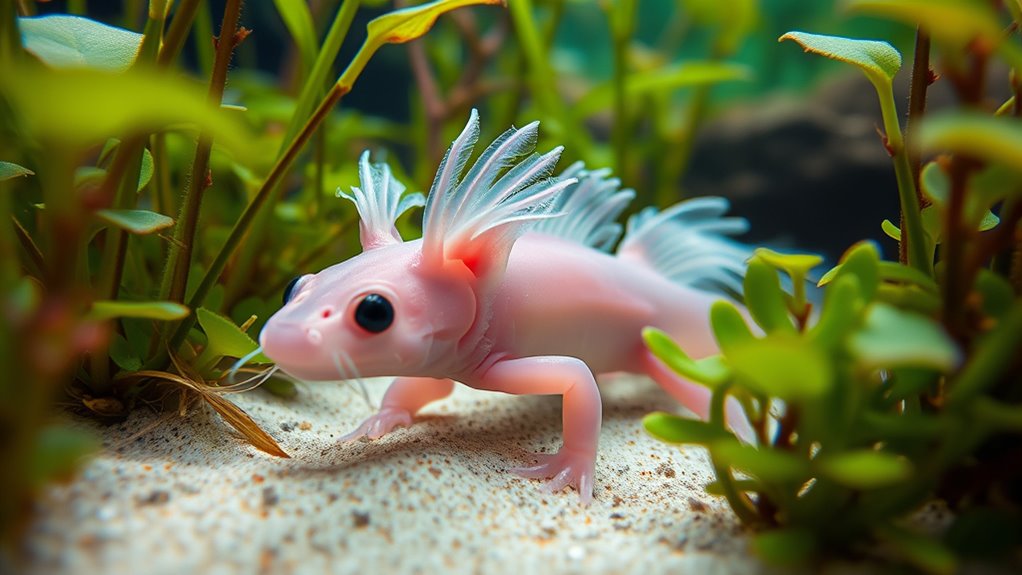

You’ll discover that the axolotl is a unique salamander that retains juvenile features into adulthood, with a wide, flattened head, external gills, and variable color patterns. It lives in freshwater habitats like lakes in Mexico, but faces threats from pollution, habitat loss, and invasive species. Known for its incredible ability to regenerate limbs and organs flawlessly, it plays a crucial role in scientific studies. To explore the fascinating world and secrets of the axolotl, keep going to learn more.
Key Takeaways
- Axolotls are neotenic salamanders that retain juvenile features into adulthood, never undergoing full metamorphosis.
- They possess remarkable regenerative abilities, flawlessly regrowing limbs, spinal cords, and organs without scarring.
- Their natural habitat in Mexico faces threats like pollution, habitat loss, and invasive species, endangering wild populations.
- Axolotls are vital scientific models for studying tissue regeneration, development, and potential medical applications.
- They exhibit diverse coloration and unique physical traits, including external gills and lidless, curious-looking eyes.
Unique Features of the Axolotl’s Appearance

Have you ever wondered what makes the axolotl’s appearance so striking? Its wide, flattened head and lidless eyes give it a unique, almost curious expression. You’ll notice external gill stalks, called rami, with feathery filaments that fan out behind its head, increasing surface area for breathing. Its limbs are underdeveloped, with long, thin digits, highlighting its aquatic lifestyle. The coloration varies, from the wild-type dark brown with speckles to leucistic pale pink with black eyes, albino white, or melanistic black and blue shades. Adult axolotls typically reach 10 to 12 inches, weighing around 300 grams. Their smooth, moist skin and distinctive features create an enthralling appearance, making them a true marvel of nature’s diversity. Efficient transfer of heat plays a role in their ability to thrive in aquatic environments. Interestingly, their regenerative capabilities are so advanced that they can regrow entire limbs and other body parts, further showcasing their remarkable biology. Additionally, their biological resilience highlights their ability to adapt and survive in varying conditions.
The Life Cycle and Developmental Stages
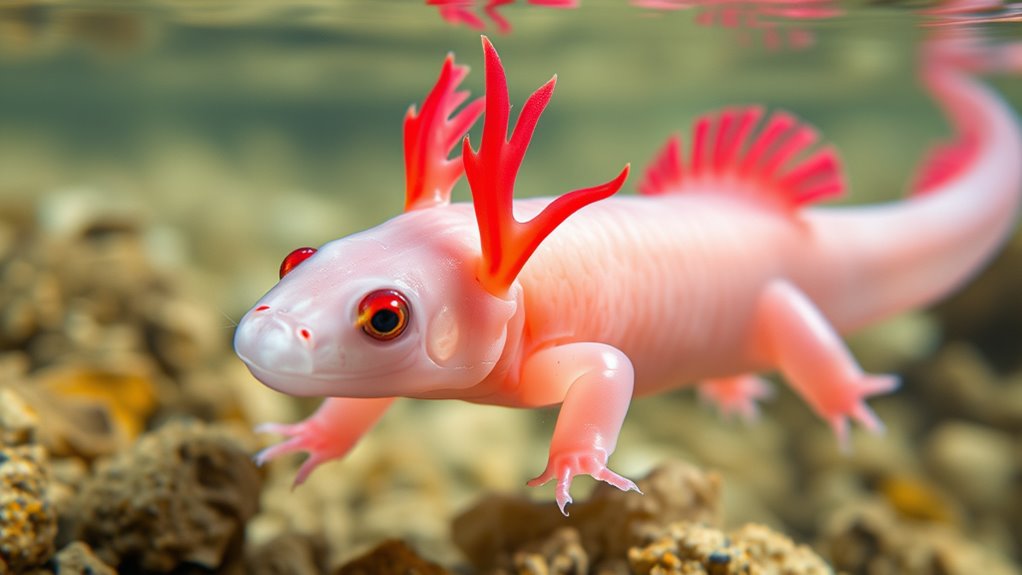
The life cycle of an axolotl is a fascinating process characterized by its neotenic development, meaning it retains juvenile features throughout its adult life. You’ll find that they reach sexual maturity at around 18 months while still in their larval form. Their eggs are large, with each clutch containing up to 1,000 eggs that hatch in about 14 days at 24°C. From there, larvae develop external gills, a tail, and underdeveloped limbs. Unlike many amphibians, they rarely undergo metamorphosis naturally, maintaining their aquatic, juvenile traits. This unique development process is an example of neotenic development, which allows them to retain juvenile characteristics into adulthood. Historically, the understanding of their growth patterns has contributed to insights into developmental biology, highlighting the significance of their unique life cycle.
Natural Habitat and Environmental Challenges
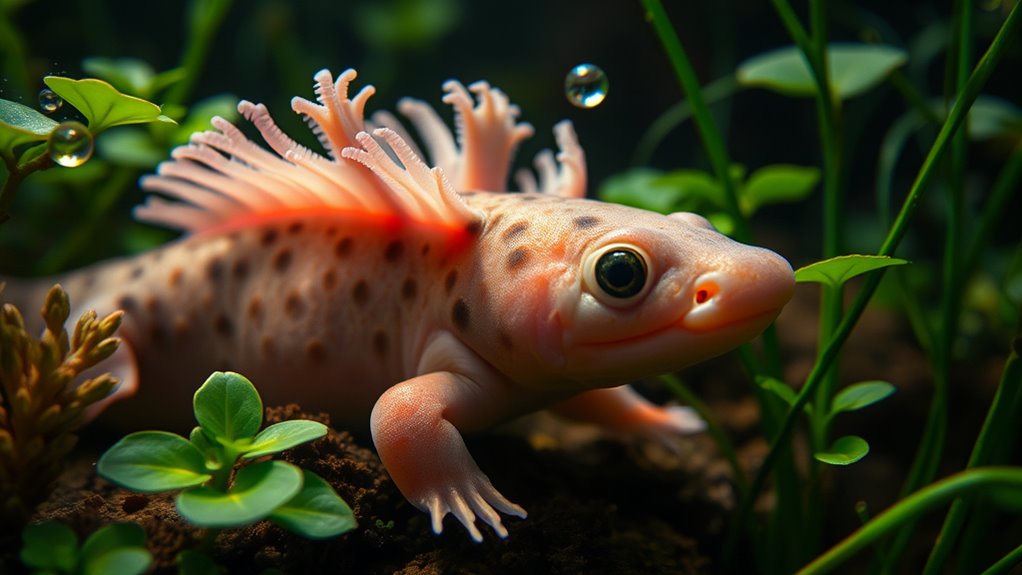
You should know that habitat fragmentation has severely reduced axolotls’ living space, making it harder for populations to survive and reproduce. Pollution from urban runoff and industrial waste further threatens their health and water quality. Invasive species like carp and tilapia now compete for resources and prey on axolotls, worsening their environmental challenges. Protecting their natural habitat is crucial for the species’ long-term survival. Additionally, ongoing environmental pollution continues to degrade water quality, further endangering these unique creatures. The impacts of sustainable fashion practices, such as reducing waste and promoting eco-friendly materials, can serve as a model for broader environmental conservation efforts. Understanding credit card security measures can help mitigate risks associated with online transactions that may impact environmental initiatives. Promoting vibrational alignment with conservation goals can inspire collective action to preserve these delicate ecosystems.
Habitat Fragmentation Effects
Habitat fragmentation has severely impacted axolotl populations by breaking up their once-continuous freshwater environment into isolated pockets. This separation limits gene flow, reducing genetic diversity and increasing vulnerability to disease and environmental changes. Isolated populations struggle to find mates, leading to decreased reproductive success. Fragmentation also exposes axolotls to increased predation risk and water quality fluctuations. You may notice these effects through:
- Reduced movement between habitat patches
- Limited access to diverse food sources
- Higher risk of local extinctions
- Increased competition within small populations
- Challenges in maintaining healthy population numbers
These issues make it harder for axolotls to survive, thrive, and maintain genetic resilience. Conserving and reconnecting habitat patches is vital to guarantee their long-term survival.
Pollution Impact Risks
Habitat fragmentation exposes axolotls to increasing environmental pressures, with pollution posing one of the most significant threats. Contaminants like heavy metals, pesticides, and industrial waste seep into their freshwater habitats, impairing their health and reproductive abilities. These pollutants can cause genetic mutations, weaken immune systems, and disrupt essential biological processes. Water quality declines, leading to hypoxia and increased disease susceptibility. Since axolotls rely on clean, oxygen-rich water for respiration and development, pollution directly threatens their survival. Additionally, pollutants can accumulate in their bodies, affecting not only their health but also their regenerative capabilities. Without clean water, these unique creatures face declining populations, making pollution control critical for their conservation and the health of their fragile ecosystems.
Invasive Species Threat
Invasive species pose a significant threat to axolotls by competing for resources and introducing new predators into their fragile environment. These newcomers can quickly disrupt their delicate ecosystem, making survival even harder. You might see invasive fish like tilapia and carp, which eat axolotl eggs or compete for food. Non-native plants can alter water quality and reduce oxygen levels, stressing native species. Additionally, invasive crayfish and aquatic insects may prey on young axolotls or damage their habitats. These species often thrive because they face fewer natural predators in the new environment, which can lead to disrupted ecological balance. Their unchecked proliferation can cause habitat degradation and further threaten native biodiversity. Protecting the axolotl’s habitat requires controlling invasive species, restoring native plants, and monitoring ecological changes to prevent further damage. Implementing ecosystem management strategies can help mitigate these threats and support the survival of native species. Introducing native plant restoration can further strengthen the ecosystem and provide a healthier habitat for axolotls. Promoting biodiversity conservation is essential to maintaining a balanced ecosystem and safeguarding these unique amphibians.
Diet and Predatory Behavior
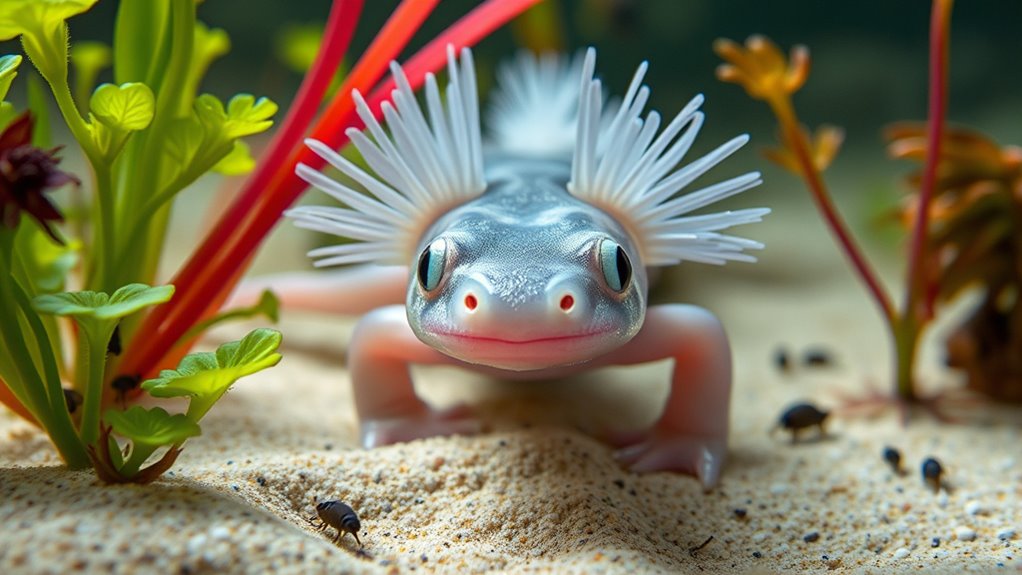
Axolotls are carnivorous creatures that rely on a broad diet of aquatic animals to survive. You’ll find them ambush prey with quick, precise strikes, using their wide mouths to swallow items whole. Their diet includes worms, insects, mollusks, small fish, tadpoles, and crustaceans. In their natural habitat, they wait quietly for prey to come close before snapping it up. They can even consume smaller axolotls if food is scarce. Axolotls have specialized gill structures that enable respiration while they hunt, ensuring they don’t get overwhelmed by their feeding process. Their predatory behavior is both efficient and adaptable, suited to the diverse food sources in their environment. Robotics investments in automation are helping researchers develop more advanced systems for monitoring and studying aquatic habitats, which can provide insights into axolotl behavior and conservation. Additionally, understanding their feeding mechanisms can help improve captive care and ensure their dietary needs are met effectively. For example, their ability to capture and swallow prey quickly is facilitated by their ambush hunting tactics, which are highly effective in their natural settings. In captivity, you can mimic their natural diet by offering worms, insects, and small aquatic prey.
Remarkable Regeneration Abilities
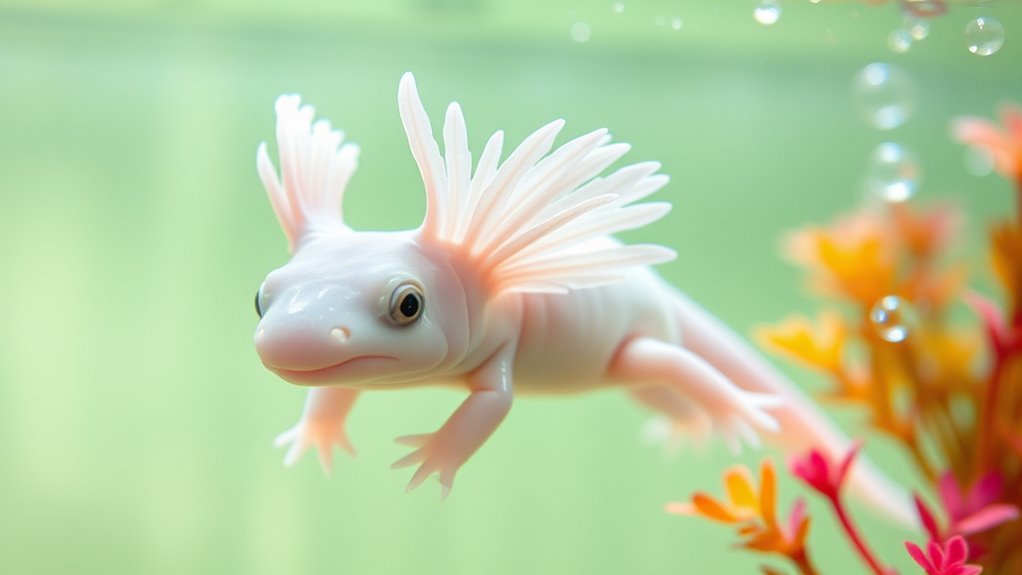
You might be amazed to learn that axolotls can regrow entire limbs flawlessly, with no scars left behind. Their unique regenerative process also extends to parts of the spinal cord, heart tissue, and other organs. This remarkable ability makes them a key model for studying healing and tissue regeneration. Interestingly, dreams about such extraordinary biological processes can sometimes symbolize unresolved issues or aspirations for renewal in our own lives. Understanding their regenerative mechanisms could inspire advances in medicine and healing therapies. Their ability to regrow complex tissues highlights the potential for breakthroughs in regenerative medicine research and aligns with recent AI-driven innovations in medical science. Researchers are exploring the cellular and molecular basis of axolotl regeneration to unlock secrets that could revolutionize clinical treatments for injuries and degenerative diseases.
Limbs Regrow Flawlessly
Thanks to their extraordinary regenerative abilities, axolotls can regrow entire limbs with remarkable precision and perfection. When a limb is lost, they quickly activate a regenerative process that restores muscle, bones, nerves, and skin seamlessly, leaving no scar behind. Their cells de-differentiate into a blastema—a mass of progenitor cells—that guides the regrowth. This process is highly coordinated, ensuring the new limb matches the original in size, shape, and function.
- Regrowth begins within days of injury
- Cells in the blastema proliferate rapidly
- Nerves release signals essential for limb formation
- The immune system suppresses inflammation to prevent scarring
- Bones, muscles, and nerves regenerate synchronously
Scar-Free Healing Process
Remarkably, axolotls heal injuries without leaving any scars, a feat that sets them apart from most other vertebrates. When they get hurt, their bodies rapidly reconstruct tissue, restoring muscles, skin, and even nerves perfectly. This process involves a special immune response that suppresses inflammation, preventing scars from forming. Instead of scar tissue, they regenerate with new, healthy tissue that looks just like the original. Their ability to regenerate vital tissues is a key factor in their resilience and survival in their aquatic environment. Imagine their healing as a seamless patchwork:
| Injury Site | Healing Outcome |
|---|---|
| Cut on limb | Fully regenerated limb with no scar |
| Damaged skin | Smooth, unbroken skin |
| Lost tail | Complete tail regrowth |
| Severed nerve | Restored nerve function |
This incredible ability helps them thrive in their aquatic environment and inspires scientists worldwide.
Conservation Status and Efforts
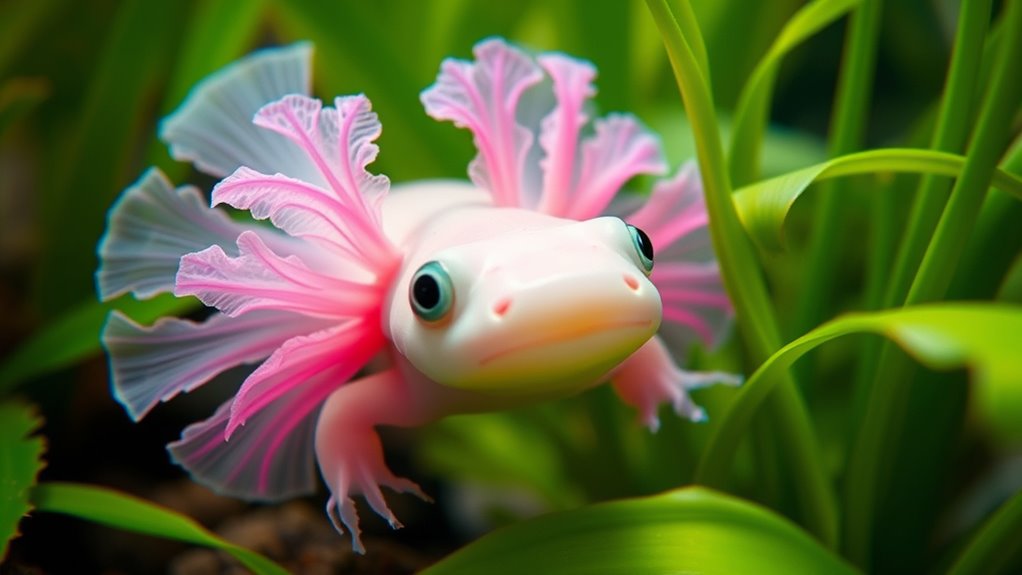
Have you ever wondered why the axolotl is considered critically endangered? Its wild population faces severe threats from habitat loss, pollution, and invasive species. Fewer than 1,000 wild individuals remain, mainly due to urbanization in Mexico City. Conservation efforts focus on several key actions:
- Restoring native habitats like Lake Xochimilco and Lake Chalco
- Developing captive breeding programs to bolster populations
- Implementing laws to protect remaining habitats and prevent illegal collection
- Controlling invasive species that prey on or compete with axolotls
- Promoting public awareness and education about their ecological importance
- Emphasizing the importance of native habitat preservation to ensure long-term survival
These combined measures aim to prevent extinction and ensure the species’ survival. Despite challenges, ongoing efforts endeavor to keep the axolotl’s unique world alive in the wild.
The Role of Axolotls in Scientific Research
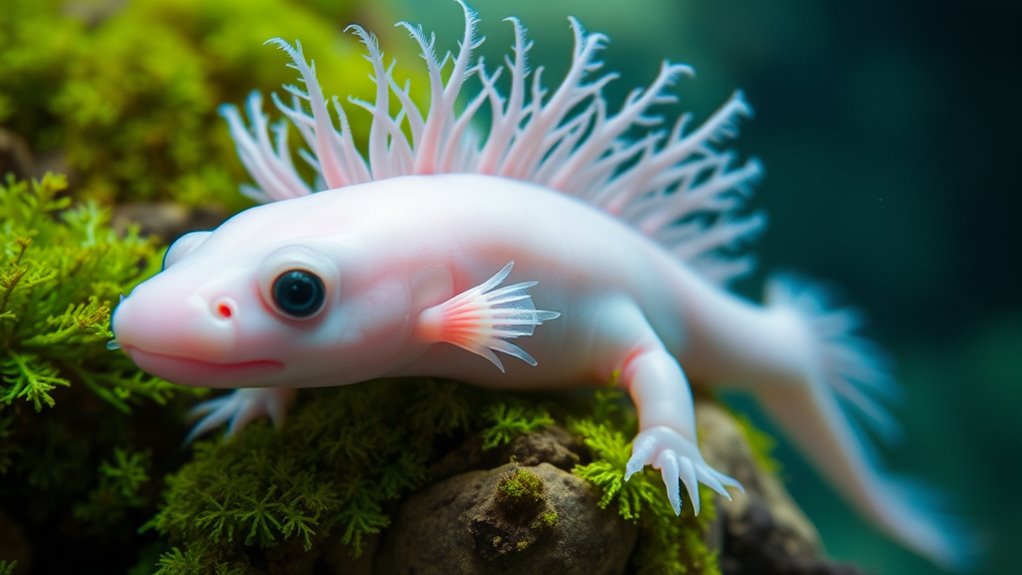
The axolotl’s unique biological features have made it an essential model organism in scientific research. Its ability to regenerate entire limbs, spinal cord, and heart tissue without scarring provides valuable insights into regenerative medicine. Researchers study how axolotls suppress inflammation during healing to develop treatments for human injuries. Their neoteny, retaining larval traits into adulthood, helps scientists understand developmental processes and gene regulation. Additionally, axolotls’ large, polyploid cells make tissue analysis easier, aiding stem cell research. Their resistance to certain fungi and environmental stressors offers clues for disease resistance. Because of their distinctive biology, axolotls serve as pivotal tools for studying regeneration, genetics, and developmental biology, advancing medical science and deepening our understanding of vertebrate biology.
Frequently Asked Questions
How Long Can an Axolotl Live in Captivity?
You can expect an axolotl to live up to 15 years in captivity with proper care. To guarantee a long, healthy life, provide clean, well-oxygenated water, a balanced diet, and a suitable habitat that mimics their natural environment. Regular monitoring and maintaining stable water temperature and quality are essential. Avoid stress and handle them minimally to prevent health issues, helping your axolotl thrive for many years.
Can Axolotls Change Their Coloration Naturally?
Yes, axolotls can change their coloration naturally, like a chameleon blending into its surroundings. They do this to adapt to their environment, regulate body temperature, or communicate. You might notice them shifting from wild-type dark brown to leucistic or melanistic hues. This color-changing ability is an incredible survival tool, allowing them to hide from predators or express their mood—making them truly fascinating aquatic chameleons.
Are Axolotls Suitable as Pets for Beginners?
Yes, axolotls are suitable for beginners if you’re prepared to meet their needs. They require a stable aquatic environment, clean water, and proper temperature control. You’ll need to provide enough space, a balanced diet, and avoid handling them too much to prevent stress. With patience and proper care, axolotls can be rewarding pets, but remember they have a lifespan of up to 15 years and need consistent attention.
What Are the Main Threats to Wild Axolotl Populations?
The main threats to wild axolotl populations are habitat loss, pollution, and invasive species. Urban development in Mexico City has fragmented their natural lakes and canals, destroying essential breeding and living areas. Water pollution from urban runoff further degrades their habitat, while invasive fish like carp and tilapia prey on them and compete for food. These factors have caused a dramatic decline, pushing their numbers to critically low levels.
How Do Axolotls Communicate With Each Other?
You might not realize it, but axolotls communicate mainly through body movements and chemical signals. When they want to attract a mate or warn others of danger, they use subtle gestures like tail flicks or head shakes. They also release chemicals into the water, which can alert nearby axolotls to their presence or reproductive status. These methods help them stay connected in their solitary, aquatic environment.
Conclusion
So, even if you think axolotls are just strange amphibians, their unique traits and incredible regenerative powers make them truly extraordinary. Some might worry they could become invasive if released, but responsible care guarantees they stay a fascinating, harmless part of their native ecosystems and scientific study. Embrace their mysteries, and you’ll discover a creature that challenges our understanding of growth, life, and resilience in the natural world.