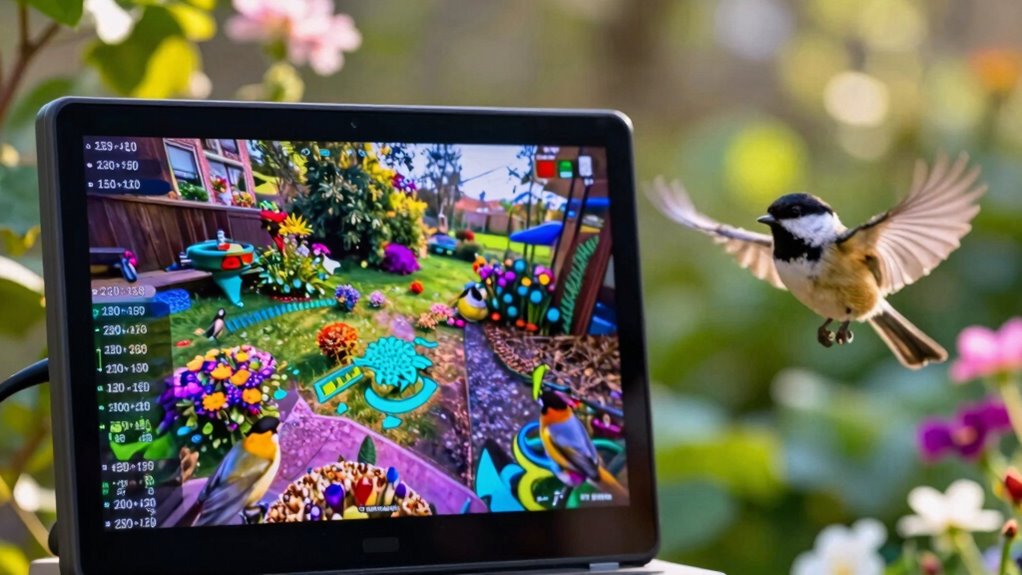

To read bird feeder camera data like a naturalist, start by identifying the species visiting your feeder through the footage. Track their feeding patterns, noting frequency and duration of visits. Observe any seasonal trends and the impact of colder months on their behavior. Position your camera effectively to capture social dynamics and competition among species. Document your findings in a logbook to recognize shifts in populations and preferences. Keep exploring to uncover even more fascinating details about your feathered visitors.

Prime made for students and young adults
- Fast, free delivery for dorm and study essentials
- Prime Video and Amazon Music included
- Member-only deals
Key Takeaways
- Identify Species: Use footage to catalog bird species, understanding local biodiversity and specific needs for effective feeding strategies.
- Track Feeding Patterns: Note frequency and duration of visits to identify seasonal trends and preferences, enhancing feeder management year-round.
- Observe Interactions: Analyze social dynamics and competition among species to better understand their behavior at the feeder during different times of day.
- Document Findings: Maintain a logbook or spreadsheet to track species, feeding times, and notable behaviors, fostering a deeper understanding of local wildlife.
- Capture Quality Images: Use photography to enhance species identification and record unique behaviors, contributing to a comprehensive birdwatching experience.

If you’ve installed a bird feeder camera, you’re likely excited to explore the data it collects. You’re not just capturing images; you’re diving into a world of bird behavior that can provide fascinating insights. Start your journey by reviewing the footage to identify the various species visiting your feeder. This species identification is essential, as it helps you understand local biodiversity and the specific needs of different birds.
As you sift through the data, focus on their feeding patterns. Notice how often certain species return and how long they spend at your feeder. These details can reveal seasonal trends that might surprise you. For instance, some birds may prefer your feeder during colder months when natural food sources are scarce, while others might only show up during migration. By keeping track of these patterns, you can make your feeding station more inviting, ensuring you attract a diverse array of birds year-round.
Camera placement plays a significant role in the quality of your data analysis. If your camera isn’t positioned correctly, you might miss out on vital behavioral insights. Aim to place it at a height and angle that captures the interactions clearly. This way, you can observe not just individual feeding habits but also social dynamics among species. Do certain birds dominate the feeder? Are there specific times when competition is fierce? By answering these questions, you gain a deeper understanding of avian interactions.
Don’t overlook the potential for wildlife photography, either. You can capture stunning images of your feathered visitors, which can be both rewarding and useful. High-quality photos can help you better identify species and can even serve as a delightful record of your birdwatching journey.
As you analyze the data, consider creating a logbook or spreadsheet to track your findings. Document the species, their feeding times, and any notable behaviors. Over time, you’ll be able to recognize shifts in bird populations and their preferences, giving you a richer understanding of local wildlife.
In essence, engaging with bird feeder camera data is more than just a hobby; it’s a chance to connect with nature. Embrace the opportunity to learn about bird behavior, refine your skills in data analysis, and enjoy the art of wildlife photography. With each observation, you’re not just a spectator but an active participant in the avian world around you.
As an affiliate, we earn on qualifying purchases.
Frequently Asked Questions
What Types of Cameras Are Best for Bird Feeders?
For bird feeders, consider cameras with high video quality and essential features like motion detection and night vision. These features guarantee you capture clear footage of your feathered friends, day or night. A camera with a wide field of view allows you to monitor multiple birds at once. Look for models with easy connectivity to your smartphone, so you can enjoy real-time updates and share your birdwatching adventures effortlessly.
How Can I Identify Bird Species From Videos?
When it comes to identifying bird species from videos, you’ve gotta know the ropes. Start by observing species characteristics like size, color, and markings. Pay attention to behavior patterns too—how they feed, their flight style, and social interactions. Comparing these traits with field guides or online resources can help narrow down your options. With a little patience and practice, you’ll soon become a pro at spotting different birds in no time!
What Time of Day Do Birds Typically Feed?
Birds typically feed during the early morning and late afternoon. You’ll notice their morning activity peaks around dawn, when light conditions are ideal. In the evening, they often return to replenish their energy, reflecting distinct evening patterns. Seasonal variations also affect their feeding habits, as some species adjust their schedules based on daylight. Additionally, territorial behavior can influence when and how they visit feeders, especially during breeding seasons.
How Can Weather Affect Bird Feeder Activity?
Weather can dramatically influence bird feeder activity. On chilly mornings, when the air’s as crisp as a fresh apple, birds flock to your feeder for warmth and energy. If temperatures drop, you’ll notice increased visits, as they seek sustenance. Conversely, heavy precipitation can deter them; rain and snow create chaotic conditions, making it harder for birds to find food. Keeping an eye on these factors helps you understand your feathered friends better.
Are Certain Feeders More Effective for Attracting Specific Birds?
Certain feeders are indeed more effective for attracting specific birds. To maximize your success, focus on feeder placement and seed selection. For instance, tube feeders often attract finches, while platform feeders can draw in larger birds like doves. Choose seeds that appeal to your target species—sunflower seeds for cardinals or nyjer seeds for goldfinches. By strategically placing your feeders and selecting the right seeds, you’ll create an inviting environment for your feathered friends.
Conclusion
So, armed with your newfound bird feeder camera skills, you’re ready to interpret nature’s drama like a seasoned naturalist. Just remember, it’s not just birds out there; it’s a soap opera with feathers! You’ll soon find yourself analyzing avian antics more than your favorite TV shows. Who knew that watching a squirrel steal birdseed could evoke such existential questions? Embrace your inner ornithologist, because if you can’t find meaning in birdwatching, where else will you look?
Fall Picks
fall essentials
As an affiliate, we earn on qualifying purchases.