
If you explore the world of the oldest living organisms, you’ll find the bristlecone pines stand out as Earth’s “Living Methuselahs,” with some over 5,000 years old. These extraordinary trees grow in remote, high-elevation areas, showing remarkable resilience through their twisted, gnarled forms. Their ancient wood holds clues to climate change and survival strategies, and their secrets continue to fascinate scientists. Keep exploring to discover more about these incredible trees and what makes them so resilient.
Key Takeaways
- Bristlecone pines are Earth’s oldest living trees, with some over 5,000 years old, exemplified by California’s Methuselah tree.
- They thrive in high-altitude, rocky environments in California, Nevada, and Utah, adapting to extreme weather.
- Their dense, resinous wood, and unique morphological features contribute to their remarkable longevity.
- Growth rings in bristlecone pines serve as climate records, revealing ancient environmental conditions.
- Conservation efforts focus on protecting these fragile, ancient trees from climate change and human threats.
The Oldest Organisms on Earth
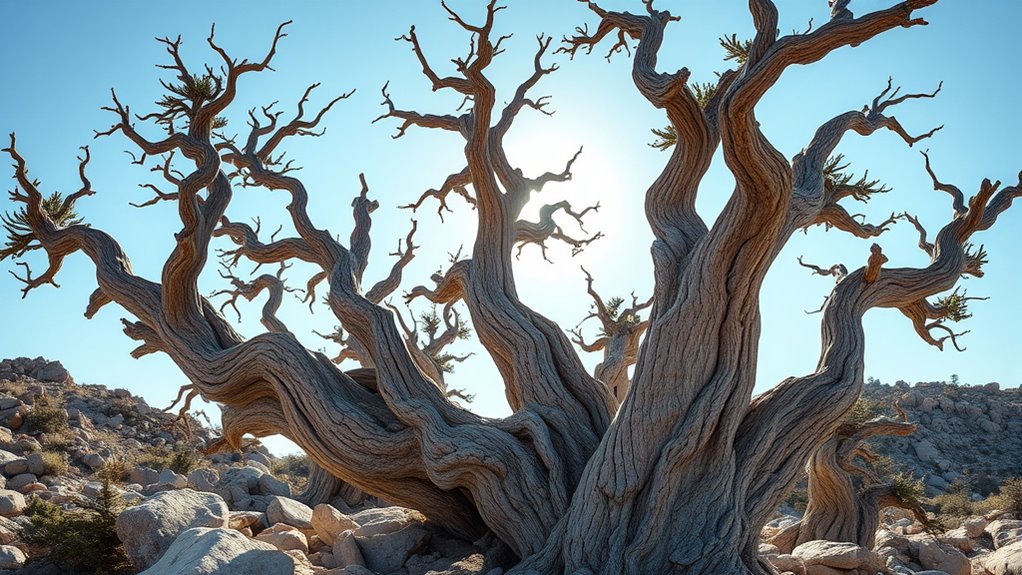
Have you ever wondered which organisms hold the title for the oldest on Earth? The answer lies with certain bristlecone pines, especially the Great Basin bristlecone pine (P. longaeva). These trees aren’t just old; they’re ancient, with some living over 5,000 years. The Methuselah tree in California’s White Mountains is about 4,850 years old, making it one of the oldest known non-clonal organisms. These trees survive in harsh, rocky environments at high elevations, which limits competition and preserves their longevity. Their slow growth, resin-rich wood, and ability to withstand extreme conditions help them live for millennia. Additionally, their resilience to environmental stressors is a key factor in their extraordinary lifespan. Their genetic adaptations also contribute to their ability to endure such extreme conditions over thousands of years. Furthermore, their clonal propagation allows some bristlecone forests to persist for tens of thousands of years through interconnected growth. Recent studies suggest that their unique antioxidant properties play a vital role in protecting their cells from oxidative damage over centuries.
Key Habitats and Geographic Distribution
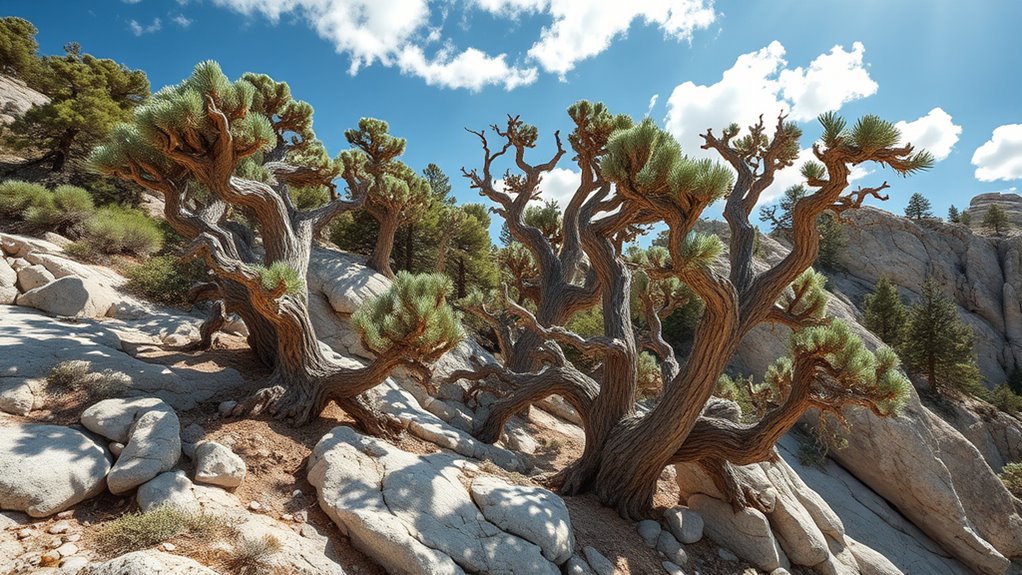
You’ll find these ancient trees mainly in high-elevation mountain areas with rocky, nutrient-poor soils. Their restricted geographic range helps protect them from widespread threats, but it also makes them vulnerable to climate change. This harsh environment plays a key role in their remarkable longevity and survival. Additionally, their ability to withstand challenging growing conditions is a testament to their impressive resilience and adaptations over thousands of years. The unique coastal zone environments where they thrive are shaped by wave and wind action, influencing the microclimates that support their growth. These extreme habitats have driven the evolution of specialized traits that enable the trees to endure such conditions. Their remarkable ability to resist environmental stressors has allowed them to persist through various climatic shifts over millennia. Understanding their ecological niche provides insight into how these trees have persisted in such extreme habitats over millennia.
Mountainous High Elevations
Mountainous high elevations provide the ideal habitats for some of the oldest living trees, such as bristlecone pines. These trees thrive at elevations between 8,000 and 11,000 feet, where the environment is cold, windy, and rocky. The thin, nutrient-poor soils limit competition from other plants, giving bristlecone pines an advantage. You’ll find these ancient trees mainly in the White Mountains of California, Great Basin National Park in Nevada, and parts of Utah and Colorado. The extreme conditions—low temperatures, high winds, and short growing seasons—slow their growth and reduce threats from pests and disease. This harsh environment plays a vital role in their longevity, helping them survive for thousands of years. Additionally, their ability to withstand stressful environmental conditions is a key factor in their remarkable lifespan. Their hardy nature also includes resistance to airborne pollutants, which further enhances their survival in challenging habitats.
Rocky, Nutrient-Poor Soils
The rocky, nutrient-poor soils of high-altitude environments shape the distribution of ancient bristlecone pines, confining them to specific geographic regions such as the White Mountains of California, Great Basin National Park in Nevada, and parts of Utah and Colorado. These soils contain minimal organic matter, making it difficult for most plants to thrive. Yet, bristlecone pines have adapted to survive in these harsh conditions, developing dense, resinous wood resistant to decay. Their roots penetrate fractured rocks for nutrients and water, while slow growth rates reduce the need for abundant resources. The extreme environment limits competition and predators, allowing these trees to persist for thousands of years. Their resilience in such nutrient-poor soils is key to their extraordinary longevity and unique ecological niche. A remarkable adaptation that supports their survival is their ability to conserve water efficiently in these arid conditions, which is essential for thriving in extreme environments. Additionally, their ability to withstand environmental stressors further enhances their longevity in such challenging habitats.
Restricted Geographic Range
Despite their incredible longevity, the oldest living trees are confined to specific, specialized regions. You won’t find these ancient bristlecone pines growing just anywhere—they thrive only in high-altitude, harsh environments. Their limited range includes California’s White Mountains, Nevada’s Great Basin, and parts of Utah and Colorado. These areas provide rocky, nutrient-poor soils and cold temperatures that suppress competition and predators, helping these trees survive millennia. The following table highlights key locations and conditions:
| Location | Conditions |
|---|---|
| White Mountains, California | 8,000–11,000 ft, rocky, cold, minimal soil |
| Great Basin National Park | Rocky, dry, high elevation |
| Utah and Colorado | Similar high-altitude, rugged terrain |
| Unique habitats | Limited, specialized environments |
Secrets Behind Their Longevity
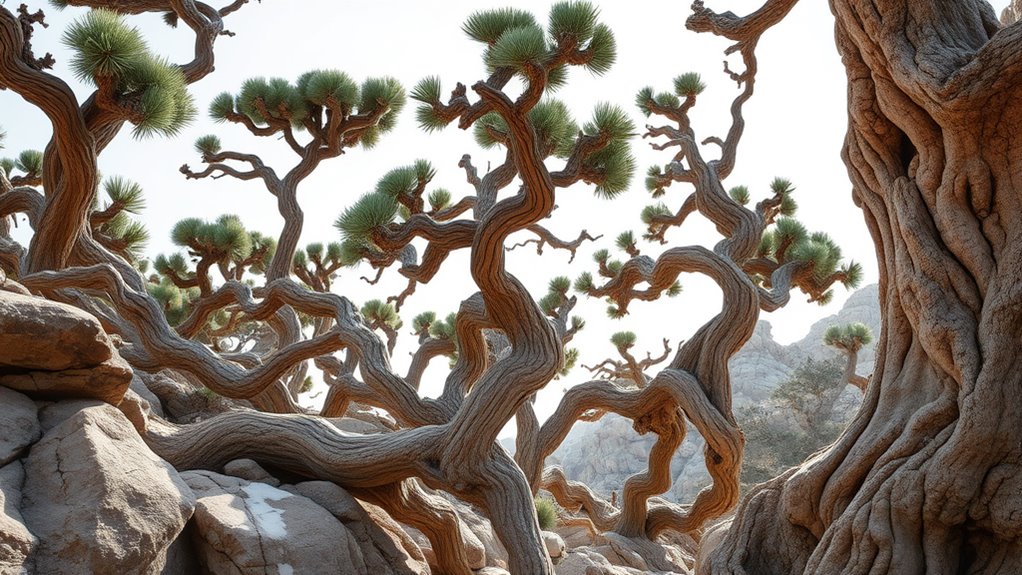
Bristlecone pines achieve their extraordinary lifespan through a combination of unique biological and environmental factors. Their high ratio of dead wood to live tissue reduces respiration and water loss, helping them survive harsh conditions. They also exhibit high telomerase activity, which slows cellular aging by maintaining telomere length. Unlike most pines, their needles stay attached for over 40 years, ensuring survival during droughts or cold spells. Their slow growth rate results in dense, resinous, and decay-resistant wood, enabling them to withstand environmental stress and decay. Additionally, their ability to form growth rings only during favorable years provides precise climate data. These trees also possess drought tolerance mechanisms that allow them to endure prolonged dry periods. Their adaptations to environmental stress help minimize damage and conserve resources. Their capacity for climate resilience further contributes to their longevity, allowing them to endure changing conditions over millennia. Moreover, their genetic stability plays a crucial role in maintaining their resilience across centuries. This stability is partly facilitated by their ability to maintain a balanced cellular function, which is essential for longevity. Together, these adaptations minimize damage, conserve resources, and extend their lifespan, making bristlecone pines some of the longest-living organisms on Earth.
Notable Ancient Bristlecone Pines
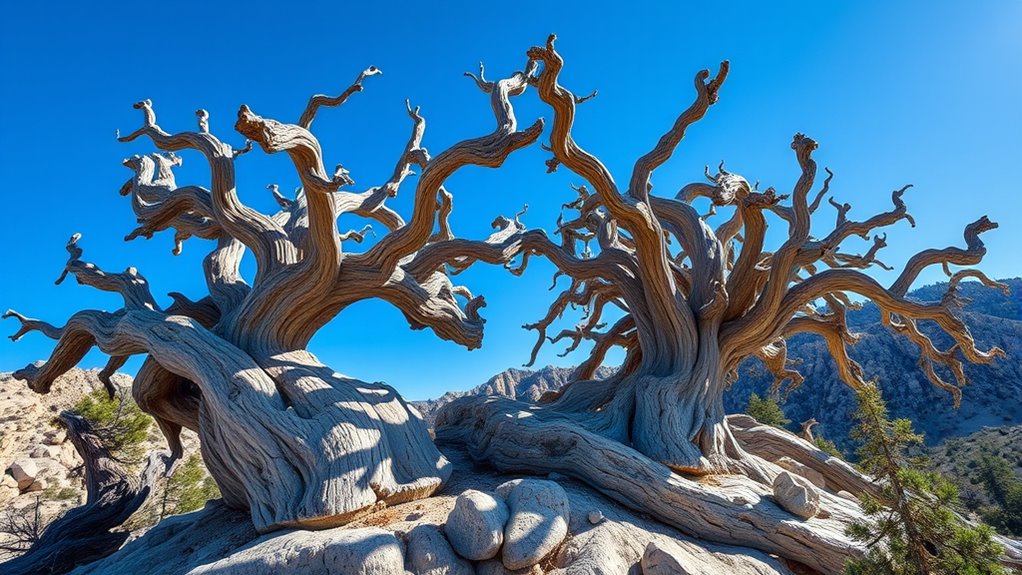
Among these ancient giants, some trees stand out not just for their age but also for their remarkable stories and unique characteristics. The Methuselah tree in California’s White Mountains is famous worldwide, estimated to be about 4,850 years old. Nearby, a tree discovered in 2012 is believed to be over 5,060 years old, making it one of the oldest known living organisms on Earth. The Prometheus tree, cut down in 1964, was nearly 5,000 years old and held the record before its loss. In Colorado, Rocky Mountain bristlecone pines live up to around 2,480 years. These notable specimens showcase the species’ incredible longevity and resilience, standing as living proof of nature’s ability to endure through millennia.
How These Trees Help Us Understand Climate History
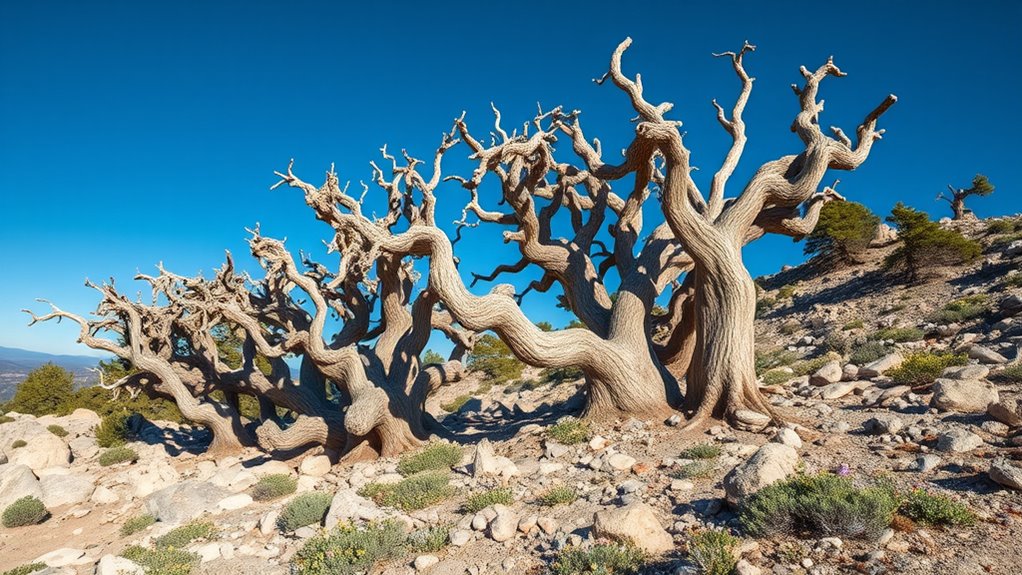
Ancient bristlecone trees serve as invaluable natural archives that reveal Earth’s climate history. Their growth rings, formed annually, record environmental conditions year by year, making them essential for climate reconstruction. By analyzing these rings, you can identify periods of drought, cold, or moisture, helping scientists understand past climate fluctuations. Because bristlecones survive in harsh environments with minimal disturbance, their rings provide continuous, high-resolution data over thousands of years. Comparing ring patterns across different trees allows researchers to identify regional climate trends and anomalies. This detailed record helps validate climate models and improves predictions of future changes. Additionally, advances in dendrochronology techniques enable more precise dating and climate interpretation from the rings. In essence, these trees act as time capsules, offering insights into Earth’s climate evolution and informing our understanding of how climate systems respond to natural and human influences. The study of their rings also contributes to our knowledge of paleoclimatology, helping us piece together climate patterns from the distant past. Moreover, recent research has highlighted how tree-ring data can be integrated with other climate proxies to develop comprehensive climate reconstructions. Incorporating climate variability analysis enhances the accuracy of these reconstructions and helps identify long-term trends.
Unique Features of Bristlecone Pine Morphology
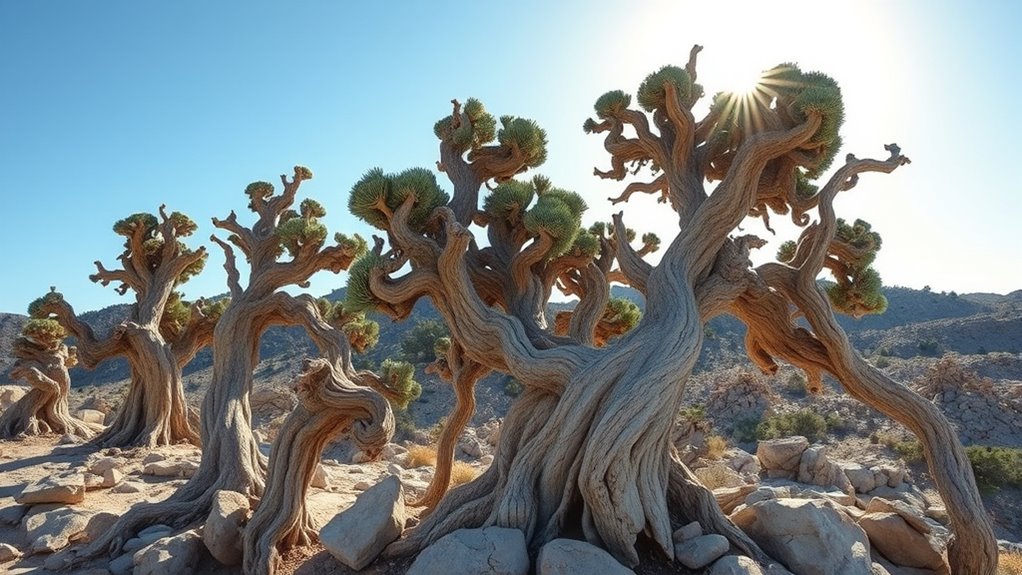
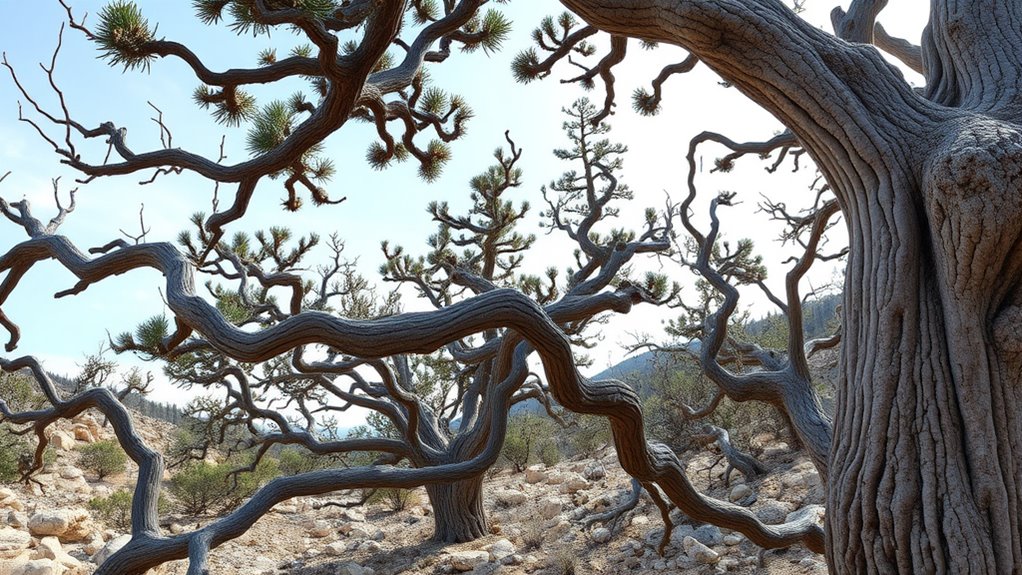
You’ll notice that bristlecone pines have a gnarled, resilient appearance, shaped by centuries of harsh conditions. Their needles stay green and viable for decades, supporting survival in extreme environments. The trees also boast dense, resinous wood that resists decay, helping them endure for thousands of years. Additionally, their unique vocal techniques and health contribute to their remarkable longevity by minimizing stress on the trees’ structural components.
Gnarled, Resilient Form
The bristlecone pine’s distinctive gnarled and twisted appearance is a direct result of its harsh environment and slow growth rate. As you observe, its contorted branches and knobby trunk reflect decades of surviving extreme weather, wind, and cold temperatures. The tree’s resilience is apparent in its dense, resinous wood, which is highly resistant to decay, enabling it to withstand partial death and damage. Its compact form minimizes surface area, reducing water loss and weather exposure. The irregular, rugged structure also helps conserve nutrients in nutrient-poor soils. Over centuries, this hardy morphology not only protects the tree but also embodies its extraordinary ability to endure in some of Earth’s most extreme conditions, standing as a record of nature’s resilience.
Long-Lasting Needles
Bristlecone pines have developed a remarkable adaptation in their needles that contributes substantially to their extraordinary longevity. Unlike most pines, their needles stay attached for over 40 years, reducing the energy needed for new needle growth each season. This long-lasting trait helps conserve resources in harsh environments with limited nutrients and water. The needles are densely packed with resin, making them highly resistant to decay and pests. Their small size and thick, waxy coating minimize water loss, essential during cold, dry winters. By retaining needles for decades, bristlecone pines maintain photosynthesis during years of minimal growth, supporting survival in extreme conditions. This unique needle longevity plays a vital role in their ability to endure for thousands of years.
Durable, Resinous Wood
Their wood is remarkably dense, resin-rich, and resistant to decay, which plays a vital role in the trees’ longevity. This durability helps bristlecone pines survive harsh conditions and resist pests and rot. The high resin content acts as a natural preservative, sealing wounds and preventing microbial invasion. Their unique wood structure enables them to withstand extreme environmental stress over millennia. To highlight this, consider the table:
| Feature | Effect | Benefit |
|---|---|---|
| Density | Slows decay and insect damage | Extends lifespan |
| Resin Content | Protects against rot and pests | Maintains structural integrity |
| Decay Resistance | Preserves wood in harsh environments | Supports survival in extreme habitats |
This resilient wood is key to their extraordinary age.
Challenges in Preserving Ancient Giants
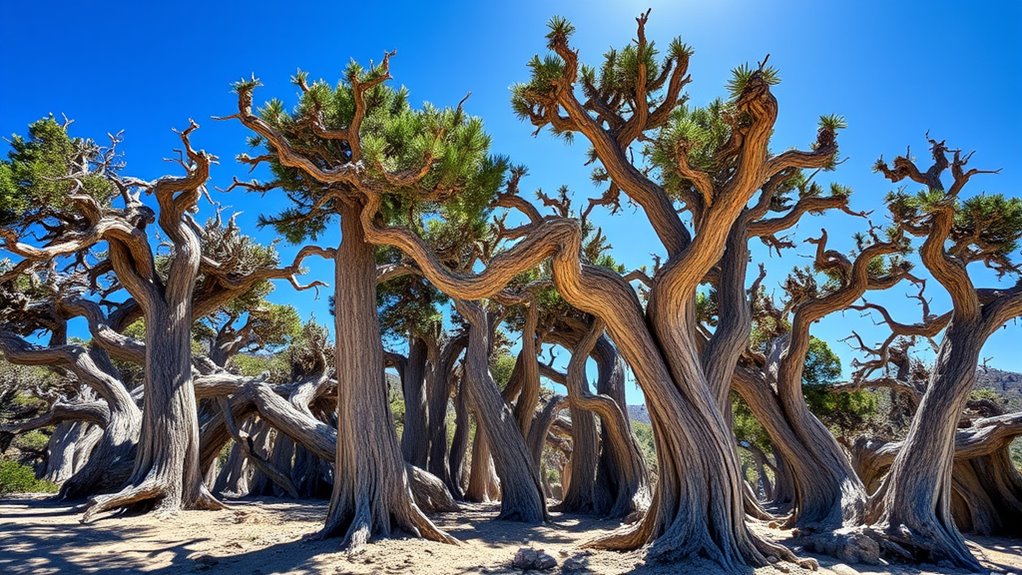
Preserving ancient giants presents numerous challenges, especially as climate change and human activity threaten their fragile habitats. You must protect these vulnerable trees from environmental stresses like drought, temperature fluctuations, and shifting weather patterns that can accelerate decline. Human actions, such as vandalism, illegal collection, and land development, pose immediate risks; the locations of the oldest trees are kept secret to prevent damage. Additionally, rising temperatures may cause habitat loss, forcing these trees to adapt or die. Conservation efforts require ongoing monitoring, habitat protection, and strict regulations. You also face the challenge of balancing scientific research with preservation, ensuring that studying these trees doesn’t inadvertently harm them. Ultimately, safeguarding these living relics demands vigilance, informed policies, and public awareness to secure their survival for future generations.
Recent Discoveries and Future Research Directions
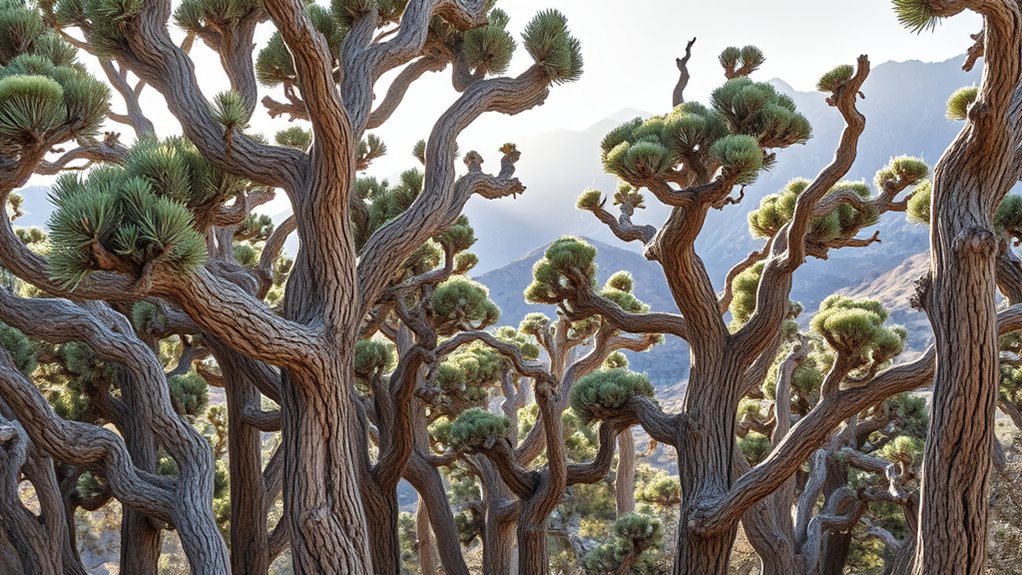
Recent discoveries are reshaping our understanding of the oldest living trees, with researchers identifying specimens in unexpected regions that challenge previous age records. For instance, new ancient bristlecone pines have been found in Chile, suggesting that the species’ longevity isn’t limited to North America. These findings open avenues for comparative studies, helping scientists understand genetic and environmental factors behind extreme longevity. Future research aims to decode the molecular mechanisms that enable these trees to withstand harsh conditions for millennia. Additionally, advancements in dendrochronology and genetic analysis will improve age estimates and reveal adaptive traits. Protecting these trees from climate change and human activity remains a priority, and international collaboration will be crucial to uncover more ancient specimens and reveal their secrets.
Frequently Asked Questions
How Do Bristlecone Pines Resist Pests and Diseases Over Thousands of Years?
You might be surprised to learn that bristlecone pines resist pests and diseases through their dense, resinous, and decay-resistant wood, which creates a natural barrier. Their slow growth and hardy adaptation to harsh environments also limit vulnerability. Additionally, their high levels of chemical compounds deter pests, while their ability to survive in nutrient-poor soils reduces the chances of infections. This combination helps them endure for thousands of years.
What Specific Genetic Traits Contribute to Their Extraordinary Longevity?
You notice that bristlecone pines boast remarkable longevity thanks to their genetic traits. Their high telomerase activity helps heal and preserve cellular health, halting harmful telomere shortening. Additionally, their slow, sustainable growth reduces metabolic stress, while their resin-rich, decay-resistant wood wards off pests. These resilient, radiating traits work together, weaving a web of endurance that allows them to withstand centuries of harsh habitats and environmental hardships.
How Do Climate Changes Threaten the Survival of These Ancient Trees?
Climate change threatens these ancient trees by altering their high-altitude habitats, making conditions harsher or unpredictable. Rising temperatures can cause drought stress, increase pests, and lead to more frequent freeze-thaw cycles that damage their fragile tissues. As a result, you risk losing these irreplaceable living records of Earth’s climate history, and their resilience could diminish if their environment continues to change rapidly.
Are There Comparable Ancient Tree Species in Other Parts of the World?
Yes, there are other ancient trees around the world that rival the bristlecone pines’ age. In Chile’s Alerce forests, you’ll find Fitzroya trees living over 3,600 years, and Japan’s Jōmon Sugi is estimated to be around 2,000 to 7,000 years old. These silent giants hide their secrets in remote, rugged terrains, waiting to reveal their incredible stories of endurance and resilience—if you’re lucky enough to find them.
What Conservation Efforts Are Most Effective in Protecting These Fragile Trees?
You can protect these fragile trees most effectively by supporting conservation programs that safeguard their high-altitude habitats from climate change and human activity. Avoid vandalism and follow guidelines if visiting designated areas. Advocate for policies that limit development and pollution near these ecosystems. Additionally, promote awareness about their importance in climate research and history, ensuring their preservation for future generations. Your efforts help maintain their longevity and ecological significance.
Conclusion
As you marvel at these ancient giants, remember they’re living attestations to resilience—nature’s silent storytellers whispering secrets of Earth’s history. Their enduring presence reminds us that, like these trees, our own strength lies in perseverance through time’s storms. Cherish and protect these bristlecone pines, for in their petrified silence, they teach us that even in age and adversity, life’s enduring spirit remains unbroken—waiting for us to listen and learn.