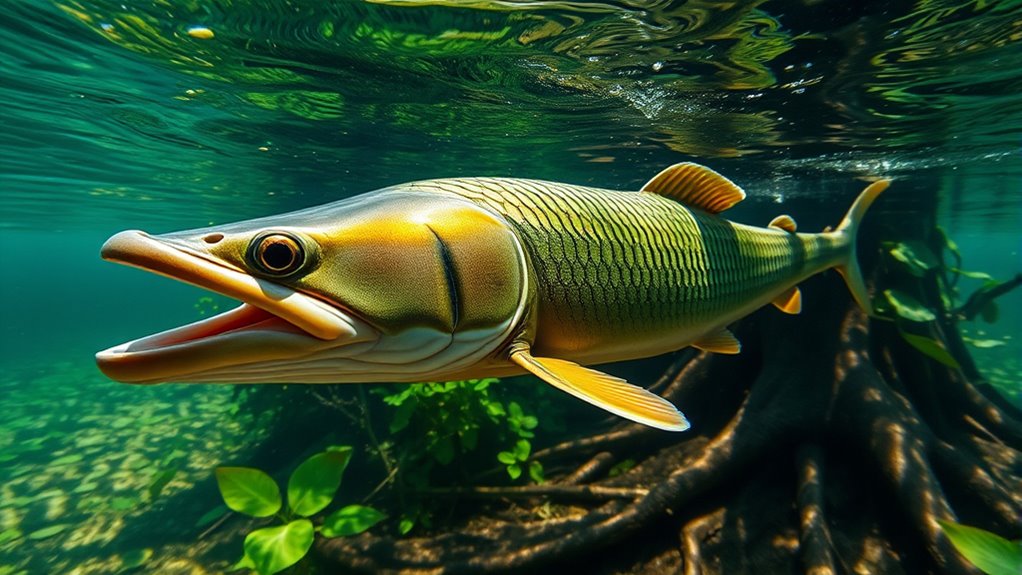

Gars have survived over 100 million years thanks to their primitive, lung-like gas bladder that lets them breathe air in low-oxygen waters. This ancient adaptation provides a survival advantage in stagnant ponds, swamps, and floodplain pools, where oxygen levels drop. Their specialized anatomy, including a vascularized lining and muscular structures, helps them thrive in challenging environments. To discover how these ancient fish continue to survive today, explore the fascinating features behind their resilience.
Key Takeaways
- Gars possess a primitive lung-like gas bladder lined with blood vessels, enabling efficient air breathing.
- Their lung structure has remained evolutionarily stable for over 100 million years, aiding survival in hypoxic waters.
- Gars can gulp air at the water surface, allowing them to thrive in low-oxygen, stagnant habitats.
- Their primitive lungs help them withstand environmental challenges like pollution, habitat destruction, and climate change.
- The long-term stability and functionality of their lung-like organs have contributed to their status as living fossils.

API Stress Coat Aquarium Water Conditioner 16-Ounce Bottle
- Product Size: 16-ounce bottle
- Dual-Action Formula: Makes water safe for fish
- Chemical Removal: Eliminates harmful tap water chemicals
As an affiliate, we earn on qualifying purchases.
As an affiliate, we earn on qualifying purchases.
The Ancient Roots of Gars
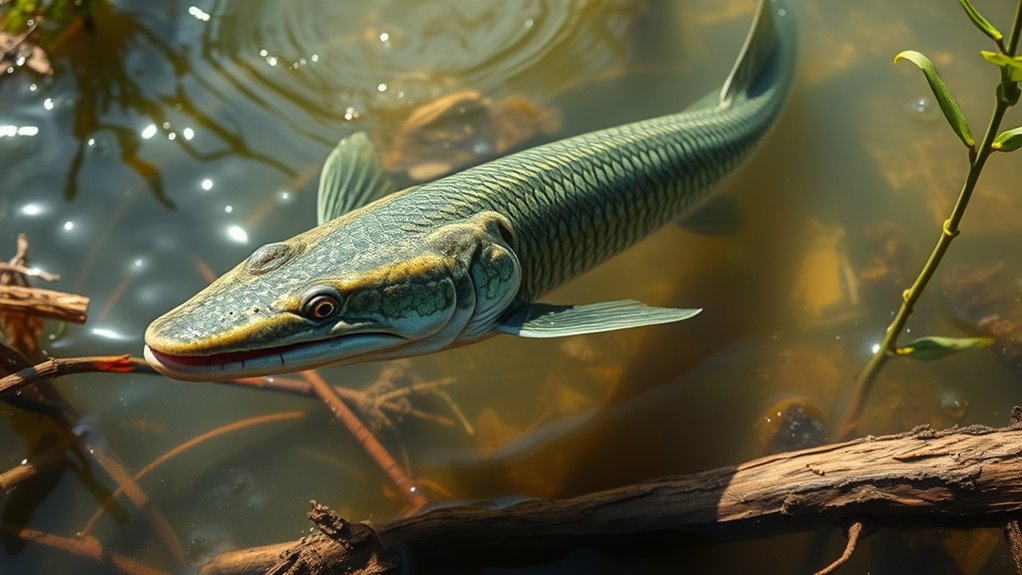
Gars have ancient origins that date back over 240 million years to the Middle Triassic period. You’re looking at living fossils, the only remaining members of the Ginglymodi group, which thrived during the Mesozoic era. These fish have persisted through massive environmental changes, making them one of the oldest surviving bony fish lineages. Their evolutionary history is slow, with the least rapid molecular evolution among jawed vertebrates, which helps explain their long-term stability. You’ll find their closest relatives today are bowfin fish, with both species forming the Holostei clade that diverged during the Late Permian. The oldest anatomically modern gar, Nhanulepisosteus, appeared around 157 million years ago in the Upper Jurassic, showing their remarkable resilience and ancient roots. Their fossil record illustrates a continuous presence that has outlived numerous mass extinctions, emphasizing their status as true survivors in vertebrate history. Additionally, their distinctive morphology has remained relatively unchanged, contributing to their reputation as living fossils. Understanding their biodiversity helps us appreciate the importance of conserving such ancient lineages for ecological and evolutionary insights.
Unique Anatomy of the Gar’s Respiratory System
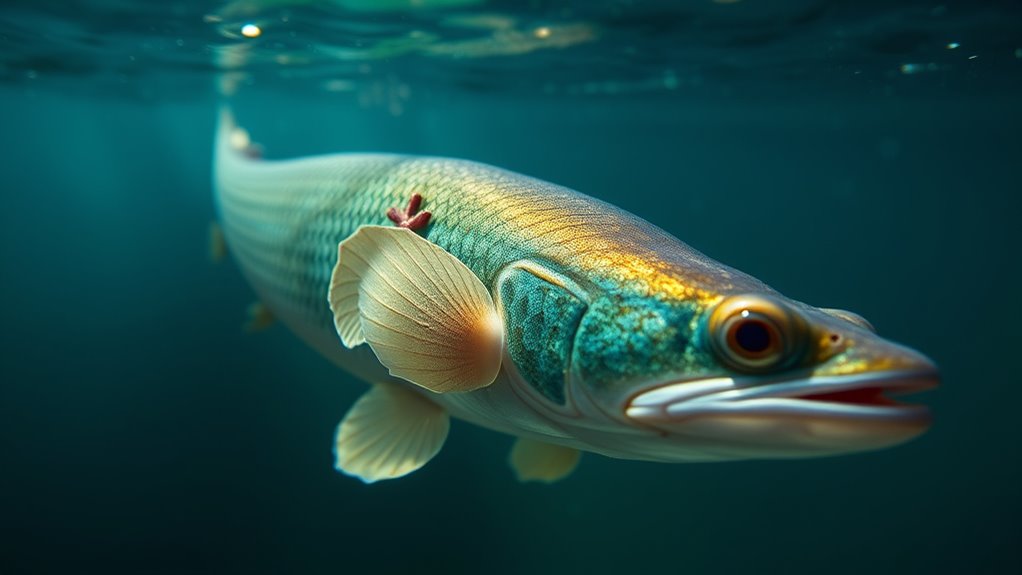
You’ll notice that the gar’s air sac has a unique structure resembling a primitive lung, with a vascularized, ciliated lining that helps facilitate breathing. Its central canal divides the gas bladder into lobes, supported by muscles and blood vessels, forming an efficient respiratory surface. The tissue composition, including mucus cells and pneumocytes, plays a vital role in its ability to extract oxygen from air. This specialized respiratory adaptation allows the gar to thrive in low-oxygen environments, showcasing its remarkable respiratory system adaptability. The presence of natural habitats with fluctuating oxygen levels has driven the evolution of these unique respiratory features, ensuring its survival over millions of years. Its ability to utilize both aquatic and aerial respiration exemplifies its dual respiratory capabilities, making it a fascinating subject for evolutionary biology. Moreover, the gar’s respiratory system demonstrates how adaptations can develop in response to environmental challenges, highlighting the dynamic nature of evolutionary processes. This evolutionary development underscores the importance of environmental pressures in shaping respiratory innovations over time.
Air Sac Structure
The air sac structure in gars is a highly specialized adaptation that enables efficient aerial respiration. Your gar’s gas bladder develops dorsal to the pharynx as a vascularized air sac lined with ciliated columnar epithelium, facilitating gas exchange outside water. A short, approximately 5mm pharyngeal-esophageal duct connects the sac to the esophagus, controlled by two glottal ridges, allowing air intake and expulsion. The central canal divides the bladder into right and left lobes, further separated by septa into interconnected air spaces. These septa contain blood vessels, smooth, and striated muscles, providing structural support and controlling air flow. The internal surface hosts a continuous respiratory epithelial layer with mucus cells, pneumocytes, and ciliated cells, optimizing gas exchange during aerial breathing. Enhanced security protocols in electronic systems help protect these delicate respiratory structures from potential threats. Understanding the efficiency of such respiratory adaptations highlights the importance of specialized anatomy in survival. The development of such structures can be linked to AI-powered monitoring techniques that assess the health and functionality of respiratory tissues in real-time, and advancements in biomedical technology further support the preservation of these unique adaptations. Additionally, studies on respiratory efficiency can provide insights into how these structures evolved and function under different environmental pressures.
Respiratory Tissue Composition
The respiratory tissue of gars is uniquely adapted to support efficient aerial gas exchange within their specialized air sacs. The inner lining features a continuous layer of respiratory epithelium, including mucus-producing cells, pneumocytes, and ciliated epithelial cells. This tissue facilitates gas diffusion between the blood vessels and the air spaces inside the sac. Blood vessels are densely packed within the septa, providing a large surface area for oxygen uptake and carbon dioxide release. The septal muscles, composed of smooth and striated fibers, regulate airflow and maintain structural integrity during respiration. This specialized tissue composition allows gars to maximize oxygen extraction from air, ensuring survival in low-oxygen environments. The combination of epithelial cells, blood vessel networks, and muscular support makes their respiratory tissue highly efficient. Additionally, the development of respiratory system adaptations reflects their evolutionary success in diverse habitats.
How Gars Breathe Air

Gars breathe air by using their specialized gas bladder, which functions much like a primitive lung. This organ is a vascularized air sac located dorsal to the pharynx, lined with ciliated columnar epithelium that facilitates gas exchange. When oxygen levels in water drop, you’ll notice the gar rising to the surface and gulping air. The bladder is divided into right and left lobes by a central canal, with septa made of blood vessels and muscle supporting its structure. As you observe, airflow occurs through a process called obligate air breathing, where the gar actively fills its bladder with air. This adaptation allows the fish to survive in hypoxic waters, giving it an edge over species that rely solely on gill respiration. Understanding respiratory adaptations helps explain how gars thrive in low-oxygen environments. Additionally, gars have developed a unique breathing mechanism that enables efficient gas exchange even in severely oxygen-depleted habitats. This remarkable ability is supported by their specialized respiratory structures, which enhance their survival in challenging conditions. Moreover, the presence of this lung-like organ is a key evolutionary trait that has contributed to their longevity and resilience over millions of years. Their ability to perform air breathing is an example of an adaptation that has enabled gars to persist through major environmental changes across geological timescales.
Evolutionary Benefits of Lung-Like Structures
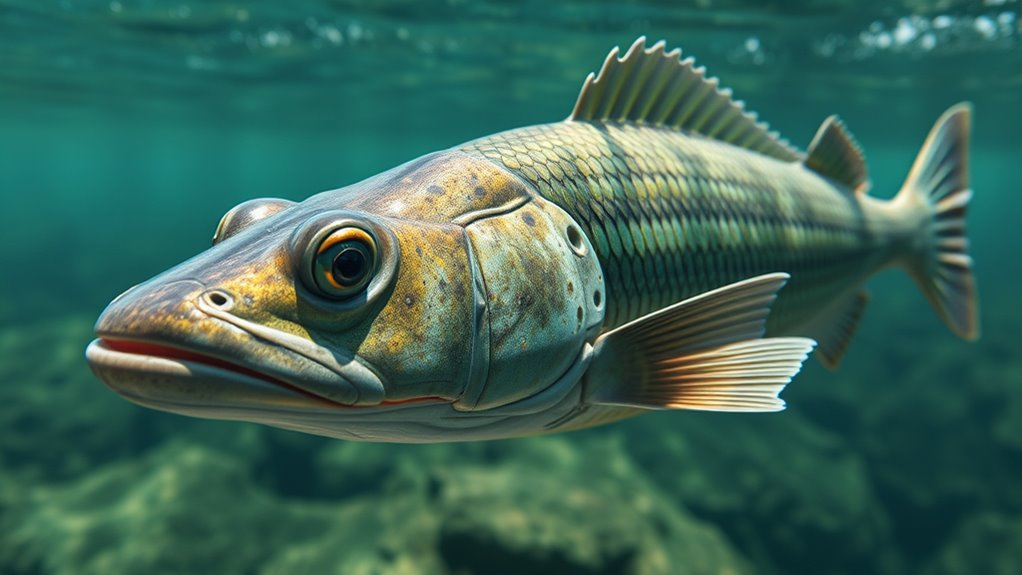
Lung-like structures give fish like gars a significant advantage when oxygen levels drop in their environment. By accessing air, they can survive in habitats where other fish can’t, boosting their chances of persistence. This adaptation creates key survival strategies, especially in low-oxygen or disconnected waters. Their ability to utilize oxygen from air is a crucial factor in their evolutionary success. Additionally, this trait exemplifies how physical adaptations can enhance survival in changing environments. Such features demonstrate the importance of evolutionary adaptations in enabling species to thrive under challenging conditions. The development of lung-like structures is a remarkable example of how natural selection can drive significant morphological changes for survival.
Enhanced Survival Strategies
One of the key ways lung-like structures boost survival is by allowing fish to thrive in low-oxygen environments where most species struggle. With their ability to breathe air, gars can access habitats others can’t, like stagnant ponds and floodplain pools. This advantage means fewer competitors and predators, increasing their chances of survival during droughts or habitat disruptions. The lung-like organ also enables gars to exploit food sources unavailable to purely gill-breathing fish, such as prey in oxygen-depleted waters. Additionally, this adaptation supports persistence through environmental changes that would otherwise threaten their existence. Over millions of years, this trait has provided gars with resilience, enabling them to occupy niches that are inhospitable to most fish, securing their survival against shifting climates and habitat loss. Recognizing these adaptations highlights how physiological innovations can significantly influence a species’ evolutionary success.
Access to Low-Oxygen Environments
The ability to breathe air directly grants gars a significant advantage in environments where oxygen levels are too low for most fish to survive. You’d find that gars can access oxygen in stagnant, hypoxic waters where other fish suffocate. Their lung-like swim bladder acts as a reliable oxygen source, allowing them to endure in disconnected water bodies like oxbows, sloughs, or floodplains. This adaptation means they don’t need constant water movement or high oxygen content, giving them a survival edge during droughts or pollution spikes. By breathing air, gars avoid competition with species that rely solely on dissolved oxygen. This trait ensures they remain active and hunt efficiently even when water quality declines, securing their presence in challenging habitats for over 100 million years.
Gar’s Adaptation to Low-Oxygen Environments

Gar’s unique air-breathing adaptation allows it to thrive in environments with dangerously low oxygen levels. When water becomes hypoxic, you’ll notice the gar surfacing frequently, gulping air at the surface. Its specialized gas bladder, which functions like a primitive lung, supplies oxygen directly from the air, bypassing the gills. This ability lets you find gar in stagnant ponds, oxbows, and sluggish rivers where oxygen is scarce. The vascularized bladder, lined with mucus and ciliated cells, facilitates efficient gas exchange. Its muscular septa and blood vessel networks support rapid air intake and circulation. By relying on this adaptation, the gar can survive conditions that would quickly suffocate other fish, giving it a pivotal edge in low-oxygen habitats. This resilience has helped it persist for over 100 million years.
Comparing Gars to Other Lunged Fish
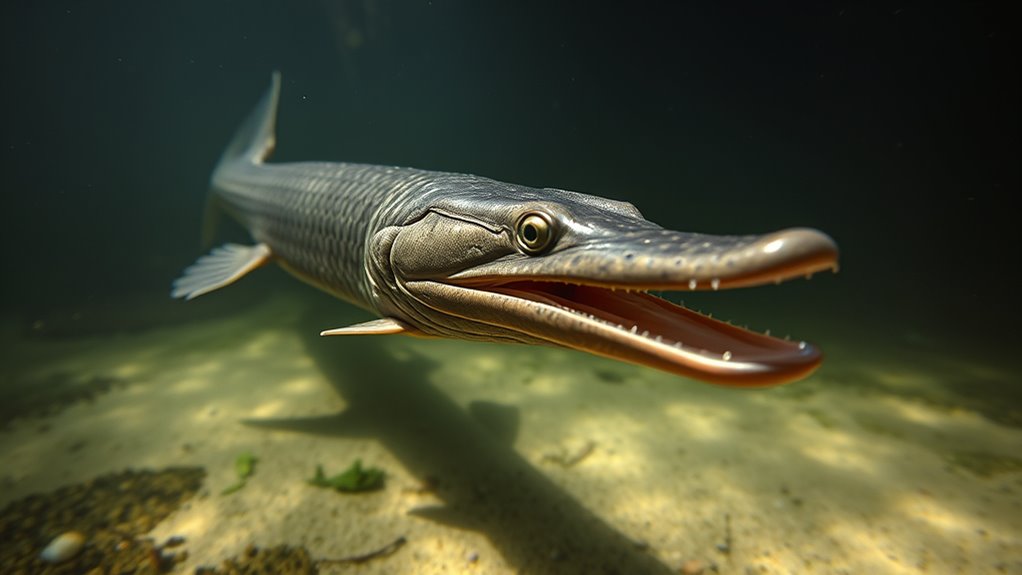
When comparing gars to other lunged fish, you’ll notice differences in their lung structures and how they support respiration. Gars have a primitive lung-like swim bladder with unique vascularization, unlike more advanced lunged fish that evolved specialized lungs. These variations reflect distinct evolutionary paths and breathing mechanisms that help each group survive in low-oxygen environments.
Lung Structures Comparison
Comparing lung structures in gars and other lunged fish reveals key differences in design and function that reflect their distinct evolutionary paths. Gars have a primitive lung-like swim bladder with a vascularized lining and septa, supporting efficient air exchange. In contrast, some lunged fish, like lungfish, possess highly specialized, compartmentalized lungs with alveoli for gas diffusion. Particularly:
- Gars’ lungs resemble early amphibian lungs, mainly serving buoyancy and limited respiration.
- Lungfish lungs are more complex, adapted for extended terrestrial excursions.
- Gars rely on a simple, vascularized swim bladder, while other lunged fish developed multi-chambered lungs.
These structural differences highlight how gars retained a basic lung form, whereas other species evolved advanced respiratory organs suited for diverse environments.
Evolutionary Divergence Patterns
Have you ever wondered how gars diverged from other lunged fish in their evolutionary journey? Gars stand out because they’re the only surviving members of a once-diverse group, Ginglymodi, which thrived during the Mesozoic era. Unlike other lunged fish, gars maintained a slow molecular evolution rate, which slowed their speciation and kept them relatively unchanged over millions of years. Their closest relatives, bowfin, also exhibit primitive features, highlighting a shared ancestral path. While many lunged fish developed more advanced lungs or adaptations for different environments, gars retained their primitive lung-like swim bladder, giving them an edge in low-oxygen habitats. This divergence shows how gars preserved ancient traits while other lineages diversified or vanished.
Breathing Mechanism Variations
Gars exhibit a unique breathing mechanism that sets them apart from other lunged fish by relying primarily on a specialized gas bladder that functions like a primitive lung. Unlike many lunged fish that use paired lungs or modified swim bladders, gars have a dorsal gas bladder lined with a vascularized epithelium, enabling efficient aerial respiration. This adaptation allows them to survive in low-oxygen environments where other fish can’t breathe. To understand the differences, note that:
- Gars use a vascularized gas bladder with a duct-controlled gulping process, unlike lungfish that have paired lungs.
- Their swim bladder is highly vascularized, resembling amphibian lungs, unlike the simple, less complex structures in other fish.
- The breathing process involves a central canal and septa, creating a highly efficient, compartmentalized air exchange system.
This variation highlights the gar’s specialized adaptation for survival across diverse habitats.
The Role of the Gas Bladder in Survival
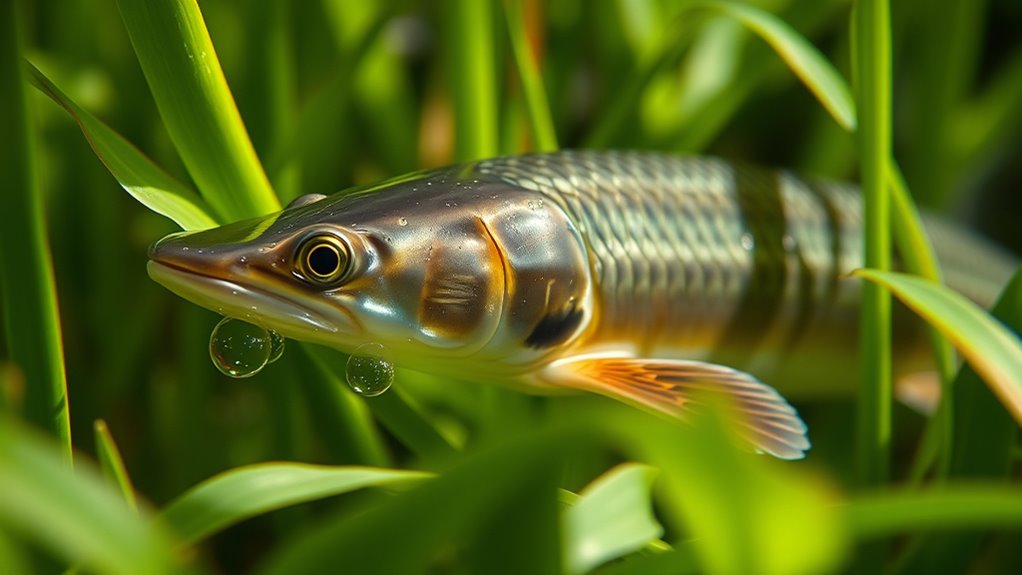
The gas bladder plays a vital role in the gar’s survival by serving as an efficient air-breathing organ that supplements its gill respiration. It allows you to breathe air directly from the surface, especially in low-oxygen waters. The bladder is a vascularized, lung-like structure lined with ciliated epithelium, enabling gas exchange. This adaptation lets you endure environments where other fish cannot survive. The table below highlights key features:
| Feature | Function |
|---|---|
| Dorsal origin of gas bladder | Provides structural support for breathing |
| Central canal | Distributes air within lobes and air spaces |
| Blood vessel network | Facilitates oxygen transfer during air-breathing |
This organ significantly boosts your chances of survival in challenging habitats, making you a resilient species through millions of years.
Environmental Challenges and Resilience
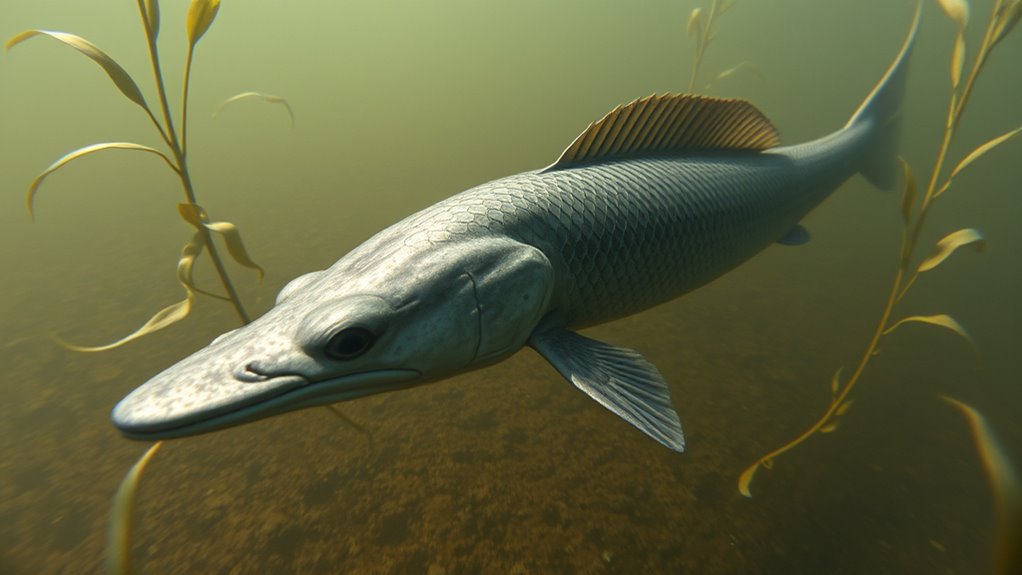
Despite their remarkable adaptations, gars face significant environmental challenges that threaten their survival. Pollution from agriculture and industry contaminates their habitats, impacting water quality and oxygen levels. Climate change causes temperature fluctuations and droughts, reducing suitable living spaces. Additionally, habitat destruction from urban development and dam construction fragments populations. To survive, gars rely on their air-breathing ability, which offers resilience in low-oxygen environments. However, this advantage is under threat from increasing pollutants. Key challenges include:
- Water pollution decreasing oxygen availability and increasing toxins.
- Habitat loss reducing migration routes and breeding sites.
- Climate shifts causing unpredictable water conditions.
Your understanding of these threats highlights the importance of conservation efforts to preserve gars and their unique adaptations.
Gar’s Place in the Modern Ecosystem
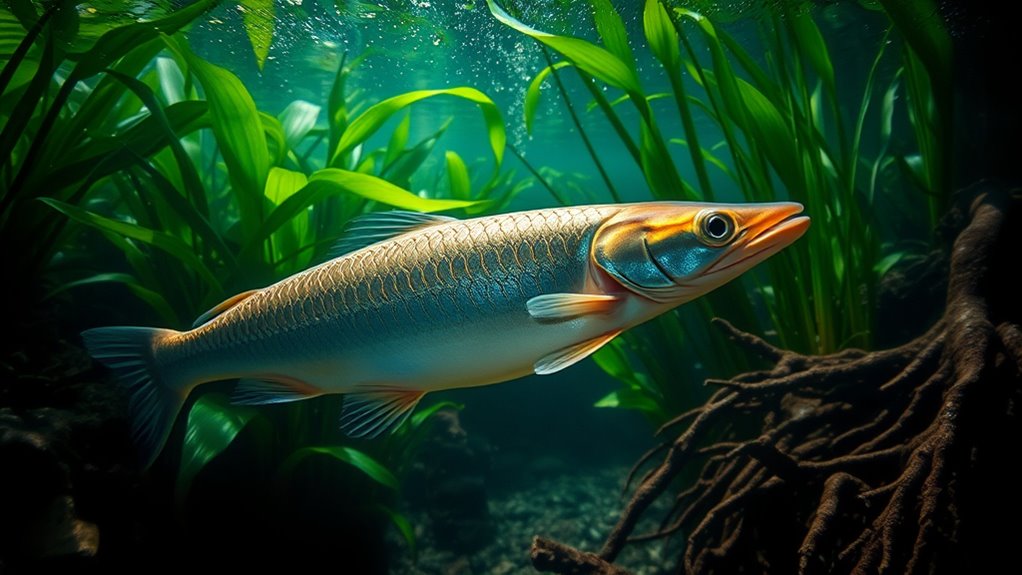
In modern ecosystems, gars occupy a unique niche as resilient predators capable of surviving in low-oxygen and polluted waters. Their air-breathing ability allows them to thrive where many fish cannot, especially in stagnant or degraded habitats. Gars often dominate shallow lakes, swamps, and estuaries, where they hunt for fish, amphibians, and invertebrates. Their presence helps control prey populations and maintain ecological balance. You’ll find gars coexisting with other species, often filling a predator role that fewer fish can match. Here’s a snapshot of their ecological role:
| Habitat | Prey | Predators/Threats |
|---|---|---|
| Shallow lakes | Fish, amphibians, invertebrates | Larger fish, humans |
| Swamps | Small fish, insects | Habitat loss, pollution |
| Estuaries | Crustaceans, mollusks | Commercial fishing |
| Floodplains | Juvenile fish, insects | Habitat alteration |
| Oxbows | Small fish, amphibians | Overfishing, pollution |
The Longevity of Primitive Lung Features
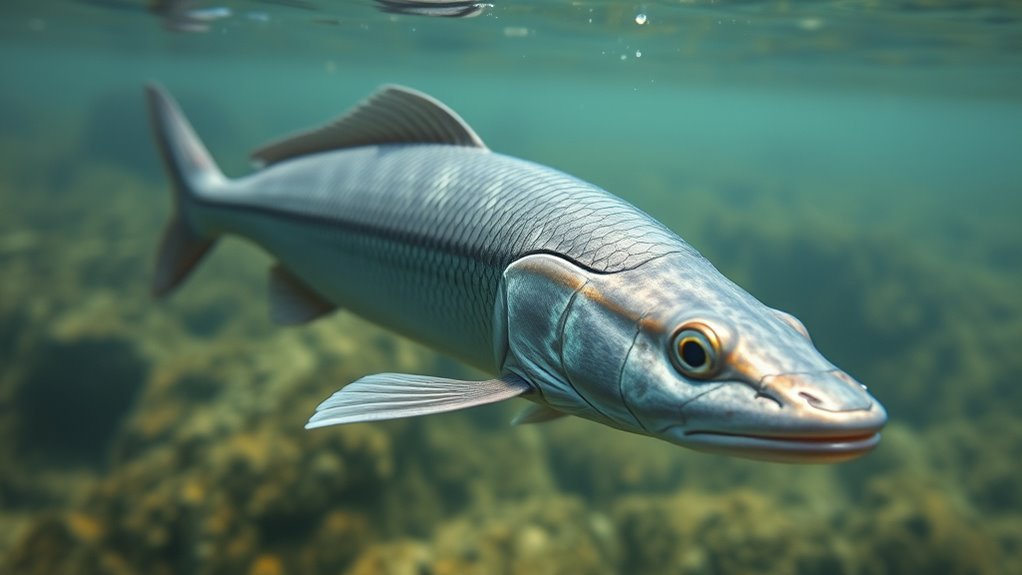
Primitive lung features in gars have persisted for over 100 million years, highlighting their remarkable evolutionary stability. This durability shows how these ancient structures provided a significant survival advantage. Your understanding of this longevity reveals key points:
Gars’ primitive lung features have remained unchanged for over 100 million years, showcasing remarkable evolutionary stability and survival advantage.
- Evolutionary Advantage: The primitive lung allows gars to survive in low-oxygen environments where other fish cannot thrive.
- Structural Resilience: Their lung-like swim bladder, lined with blood vessels and tissues, has remained unchanged due to its efficiency.
- Limited Change: Gars’ slow molecular evolution rate means their primitive lung features evolved very little over millions of years, maintaining their original function.
This stability underscores how primitive lung features continue to serve gars effectively, demonstrating a rare evolutionary success story.
Frequently Asked Questions
How Does the Gar’s Lung-Like Structure Compare to Amphibian Lungs?
Your gar’s lung-like structure closely resembles amphibian lungs, especially in its vascularized, air-filled bladder that supports efficient gas exchange. Like amphibian lungs, it has a rich blood supply and a surface lined with mucus and epithelial cells, facilitating oxygen absorption. Unlike mammalian lungs, it lacks alveoli but still functions to supplement gill respiration during low oxygen conditions, showcasing its primitive but effective respiratory adaptation.
What Specific Genetic Mutations Enabled Gar’s Primitive Lung Development?
You find that specific genetic mutations, such as changes in genes regulating lung development like Tbx4 and Tbx5, enabled the gar’s primitive lung formation. These mutations promote the growth of vascularized air sacs and support structures within the gas bladder. These genetic shifts allowed the gar to develop an air-breathing organ, giving it a survival advantage in low-oxygen environments and contributing to its evolutionary resilience.
Are There Any Other Fish Species With Similar Lung Adaptations?
Yes, some other fish species have similar lung adaptations. For instance, the bowfin also possesses a primitive lung-like structure that helps it survive in low-oxygen environments. Additionally, certain catfish and lungfish have developed true lungs, allowing them to breathe air when water quality deteriorates. These adaptations help them endure challenging habitats, giving them a survival advantage comparable to the gar’s air-breathing organ.
How Does Environmental Pollution Affect Gar’s Respiratory Health?
Pollution impacts a gar’s respiratory health like a storm choking the sky. Contaminants such as petrochemicals and oil spills clog its air-breathing organs, impairing oxygen exchange. This stress weakens its immune system and can cause tissue damage. Since gar rely on their primitive lungs to survive in low-oxygen waters, pollution drastically reduces their lifespan and resilience, threatening their ancient lineage and survival in already fragile habitats.
Can Gar’s Lung Structures Be Used to Inform Human Lung Research?
Yes, gar’s lung structures can inform human lung research. Their primitive, vascularized air sacs resemble early lung tissue, offering insights into respiratory evolution. Studying their surfactant system and blood vessel organization helps understand lung function and adaptation. These features might inspire new treatments for lung diseases or regenerative therapies, as gar’s simple yet efficient lungs demonstrate how structure relates to function in respiratory health.
Conclusion
You stand beside ancient waters, witnessing a creature that’s barely changed, its lungs like whispers from a prehistoric past. The gar’s resilience dances like sunlight piercing murky depths, a demonstration to millions of years of adaptation. Its primitive lungs, still breathing air amidst modern chaos, remind you that some survival stories are etched in every scale and breath. In this timeless dance of life, the gar endures, a living relic of Earth’s resilient heartbeat.