Thanks to targeted conservation efforts like protecting nesting sites, reducing bycatch with Turtle Excluder Devices, and boosting community involvement, green sea turtle populations are gradually bouncing back. Success stories from Florida and Mexico show how habitat preservation and public education make a real difference. Despite ongoing challenges like poaching and climate change, strategic initiatives are turning the tide. Keep exploring to discover how these efforts continue to shape the future of green sea turtles.
Key Takeaways
- Conservation efforts have significantly increased green sea turtle populations, with some regions experiencing over 200,000 nesting females annually.
- Protecting nesting beaches and implementing Turtle Excluder Devices (TEDs) have reduced bycatch and habitat destruction.
- Community involvement and public education have played vital roles in fostering awareness and supporting recovery initiatives.
- Regional successes, like Florida and Mexico, demonstrate targeted conservation strategies effectively boost turtle numbers.
- Ongoing threats such as illegal poaching, habitat loss, and climate change require continued adaptive management for sustained recovery.
Turning the Tide: The Green Sea Turtle’s Downward Journey Reversed

Thanks to decades of dedicated conservation efforts, the green sea turtle’s downward journey has been effectively reversed. Once critically threatened by hunting, habitat destruction, and bycatch, their populations faced steep declines worldwide. Thanks to international cooperation, legal protections, and community involvement, these turtles are making a remarkable comeback. Protection of nesting sites, the use of Turtle Excluder Devices, and strict trade restrictions have played vital roles. As a result, the global population has increased by approximately 28% since the 1970s, and their conservation status was downgraded from “Endangered” to “Least Concern” in 2025. This shift marks a significant milestone, demonstrating that focused, sustained efforts can turn the tide for even the most vulnerable species. Additionally, promoting biodiversity-friendly practices in coastal areas helps sustain healthy habitats for these turtles and other marine life. Incorporating automation’s role in business intelligence in conservation efforts can improve data collection and monitoring of turtle populations, ensuring more accurate and timely responses. The success of these initiatives highlights the importance of conservation strategies in safeguarding endangered species for future generations. Moreover, ongoing research into electric-powered conservation tools shows promise for enhancing fieldwork efficiency and effectiveness. Recognizing the importance of community engagement can further bolster conservation successes and foster sustainable coexistence with marine ecosystems.
Milestones in Recovery: Notable Success Stories From Around the Globe
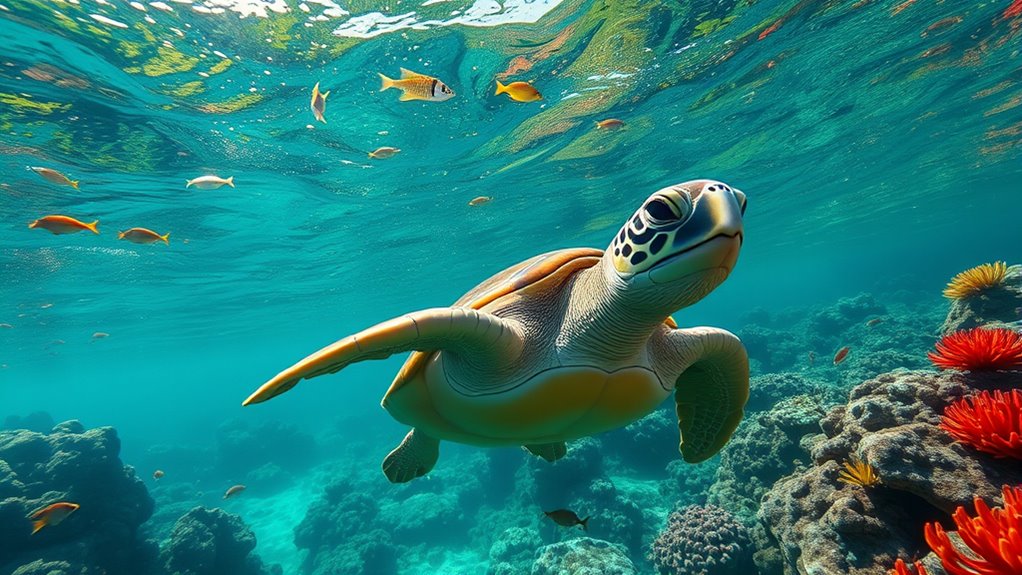
You can see the progress firsthand in places like Florida, where nesting numbers have skyrocketed from around 4,000 in the 1980s to over 230,000 today. Similarly, Colola Beach in Mexico has seen a remarkable revival, with nesting females increasing from just 250 in 1985 to over 1,000 nightly during peak season by 2020. These stories highlight how targeted conservation efforts can lead to inspiring recoveries worldwide. Recognizing the signs of running dry can help sustain these positive trends and ensure continued recovery of the green sea turtle populations. Additionally, advances in AI in Education such as Intelligent Tutoring Systems could potentially support conservation awareness programs through personalized learning tools. Monitoring population recovery is crucial to understanding the long-term success of these efforts and adjusting strategies accordingly. Incorporating community engagement has also proven essential in maintaining long-term conservation success. Understanding the symptoms of breast cancer can also be vital for early detection and treatment outcomes, paralleling the importance of monitoring turtle populations for signs of decline.
Florida Nesting Boom
The green sea turtle nesting population in Florida has experienced a remarkable surge since the 1980s, transforming it from a fragile resource into a symbol of successful conservation. Today, over 230,000 nests are laid annually, a dramatic increase from roughly 4,000 in the 1980s. This growth results from targeted protection efforts, such as beach sanctuaries and community-driven initiatives to reduce poaching. Regulations like turtle excluder devices and habitat preservation have further boosted nesting success. These measures have not only restored numbers but also fostered awareness and local engagement. Additionally, natural materials like sand and vegetation play a crucial role in providing suitable nesting sites for green sea turtles. While challenges like habitat loss and climate change persist, Florida’s recovery story demonstrates how coordinated efforts can turn a threatened species into a thriving population, inspiring global conservation initiatives.
Colola Beach Revival
Despite earlier struggles, Colola Beach in Mexico has become a beacon of successful green sea turtle conservation. Thanks to dedicated community efforts and strict protections, the number of nesting females has skyrocketed. In 1985, only 250 females nested annually; by 2020, over 1,000 females nested nightly during peak season. The total nests increased from a handful to more than 10,000 each year. This remarkable turnaround inspires hope and demonstrates what coordinated action can achieve. Increased color accuracy in conservation monitoring tools has helped researchers better track nesting patterns and health of the turtle populations.
The Power of Protection: Strategies That Made a Difference
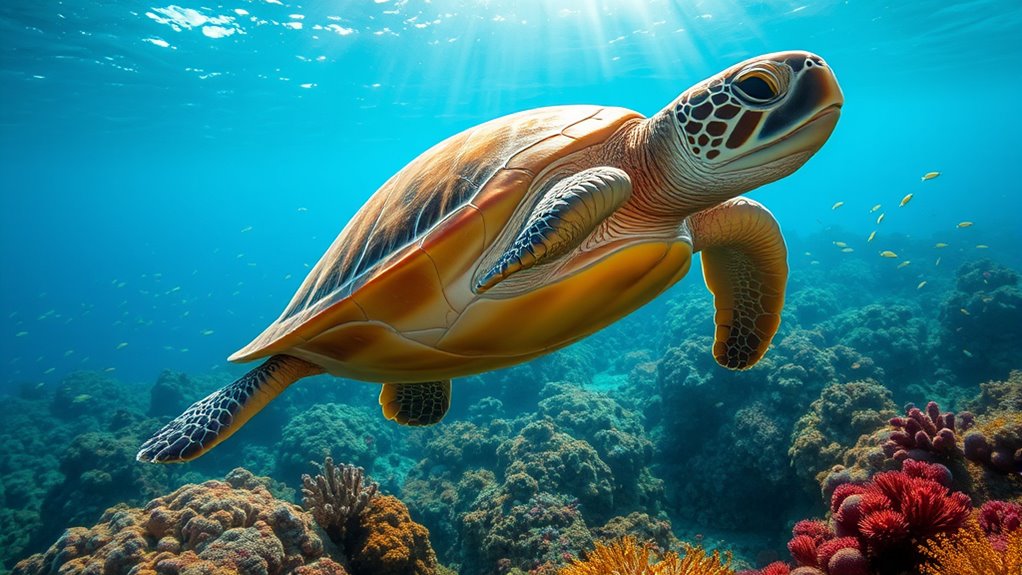
Protection efforts have played a essential role in turning the tide for green sea turtles, demonstrating how targeted strategies can make a real difference. By establishing designated nesting sanctuaries, you help safeguard eggs and females from poaching and habitat destruction. Community-based programs empower locals to reduce unsustainable harvests, directly decreasing illegal killing. Equipment modifications, like Turtle Excluder Devices, reduce bycatch in fisheries, saving countless turtles each year. International trade restrictions have cut down illegal commerce in turtle products, limiting market-driven threats. Legal protections, such as the Endangered Species Act, provide a critical legal framework for conservation. These combined efforts, supported by ongoing enforcement and community engagement, have driven population recoveries worldwide. Additionally, fostering an energetic alignment among conservation groups enhances collective efforts and resilience. Recognizing the importance of cybersecurity in protecting critical data, conservation organizations are increasingly adopting advanced security measures to safeguard their digital assets. Implementing innovative monitoring technologies further bolsters conservation initiatives by providing real-time data and early warning systems. Moreover, integrating public education campaigns raises awareness and encourages community participation in safeguarding these vital species. Your continued support and vigilance ensure these strategies remain effective and contribute to the green turtle’s resurgence.
Ongoing Battles: Challenges Facing Green Sea Turtle Conservation

Although conservation efforts have yielded significant progress, green sea turtles still face persistent threats that hinder their full recovery. Illegal hunting, bycatch, and habitat loss remain critical issues across many regions. Despite protective measures, some populations, like those in Costa Rica and Hawaii, continue to struggle. Climate change exacerbates these challenges by altering nesting sites and increasing storm impacts. The table below highlights ongoing threats and their impact:
| Threat | Region | Effect |
|---|---|---|
| Illegal poaching | Global | Decreases breeding females |
| Bycatch in fisheries | Worldwide | Causes mortality, injuries |
| Coastal development | Coastal areas worldwide | Reduces nesting habitats |
Addressing these threats requires continuous vigilance, innovative solutions, and coordinated efforts. Implementing conservation strategies is essential for ensuring the survival of this iconic species. Additionally, fostering community awareness and engagement plays a vital role in conservation efforts, ensuring local support for protective measures. Recognizing the importance of vibrational energy can also inspire more effective community-led initiatives and promote a collective commitment to preservation. Moreover, integrating scientific research can help develop targeted interventions that adapt to evolving environmental challenges. Emphasizing public education can further enhance community involvement and long-term conservation success.
Regional Variations: Different Outcomes in Various Parts of the World
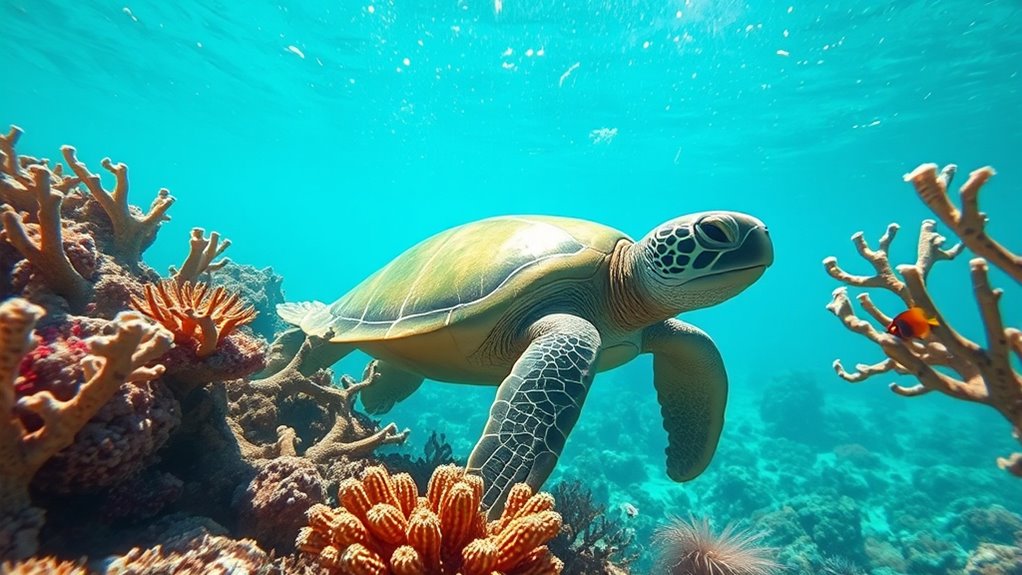
You’ll notice that some regions, like the U.S., have seen remarkable rebounds in green sea turtle populations thanks to strong protections. Meanwhile, Caribbean populations still face challenges despite decades of conservation efforts. Curiously, urban areas like Southern California have created successful habitats where turtles thrive amid city landscapes. Additionally, embracing failure in conservation can lead to more resilient strategies that adapt to changing environmental conditions. Recognizing the importance of regional biodiversity differences, such as the prairie landscapes in Kansas and Illinois, helps tailor conservation efforts to local ecosystems. Moreover, understanding the role of specific exfoliating acids in fostering healthy habitats can inform future environmental restoration strategies. Incorporating cookie management strategies can also improve the effectiveness of conservation programs by facilitating better data collection and community engagement.
U.S. Populations Rebound
The green sea turtle populations in the United States have experienced a remarkable rebound, thanks to decades of targeted conservation efforts. Since protections began in 1973 under the Endangered Species Act, nesting numbers in Florida have soared from around 4,000 in the 1980s to over 230,000 in the 2010s. In California, the San Gabriel River now hosts a thriving urban green turtle population, a rare success story. Federal and state protections have reduced illegal hunting and bycatch, while sanctuary zones protect nesting beaches. Ongoing monitoring and habitat restoration maintain these gains. Although challenges like habitat loss and climate change remain, the U.S. demonstrates how sustained efforts can turn the tide, offering hope for long-term recovery of this iconic species.
Caribbean Challenges Persist
While many regions have seen significant improvements in green sea turtle populations, the Caribbean presents a more complex picture. Several factors hinder full recovery across the area. You should know:
- Coastal development continues to destroy critical nesting beaches, reducing available habitat.
- Illegal poaching and egg harvesting persist despite protections, threatening local populations.
- Fisheries bycatch remains a major threat, with many turtles caught in fishing gear.
- Climate change causes sea-level rise and temperature shifts, impacting nesting success and hatchling survival.
Some populations, like Tortuguero in Costa Rica, show steady growth, yet others, such as certain Caribbean islands, still face declines. Ongoing threats and habitat loss challenge conservation efforts, requiring persistent, region-specific strategies to secure long-term recovery.
Urban Habitat Success
Urban areas around the world are increasingly becoming unexpected refuges for green sea turtles, demonstrating how conservation efforts can succeed even amidst human development. In places like Southern California’s San Gabriel River, turtles thrive in urbanized environments, thanks to dedicated protection and habitat restoration. Community-led initiatives and strict legal protections have reduced threats like poaching and habitat destruction. Efforts to modify fishing gear and create nesting zones on city beaches have further supported population growth. These successes show that with targeted actions, turtles can adapt and recover in city settings. While challenges remain, such as habitat loss and pollution, urban conservation programs highlight the importance of integrating human activity with ecological preservation. Your support can help sustain these urban refuges, ensuring green sea turtles continue to bounce back.
Looking Ahead: The Future of Green Sea Turtle Conservation
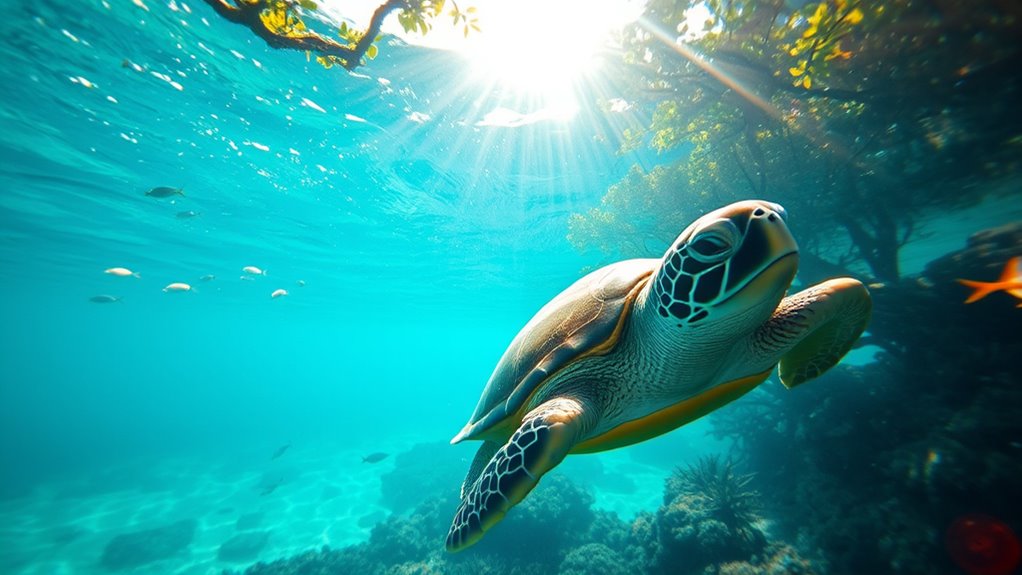
As conservation efforts continue to show success, the future of green sea turtle recovery depends on sustained commitment and adaptive strategies. To guarantee ongoing progress, you should focus on:
- Maintaining habitat quality through ongoing protection and restoration efforts.
- Strengthening international cooperation to address threats like illegal poaching and habitat loss.
- Expanding rescue, rehabilitation, and monitoring programs to track population trends.
- Promoting community engagement and education to foster local support and reduce harmful practices.
Frequently Asked Questions
What Are the Main Factors Contributing to the Green Sea Turtle’s Recovery?
You contribute to the green sea turtle’s recovery through conservation efforts like protecting nesting beaches, reducing bycatch with Turtle Excluder Devices, and enforcing trade restrictions. Community programs help curb illegal hunting, while legal protections ensure better safety. International coordination and habitat preservation also play crucial roles. Your support for these strategies helps populations rebound, as seen in increased nesting and global population growth, demonstrating that collective action makes a real difference.
How Do Local Communities Participate in Conservation Efforts?
You play a crucial role in conservation efforts. When communities establish protected nesting zones, you help safeguard eggs and females from poaching. Participating in education programs, you spread awareness about sustainable practices. Supporting local initiatives to reduce fishing bycatch and habitat destruction keeps turtles safe. Your involvement guarantees that laws are respected, and ecosystems thrive, giving green sea turtles a fighting chance for continued recovery.
Are There Any New Threats Emerging Despite Improved Protections?
Yes, despite improved protections, new threats are emerging. You might encounter ongoing illegal poaching, which still affects some regions. Fishing gear entanglement remains a concern, causing injuries or death even with safety measures in place. Habitat loss from coastal development continues to reduce nesting sites. Climate change also introduces risks like rising sea levels and temperature shifts, which could threaten turtle populations and their habitats, requiring ongoing vigilance and adaptive conservation strategies.
How Is Climate Change Impacting Green Sea Turtle Habitats?
Imagine nature’s delicate balance as a tightrope walk—you’re the one holding the pole. Climate change tips this balance, warming beaches and causing sea levels to rise, which threaten nesting sites. You see, higher temperatures can skew hatchling sex ratios and destroy critical habitats. You’re essential in supporting conservation efforts that combat these impacts, helping green sea turtles adapt by protecting nesting beaches, restoring habitats, and fighting global warming.
What Are the Prospects for Reclassifying Threatened Subspecies?
You should stay optimistic about reclassifying threatened subspecies, as ongoing conservation efforts and increasing populations boost their prospects. If current protections continue and habitat quality improves, these subspecies could be downlisted in the future. However, challenges like habitat loss and illegal activities remain, so your support for habitat preservation, anti-poaching initiatives, and sustainable fishing practices is essential to guarantee their long-term recovery and potential reclassification.
Conclusion
You’ve seen how hope isn’t just a flicker for the green sea turtle—it’s roaring back stronger than ever. Every success story proves your efforts can turn the tide, transforming despair into triumph. Though challenges remain, your dedication fuels this incredible comeback. Keep believing in the power of protection, because together, you’re rewriting the future for these magnificent creatures, making their survival story an epic of resilience that will echo through generations.