

The invasive Burmese python in the Everglades originated from the pet trade and was released into the wild. Its stealth, adaptability, and high reproduction rates help it thrive, leading to a sharp decline in native wildlife like small mammals and birds. This imbalance disrupts ecosystems, causing ecological damage. Efforts using tracking technologies and community programs aim to control the population. To understand how scientists tackle this problem, discover more below.
Key Takeaways
- Burmese pythons are invasive predators in the Florida Everglades, disrupting native ecosystems and causing declines in small mammals and reptiles.
- Their introduction resulted from pet trade releases, leading to uncontrolled population growth and ecological imbalance.
- Monitoring tools like radio telemetry and environmental DNA help detect and manage these elusive snakes.
- Control efforts face challenges due to their camouflage, stealth behavior, and inaccessible habitats.
- Sustained community involvement and technological innovations are essential to mitigate the python invasion.
The Origins of the Burmese Python in Florida

The Burmese python’s presence in Florida traces back to the pet trade, where it was initially imported from Southeast Asia for the exotic pet market. People wanted a large, impressive snake, and these pythons fit the bill. Unfortunately, many owners couldn’t care for them or simply released them into the wild when they outgrew their tanks. Once free, they found suitable habitats in the Everglades’ wetlands and marshes. Since then, their population has exploded, establishing a thriving invasive species. Their size, adaptability, and stealth have allowed them to spread silently across vast areas. This introduction from the pet trade is the root of Florida’s current crisis, transforming a once-rare species into a dominant predator in the ecosystem.
How They Thrive: Adaptation and Stealth in the Everglades
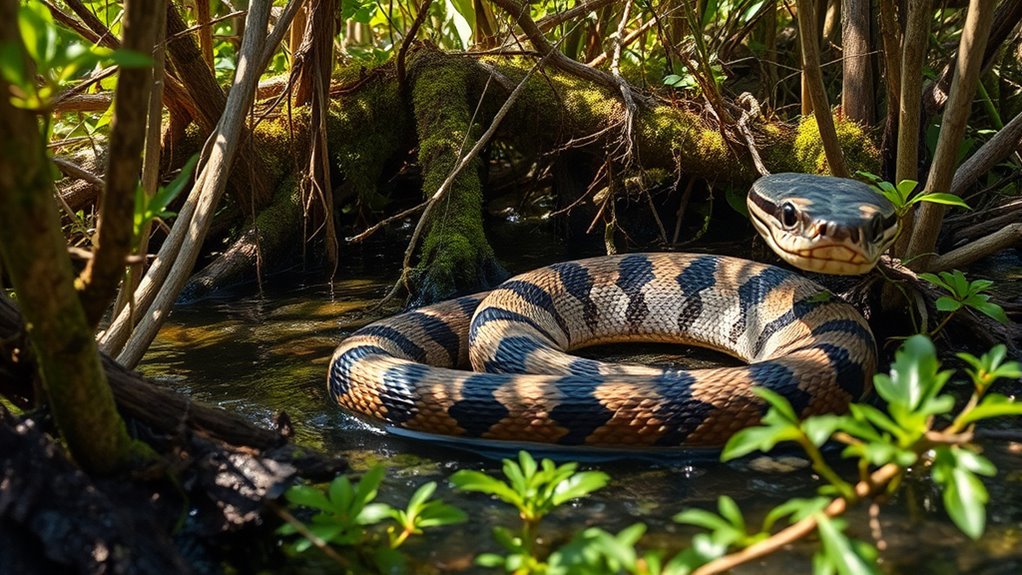
How do Burmese pythons manage to survive and spread so effectively in the vast, challenging environment of the Everglades? Their cryptic coloration helps them blend seamlessly into the landscape, making detection difficult. They’re generalist hunters, preying on a wide variety of animals, from small mammals to birds, which allows them to thrive regardless of prey availability. Their stealthy behavior and low activity levels help them avoid predators and human detection. They also reproduce rapidly, with high reproductive rates fueling population growth. The table below highlights key adaptation strategies:
| Strategy | Effect |
|---|---|
| Cryptic Coloration | Camouflage in marshes and grasslands |
| Generalist Diet | Preys on many species |
| Stealth Behavior | Avoids detection |
| Rapid Reproduction | Quick population expansion |
| Reproductive Timing | Breeds during optimal seasons |
Additionally, their capacity for environmental adaptation enables them to thrive in the Everglades’ unique ecosystem, ensuring their persistent presence and spread. They also modify their behavioral responses in reaction to environmental changes, further enhancing their invasive potential. Recognizing these adaptation mechanisms is crucial for managing and controlling their spread effectively.
The Ecological Toll on Native Wildlife
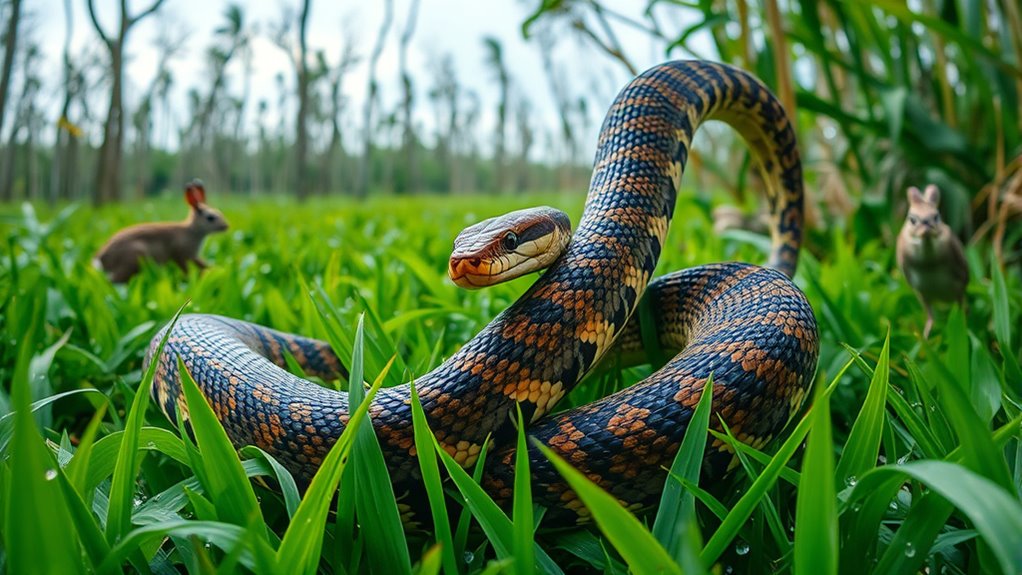
You can see how the Burmese python’s presence threatens native predators by reducing their food sources. As small mammals like raccoons and marsh rabbits decline, the entire ecosystem feels the impact. This imbalance highlights the urgent need to address their growing population. Recognizing the importance of ecological balance is crucial for developing effective management strategies. Additionally, understanding the dog names popular among owners can help foster stronger bonds with pets, which is essential for conservation efforts. Promoting positive thinking in community engagement can also inspire collaborative solutions to invasive species management. Implementing targeted removal programs and monitoring invasive species are key components of a comprehensive approach. Maintaining ecosystem health through these efforts helps ensure the resilience of native wildlife populations.
Native Predator Decline
Native predators in the Everglades are experiencing a drastic decline due to the rapid spread of Burmese pythons. These invasive snakes outcompete and prey on native species, disrupting the food chain. You can see this impact in several ways:
- Native predators like bobcats, raptors, and panthers lose primary food sources, forcing them to hunt less effectively.
- The decline in small mammals and reptiles reduces prey availability for other predators, leading to further population drops.
- As pythons consume a wide range of prey, they eliminate critical native species, causing imbalanced ecosystems and threatening biodiversity.
This predator decline weakens the natural regulation of native species, allowing invasive pythons to dominate and further destabilize the fragile Everglades ecosystem.
Small Mammal Loss
The surge of Burmese pythons in the Everglades has led to a sharp decline in small mammal populations. As a result, animals like raccoons, opossums, foxes, marsh rabbits, and cottontails are disappearing from their habitats. You might notice fewer sightings of these species, which play crucial roles in the ecosystem. When pythons prey on these mammals, they disrupt food chains and threaten the balance of native wildlife. This loss also affects predators that rely on small mammals for sustenance, such as birds of prey and larger carnivores. Without their usual prey, these predators struggle to survive and reproduce. The decline of small mammals weakens the entire ecosystem, diminishing biodiversity and altering the natural course of the Everglades’ delicate environment. Additionally, the disruption of food webs can lead to unforeseen changes in the ecological dynamics of the region. The presence of invasive species like pythons can also cause habitat degradation, further stressing native species. This cascade of effects highlights the importance of maintaining ecological balance to preserve the region’s health and resilience.
Efforts to Remove and Control the Population
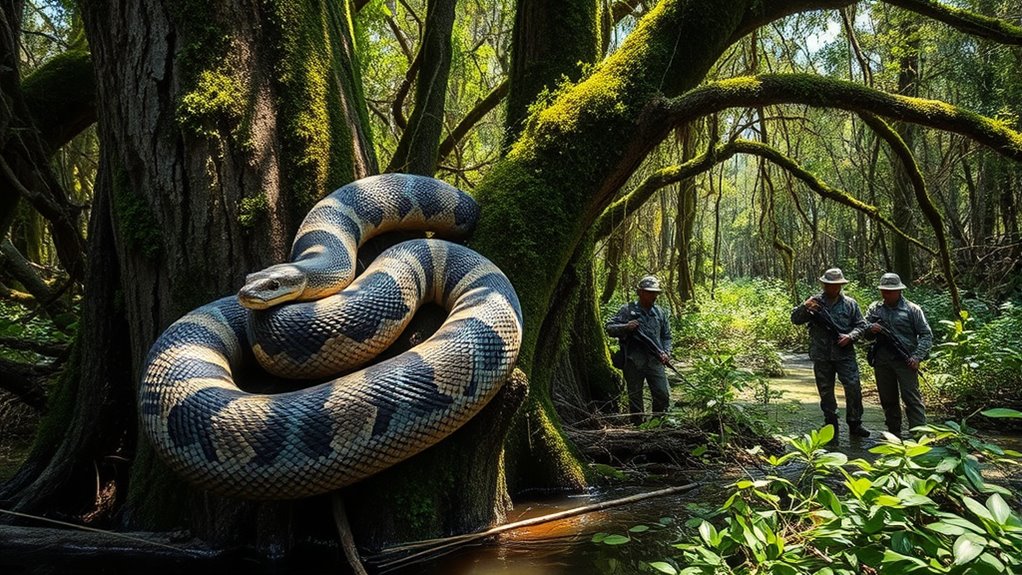
Efforts to remove and control the Burmese python population in Florida have been ongoing and multi-faceted, involving state agencies, research institutions, and public participation. You can contribute to these efforts in several ways:
Ongoing, multi-faceted efforts involve agencies, researchers, and the public to control Burmese pythons in Florida.
- Participate in organized Python Challenges, where hundreds of volunteers remove invasive snakes during competitive events.
- Support or volunteer with organizations like the Florida Fish and Wildlife Conservation Commission, which conducts targeted removal programs.
- Stay informed and report sightings through official channels to aid detection and response efforts. Utilizing load‑planning tools can help optimize resource allocation for removal activities.
- Incorporating Gold IRA Rollovers into financial planning can provide a hedge against economic uncertainties that may impact conservation funding and resources.
- Understanding the importance of species eradication strategies can enhance community involvement and support for control efforts. The success of these initiatives often relies on transparent brand reputation and community trust.
Since 2017, over 16,000 pythons have been removed, and thousands more are captured annually through coordinated programs. These combined efforts aim to slow the spread, but complete eradication remains a significant challenge.
Tracking Technologies and Scientific Research

You can use radio telemetry to track Burmese pythons and identify their movements during breeding season. Environmental DNA sampling helps detect their presence even when they’re hidden or elusive. Advanced landscape monitoring tools allow researchers to observe population patterns across the vast Everglades, improving management efforts.
Radio Telemetry Applications
Radio telemetry has become a crucial tool in tracking and studying invasive Burmese pythons in the Everglades, allowing researchers to monitor their movements, behaviors, and population dynamics in real time. By attaching transmitters to selected “scout snakes,” scientists gain critical insights into their habitat use and breeding patterns. This technology enhances understanding of python ecology, supports predictive modeling, and helps develop long-term management strategies to curb their spread in Florida’s fragile ecosystem. Additionally, the use of tracking devices enables the collection of detailed movement data, which is essential for effective population control efforts. The integration of cultural celebrations in community awareness programs has also played a role in promoting python management initiatives among local residents. Understanding the self-watering plant pots can serve as an analogy for how these tracking systems maintain consistent monitoring, ensuring no snake goes undetected over time. Implementing cost-effective monitoring solutions is vital for ongoing research and management success in invasive species control. Moreover, advances in tuning in automotive technology demonstrate how continuous improvements and innovative systems can optimize performance and safety, paralleling the ongoing refinement needed in ecological management strategies.
Environmental DNA Sampling
Environmental DNA (eDNA) sampling has emerged as a powerful tool for detecting invasive Burmese pythons in the Everglades, especially given their elusive nature. By collecting water samples from the environment, you can detect traces of python DNA shed through skin cells, feces, or saliva. This non-invasive method allows you to identify the presence of pythons without the need for direct sightings or capture. eDNA analysis uses sensitive laboratory techniques to amplify and detect tiny amounts of genetic material, providing a reliable indication of whether pythons inhabit a specific area. This approach is particularly useful in large, complex habitats where traditional tracking methods struggle. Ultimately, eDNA sampling enhances your ability to monitor python distribution and informs targeted removal efforts.
Landscape Monitoring Tools
Advances in landscape monitoring tools have considerably enhanced efforts to track and manage invasive Burmese pythons in the Everglades. These technologies allow you to gather critical data and improve detection rates.
- Radio telemetry and tagged “scout snakes” help locate breeding females during the season, providing real-time movement data. Workaholic tendencies can hinder relationship development, but in conservation efforts, dedicated tracking can be vital for success.
- Environmental DNA (eDNA) sampling detects python presence through water and soil samples, increasing detection accuracy in hard-to-reach areas. This method is especially useful when traditional visual surveys are limited or ineffective.
- Advanced tracking models and GIS tools analyze habitat use, movement patterns, and population trends, enabling targeted removal efforts. Integrating these tools with proper technique ensures that data collection is accurate and sustainable over time.
- Combining various monitoring methods enhances overall efficiency and helps overcome detection challenges, making management strategies more effective and adaptive to changing conditions.
Together, these tools give you a clearer picture of python distribution, making your management strategies more effective. They’re essential in overcoming detection challenges and controlling this invasive species.
Challenges in Managing the Invasive Species

Managing the invasive Burmese python population in Florida presents significant challenges because their cryptic coloration and secretive behavior make them difficult to detect and capture. You face low detection rates since only about 1% of pythons are ever seen or caught, despite thousands being removed. Their ability to hide in dense, complex habitats means you need extensive, labor-intensive efforts to locate them. Without natural predators, the population can grow unchecked, compounding control difficulties. Terrain and inaccessible areas hinder removal operations, requiring sustained and coordinated efforts from agencies, researchers, and volunteers. Tracking methods like radio telemetry and environmental DNA help improve detection, but they still can’t keep pace with the snakes’ rapid spread. Overall, the elusive nature of these pythons makes managing their impact a long-term, complex challenge. Additionally, public awareness campaigns are vital to garner support and participation in control efforts.
What the Future Holds for Florida’s Ecosystems

The future of Florida’s ecosystems hinges on how effectively efforts to control the Burmese python population succeed. If current strategies improve, native wildlife may stabilize. Here’s what to expect:
- Enhanced detection methods will lead to better identification of python hotspots, increasing removal success.
- Community engagement will grow, encouraging citizen participation and rapid reporting of sightings.
- Innovative technologies, like AI tracking and genetic research, will develop, making control efforts more efficient.
However, complete eradication remains unlikely due to the snakes’ stealth and extensive range. Continued collaboration among agencies, scientists, and the public is essential. With persistent effort, there’s hope that Florida’s ecosystems can regain balance and preserve native species for future generations.
Frequently Asked Questions
How Do Burmese Pythons Reproduce and How Many Offspring Do They Have?
You should know that Burmese pythons reproduce once a year during the breeding season from November to April. Males seek out females using pheromones, and after mating, females lay clutches of 50 to 100 eggs. They fiercely guard their nests until hatching, which usually takes about 60 to 70 days. Their high reproductive rate and ability to produce large clutches make controlling their population challenging.
What Natural Predators, if Any, Exist for Pythons in Florida?
You won’t find many natural predators for Burmese pythons in Florida. Adult pythons have few threats, as their size and cryptic behavior help them avoid predators. However, large birds of prey, such as eagles and hawks, may occasionally attack juvenile pythons. Some large mammals like bobcats and feral hogs might prey on smaller ones, but overall, the python’s size and stealth make natural predation rare, allowing their population to grow unchecked.
How Does the Python Population Affect the Local Human Communities?
Imagine a silent predator lurking in your backyard, disrupting your peace—that’s how pythons affect local communities. With over 23,000 removed, their presence threatens public safety, especially for outdoor enthusiasts and workers. Encounters can lead to injuries or panic, and the economic impact hampers tourism and land use. Ongoing removal efforts and awareness programs aim to protect communities, but the threat remains a serious concern for Florida residents.
Are There Any Biological Control Methods Being Researched?
You should know that researchers are exploring biological control methods to manage the python population. They’re studying potential natural predators, like certain species of constrictor-eating snakes or even viruses that target pythons specifically. While these methods show promise, they’re still in experimental stages due to concerns about ecological impacts. You can stay informed on advancements, but currently, removal and trapping remain the primary strategies to control these invasive snakes.
What Are the Long-Term Ecological Consequences if Pythons Are Not Controlled?
If you don’t control the pythons, you’ll see serious ecological consequences. Native species like panthers, raccoons, and wading birds will decline or disappear because of relentless predation. This imbalance could disrupt the entire ecosystem, affecting plant life, water quality, and other wildlife. Without intervention, the biodiversity of the Everglades will suffer, making it harder for the environment to recover and maintain its natural health.
Conclusion
You can’t ignore the silent invasion happening in the Everglades. These pythons slither through the ecosystem like shadows, threatening native wildlife and unraveling the delicate balance of nature. But with your awareness and support for ongoing efforts, you become an essential part of the fight to restore Florida’s wilderness. Together, we can turn the tide before these invasive predators become an unstoppable storm, threatening to drown the beauty of the Everglades in chaos.