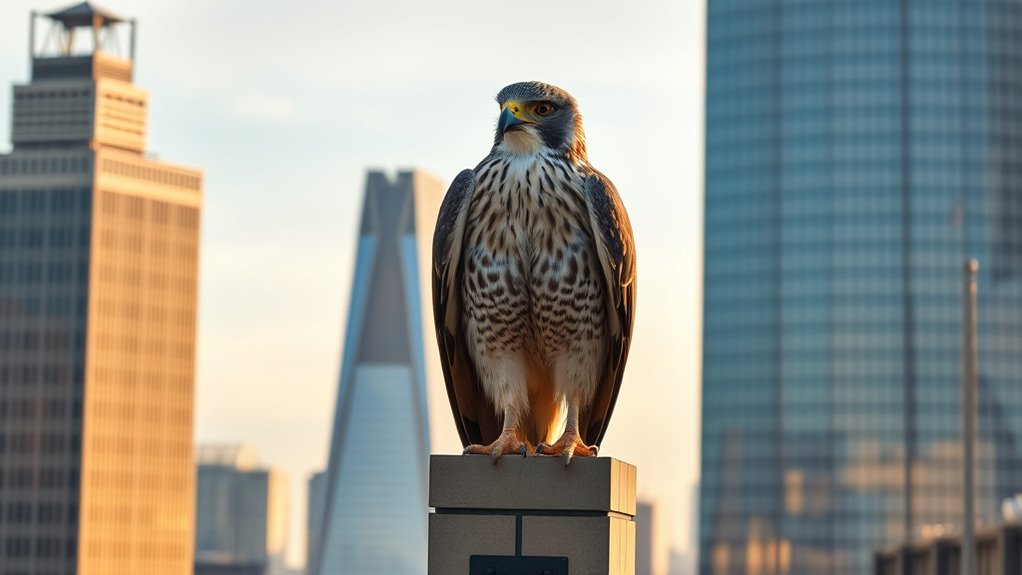

Peregrine falcons have adapted remarkably well to city life by nesting on skyscraper ledges that resemble natural cliffs. They hunt fast-moving city birds like pigeons, using their incredible speed and sharp eyesight. Urban areas provide high vantage points and abundant prey, helping these falcons thrive amid concrete jungles. Efforts like installing nesting sites and protecting their habitat guarantee their survival. If you’re curious about how these sleek predators dominate city skylines, there’s more to uncover.
Key Takeaways
- Peregrine falcons adapt to urban environments by nesting on skyscraper ledges, mimicking natural cliff habitats.
- Their incredible speed and sharp eyesight make city pigeons ideal prey, supporting their urban resurgence.
- Conservation efforts include installing nesting boxes and bird-friendly glass on buildings to aid their populations.
- Urban landscapes provide high vantage points and abundant prey, enabling peregrines to thrive in city skylines.
- Public awareness and habitat management foster coexistence, ensuring peregrine falcons remain a symbol of urban wildlife success.
The Rise of Urban Peregrines: A Historical Perspective

While peregrine falcons once faced widespread decline due to pesticide use and habitat loss, they began making a remarkable comeback in urban areas during the late 20th century. Their success ties closely to avian adaptations that suit city environments, such as their ability to hunt swiftly from high perches and navigate tall structures. These birds exemplify urban ecology at its finest, thriving amidst skyscrapers that mimic their natural cliffside nesting sites. Their sharp eyesight and agile flight give them advantages in hunting pigeons and other city prey. As cities grew, peregrines adapted to these new landscapes, turning urban environments into prime hunting grounds. This shift highlights their resilience and ability to exploit altered habitats, transforming cityscapes into modern-day nesting and hunting territories.
Adapting to the Concrete Jungle: Nesting and Hunting Strategies
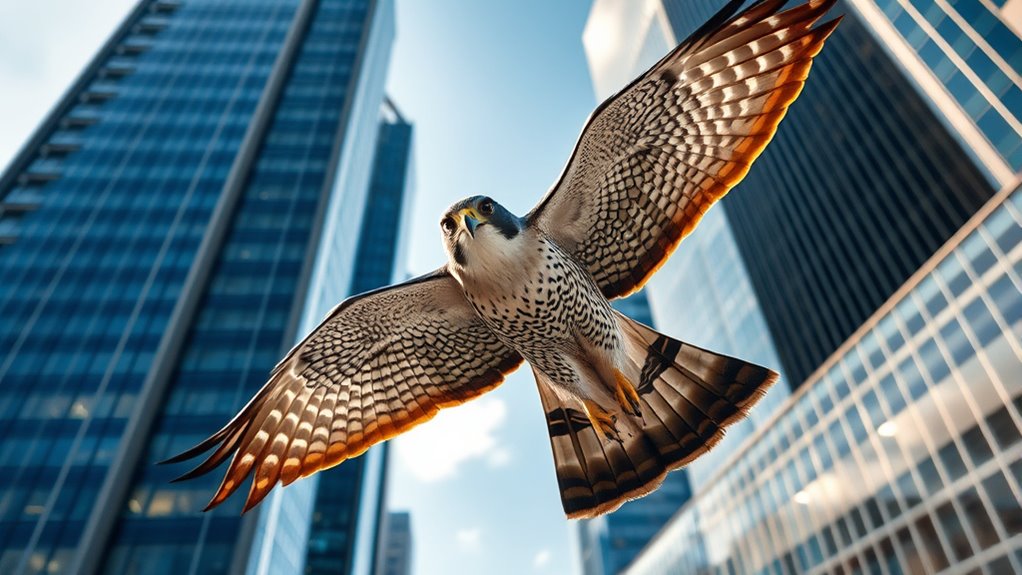
Peregrine falcons have become expert adapters to the urban environment, developing nesting and hunting strategies that take full advantage of the concrete jungle. Urban nesting sites often include ledges on skyscrapers and bridges, mimicking their natural cliff habitats. You’ll notice they select high vantage points, providing safety and a broad view for hunting. Their hunting adaptations are impressive; they use incredible speed and precision to catch fast-moving prey like pigeons and starlings. These birds capitalize on the abundance of city-dwelling birds, honing their skills for swift, accurate strikes. Their ability to adapt their nesting sites and hunting techniques ensures they thrive amidst towering structures, turning cityscapes into their new hunting grounds and nesting territories. Additionally, their remarkable adaptations demonstrate their capacity to thrive in changing environments, making them one of the most successful urban predators. Their behavioral flexibility allows them to exploit diverse urban niches and respond swiftly to new challenges in the city landscape. This remarkable adaptability is supported by their innovative hunting strategies, which enable them to excel in complex and dynamic urban ecosystems. Furthermore, their capacity for rapid flight underscores their ability to maneuver through tight urban spaces and pursue prey with astonishing agility, highlighting their evolutionary success in city environments. Moreover, ongoing research into their ecological impact reveals how they influence urban bird populations and local ecosystems.
Notable City Skylines: Case Studies of Falcon Success
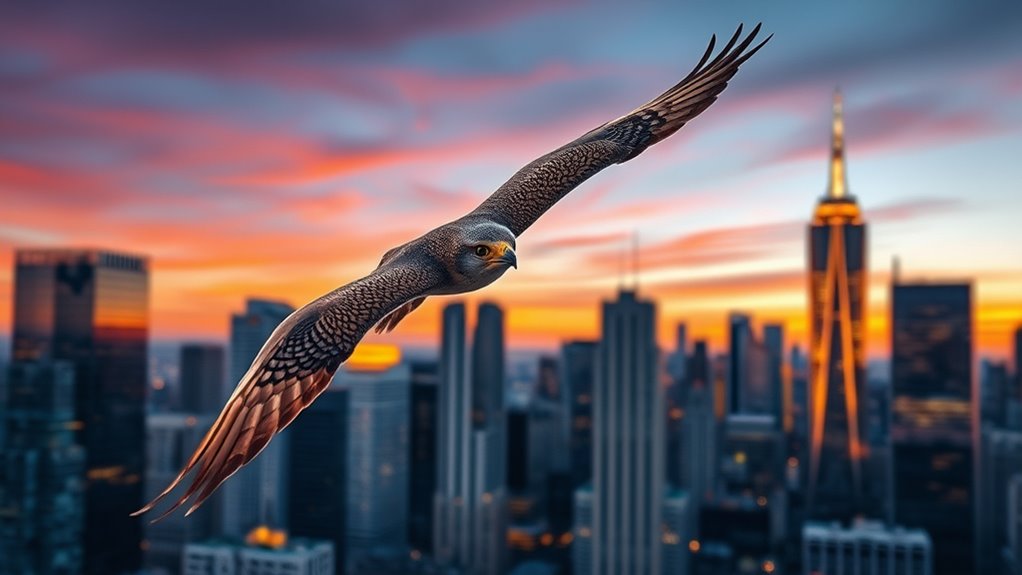
Cities like New York, Dubai, and Hong Kong showcase some of the most impressive peregrine falcon success stories, where these birds have become symbolically intertwined with the skylines. Their ability to adapt to urban environments hinges on finding suitable nesting sites and capitalizing on bird migration patterns. These cities demonstrate how falcons thrive amid skyscrapers, often replacing natural cliffs. Moreover, the presence of urban celebrations and events can influence the availability of resources and nesting opportunities for these birds. Consider these key insights:
- Urban nesting sites, like ledges and building ledges, mimic natural cliffs, attracting falcons.
- City locations influence bird migration routes, making urban areas ideal stopovers.
- Falcon populations in these skylines symbolize resilience, adapting to human-made environments and showing their success in taking over urban spaces. Additionally, ongoing conservation efforts supporting urban wildlife play a vital role in sustaining these populations and ensuring their continued dominance in cityscapes. These efforts often involve urban habitat enhancement, which provides safer and more accessible nesting options for the falcons. Community involvement and public education programs further help foster coexistence and protect these remarkable birds, ensuring their long-term presence in metropolitan areas.
Conservation Efforts and Human-Wildlife Interactions
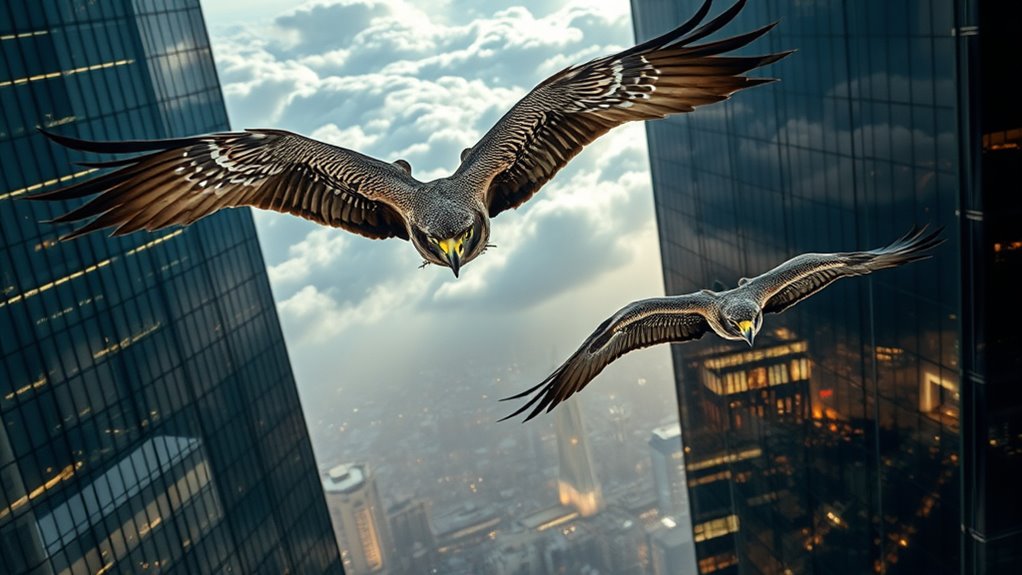
Conservation efforts have become essential in safeguarding peregrine falcons as they adapt to urban environments, where human activity can pose significant threats. Urban noise can disrupt their hunting and communication, making it harder for them to thrive. To reduce risks, conservationists install bird-friendly glass and barriers on skyscrapers to prevent bird collisions, a common cause of injury or death. Public awareness campaigns encourage city residents and building managers to identify falcon nesting sites and avoid disturbing them. Monitoring programs track falcon populations and migration patterns, helping tailor conservation strategies. These efforts foster coexistence, ensuring peregrine falcons continue to thrive amid city noise and busy skylines. Incorporating sound design techniques can also help create educational audio materials that raise awareness and promote coexistence. Your participation and support are vital in maintaining a balanced urban ecosystem that benefits both humans and these remarkable birds.
The Future of Peregrine Falcons in Urban Environments
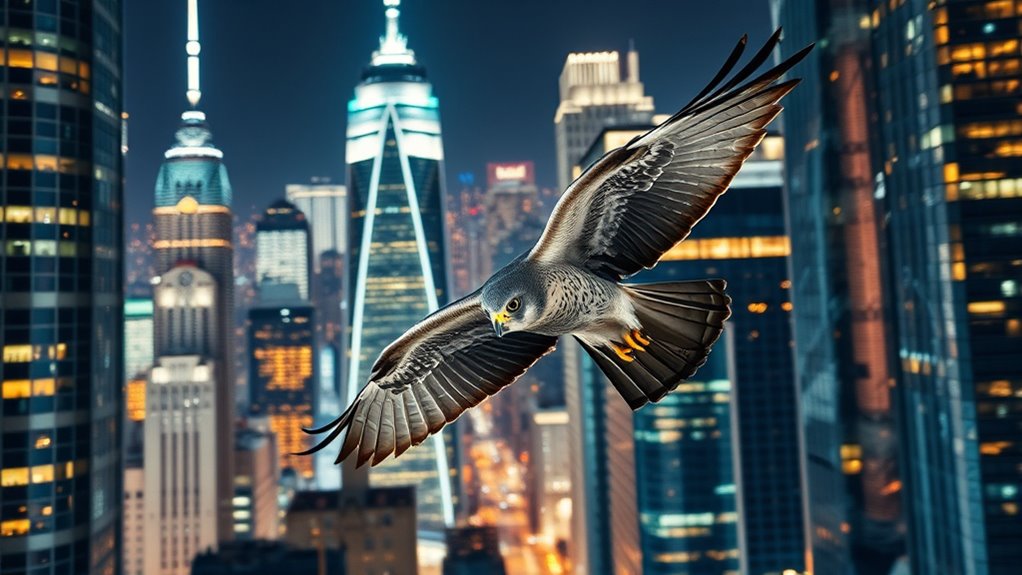
As urban landscapes continue to evolve, the future of peregrine falcons depends on how effectively we adapt our cities to support their survival. Your role in shaping urban ecology is crucial. With proper avian adaptation strategies, these birds can thrive amid skyscrapers and concrete jungles. To guarantee their continued presence, consider these key factors:
- Installing nesting sites on buildings mimics natural cliffs, aiding avian adaptation.
- Reducing pollution helps maintain healthy prey populations, supporting urban ecology.
- Creating green corridors allows falcons to hunt and migrate safely across cityscapes.
- Employing vertical storage solutions in urban planning can minimize habitat disruption and promote ecological balance.
- Implementing urban bird-friendly designs can further enhance the adaptability and nesting success of peregrine falcons in cities, especially when these designs incorporate ecological principles to foster a balanced environment.
Frequently Asked Questions
How Do Peregrine Falcons Choose Their Urban Nesting Sites?
You can see that peregrine falcons choose their urban nesting sites based on their nesting preferences, often favoring tall buildings that mimic cliffs. They rely on urban camouflage, blending in with the city’s architecture for safety. These falcons prefer ledges and crevices on skyscrapers, which provide ideal protection and vantage points. Their choice of nesting sites demonstrates adaptability, allowing them to thrive amidst cityscapes instead of natural cliffs.
What Specific Adaptations Enable Peregrines to Hunt in Cities?
Did you know peregrine falcons can reach speeds over 200 mph during dives? Their aerial agility allows them to navigate complex urban landscapes effortlessly, while sharp eyesight enhances prey detection amid skyscrapers. These adaptations let them hunt effectively in cities, where they target pigeons and other birds. Their powerful talons and streamlined bodies enable precise strikes, making urban environments ideal hunting grounds for these skilled predators.
Are City-Dwelling Peregrines Different From Rural Populations Genetically?
You might wonder if city-dwelling peregrines differ genetically from rural ones. Research shows that urban populations often have distinct genetic variation and population structure due to limited gene flow and adaptation to city life. These differences can lead to unique traits suited for urban hunting and nesting, making city peregrines somewhat genetically distinct. So, yes, urban peregrines often exhibit genetic distinctions compared to their rural counterparts.
How Do Urban Peregrines Impact Local Bird Populations?
Urban peregrines act like stealthy predators, and their presence can markedly impact local bird populations. You’ll notice that urban noise and bird displacement often lead to fewer small birds in city areas, as peregrines hunt them efficiently. This predatory pressure reduces overall bird diversity, shaping the city’s avian community. So, their impact is a dynamic balance of predation and adaptation, influencing which species thrive amidst the skyscrapers.
What Role Do Citizen Scientists Play in Monitoring Peregrine Falcons?
You play a crucial role in urban ecology by participating in citizen monitoring of peregrine falcons. Your observations help track their nesting, feeding, and migration patterns, providing valuable data for scientists. By reporting sightings and behaviors, you contribute to understanding how these falcons adapt to city environments. Your involvement supports conservation efforts, guarantees accurate population assessments, and helps us learn how urban landscapes influence peregrine falcon survival.
Conclusion
Remember, nature always finds a way. As peregrine falcons thrive amid city skyscrapers, they remind us that adaptability is key. Your city’s skyline has become their new hunting ground, proving that even in human-made environments, wildlife can flourish. With ongoing conservation efforts, you can help guarantee these remarkable birds continue soaring high above your city. The saying “Where there’s a will, there’s a way” couldn’t be more fitting for these resilient falcons and their urban conquest.