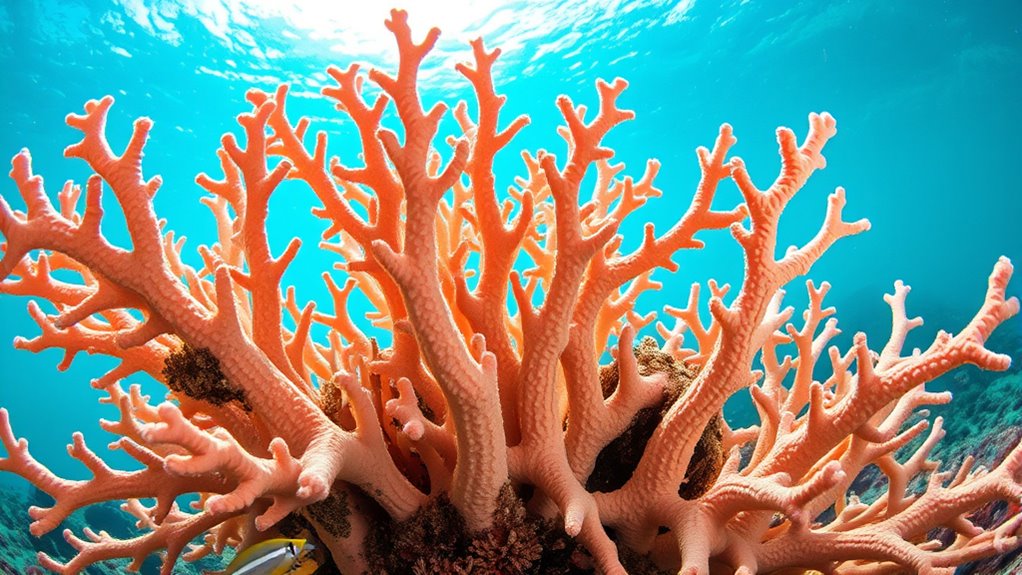

The staghorn coral is a fast-growing, tree-like reef builder that provides crucial habitat and coastal protection. Facing threats like disease, climate change, and pollution, it struggles to survive in its native waters across the Atlantic and Caribbean. Efforts like nurseries, transplants, and protected areas aim to rescue this species. If you want to discover how conservation teams are working to save the staghorn and rebuild reefs, keep exploring this important story.
Key Takeaways
- Staghorn coral is a fast-growing, branching species vital for reef building and habitat creation.
- It faces threats from disease, climate change, pollution, and storms, leading to significant declines.
- Conservation efforts include nursery cultivation, reef transplantation, and protected marine areas.
- Researchers focus on breeding disease-resistant and warming-tolerant staghorn corals for restoration.
- Protecting and restoring staghorn coral is essential for reef resilience, biodiversity, and coastal protection.
The Unique Features of the Staghorn Coral
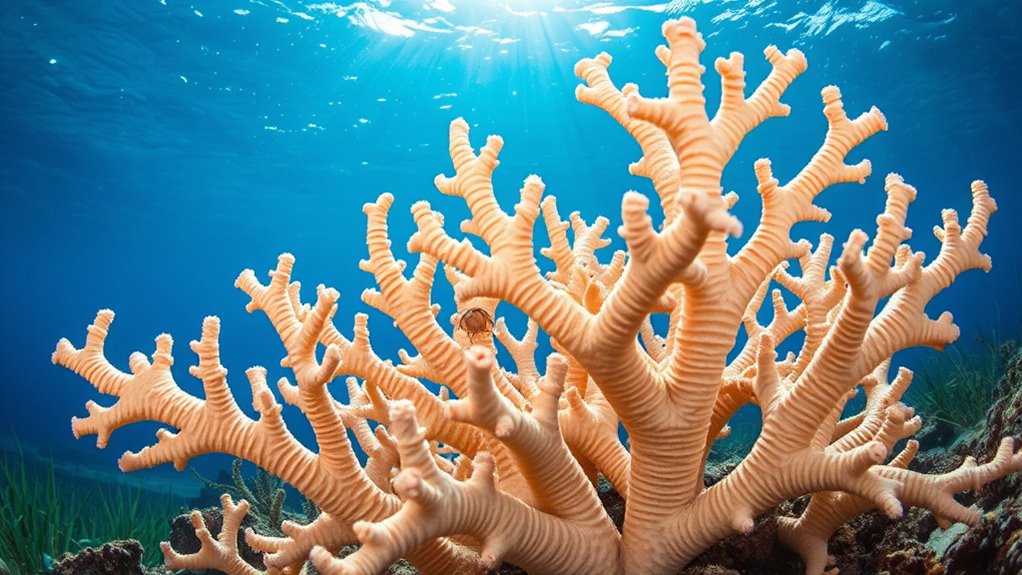
The staghorn coral (*Acropora cervicornis*) stands out because of its distinctive branching structure that resembles deer antlers. You’ll notice its cylindrical branches can grow over 2 meters tall, creating impressive, tree-like colonies that reach up to 4 feet high and 6 feet wide. Its golden yellow-tan color, highlighted by white tips, signals new growth. Unlike related species, its branches are spaced out, giving it a delicate, open appearance. These thin, cylindrical branches grow quickly, up to 8 inches annually, making it one of the fastest-growing corals in the Western Atlantic. Its unique shape and rapid growth rate make it a crucial reef-building species, providing essential habitat and supporting marine ecosystems. Additionally, its ability to withstand various environmental conditions highlights its resilience and importance in reef recovery efforts.
Habitat and Distribution Across the Atlantic and Caribbean
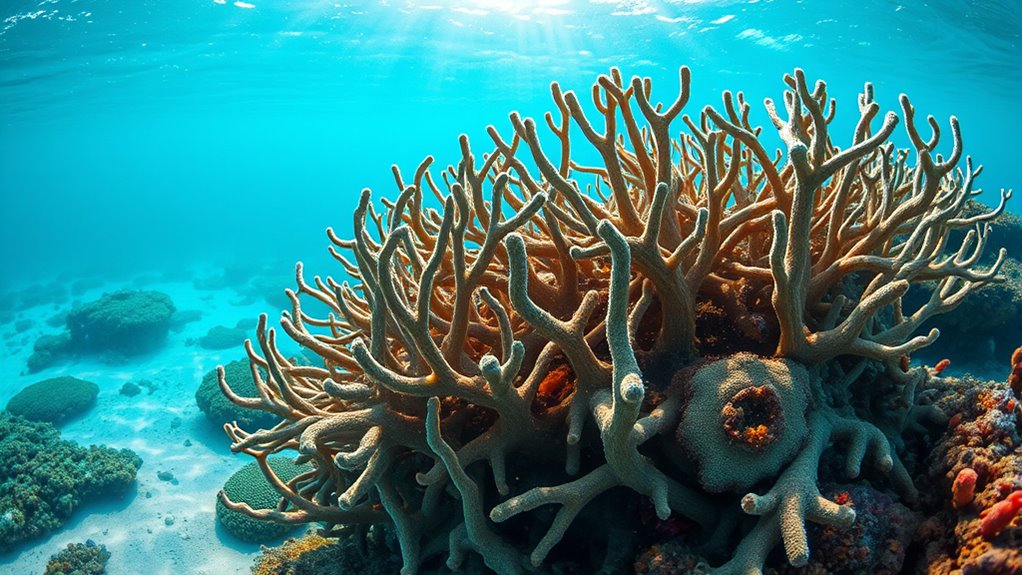
Ever wonder where staghorn coral thrives? You’ll find it mainly in shallow waters between 15 and 60 feet deep, across the Gulf of Mexico, Caribbean Sea, and northern Atlantic. It prefers calm back reefs, patch reefs, and transitional habitats with clear water, rarely exceeding 20 meters in depth. Its northern limit reaches Palm Beach County, Florida, where it’s scarce. Water quality and environmental stability are vital for its survival, as water quality directly impacts its growth and resilience. Maintaining high-quality water is essential, with water sources often tested for environmental standards to ensure optimal conditions for coral health. Additionally, stable habitats are crucial for supporting healthy coral populations and recovery efforts. Promoting biodiversity in surrounding ecosystems can further enhance coral resilience and aid in reef restoration projects.
Rapid Growth and Its Role in Reef Building

Building on its widespread presence in shallow reef habitats, the staghorn coral is renowned for its rapid growth rate, which plays a pivotal role in reef construction. Each year, it adds up to 5 centimeters of new skeleton for every centimeter of existing structure. This quick growth allows it to quickly form dense thickets that serve as foundation habitats for many marine species. When healthy, individual branches can grow up to 8 inches annually, helping reefs expand and recover faster. Its ability to reach reproductive maturity by about 7 inches ensures it can contribute to reef regeneration sooner. This rapid growth makes the staghorn coral an essential player in building and maintaining resilient reef ecosystems, especially in the face of environmental threats. Growth rate is a key factor in its success as a reef builder.
The Vital Ecological Functions of Staghorn Coral
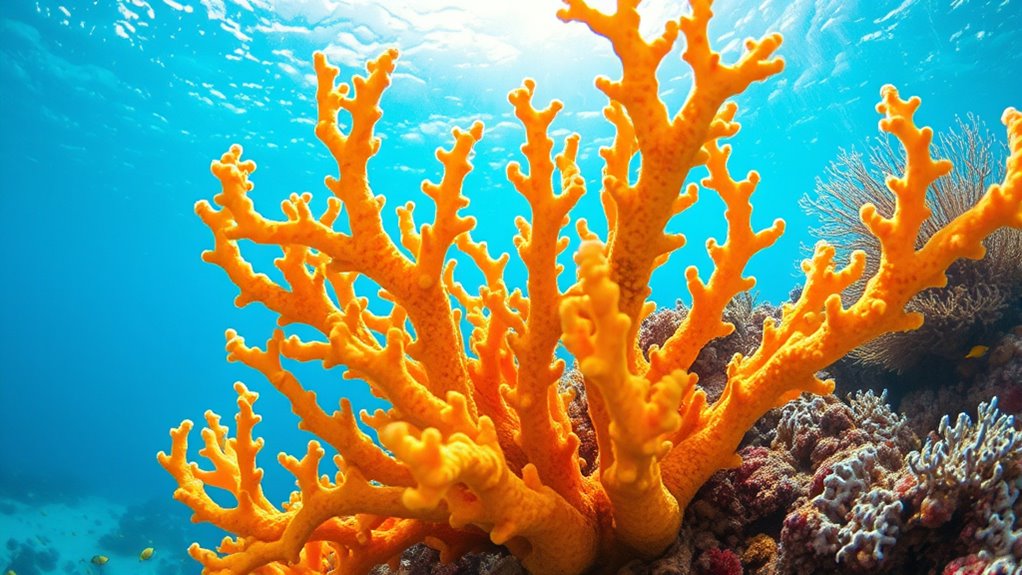
Staghorn coral plays a crucial role in building and maintaining healthy reef ecosystems through its rapid growth and structural strength. It provides vital habitat for fish and invertebrates, supporting biodiversity and nursery grounds. Additionally, it helps protect coastlines by dissipating wave energy and reducing erosion during storms. To achieve optimal growth and resilience, understanding color accuracy and environmental conditions is essential for conservation efforts.
Reef Building Power
Because of its rapid growth and branching structure, staghorn coral plays a crucial role in constructing and maintaining healthy reef ecosystems. Its fast development allows it to quickly form the structural framework of reefs, providing essential support for other marine life. The coral’s branches create complex, three-dimensional habitats that stabilize the reef and promote biodiversity. As one of the fastest-growing coral species in the Western Atlantic, it can add up to 5 centimeters of skeleton annually, enabling rapid reef expansion. This growth not only builds the physical foundation of the reef but also enhances resilience against erosion and storm damage. By efficiently converting sunlight into energy through photosynthetic algae, staghorn coral sustains its growth, reinforcing its role as a primary reef builder and ecological engineer in its environment. Vetted Additionally, maintaining optimal environmental conditions is vital for supporting healthy growth and resilience of these corals, especially since water quality directly impacts their ability to thrive. Proper nutrient levels are essential to prevent overgrowth of algae that can compete with corals for resources. Moreover, research indicates that tuning environmental parameters such as temperature and light can significantly influence coral health and recovery.
Habitat Provisioning Support
As a key architect of reef ecosystems, staghorn coral provides essential habitat structures that support a diverse array of marine life. Its branching form creates dense thickets in shallow waters, offering refuge and breeding grounds for fish, crustaceans, and invertebrates. Juvenile fish find shelter among the branches, while adult species use these structures to hide from predators. The complex habitat also enhances biodiversity by supporting various species that rely on the coral’s intricate architecture. These coral formations contribute to the overall health of reef communities by fostering species richness and stability. Without staghorn coral’s habitat provisioning, many marine organisms would struggle to find safe spaces, disrupting ecological balance and diminishing reef resilience. Its role is crucial for maintaining vibrant, functioning reef ecosystems. Additionally, the habitat provided by staghorn coral supports ecological diversity, which is vital for the long-term sustainability of reef environments. This habitat provisioning also plays a role in protecting coastal areas by reducing wave energy and preventing erosion. Moreover, healthy staghorn populations are essential for reef recovery after disturbances such as storms or bleaching events. Effective conservation efforts that promote coral resilience are increasingly recognizing the importance of habitat restoration, essential for ensuring the continued provision of these vital ecological functions. Furthermore, the structural complexity of staghorn coral aids in sediment stabilization, contributing to the overall stability of reef systems.
Coastal Protection Role
Have you ever wondered how coral reefs protect coastlines from storms and erosion? When healthy, staghorn coral forms dense, three-dimensional structures that act as natural barriers, dissipating wave energy before it reaches shore. Their branching form breaks up powerful waves, reducing their force and minimizing coastal erosion. These reefs also buffer storm surges, helping to protect communities from flooding and damage during hurricanes and heavy storms. By stabilizing the underwater landscape, they prevent sediment from washing into the ocean and smothering nearby habitats. Their presence maintains calmer waters, supporting diverse marine life and healthy ecosystems. Additionally, these structures contribute significantly to ecological resilience by supporting a variety of marine species and promoting biodiversity. The complex architecture of staghorn coral provides critical habitat for many marine organisms, enhancing biodiversity in reef ecosystems. The formation of these structures is vital for coastal protection, which reduces the impact of natural disasters on human settlements. Without these crucial structures, coastlines become more vulnerable to the destructive forces of nature, increasing risks to both ecosystems and human settlements. Protecting staghorn coral is essential for safeguarding coastal resilience, especially as climate change accelerates reef degradation via nutrient management. Understanding the importance of these corals helps emphasize the need for reef conservation efforts, which are vital for maintaining the health of marine environments and coastal communities.
Challenges and Threats Facing Wild Populations
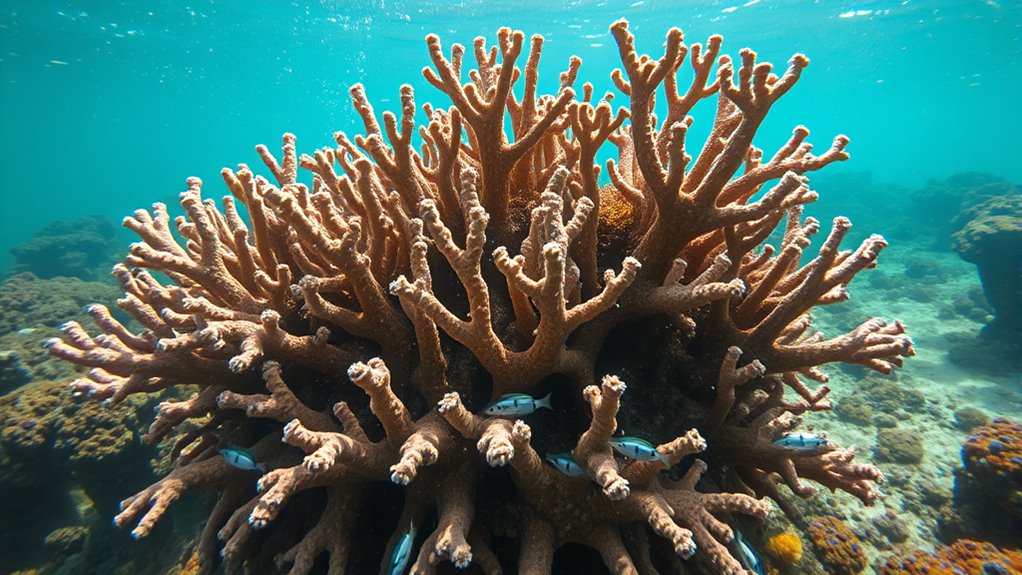
Wild populations of staghorn coral face numerous threats that threaten their survival and recovery. One major challenge is disease, especially stony coral tissue loss disease, which rapidly kills affected colonies. Climate change also causes bleaching events, stressing corals and weakening their defenses. Human activities, like overfishing and pollution, degrade water quality and disrupt reef balance. Additionally, storms and hurricanes physically damage reefs, breaking branches and destroying habitats. Moreover, the rise of sustainable practices in reef management aims to mitigate some of these impacts and promote coral resilience. Below is a table highlighting key threats:
| Threat | Impact |
|---|---|
| Disease | Rapid colony decline, loss of reproductive capacity |
| Climate Change | Bleaching, weakened stress resilience |
| Pollution | Water quality decline, increased disease susceptibility |
| Physical Damage | Structural destruction, habitat loss |
How Conservation Efforts Are Working to Save the Species
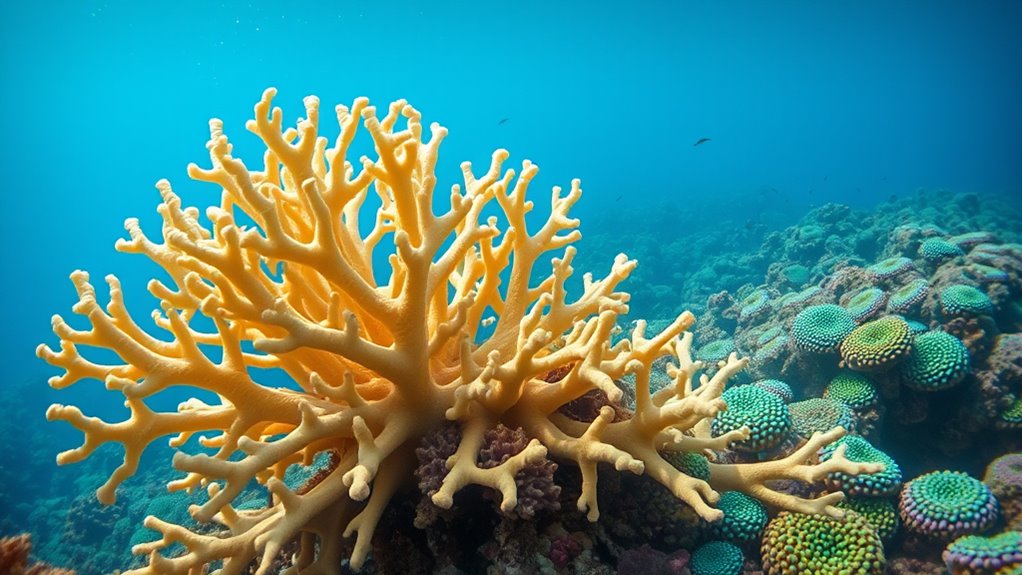
Conservation efforts are actively working to protect and restore staghorn coral populations through a combination of innovative techniques and collaborative initiatives. Scientists are cultivating corals in nurseries, growing fragments in controlled environments, and then transplanting them onto damaged reefs. This accelerates natural recovery and boosts genetic diversity. Marine protected areas limit human impacts like fishing and pollution, creating safer habitats. Restoration projects also include selective breeding for disease resistance and resilience to warming waters. Public awareness campaigns and citizen science programs engage local communities, fostering stewardship. Additionally, research into disease management and adaptive restoration strategies helps counter threats. These combined efforts aim to rebuild healthy, self-sustaining populations, ensuring that staghorn corals can once again thrive and support reef ecosystems.
Frequently Asked Questions
How Do Staghorn Corals Respond to Climate Change Impacts?
You see that climate change impacts staghorn corals by increasing water temperatures and ocean acidification, which stress their essential symbiotic algae. As a result, their growth slows, bleaching occurs, and mortality rates rise. These changes threaten their ability to rebuild reefs and provide habitat. You can help by supporting conservation efforts that reduce carbon emissions and protect these resilient, fast-growing corals from further damage.
Can Staghorn Coral Recover Naturally Without Human Intervention?
Yes, staghorn coral can recover naturally, but it’s a slow process that depends on favorable conditions. When threats like disease, pollution, and climate change lessen, surviving colonies can grow and reproduce, gradually rebuilding reef structures. You can help by supporting conservation efforts that protect their habitats and reduce human impacts. With enough healthy reef areas, these resilient corals have the potential to bounce back over time, restoring essential marine ecosystems.
What Are the Main Differences Between Staghorn and Elkhorn Corals?
You’ll notice that staghorn and elkhorn corals differ mainly in shape and growth patterns. Staghorn corals have thin, cylindrical branches that grow in a spaced-out pattern, resembling antlers, while elkhorn corals have broader, more robust branches that resemble elk antlers. Staghorn tends to grow faster and reaches reproductive maturity sooner, making it a vital reef builder, especially in the Western Atlantic.
How Long Does It Take for a Staghorn Colony to Fully Mature?
It takes about 7 inches of height for a staghorn coral colony to reach reproductive maturity, which usually occurs within 3 to 4 years of growth. During this time, your colony will grow rapidly, adding up to 8 inches annually. Once mature, it can reproduce sexually through broadcast spawning and contribute notably to reef building and habitat creation, playing a crucial role in the ecosystem’s health.
Are There Successful Examples of Restoring Staghorn Reefs?
Restoring staghorn reefs is like planting a forest—success depends on careful effort. There are promising examples, such as coral nurseries where scientists grow and outplant healthy fragments. Projects in Florida and the Caribbean have seen increased coral cover and improved reef health. While challenges remain, these efforts show that with persistence and science, we can help these essential corals rebuild their populations and restore reef ecosystems.
Conclusion
You hold the power to save the staghorn coral before it slips away like whispers on the tide. By supporting conservation efforts and spreading awareness, you become a crucial part of the reef’s story—a story of resilience and hope. Remember, every action ripples through the ocean’s vast tapestry, reminding us that even the smallest contribution can turn the tide in favor of these essential architects of our underwater world.