TL;DR

Prime made for students and young adults
- Fast, free delivery for dorm and study essentials
- Prime Video and Amazon Music included
- Member-only deals
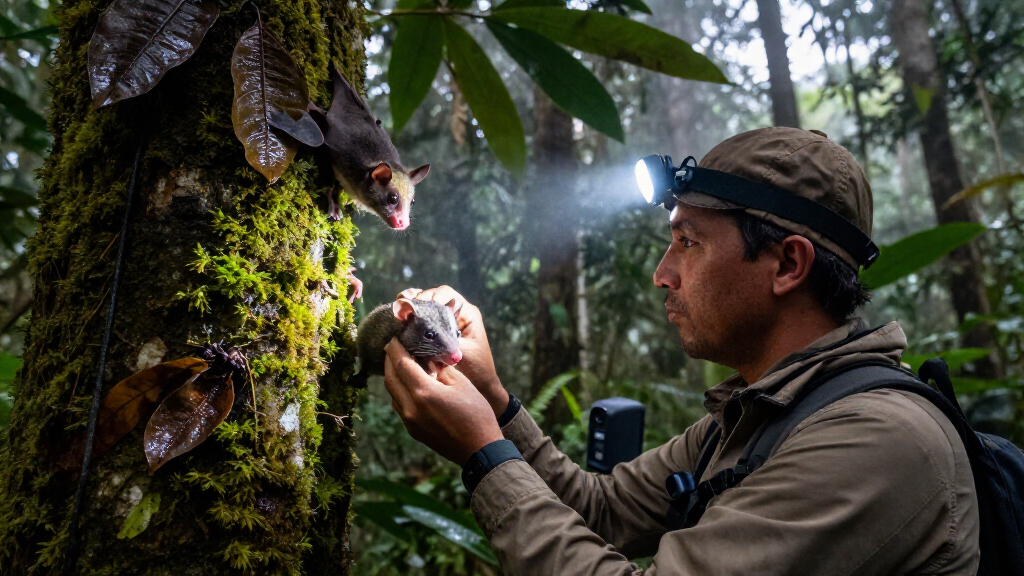
A study published in the Records of the Australian Museum reports that two marsupial species, thought to have disappeared about 6,000 years ago, are living in remote West Papua. Researchers pieced together fossil, photographic and specimen records and worked with Indigenous communities to identify them; the ring-tailed glider’s forest habitat faces logging pressure.
A study published on March 6 in the Records of the Australian Museum reports that two marsupials believed to have disappeared about 6,000 years ago are living in remote West Papua. The findings concern the pygmy long-fingered possum and ring-tailed glider, and rely on historical evidence and knowledge shared by local Indigenous communities.
The pygmy long-fingered possum is a striped marsupial weighing about 200 grams. Researchers describe its unusually long fourth finger on each hand—about twice the length of its other digits—as an adaptation that helps it extract wood-boring insect larvae, its main food source. The original report says the species is understood to have vanished from Australia during the Ice Age.
The second animal, the ring-tailed glider, has a grasping tail and lives in hollows in tall trees. The researchers identified the animals by bringing together decades-old fossils, rare photographs and museum specimens, then visiting remote locations in New Guinea. The report does not describe the animals as newly evolved or newly discovered by local residents; the scientific development is their documentation as living members of species previously believed to be lost.
Researchers worked with elders from the Tambrauw and Maybrat communities. Rika Korain, a Maybrat woman and co-author, said local knowledge was necessary to identify the species. The report says some elders had contact with the modern world only from the 1960s onward, underscoring how scientific records and community knowledge contributed different evidence.
Forest Protection After the Rediscovery
The report changes the documented status of two species: rather than being known only through historical evidence, both are reported as living in West Papua. That matters for conservation because their continued existence depends on protecting habitats where they can persist, especially the tall-tree hollows used by the glider.
According to co-author Tim Flannery, the glider’s habitat is increasingly threatened by logging. The research team and wildlife groups are pursuing efforts to secure native title for forests, which Flannery said could mean logging cannot proceed without local consent. The paper also illustrates the role of Indigenous knowledge in locating and identifying wildlife that may be absent from formal scientific records.
The discovery does not, by itself, establish how many animals remain, whether their populations are stable or what protections are in place. Those unanswered questions matter: a species can survive in a remote area while still facing substantial pressure from habitat loss.
As an affiliate, we earn on qualifying purchases.
How Researchers Reassembled the Evidence
The term “Lazarus taxon” is used for a species that reappears in the record after being considered extinct. The researchers’ case drew on multiple kinds of evidence rather than a single recent sighting: old fossils, photographs, specimens and information from residents helped guide visits to remote parts of New Guinea.
Tim Flannery, Kris Helgen and researchers from the University of Papua worked with elders from Tambrauw and Maybrat communities, according to the BBC report. Korain said local knowledge was needed to identify the animals. Flannery also described the glider as sacred to some local people, saying they would not hunt it or mention its name.
The report describes the species as thought to have disappeared about 6,000 years ago; this is the period associated with their presumed disappearance, not a claim that researchers have dated the living animals or their current populations to that time. The published work records the rediscovery, while population size and conservation status require separate evidence.
“The discovery of one lazarus taxon… is an exceptional discovery. But the discovery of two species, thought to have been extinct for thousands of years, is remarkable.”
— Tim Flannery, study co-author
Population Size and Threats Remain Unknown
The report does not provide estimates for the number of possums or gliders, the size or range of their populations, or whether either species is increasing or declining. It also does not give a detailed assessment of how much habitat remains or the scale of logging in the areas where the glider lives. The 6,000-year figure refers to how long the species were thought to have been absent, not the age of the present-day animals.
Further, the report does not spell out the legal status, boundaries or timeline of the native-title efforts described by Flannery. It is not yet clear what formal conservation protections will follow publication of the study or how local communities will be involved in decisions about land use.
Mapping Habitats and Securing Local Consent
The researchers and wildlife groups are seeking to secure native title for forest areas, according to Flannery, with the stated aim of requiring local consent before logging can occur. The report gives no timetable for that process, so its progress and outcome remain uncertain.
Further field research would be needed to establish population numbers, confirm the animals’ distribution and assess habitat pressures. The published study documents the rediscovery; the next conservation steps will depend on what researchers and local communities learn about the species and on how land-use decisions are made.
Key Questions
Which two animals were reported living in West Papua?
The study reports the pygmy long-fingered possum and the ring-tailed glider, both previously thought to have disappeared thousands of years ago.
How were the species identified?
Researchers combined old fossils, rare photographs and historical specimens with information from local elders and visits to remote New Guinea locations.
Does the study say how many animals remain?
No population estimate is given in the report. The animals’ numbers, range and population trends remain unclear.
What threat was identified?
Co-author Tim Flannery said the ring-tailed glider’s forest habitat faces increasing pressure from logging. The report does not quantify the extent of that pressure.
What does the 6,000-year figure mean?
It describes how long the species were thought to have been extinct or absent from the record. It does not mean the living animals are 6,000 years old.
Source: hn
Halloween Picks
halloween
As an affiliate, we earn on qualifying purchases.