
Ditch your car for biking and public transit to save money, boost your health, and help the environment. Start by planning safe routes with protected bike lanes and clear signage, then guarantee your gear is visible and secure with lights, reflective gear, and a good helmet. Learn how to navigate traffic and intersections safely while choosing low-traffic paths. If you want practical tips to make your switch easier, keep exploring these helpful strategies.
Key Takeaways
- Plan safe, low-traffic routes using protected bike lanes and mapping tools to ensure a secure, efficient commute.
- Invest in essential safety gear like helmets, lights, and reflective clothing to stay visible and protected.
- Use public transit options that suit your schedule, combining biking and transit for flexible, cost-effective travel.
- Follow traffic laws, use hand signals, and stay alert to navigate intersections safely and avoid accidents.
- Maintain your bike regularly and ensure all lights and reflectors are functioning for maximum safety during daily rides.
Understanding the Benefits of Biking and Transit

Biking and transit offer significant benefits that make them smart alternatives to driving. They help you save money on fuel, maintenance, and parking fees, making your commute more affordable. Plus, they reduce your carbon footprint, contributing to cleaner air and a healthier environment. Biking and public transit also promote physical activity, improving your overall health and well-being. Unlike driving, which often involves long periods of sitting, cycling and transit encourage movement, helping you stay active daily. They can also cut down commute times during rush hours, especially when using dedicated bike lanes or transit routes. Additionally, these options often provide more predictable travel times and help you avoid traffic jams, making your daily travels more efficient and less stressful. Incorporating outdoor living spaces into your routine can further enhance your active lifestyle and foster community connections. Making these choices can also reduce traffic congestion, leading to less frustration and more enjoyable commutes.
Planning Safe and Efficient Routes
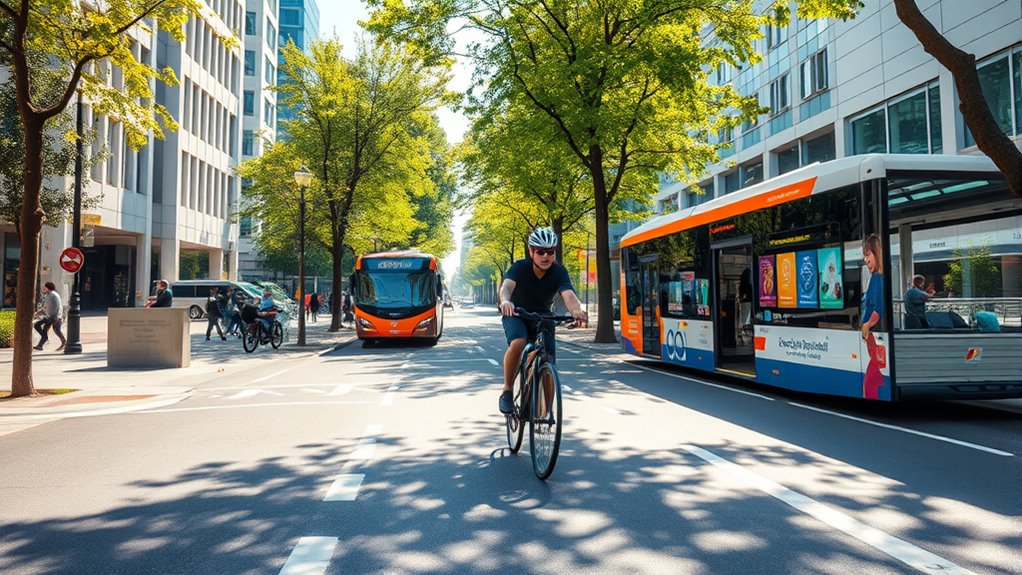
Choosing the right route is key to ensuring your safety and making your commute more efficient. Look for protected bike lanes or bike paths, as they considerably reduce crash risks compared to roads shared with motor vehicles. Use clearly marked bike-specific facilities, which can cut injury and crash rates in half. Avoid high-traffic intersections when possible, especially those where cyclists fail to yield—most fatal crashes happen there. Planning routes that stay away from busy streets or follow quieter backroads can enhance safety. Check for routes with good visibility, light, and signage. Use mapping tools or local bike maps to identify safe, direct paths, and consider alternatives that prioritize safety over shortest distance. A well-planned route boosts confidence and reduces risk during your ride. Comparative advantage can also inform your choice of routes by helping you maximize efficiency based on available resources and conditions.
Essential Gear and Bike Maintenance Tips

Ensuring your bike is equipped with the right gear and properly maintained is essential for safe and efficient commuting. Start by choosing a bike that fits you well; an oversized or ill-fitting bike is harder to control and increases crash risk. Check your brakes regularly—they’re your most critical safety feature—making sure they stop effectively. Keep tires properly inflated; under-inflated tires cause flats and reduce control. Use bright, reflective clothing and gear, especially during daytime, and install front white lights and rear red lights for visibility. Secure accessories and loose items to prevent entanglement. Regularly inspect your bike for loose bolts, chain wear, and gear functionality. Proper maintenance not only extends your bike’s lifespan but also guarantees your safety during every ride. Additionally, understanding projector contrast ratio can help you choose equipment that ensures clear visuals, especially in varying lighting conditions. Paying attention to essential safety gear such as helmets, gloves, and lights is crucial for protecting yourself in case of accidents or emergencies. Moreover, familiarizing yourself with sound healing science can inspire calming routines during your rides, promoting mindfulness and relaxation. Incorporating bike accessories like bells or mirrors can also enhance your riding experience and safety.
Staying Visible and Protecting Yourself
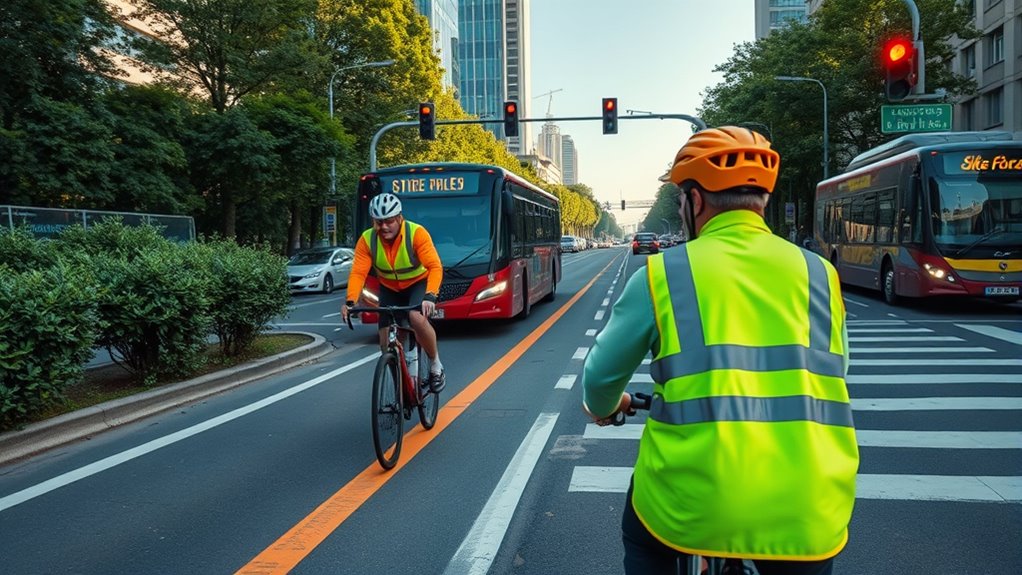
To stay safe while cycling, you need to be highly visible to motorists. Wearing bright clothing, adding reflective gear, and lighting up your bike make a big difference in alerting drivers to your presence. These simple steps can help protect you and reduce the risk of accidents. Incorporating reflective gear can also boost your focus and alertness, which is crucial for staying attentive while biking. Additionally, staying hydrated and moisturized can help maintain your skin’s elasticity and overall alertness during your ride. Ensuring your bike is equipped with proper lighting technology can further enhance your visibility, especially during low-light conditions.
Wear Bright Clothing
Have you ever wondered how a simple change in your clothing can make a big difference in your safety while cycling? Wearing bright clothing during the day helps drivers notice you from a distance, reducing the risk of accidents. It’s a quick, easy way to stay visible and protect yourself. Imagine this:
| Bright Colors | Increased Visibility | Safer Rides |
|---|---|---|
| Yellow, orange, red | Catch a driver’s eye faster | Feel confident on every ride |
| Neon shades | Stand out in traffic | Reduce the chance of surprises |
| Reflective accents | Enhance daytime visibility | Enjoy cycling with peace of mind |
| Clear distinction | Make yourself seen easily | Stay safe, stay confident |
Don’t underestimate the power of vibrant clothing—your safety depends on it. AI security technologies are increasingly used to analyze patterns and improve safety systems, highlighting the importance of visibility in reducing cyber and physical threats. Additionally, understanding the security measures involved in protective gear can help you make smarter choices for your safety. For example, electric bikes can reach speeds of up to 50 mph, making speed an important factor to consider for safety gear and riding precautions. Incorporating safety technology such as lights and reflective gear can significantly enhance your visibility, especially during low light conditions.
Use Reflective Gear
Reflective gear plays a crucial role in keeping you visible to drivers, especially during low-light conditions or at night. When you wear reflective vests, strips, or accessories, you make it easier for drivers to see you from a distance, giving them more time to react. Reflective materials bounce back light from headlights, making your presence obvious on the road. It’s especially important near intersections and in poorly lit areas where visibility is limited. You should add reflective gear to your clothing, shoes, or bike accessories for maximum effect. Remember, even simple reflective stickers or ankle bands can considerably increase your visibility. Staying visible helps prevent accidents and keeps you safe as you navigate your route. Additionally, staying aware of AI security developments can help you understand how technology is improving safety measures for cyclists and pedestrians. Incorporating reflective gear into your overall safety strategy is a simple yet effective way to enhance your visibility and protection on your journeys. Utilizing advanced safety technology can further improve your security on the road. Being aware of safety innovations can help you adapt to new tools and methods that enhance your safety. Using emotional intelligence to remain calm and aware in traffic situations can further improve your safety.
Light Up Your Bike
Lighting your bike effectively is essential for staying visible and protecting yourself during low-light conditions or at night. Bright front lights illuminate your path and alert drivers to your presence, while red rear lights make you visible from behind. Reflectors on pedals, wheels, and the frame add extra visibility when lights aren’t on or during daylight. Wear reflective clothing or accessories to increase your visibility to motorists and pedestrians. Confirm all lights are securely attached and functioning properly before each ride. Proper lighting not only helps you see obstacles but also signals to others that you’re there, reducing the risk of accidents. Investing in quality, rechargeable lights ensures you stay visible and safe on every ride, no matter the time of day. Additionally, choosing a preppy dog name that matches your style can make your cycling gear look even more fashionable and coordinated. Ensuring your lighting setup complies with local bike safety laws can help you avoid fines and stay safe on the road. Remember that many headphones are now compatible with Bluetooth, making it easier to listen to music or take calls without compromising your awareness while riding. Incorporating AI-powered lighting systems can further enhance your visibility by adapting brightness levels to your environment and riding conditions. Using lights with automatic brightness adjustment can help you stay visible without blinding other road users.
Navigating Traffic and Intersection Safety
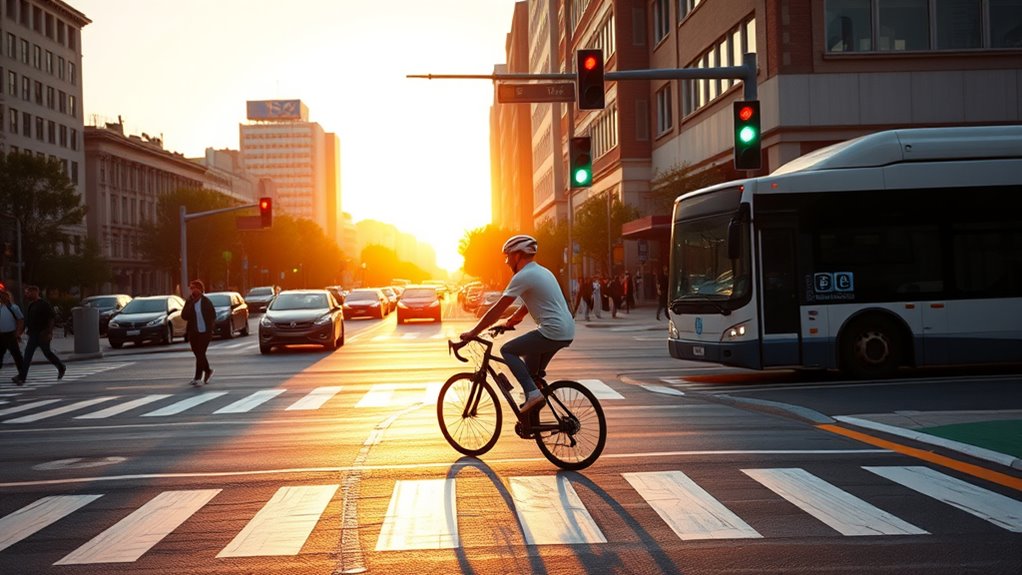
Finding your way through traffic and intersections safely is essential for reducing the risk of crashes and injuries. Always stay alert and anticipate drivers’ actions; never assume they see you. Make eye contact when possible to confirm awareness. Follow traffic signals and signs diligently, and ride in predictable patterns. Use clear hand signals to communicate your intentions to drivers and pedestrians. Stay in designated bike lanes or on the right side of the road, especially near intersections. Reduce speed when approaching busy crossings, and be extra cautious at intersections, where most fatal crashes occur. Look both ways, even if you have the right of way. Wearing a helmet and bright clothing enhances visibility, giving you extra protection while steering through traffic safely.
Making the Switch: Tips for Beginners

When you start cycling, choosing routes with protected bike lanes or quiet streets can greatly improve your safety. Make sure to gear up with a well-fitting helmet, bright clothing, and lights to stay visible. Taking these simple steps helps you ride confidently and reduces your risk of injury.
Choosing Safe Routes
Choosing safe routes is essential for reducing your risk of injury and making cycling a more enjoyable experience. Look for dedicated bike lanes or paths, which considerably lower crash risks compared to shared roads. Avoid routes with heavy traffic, especially near intersections where most fatal crashes occur. Prioritize well-marked, bike-specific facilities that offer clear separation from motor vehicles. Use route planning apps or maps to identify quieter streets with lower traffic volumes. Stick to routes with good visibility, minimal intersections, and adequate lighting. If possible, choose paths that avoid busy roads altogether, such as parks or residential streets. Always remain alert and aware of your surroundings, and plan your routes ahead of time to maximize safety and comfort during your rides.
Essential Safety Gear
Starting your cycling journey with the right safety gear can considerably reduce your risk of injury and boost your confidence on the road. Essential gear includes a properly fitted helmet, bright or reflective clothing, and working lights. Visibility is vital; wear bright colors during the day and use front white lights and rear red lights at night. Brakes should be functioning well to guarantee quick stopping. Reflectors on your bike increase visibility, especially in low light. Secure accessories and avoid loose clothing that could catch on chains. Use gloves and padded shorts for comfort and control. Always check your gear before riding to verify safety and peace of mind.
| Safety Gear | Purpose | Tips |
|---|---|---|
| Helmet | Protects head during falls | Fit snugly, rated for impact |
| Lights | Improve visibility at night | Use front white, rear red lights |
| Reflectors | Increase visibility in low light | Attach on wheels and pedals |
| Bright clothing | Enhances daytime visibility | Wear during daylight rides |
| Gloves | Improve grip and protect hands | Choose padded for comfort |
Frequently Asked Questions
How Can I Find the Safest Routes for Biking in My City?
You can find the safest routes by looking for designated bike lanes and paths in your city. Use online maps or local cycling apps that highlight protected bike lanes and bike-specific facilities. Avoid busy intersections and high-traffic roads, especially during peak hours. Prioritize routes away from traffic when possible, and always plan your ride along well-marked, visible paths to reduce crash risks and increase safety.
What Are the Best Practices for Riding in Bad Weather?
When riding in bad weather, you should slow down, increase your visibility, and wear appropriate gear like waterproof clothing and reflective accessories. Use lights on your bike, especially in low-light conditions, and avoid slick surfaces by braking gently. Stay alert for hazards such as puddles and debris, and choose routes with better pavement or bike lanes when possible. Always prioritize safety and be prepared for changing weather conditions.
How Do I Properly Fit and Adjust My Bike Helmet?
Imagine you’re a knight preparing for battle; your helmet must fit just right. To properly fit and adjust your bike helmet, place it level on your head, ensuring it sits low on your forehead—about one inch above your eyebrows. Tighten the straps so they form a “V” under your ears, snug but comfortable, and shake your head to confirm it stays secure. A well-fitted helmet is your best defense.
What Should I Do if I Encounter Aggressive Drivers?
If you encounter aggressive drivers, stay calm and avoid confrontation. Keep a safe distance, stay predictable with your riding, and use hand signals clearly. Try to maintain eye contact or make yourself more visible by wearing bright clothing or using lights. If needed, slow down or stop until the driver passes. Remember, your safety is the priority, so avoid engaging or reacting emotionally to aggressive behavior.
Are There Specific Laws or Rules I Should Know as a New Cyclist?
Think of the road as a shared dance floor—you need to follow the rhythm of traffic laws. As a new cyclist, know that you must obey all traffic signals, stop at stop signs, and ride in the same direction as traffic. Use hand signals to communicate, wear visible gear, and stay alert. These rules keep you safe and help drivers see you as a confident partner on the road.
Conclusion
Now that you’ve got the basics down, imagine the freedom of gliding through streets or catching your bus without worry. But there’s more to discover—hidden tips, secret shortcuts, and unexpected challenges that could change your entire ride. Are you ready to take the leap from car to bike and transit? The open road—and new adventures—are waiting just around the corner. All that’s left is for you to pedal, board, and see what’s beyond the horizon.