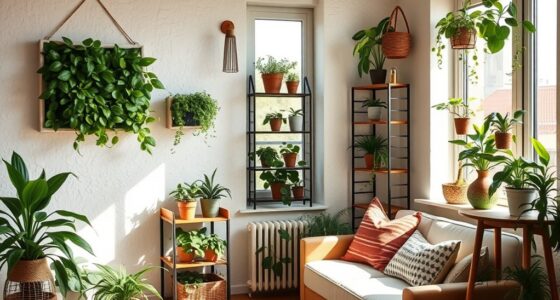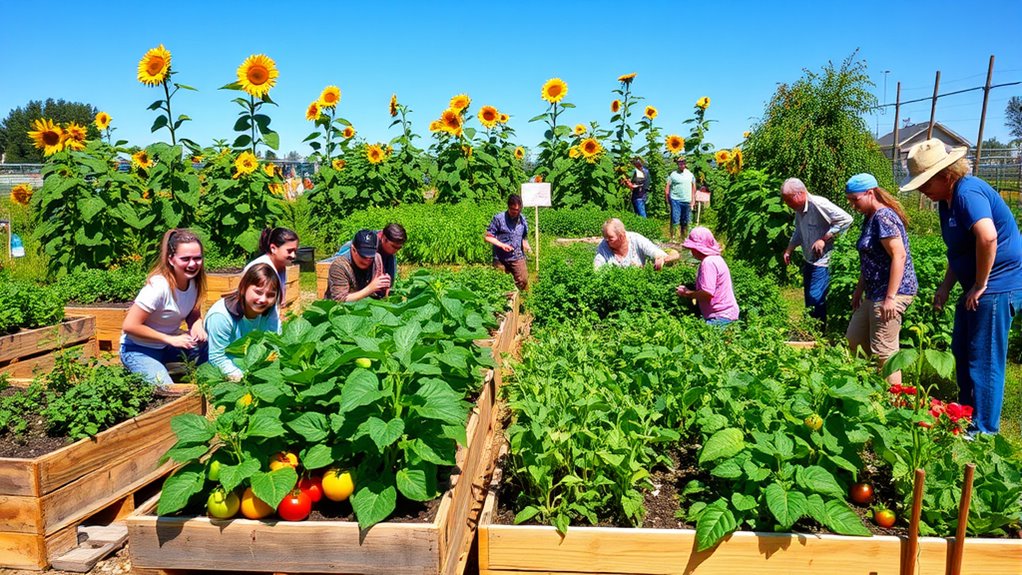

Community gardens are powerful spaces that strengthen social bonds, promote sustainability, and improve access to fresh produce. To start one, find accessible land, develop a clear plan, and partner with local organizations. If you’d rather join an existing garden, attend events, volunteer, and connect with members. Overcoming challenges like space limitations or funding is possible with creativity and strong community support. Keep exploring to discover more tips for growing or connecting with community gardens in your city.
Key Takeaways
- Identify a suitable, accessible location with good sunlight, water, and soil quality for starting or joining a garden.
- Partner with local organizations, schools, or neighborhood groups to build support and secure land.
- Develop a clear plan including layout, rules, and inclusive practices to foster community ownership and participation.
- Attend events, volunteer, and connect with existing gardens to learn and integrate into the community.
- Seek funding opportunities and build partnerships to ensure the garden’s long-term sustainability and growth.
Understanding the Benefits of Community Gardens
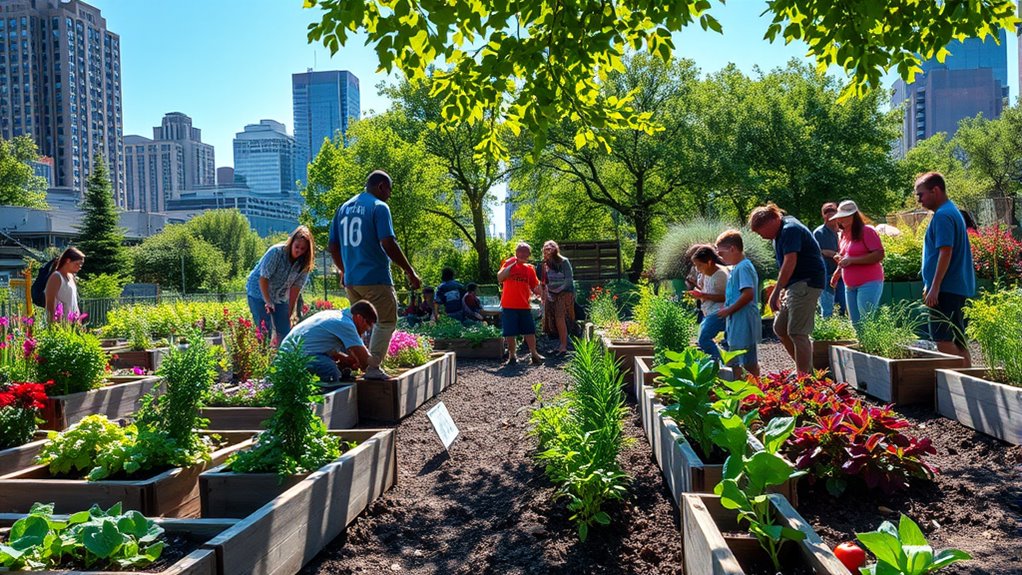
Community gardens offer a wide range of benefits that positively impact individuals and neighborhoods alike. When you get involved, you’ll notice stronger social bonds, as these spaces foster social connectedness and reduce feelings of isolation—92.8% of participants report feeling less lonely. Gardens also build trust and engagement, creating partnerships and increasing participation in local events. They are inclusive, with over 99% of users feeling welcomed and part of a community. Beyond social benefits, gardens improve health by encouraging physical activity, reducing obesity, and providing access to fresh, healthy produce—crucial in food deserts. They also boost local economies, increase property values, and support environmental sustainability through composting and reduced transportation emissions. Additionally, community gardens can serve as vital habitats that support local biodiversity, attracting pollinators like bees and butterflies which are essential for healthy ecosystems. This connection to spiritual energy can foster a sense of harmony and wellbeing among gardeners. Incorporating educational opportunities within these gardens can further enhance community engagement and knowledge sharing. Fostering community resilience is another key advantage, as these gardens help neighborhoods adapt to environmental and economic challenges. Overall, community gardens are powerful tools for transforming neighborhoods into healthier, more connected places.
Planning and Finding the Right Space
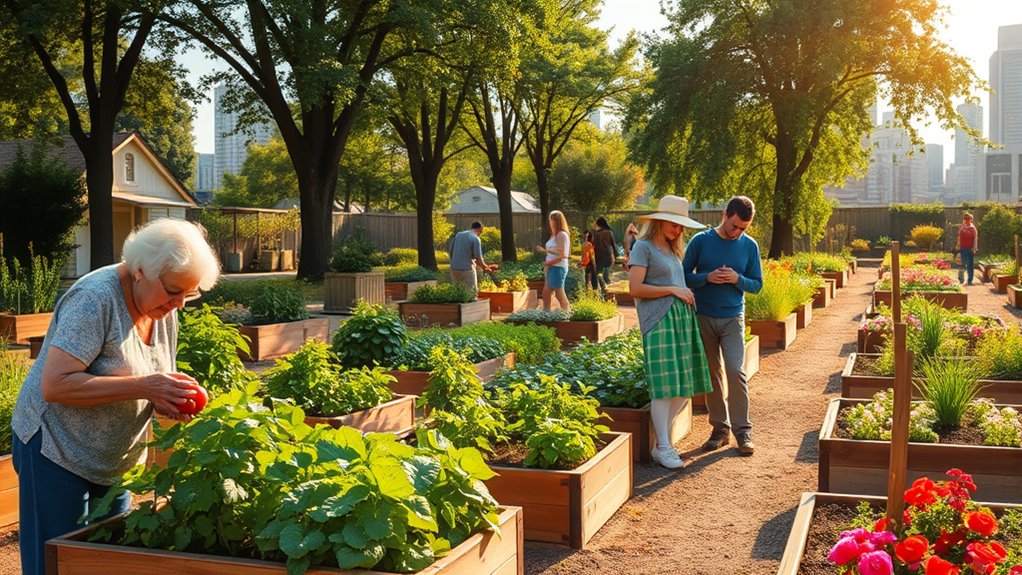
Finding the right space is an essential first step in starting or joining a community garden. You want a location that’s accessible, safe, and suitable for planting. Look for vacant lots, park land, or unused green spaces with adequate sunlight, water access, and good soil quality. Before choosing, consider the community’s needs and how the space can foster social interaction and inclusivity. Conducting a thorough site assessment will help determine whether the chosen area meets all the necessary requirements for a successful garden. Additionally, understanding soil quality and potential contamination issues is crucial for ensuring healthy plant growth and the safety of future gardeners. Evaluating environmental factors such as pollution levels and local land use history can also influence the safety and sustainability of your garden space. Performing a soil test can identify any contaminants and help plan for soil amendments or remediation if needed. Regularly monitoring environmental conditions can further ensure the ongoing safety and vitality of the garden site.
How to Start a Community Garden

Starting a community garden involves careful planning and collaboration. First, identify local partners like nonprofits, schools, or neighborhood groups to build support. Secure a suitable space—such as an empty lot or park—by contacting landowners or local authorities. Then, develop a clear plan for the garden’s layout, including plots, pathways, and communal areas. Seek funding through grants, donations, or community fundraising efforts to cover supplies and infrastructure. Establish rules and responsibilities for maintenance and membership, ensuring inclusivity and cultural relevance. Communicate openly with community members to gather input and foster ownership. Utilizing color accuracy principles can also help create an inviting and visually appealing space. Additionally, understanding electric bike speed capabilities can inspire innovative ways to incorporate sustainable transportation options in your community. Incorporating wall organization systems can enhance the organization and aesthetics of shared community spaces or storage areas. Once everything is in place, organize a kickoff event to attract volunteers and set the foundation for ongoing participation and growth. Building awareness about soil quality and composting can further enhance the sustainability and productivity of your garden. Incorporating beneficial ingredients into soil and plant care can also promote healthier growth and yield.
Getting Involved in Existing Gardens
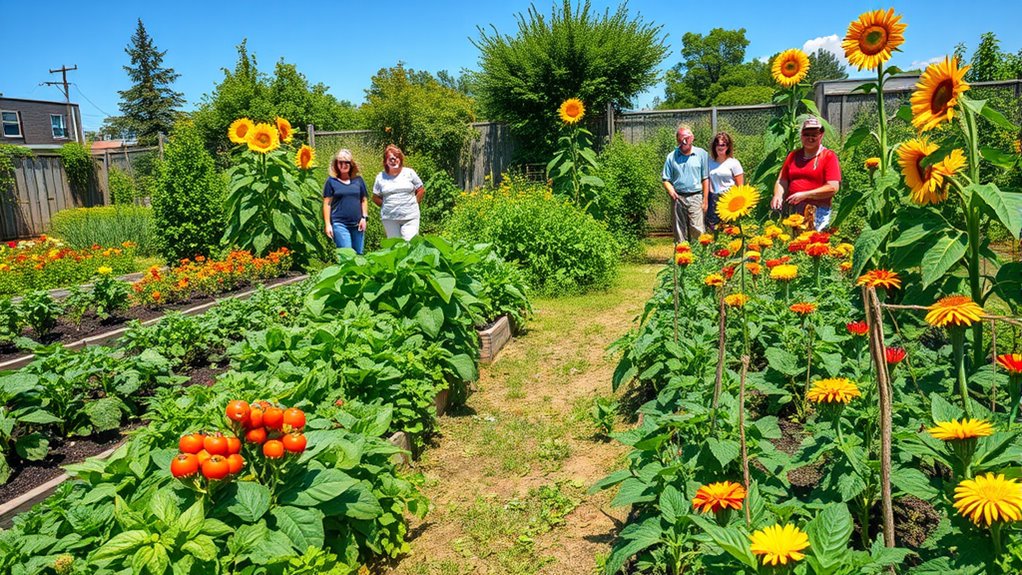
Ever wondered how you can become part of a thriving community garden without starting one from scratch? Joining an existing garden is a great way to enjoy the benefits without the initial setup. To get involved, start by researching local gardens through community boards or online groups. Attend garden events or open days to meet members and learn about volunteer opportunities. Many gardens have membership programs or waiting lists, so ask about requirements and participation options. You can also contribute by volunteering in planting, maintenance, or educational activities. This involvement helps build connections and enhances community bonds. Remember, your regular participation and willingness to help are key to strengthening the garden’s success and your own enjoyment of the space. Utilizing community resources can also provide valuable information and support for your involvement.
Overcoming Challenges and Ensuring Sustainability
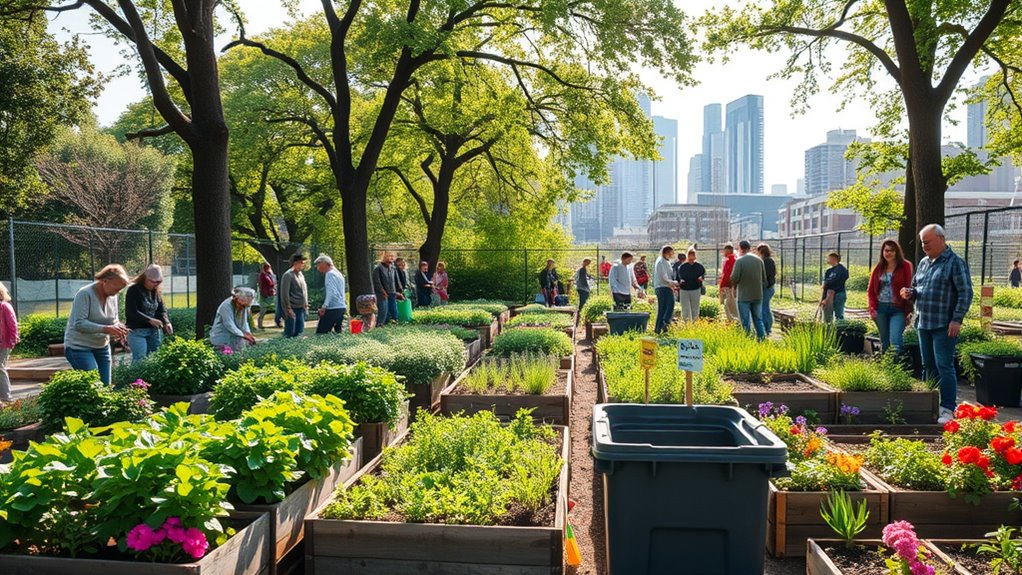
Joining an existing community garden is a rewarding experience, but sustaining its success requires addressing common challenges head-on. To do this, stay committed and encourage regular participation to maintain momentum. Secure ongoing funding by applying for grants, hosting fundraising events, or establishing membership fees that support maintenance costs. Address space limitations by collaborating with local authorities or exploring innovative solutions like rooftop or vertical gardens. To prevent gentrification, focus on inclusive programming that serves diverse communities and keeps affordability in mind. Ensure equitable access by actively involving marginalized groups and respecting cultural needs. Foster strong community bonds through events and shared responsibilities. Additionally, utilizing community engagement strategies can streamline maintenance and improve resource management. Finally, build partnerships with local organizations, businesses, and government agencies to secure resources and support for long-term sustainability.
Frequently Asked Questions
How Can Community Gardens Promote Social Equity and Inclusion?
You can promote social equity and inclusion by ensuring your community garden welcomes everyone, especially marginalized groups and newcomers. Involve diverse community members in planning and decision-making, offer culturally relevant programming, and provide accessible spaces for all abilities. Partner with local organizations to reach underserved populations, and create affordable or free memberships. By fostering a sense of belonging and shared ownership, you help build a more equitable, inclusive community through gardening.
What Are Effective Strategies for Engaging Diverse Community Members?
You can effectively engage diverse community members by actively listening to their needs and involving them in planning. Address concerns about language barriers by offering multilingual resources and culturally relevant programming. Collaborate with local organizations that serve various communities, and host inclusive events that celebrate different cultures. By fostering a welcoming environment and ensuring everyone’s voice is heard, you’ll build trust and encourage participation from all backgrounds.
How Do Community Gardens Impact Local Property Values and Gentrification?
Community gardens can boost local property values by transforming vacant lots into attractive green spaces, making neighborhoods more appealing. However, this often leads to gentrification, which can raise housing costs and displace long-term residents. You should be aware of these risks and advocate for inclusive policies that balance neighborhood improvement with affordable housing, ensuring that community gardens benefit everyone without unintentionally pushing out existing residents.
What Funding Sources Are Available for Long-Term Garden Sustainability?
You can tap into diverse funding sources to guarantee your community garden’s long-term sustainability. Look for grants from local government agencies, nonprofits, and environmental organizations that support urban greening projects. Consider community fundraising events, crowdfunding platforms, and donations from residents or local businesses. Partnering with schools or organizations may also provide ongoing support through sponsorships or in-kind contributions. Combining these options helps maintain and expand your garden over time.
How Can Gardens Support Environmental Sustainability and Reduce Urban Heat?
Imagine transforming your city’s landscape and making a real environmental impact. Gardens support sustainability by increasing green cover, which cools urban areas and reduces the heat island effect. They also promote biodiversity, filter pollutants, and conserve water through composting and rain gardens. By boosting natural habitats and encouraging eco-friendly practices, your garden becomes a crucial tool in fighting climate change and creating healthier, more resilient cities.
Conclusion
Joining or starting a community garden might seem intimidating at first, but the rewards are worth it. Don’t worry if you don’t have a lot of space or experience—many gardens thrive with just a few dedicated volunteers. Remember, it’s about building connections and sharing the joy of growing. So, take that first step; your city’s community garden is waiting for your green thumb and enthusiasm to flourish!