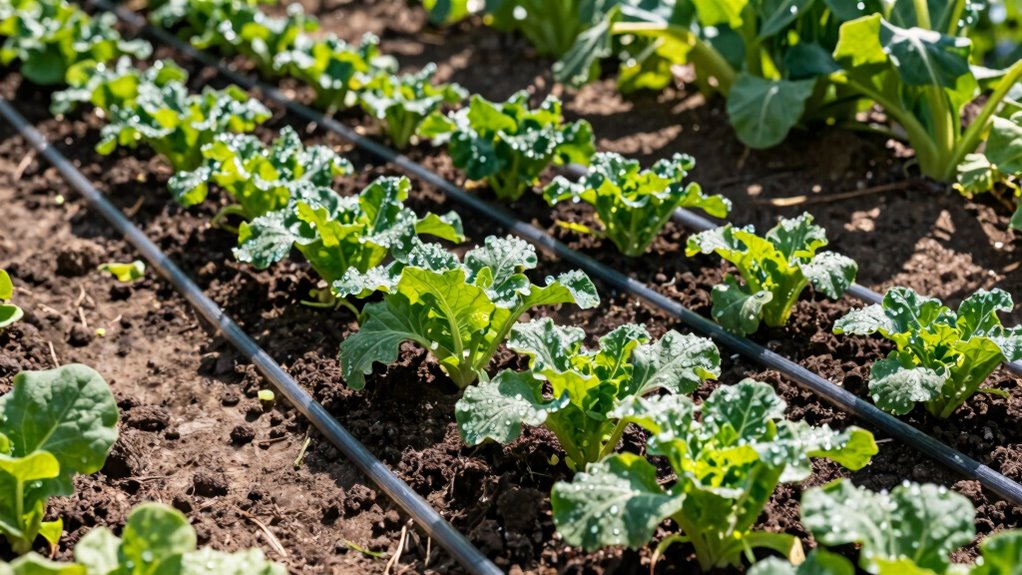

Drip irrigation saves water in raised beds by delivering moisture directly to your plants’ roots. This method reduces evaporation and runoff, ensuring every drop counts. By maintaining consistent soil moisture, your plants thrive while minimizing weed growth and competition for water. You’ll spend less time weeding and more time enjoying your garden’s productivity. Curious about more ways drip irrigation can improve your gardening experience? There’s plenty more to discover about its benefits and efficiency!

Prime made for students and young adults
- Fast, free delivery for dorm and study essentials
- Prime Video and Amazon Music included
- Member-only deals
Key Takeaways
- Delivers water directly to plant roots, minimizing evaporation and runoff.
- Maintains consistent soil moisture levels, reducing the need for excessive watering.
- Targets specific plant needs, preventing overwatering and water waste.
- Keeps surrounding soil drier, limiting weed growth and competition for moisture.
- Enhances overall garden efficiency, maximizing water usage and promoting sustainable practices.
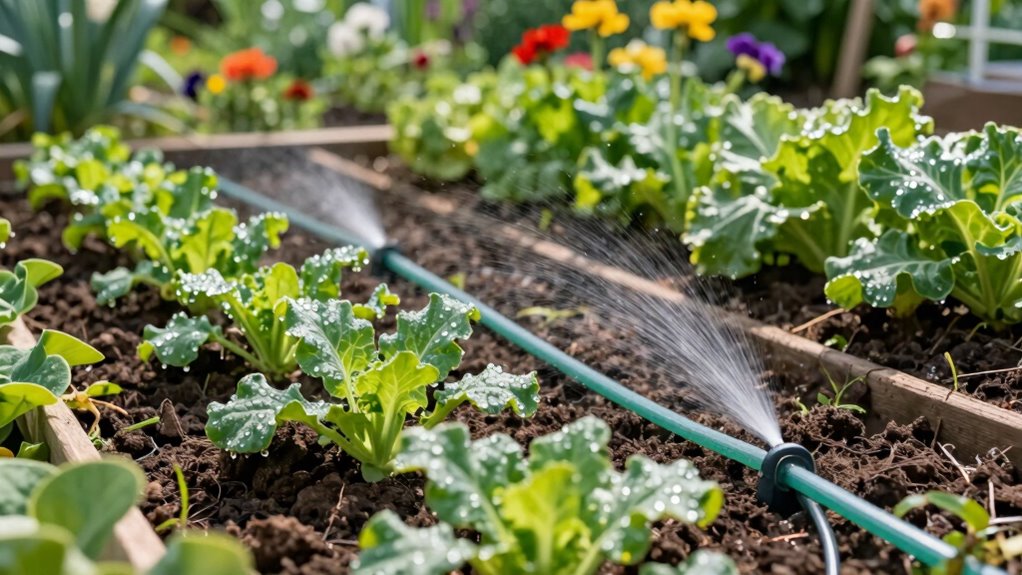
If you want to maximize the efficiency of your garden, drip irrigation in raised beds is a game changer. This method allows you to deliver water directly to the plant roots, ensuring that every drop counts. Unlike traditional watering methods, which often lead to evaporation or runoff, drip irrigation focuses on targeted delivery, enhancing water efficiency. You’ll notice less water wasted and healthier plants thriving in the ideal soil moisture they require.
When you install a drip irrigation system, you’re fundamentally setting up a network of tubes and emitters that release water slowly and evenly. This precision helps maintain consistent soil moisture levels, which is vital for plant growth. By keeping the soil just right, your plants can absorb nutrients more effectively, leading to bountiful harvests. Plus, the reduced evaporation means you can water even during hotter days without worrying about losing water to the sun.
Installing a drip irrigation system ensures precise water delivery, maintaining optimal soil moisture for healthy, thriving plants and bountiful harvests.
Another big advantage is that you control when and how much water your plants get. With a timer, you can set your system to run early in the morning or late in the evening, further reducing evaporation. This flexibility not only saves water but also allows you to cater to the specific needs of different plants. Some might prefer drier conditions, while others thrive in consistently moist soil. Drip irrigation lets you customize your approach, enhancing growth across your entire raised bed garden.
You’ll also find that drip irrigation reduces weed growth. Since the water goes directly to the plants, the surrounding soil remains drier, discouraging weeds from sprouting. This means less time spent on weeding and more focus on nurturing your garden. Also, fewer weeds mean your plants face less competition for moisture and nutrients, contributing to a healthier garden overall.
Popular right now

Ninja Luxe Café Mini Plus Espresso and Drip Coffee Machine with AutoFroth, Stainless Steel (ES351)

Bose QuietComfort Headphones (2nd Gen), Wireless Over-Ear Noise-Cancelling Headphones, Hazelnut Taupe

Breville BES870XL Barista Express Espresso Machine, Brushed Stainless Steel
As an affiliate, we earn on qualifying purchases.
Frequently Asked Questions
How Much Does a Drip Irrigation System Cost for Raised Beds?
A drip irrigation system for raised beds typically costs between $100 and $500, depending on the system components you choose. To keep expenses manageable, consider starting with a simple setup that includes tubing, emitters, and connectors. For installation, make sure to plan your layout carefully and check for any leaks after setup. With some basic tools and these tips, you can easily create an efficient watering system for your garden.
Can I Install Drip Irrigation Myself?
Absolutely, you can install drip irrigation yourself! Think of it as a fun weekend project. Start by gathering your materials and planning your layout. Use installation tips like measuring your raised beds accurately and checking for leaks after setup. The DIY benefits are huge—you’ll save money and gain valuable gardening skills. Plus, you’ll enjoy the satisfaction of creating an efficient watering system that keeps your plants happy and healthy.
What Types of Plants Benefit Most From Drip Irrigation?
Drought-resistant plants, root vegetables, herb varieties, and flowering plants all thrive with drip irrigation. You’ll find that drought-resistant species, like succulents, need less water and benefit from targeted moisture. Root vegetables, such as carrots and beets, grow better when their roots are consistently moist without waterlogging. Herbs like basil and parsley also appreciate the steady supply, while flowering plants enjoy the efficient watering that keeps their blooms vibrant. It’s a win-win for your garden!
How Often Should I Run My Drip Irrigation System?
You should run your drip irrigation system about two to three times a week, adjusting based on your plants’ needs and the season. Keep an eye on moisture levels; if the soil feels dry an inch below the surface, it’s time to water. Coincidentally, the right drip frequency can help your plants thrive while conserving water. Remember, overwatering can be just as harmful as underwatering, so find that perfect balance!
Will Drip Irrigation Reduce Weed Growth in Raised Beds?
Yes, drip irrigation can greatly reduce weed growth in raised beds. By providing targeted moisture distribution directly to your plants’ roots, it minimizes excess water in the surrounding soil, which often fuels weed competition. With consistent watering, your plants thrive while weeds struggle to establish. This efficient system not only conserves water but also helps maintain a healthier garden environment with fewer unwanted plants competing for resources.
Conclusion
Incorporating drip irrigation into your raised beds is a game-changer for water conservation. Not only does it deliver moisture directly to the roots, but it also cuts down on waste and keeps your plants thriving. With this efficient method, you’ll be killing two birds with one stone: saving water while enjoying a healthier garden. So, why wait? Immerse yourself in drip irrigation and watch your raised beds flourish like never before!