To decode eco-certifications on everyday products, start by recognizing common labels like OEKO-TEX, GOTS, and Fair Trade, which highlight safety, sustainability, and ethical sourcing. Look for third-party verifications from trusted organizations to guarantee claims are credible. Understanding what each certification emphasizes, whether chemical safety, circular use, or fair wages, helps you make informed, responsible choices. Keep exploring to uncover more tips on identifying trustworthy eco-labels.
Key Takeaways
- Recognize trusted certifications like OEKO-TEX, GOTS, and Cradle to Cradle to verify product safety and sustainability claims.
- Understand each label’s focus—chemical safety, environmental impact, or ethical sourcing—to make informed choices.
- Check for official logos, certification bodies, and expiration dates to ensure authenticity and credibility.
- Prioritize independent, third-party verified labels over self-certified claims for reliable information.
- Research the certification standards and scope to align product selections with your health and sustainability values.
Understanding Textile & Apparel Certifications
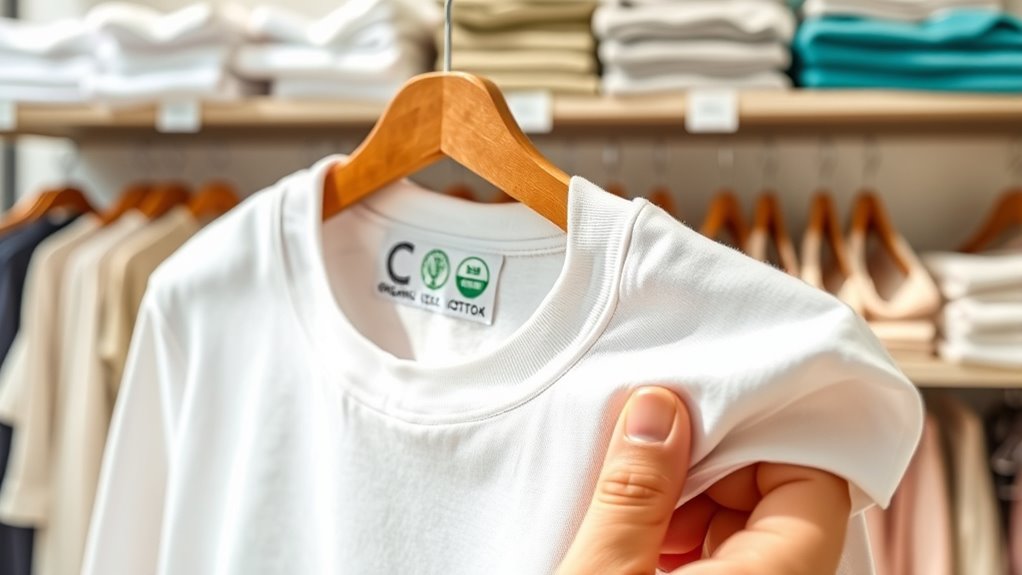
Are you familiar with what makes a textile or apparel product truly sustainable and safe? It starts with certifications that verify the safety, eco-friendliness, and ethical standards of the materials and manufacturing processes. The OEKO-TEX Standard 100, for example, tests textiles for over 100 harmful substances, ensuring that products are free from dangerous chemicals. Meanwhile, the GOTS certification confirms that fibers are organic and produced under fair labor conditions. The Cradle to Cradle label indicates that a product is designed for circular use, minimizing waste. These certifications help you identify brands committed to safety and sustainability, giving you confidence in your choices. Recognizing these labels allows you to support products that align with your values and promote a healthier planet. Certification standards are essential tools for understanding the true sustainability of textile and apparel items.
Recognizing Health & Safety Product Labels
When you’re checking health and safety labels, look for clear chemical-free indicators that show a product is free from harmful substances. Keep in mind that independent certification standards verify these claims, ensuring the labels are trustworthy. By understanding what these labels mean, you can make safer, more informed choices for yourself and your family. For skincare products, verifying brand trustworthiness through certifications and endorsements can provide additional confidence in their safety and quality. Recognizing eco-certifications on labels can help identify products that meet strict environmental and health standards, giving you peace of mind. Additionally, using keto diet tracking apps can assist in making healthier choices aligned with your lifestyle goals. Being aware of food safety standards in products, including those related to dairy and plant-based options, can further help you avoid ingredients that may cause adverse reactions or digestive issues. Awareness of precious metals IRA options can help diversify your investments securely and protect your financial future.
Chemical-Free Indicators
How can you quickly identify products that are free from harmful chemicals and safe for your health? Look for labels like Made Safe, EWG Verified, and OEKO-TEX Standard 100. Made Safe certifies products contain no known or probable carcinogens, endocrine disruptors, or toxic substances. EWG Verified ensures personal care items meet strict safety standards and exclude ingredients flagged for health or environmental concerns. OEKO-TEX Standard 100 applies to textiles and guarantees they’re free from over 100 hazardous chemicals. These indicators signal that manufacturers have tested or vetted ingredients to protect your well-being. Recognizing these labels helps you identify safe products and avoid items with harmful chemicals, ensuring safer, healthier options in your everyday routine. Being aware of chemical-free indicators, such as certifications, can assist you in making better health-conscious decisions. Additionally, understanding certification processes can further help you distinguish truly safe products from those with false claims. By familiarizing yourself with these trusted safety labels, you can make more confident and informed decisions about your purchases.
Independent Certification Standards
Identifying trustworthy health and safety labels on products can seem complex, but recognizing independent certification standards makes it easier to guarantee your choices are safe. These standards involve third-party organizations that verify products meet strict safety and ethical criteria. This process ensures the labels aren’t just marketing tricks but genuine indicators of quality. This verification process also helps prevent misleading claims that can occur in product marketing, giving consumers more confidence in their purchases. For example, some certifications specifically address the presence of harmful ingredients in products, such as anti-aging effects and other skin treatments. Here are three key certification standards to look for:
- Made Safe – certifies products are free from harmful chemicals, carcinogens, and endocrine disruptors.
- EWG Verified – confirms personal care items meet strict health and safety standards, excluding unsafe ingredients.
- OEKO-TEX Standard 100 – guarantees textiles are tested for over 100 harmful substances, ensuring safety for sensitive skin and personal use. Incorporating independent verification can further assure consumers of a product’s integrity and safety, as understanding narcissistic tendencies in product marketing can help consumers make more informed decisions, providing peace of mind when making purchasing decisions.
Deciphering Food & Agricultural Sustainability Marks

Food and agricultural sustainability marks help you quickly determine whether products are produced responsibly and with environmentally friendly practices. These labels verify that farming methods prioritize soil health, water conservation, and biodiversity. For example, Certified Regenerative by A Greener World ensures products come from farms using regenerative techniques that restore ecosystems. Fair for Life guarantees fair wages and ethical treatment across supply chains. The Forest Stewardship Council (FSC) certifies sustainably managed forest resources used in packaging and processing. Vegan Action confirms products contain no animal ingredients or animal-processed components, supporting cruelty-free choices. Recycled content labels verify that materials come from post-consumer waste, reducing landfill impact. Additionally, hydrocolloid technology in pimple patches helps absorb impurities more effectively and reduce inflammation around blemishes. Understanding these sustainability marks can empower consumers to support environmentally responsible practices and make more informed purchasing decisions. Recognizing environmental certifications can also guide consumers toward products that adhere to strict ecological standards. By understanding these marks, you can make informed decisions that support sustainable agriculture, protect ecosystems, and promote ethical farming practices. Furthermore, awareness of labeling standards ensures clarity and transparency in how products are marketed and certified.
Interpreting Environmental & Material Sustainability Seals
Understanding environmental and material sustainability seals requires recognizing their different scopes and focus areas. Some labels emphasize a product’s entire lifecycle, while others target specific materials or practices. To guarantee authenticity, you need to verify the certifying organizations and assess how each seal aligns with your sustainability priorities. For example, sound recording techniques can also be certified for environmental standards if the production process adheres to sustainable practices.
Certification Scope Differences
When comparing environmental and material sustainability seals, it’s important to recognize that each certification has a distinct scope and focus, which can influence how you interpret their claims. Some seals target specific aspects, while others cover broader standards. To understand their differences:
- Focus Area: Some certifications, like OEKO-TEX Standard 100, emphasize chemical safety, while others, like Cradle to Cradle, focus on circularity and lifecycle impacts. Recognizing these differences helps consumers make informed choices based on their sustainability priorities.
- Product Category: Certain labels are specific to categories—food (FSC), textiles (GOTS), or household products (EPA Safer Choice)—limiting their scope.
- Certifying Body: Recognized third-party organizations often set stricter standards, ensuring more all-encompassing coverage compared to self-certified claims.
- Certification Scope and Limitations: It is also essential to consider the certification scope of each label, as some may only address specific environmental aspects rather than comprehensive sustainability.
Material and Lifecycle Focus
Material and lifecycle-focused certifications reveal how products are designed to minimize environmental impact throughout their entire lifespan. These labels emphasize sustainable sourcing, circular design, and responsible disposal. For instance, Cradle to Cradle certification guarantees products are made for reuse, recycling, or safe biodegradation, reducing waste and resource depletion. Recycled content labels verify that materials derive from post-consumer or industrial waste, cutting down on virgin resource extraction. Certifications like Biodegradable and Compostable assure products break down naturally without releasing harmful substances. Additionally, standards such as PEFC promote sustainable forest management for timber and wood-based items. These seals help you identify products that prioritize long-term environmental health, encouraging responsible consumption and supporting systems that value durability, recyclability, and minimal ecological footprint. Incorporating material lifecycle considerations ensures products contribute to a more sustainable and resilient ecosystem from creation to disposal. Moreover, understanding these eco-certifications can guide consumers toward making more environmentally conscious choices in their everyday purchases.
Verifying Authenticity and Impact
How can you be sure that a product’s environmental claims are genuine? You need to verify the authenticity of eco-labels and understand their impact. Here’s how you can do it:
- Check for third-party certification: Trusted organizations like Ecocert, EWG, or Cradle to Cradle verify claims independently, ensuring they’re credible.
- Research label standards: Understand what each seal truly represents—whether it focuses on harmful chemicals, sustainable sourcing, or ethical practices.
- Look for transparency: Reputable brands often provide detailed information about their certifications, supply chains, and environmental practices.
Identifying Personal Care & Household Product Certifications
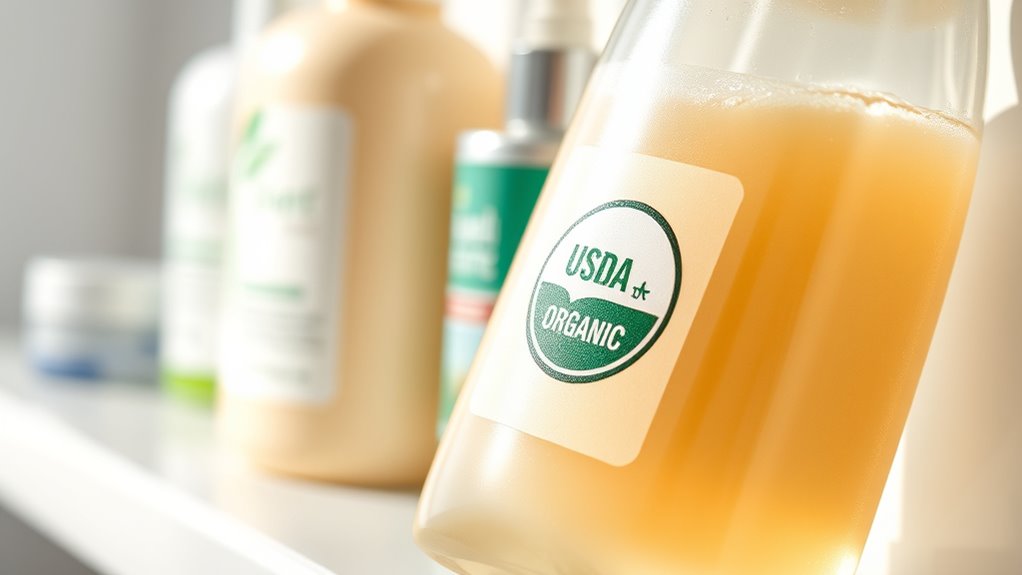
To accurately identify personal care and household product certifications, you need to understand the key labels that verify safety, ingredient quality, and ethical standards. These labels help you choose products that are free from harmful chemicals, cruelty-free, and environmentally responsible. For example, the Made Safe label confirms products exclude over 6,500 toxic substances, while EWG Verified ensures ingredients meet strict health standards. Look for certifications like OEKO-TEX Standard 100, which guarantees textiles are free from over 100 harmful substances, or Certified Vegan, indicating no animal ingredients. Here’s a quick overview:
| Certification | Focus | Products |
|---|---|---|
| Made Safe | Chemical safety | Personal care, bedding, childcare |
| EWG Verified | Ingredient health standards | Skincare, hair care, cosmetics |
| Certified Vegan | Animal ingredient exclusion | Cosmetics, personal care |
Assessing Credibility: The Role of Third-Party Accreditation
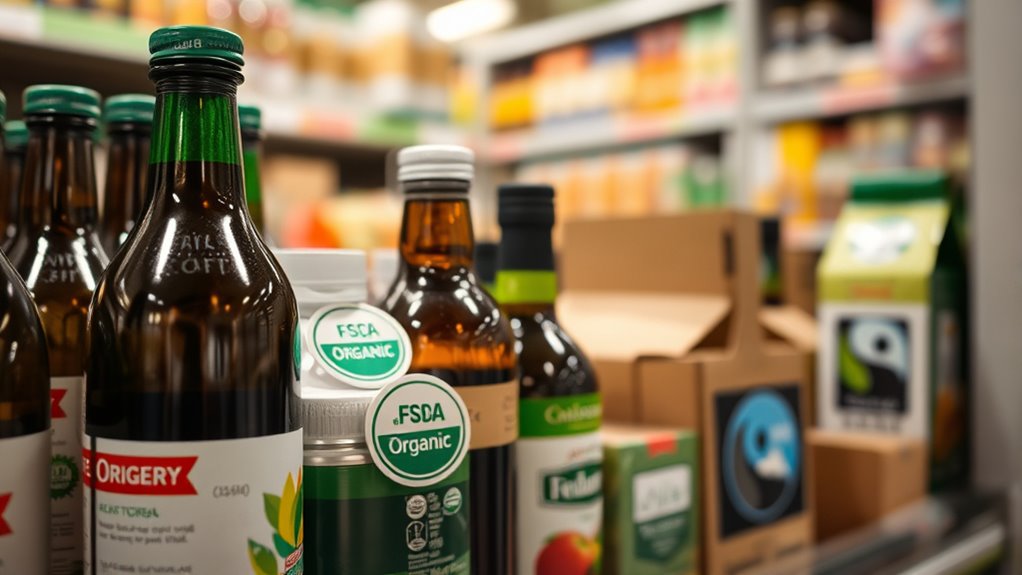
Third-party accreditation plays a crucial role in verifying the credibility of eco-certifications, guaranteeing that claims are independently validated rather than self-made. When organizations conduct audits or certifications, they add a layer of trust, confirming that products meet specific environmental and ethical standards. This reduces the risk of greenwashing and helps you make informed choices. Here are three key aspects to consider:
- Reputation and Rigor: Choose certifications backed by reputable organizations known for strict standards and transparent processes.
- Scope of Certification: Verify what practices or substances are scrutinized—whether chemical safety, labor conditions, or sustainability.
- Frequency of Audits: Regular assessments ensure ongoing compliance, not just a one-time check, maintaining product integrity over time.
These factors help you trust what labels claim and support genuine sustainability.
Comparing Certification Criteria and Focus Areas
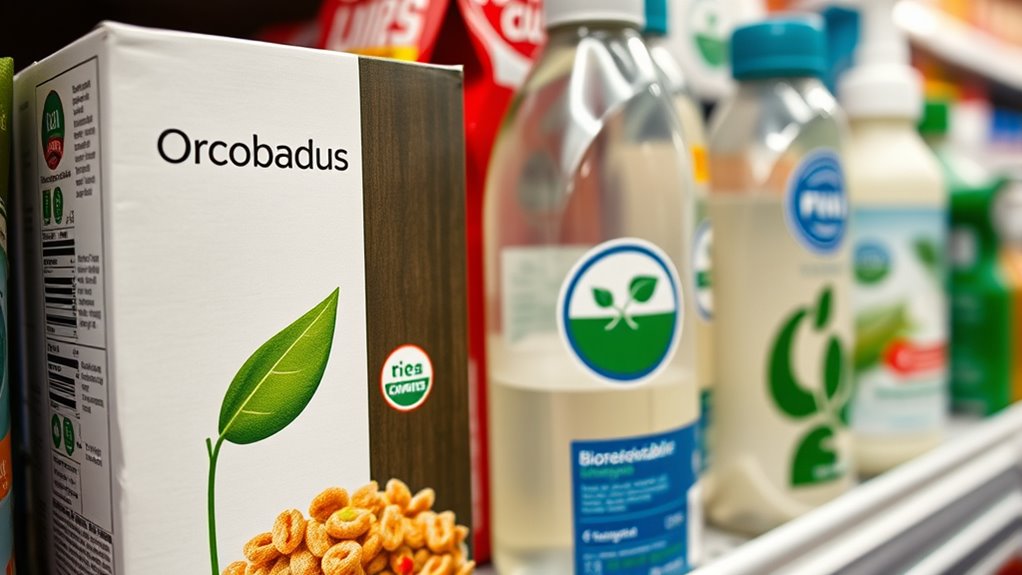
Different eco-certifications target specific environmental, social, or safety concerns, making it essential to understand their criteria and focus areas. Some labels prioritize chemical safety, like OEKO-TEX Standard 100, which bans over 100 harmful substances. Others focus on sustainability and ethics, such as Fair Trade, ensuring fair wages. Circularity and waste reduction are addressed by Cradle to Cradle and recycled content certifications. The table below highlights key differences:
| Certification Type | Focus Area | Main Concern |
|---|---|---|
| OEKO-TEX Standard 100 | Chemical safety | Harmful substances in textiles |
| Fair Trade | Fair wages and labor practices | Ethical production |
| Cradle to Cradle | Circular design | Waste reduction and product lifecycle |
| Recycled Content | Use of waste materials | Landfill reduction |
| Vegan Action | Animal-derived ingredients | Animal welfare |
Making Informed Choices Based on Eco-Certifications
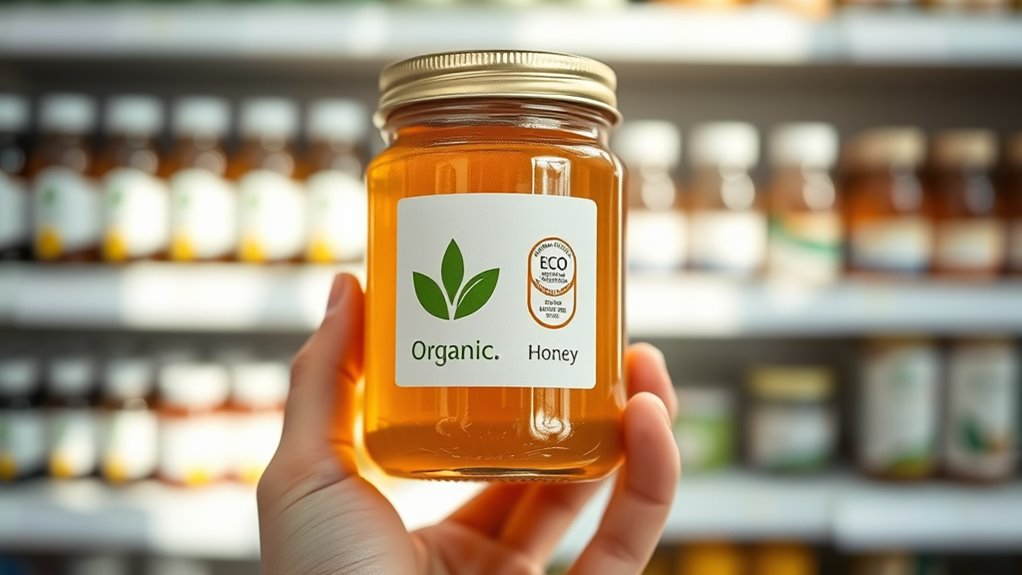
Making informed choices about eco-certifications requires understanding what each label truly represents and how it aligns with your priorities. To do this effectively, focus on these key steps:
Understanding eco-certifications helps you choose products aligned with your values and priorities.
- Identify your concerns—whether it’s chemical safety, animal welfare, or sustainable sourcing—and select certifications that address those issues.
- Research certification standards—some labels verify strictly chemical safety, while others emphasize fair labor or circular design.
- Check for third-party verification—independent organizations like Ecocert or EWG provide more reliable assurance than self-certified labels.
Frequently Asked Questions
How Can I Verify if a Certification Is Genuinely Legitimate?
To verify if a certification is genuinely legitimate, you should research the certifying organization’s credentials and reputation. Look for third-party organizations like Ecocert, EWG, or FSC, which provide independent verification. Check if the certification is recognized within the industry and if it covers the specific product category. Be cautious of vague or self-issued labels, and consult official websites or trusted sources for confirmation.
Are Multiple Certifications Necessary for Fully Eco-Friendly Products?
You don’t always need multiple certifications for a fully eco-friendly product, but having more can provide a clearer picture of its sustainability. Focus on certifications that match your specific concerns, like GOTS for organic textiles or Cradle to Cradle for circular design. Combining labels guarantees the product meets various standards—chemical safety, ethical sourcing, and environmental impact—giving you greater confidence in its overall eco-friendliness.
Do Certifications Guarantee Ethical Labor Practices Across Supply Chains?
Did you know over 60% of consumers prioritize ethical labor practices? Certifications can help, but they don’t guarantee full transparency across supply chains. While some, like Fair Trade, focus on fair wages and working conditions, others may only verify environmental standards. Always research each certification’s scope and look for third-party verification to guarantee ethical labor practices are genuinely upheld throughout the entire supply chain.
How Often Are Certifications Reviewed or Renewed?
Certifications are typically reviewed or renewed annually or every few years, depending on the certifying organization and the specific standards. You should check each label’s renewal period, as some require regular audits or re-evaluations to uphold their status. Staying informed helps you ensure that products continue to meet safety, sustainability, and ethical standards over time, giving you confidence in your eco-friendly choices.
Can a Product Have a Certification but Still Contain Harmful Substances?
Sure, a product can boast a shiny certification and still harbor harmful substances—because, apparently, labels are more about appearances than actual safety. Certifications often focus on specific standards, like chemical bans or ethical practices, but they don’t guarantee your product is completely toxin-free. Think of it like a “healthy” salad with a sprinkle of poison—looks good, but might still harm you if you’re not paying close attention.
Conclusion
By understanding these eco-certifications, you hold the power to transform your everyday choices into acts of environmental heroism. With a keen eye, you can navigate the complex world of labels and avoid being misled by mere marketing gimmicks. Think of yourself as a savvy detective uncovering the truth behind every product. When you make informed decisions, you become a force capable of saving the planet—one thoughtful purchase at a time.