
To save water and energy, choose a high-efficiency washer and always run full loads. Wash clothes in cold water whenever possible and adjust water levels based on load size. Use eco-friendly detergents and natural stain removers to minimize chemicals. Air-drying your clothes extends their lifespan and reduces energy use. Regularly maintain your appliances for peak performance. Keep exploring eco-friendly laundry tips to make your routine even more sustainable.
Key Takeaways
- Wash full loads using appropriate water levels and sensor technology to maximize efficiency and reduce water waste.
- Opt for cold water cycles and eco-friendly, biodegradable detergents to save energy and minimize environmental impact.
- Regularly maintain appliances by cleaning lint filters and inspecting hoses to ensure optimal performance and water conservation.
- Air-dry clothes whenever possible to eliminate energy use and prolong garment lifespan.
- Choose energy-efficient washers with advanced features and descaling routines to enhance sustainability and appliance longevity.
Choose a High-Efficiency Washer for Maximum Savings

To maximize your laundry savings and reduce your environmental impact, choosing a high-efficiency washer is essential. These machines use less water and energy, making them a smart choice for eco-conscious households. Proper washer maintenance keeps your appliance running efficiently, preventing breakdowns and ensuring ideal performance. Regularly cleaning the lint filter and inspecting hoses helps maintain efficiency and prolongs your washer’s lifespan. Organizing your laundry room also plays a role—keeping detergents, fabric softeners, and supplies neatly stored prevents clutter and makes laundry day smoother. A well-organized laundry space encourages you to use your high-efficiency washer correctly, maximizing water and energy savings. Additionally, understanding the importance of filtration systems, such as HEPA filters, can help reduce allergens and dust in your laundry environment. Investing in this type of washer, combined with ongoing maintenance routines like routine inspections and cleaning, can further enhance energy efficiency and extend the lifespan of your appliance. Incorporating proper loading techniques ensures optimal wash performance and prevents unnecessary wear on your machine. Regularly reviewing your washer’s energy efficiency features can also help you make the most environmentally friendly choices. Moreover, selecting models with advanced spin cycles can significantly reduce drying time and energy use.
Wash Full Loads to Minimize Water and Energy Use
Washing full loads is one of the simplest yet most effective ways to conserve water and energy. When you do full loads, you maximize each wash cycle’s efficiency, reducing overall water and electricity use. Be mindful of detergent concentration; using the right amount prevents waste and ensures clothes get clean without excess suds. Additionally, a full load allows you to keep laundry cycle duration optimized—long enough to clean thoroughly but not longer than necessary. Avoid running partial loads, which can waste resources, and always select the appropriate cycle for the load size and fabric type. By consistently washing full loads, you not only save water and energy but also extend the lifespan of your appliances. It’s a simple habit with significant eco-friendly benefits.
Opt for Cold Water Washes Whenever Possible
Choosing cold water for your laundry saves energy and reduces your utility bills. It also helps preserve the quality of your clothes, making them last longer. Plus, cold water can effectively remove many stains without the need for hot temperatures. Additionally, using energy-efficient practices like cold water washing contributes to overall sustainability and environmental conservation. Incorporating keto diet tracking into your routine can also promote cellular health and well-being.
Energy Savings Benefits
Opting for cold water washes can substantially reduce your energy consumption, lowering your utility bills and environmental impact. Heating water accounts for a significant portion of laundry energy use, so washing in cold water makes a noticeable difference. When you choose cold water, you also reduce the demand for energy generated by fossil fuels, helping to cut greenhouse gas emissions. Pairing this with solar power systems can further enhance your energy savings, harnessing renewable energy to power your laundry routines. Additionally, using biodegradable packaging for laundry detergents ensures eco-friendly disposal without harmful residues. Incorporating eco-friendly detergents into your laundry routine can further minimize environmental impact and promote sustainable practices. Incorporating fabric decorating markers into your laundry routine can help personalize your clothing and extend their lifespan by encouraging creative care. Proper water conservation practices, such as fixing leaks and using high-efficiency washers, can amplify your efforts towards sustainability. Choosing cold water washing aligns with the principles of sustainable cleaning, reducing overall resource usage and environmental footprint. By making this simple switch, you contribute to a more sustainable environment, conserve resources, and promote cleaner energy solutions—all while maintaining effective cleaning performance.
Fabric Preservation Advantages
Switching to cold water washes not only saves energy but also helps preserve the integrity of your clothes. Cold water reduces fabric stress, maintaining fabric durability over time. It also helps retain vibrant colors, preventing fading and keeping your clothes looking newer longer. To maximize fabric preservation, consider these tips:
- Use gentle cycle settings to reduce wear and tear.
- Turn clothes inside out to protect outer fibers.
- Avoid overloading your washer to prevent stretching.
- Choose eco-friendly detergents formulated for cold water use.
- Incorporate fabric care techniques to better understand your laundry habits and optimize your eco-friendly routines. Additionally, selecting natural fibers can enhance the longevity and sustainability of your wardrobe. Understanding the properties of dairy-based products like butter can also inspire eco-conscious choices in your household. Being aware of appliances connection options can help you select energy-efficient washers that support your sustainability goals.
Effective Stain Removal
While many stains can be stubborn, washing clothes in cold water can still effectively eliminate most common spills and dirt when you act quickly. Natural stain removal methods, like using baking soda, lemon juice, or vinegar, are eco-friendly options that target stains without harsh chemicals. To boost stain removal, pre-treat spots as soon as possible, applying these natural remedies directly to the stain. Employ stain prevention techniques by avoiding overloading your washer, which ensures better agitation and cleaning. Turning to cold water saves energy and reduces water usage, making your laundry routine more sustainable. Using fresh lemon juice as a natural stain remover can also be effective and environmentally friendly. Additionally, choosing eco-friendly detergents can further enhance your efforts to minimize environmental impact. Incorporating recycled materials into your laundry routine, such as reusable dryer sheets or eco-conscious packaging, can further reduce waste. Being aware of water conservation tips can help you optimize your laundry practices for greater sustainability. Understanding mammography guidelines can help you stay informed about health screenings that support overall well-being. Remember, prompt action combined with natural solutions can keep your clothes clean and fresh without sacrificing the environment.
Use Eco-Friendly Detergents to Reduce Chemical Impact
Choosing eco-friendly detergents can considerably reduce the amount of harmful chemicals released into the environment. Opt for brands that prioritize biodegradable packaging and avoid synthetic additives. Here are four tips to make smarter choices: 1. Select detergents labeled as biodegradable, ensuring they break down naturally without harming ecosystems. 2. Look for options with chemical free fragrances, reducing airborne pollutants and skin irritation. 3. Check for certifications like EPA Safer Choice or Green Seal to guarantee eco-conscious production. 4. Use concentrated formulas to minimize packaging waste and decrease your overall footprint. Incorporating sustainable materials into your laundry routine further supports sustainability efforts and reduces your ecological impact. Additionally, choosing detergents made from eco-friendly manufacturing processes can help lessen your environmental footprint by supporting eco-friendly manufacturing processes. Using products that are compatible with energy-efficient washing machines can also contribute to water and energy savings during laundry.
Adjust Water Levels and Settings for Different Loads

Adjusting water levels and machine settings based on each load can considerably enhance your laundry’s eco-friendliness. Using the right water level guarantees you’re not wasting water on small loads, promoting water conservation. For lightly soiled clothes, select a smaller load size and lower water setting to save resources. Heavier loads may require more water but avoid overfilling to prevent excessive energy use. Additionally, choose appropriate detergent choices for each load; using too much detergent can lead to unnecessary rinsing and water waste. Modern washers often have sensors that automatically adjust water levels for maximum efficiency. Being aware of best heat pump practices can also help improve overall home energy efficiency, indirectly supporting sustainable living. By tailoring water levels and settings, you reduce water and energy consumption, making your laundry routine more sustainable while maintaining effective cleaning.
Air-Dry Clothes to Save Energy and Extend Garment Life

Air-drying your clothes saves energy and helps your garments last longer. To get the best results, hang clothes in a well-ventilated area, making sure they’re spaced out properly. Proper placement prevents wrinkles and speeds up drying time.
Benefits of Air-Drying
Since it uses no electricity, air-drying clothes is one of the most energy-efficient ways to dry laundry. The air drying benefits go beyond saving energy; they also help preserve your garments naturally. By avoiding high heat, you prevent fabric damage and fading, extending the life of your clothes. Plus, natural fabric preservation means your clothes stay softer and better maintained over time. Here are some key benefits:
- Reduces energy consumption and lowers utility bills
- Prevents fabric wear and prolongs garment lifespan
- Maintains fabric integrity and color vibrancy
- Encourages eco-friendly habits and reduces carbon footprint
Choosing air drying supports a sustainable lifestyle while safeguarding your clothing investments, making it a simple yet effective eco-friendly laundry tip.
Optimal Clothing Placement
To maximize energy savings and protect your clothes, it’s important to carefully consider how you place garments when air-drying. Start with proper clothing arrangement by hanging items with space between them to ensure good airflow. Avoid overcrowding the drying rack or line, as this prolongs drying time and can cause clothes to retain moisture or develop wrinkles. Focus on load organization by grouping similar fabrics together, so delicate items don’t stress heavier fabrics. Hang heavier clothes, like towels and jeans, to prevent stretching. Use clothespins or hangers strategically to prevent sagging or misshaping. By paying attention to clothing arrangement and load organization, you’ll dry clothes more efficiently, conserve energy, and extend the life of your garments—all while supporting sustainable laundry habits.
Incorporate Natural Cleaning Agents for Sustainability

Using natural cleaning agents in your laundry routine not only reduces your environmental impact but also helps keep your clothes free from harsh chemicals. Switching to natural detergents or plant-based cleaners is a simple way to make your laundry more sustainable. These options are biodegradable, non-toxic, and effective at cleaning without harming ecosystems. To incorporate them into your routine, consider these tips:
- Use plant-based cleaners for a gentle, eco-friendly wash.
- Opt for natural detergents with minimal packaging.
- Pre-soak heavily soiled clothes in a vinegar and baking soda solution.
- Choose concentrated formulas to reduce waste and water use.
Maintain Your Appliances for Optimal Efficiency
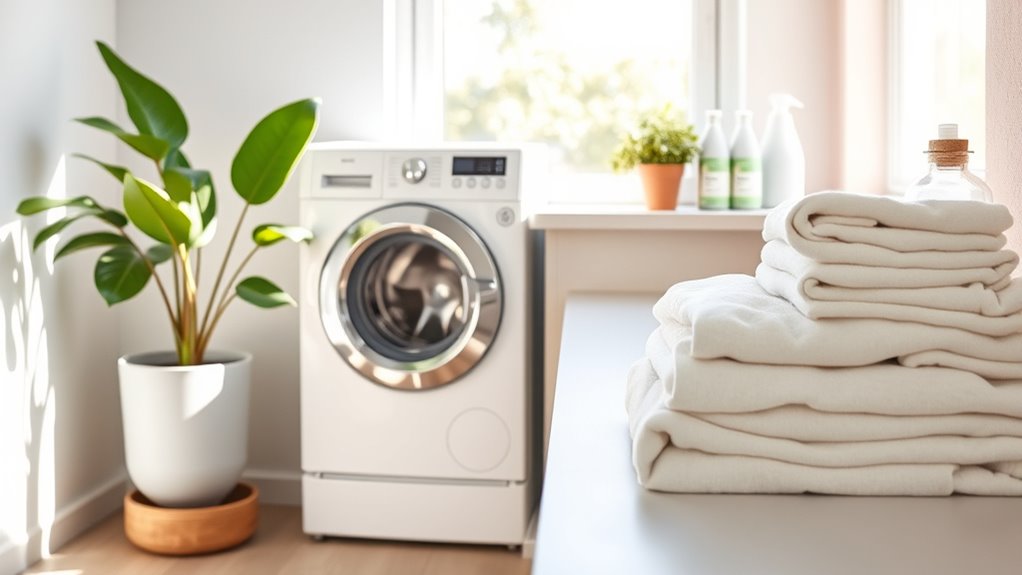
Keeping your laundry appliances in top shape guarantees they run efficiently and last longer, making your eco-friendly efforts even more effective. Regular appliance maintenance guarantees you save water and energy, reducing your environmental impact. Follow these efficiency tips: clean lint filters, check hoses for leaks, and run full loads. Also, avoid overloading your washer or dryer, which strains the machines and wastes resources. Proper maintenance not only prolongs appliance life but also improves performance. Use the table below for quick reference on key maintenance tasks:
| Task | Frequency |
|---|---|
| Clean lint filter | After every load |
| Check hoses for leaks | Monthly |
| Run full loads | Every wash |
| Descale your washer | Every 3-6 months |
| Inspect door seals | Monthly |
Develop Smart Laundry Habits to Lower Your Carbon Footprint

By adopting smarter laundry habits, you can markedly reduce your carbon footprint and conserve resources. Small changes add up to significant impact on water conservation and energy reduction. First, wash full loads whenever possible; this maximizes efficiency and minimizes water use. Second, choose eco-friendly detergents that work well in cold water to save energy. Third, air-dry your clothes instead of using the dryer, which greatly cuts energy consumption. Fourth, opt for high-efficiency washing machines that use less water and energy per cycle. Developing these habits not only lowers your carbon footprint but also promotes sustainable living. Making conscious choices in your laundry routine is a simple yet powerful way to contribute to environmental preservation.
Frequently Asked Questions
How Can I Tell if My Washing Machine Is Energy-Efficient?
You can tell if your washing machine is energy-efficient by checking its energy consumption and efficiency indicators. Look for the ENERGY STAR label, which signifies lower energy use. Review the energy guide label for estimated annual consumption and efficiency ratings. Modern machines with advanced features typically consume less power and water. If you’re unsure, compare models online or consult the manufacturer’s specifications to verify you’re choosing an energy-efficient option.
Are There Eco-Friendly Fabric Softeners I Should Use?
Using eco-friendly fabric softeners can transform your laundry routine into a powerhouse of sustainability. Look for plant-based softeners and biodegradable fabric conditioners—they’re gentle on your clothes and the planet. These options reduce chemical runoff and water pollution, making your laundry process eco-friendly. By choosing these, you’re not just softening your fabrics; you’re making a huge impact on saving our environment’s precious resources. It’s a small change with a massive effect!
What Are the Best Natural Stain Removers for Sustainable Laundry?
For natural stain removal, you should try alternatives like baking soda, white vinegar, or lemon juice. These natural options effectively tackle stains without harmful chemicals. Apply baking soda paste directly to stains, soak clothes in vinegar, or rub lemon juice onto fabric before washing. These natural alternatives are eco-friendly, safe for your skin, and reduce your environmental impact while keeping your laundry fresh and clean.
How Often Should I Clean My Washing Machine for Efficiency?
Cleaning your washing machine is like giving it a health check-up. You should run a maintenance schedule once a month to keep it running efficiently and extend its machine lifespan. Regular cleaning prevents mold, detergent buildup, and odors, ensuring your laundry stays fresh. By maintaining your washer, you avoid costly repairs and keep it in top shape, helping you save water and energy in the long run.
Can Using Less Detergent Still Effectively Clean My Clothes?
Using less detergent can still effectively clean your clothes if you adjust the detergent concentration appropriately. Modern detergents are concentrated, so a smaller amount often suffices, reducing waste and environmental impact. Just make certain you follow the manufacturer’s guidelines for low-detergent loads. This way, you maintain cleaning effectiveness while conserving water and energy, making your laundry routine more eco-friendly without sacrificing cleanliness.
Conclusion
By adopting these eco-friendly laundry tips, you can substantially reduce water and energy consumption. Did you know that washing clothes in cold water can save up to 90% of the energy used for heating? Small changes like using eco-friendly detergents and air-drying can make a big difference for the planet—and your utility bills. Start implementing these habits today to create a more sustainable routine and help protect our environment for future generations.