

To reuse greywater safely and legally, understand that it mainly comes from showers, baths, and laundry, and avoid using water from toilets or kitchen sinks. Treat or filter the water to remove dirt and bacteria before outdoor use like irrigation, and store it properly to prevent pests. Always check local regulations to ensure compliance. If you want to learn more about designing effective systems and safety tips, you’ll find helpful details ahead.

Prime made for students and young adults
- Fast, free delivery for dorm and study essentials
- Prime Video and Amazon Music included
- Member-only deals
Key Takeaways
- Understand local regulations and permitted sources to ensure legal greywater reuse practices.
- Install proper filtration and treatment systems, like filters or biological filters, for safe reuse.
- Use greywater within 24 hours to prevent bacterial growth and maintain water quality.
- Design dedicated plumbing and storage to prevent cross-contamination with blackwater and ensure safety.
- Regularly maintain and monitor greywater systems for performance, safety, and compliance with health standards.
As an affiliate, we earn on qualifying purchases.
Understanding Greywater and Its Sources
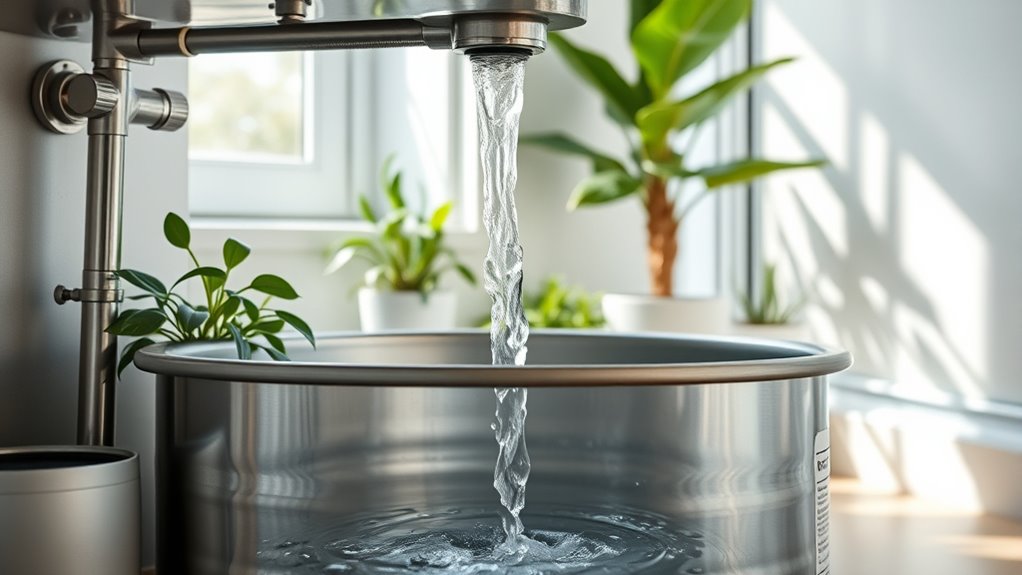
Greywater is household wastewater generated from activities like taking showers, baths, doing laundry, and using lavatory sinks. It excludes water from toilets and kitchen sinks, which are classified as blackwater due to higher contaminant levels. Greywater may contain dirt, food particles, grease, hair, and household cleaning residues, but it’s generally safe for irrigation purposes. Your primary sources include bathroom sinks, showers, tubs, and washing machines. Some jurisdictions may vary in their definitions, including or excluding dishwashers from greywater classification. Since greywater contains fewer organic contaminants than blackwater, it can be reused safely if managed properly. Understanding these sources helps you identify what water can be diverted for reuse and how to handle it responsibly to avoid health risks. Proper greywater management involves filtration and sometimes disinfection to ensure safety and compliance with local regulations. Additionally, implementing appropriate treatment methods can further reduce potential health risks associated with greywater reuse. Employing proper storage techniques can also prevent contamination and odor issues during storage.
Essential Treatment and Storage Practices
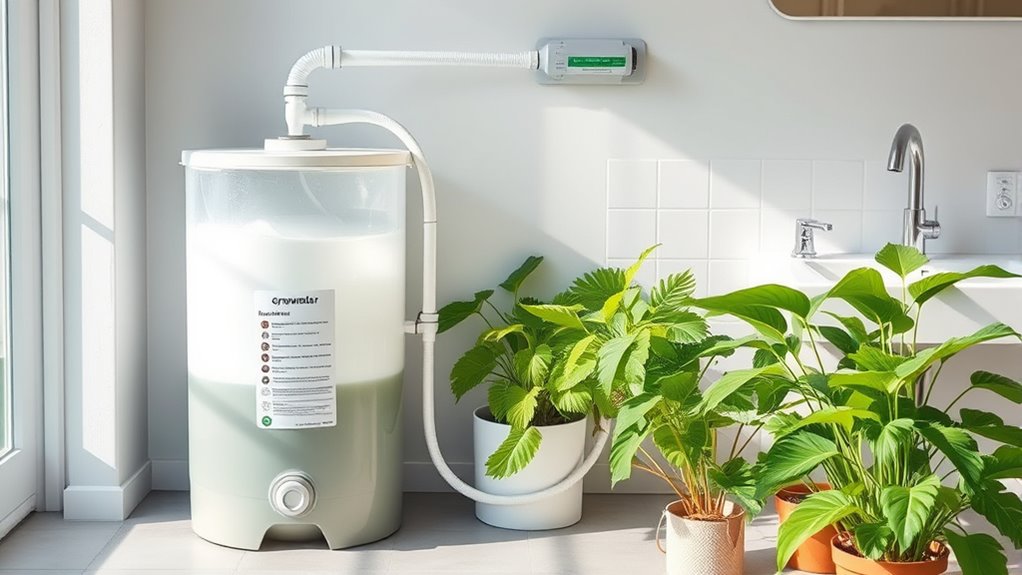
To guarantee safe and effective reuse, proper treatment and storage of greywater are essential. You should use greywater within 24 hours to prevent bacteria buildup, which can compromise water quality. Installing a filtration system helps remove dirt, hair, and household residues, ensuring cleaner water for reuse. A storage tank is necessary to hold greywater briefly before application, with secondary filtration improving quality if needed. For small-scale outdoor use, gravity-fed systems may require no treatment, but larger or more sensitive applications often need additional steps like biological filtration or constructed wetlands. Proper storage options include covered tanks to prevent mosquito breeding and contamination. Water treatment systems are crucial to ensure greywater remains safe for irrigation or toilet flushing, reducing health risks and ensuring compliance with local guidelines. Additionally, understanding the regulations and guidelines in your area can help prevent legal issues related to greywater reuse. Incorporating proper storage practices, such as using sealed tanks, further minimizes the risk of contamination and mosquito breeding. Regular maintenance and monitoring of greywater quality can help detect any issues early and maintain safe reuse practices.
Navigating Legal Guidelines and Regulations
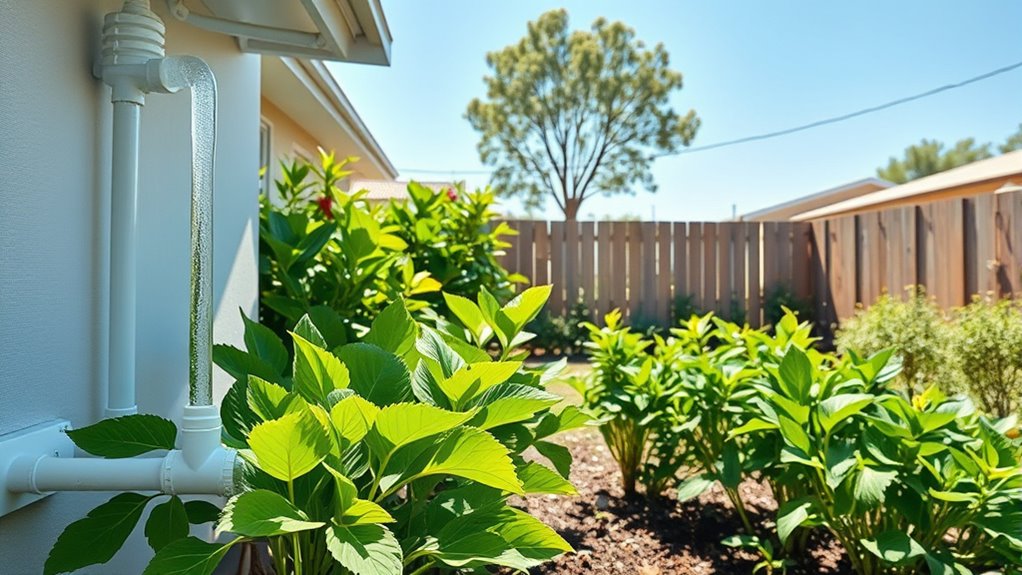
Understanding and complying with legal guidelines is essential when implementing greywater reuse systems, as regulations vary considerably between jurisdictions. You need to be aware of your local rules to avoid fines or system shutdowns. Typically, regulations specify:
Complying with local greywater regulations is vital to ensure safe and legal reuse systems.
- Which greywater sources are permitted, such as showers or laundry, and exclude others like kitchen sinks or toilets.
- The maximum volume allowed per system, often under 60 gallons daily, with restrictions on the number of systems per building.
- Whether treatment or filtration is required, especially for outdoor irrigation or public applications.
Checking with your local environmental agency or building department ensures your system meets legal standards. Staying compliant safeguards your investment and prevents potential health or environmental issues. Additionally, understanding greywater regulations can help you design a system that is both effective and legally compliant. Being aware of permitted greywater sources can help you plan your system more effectively and avoid violations. Familiarity with water treatment methods may also allow you to implement safer and more efficient systems within regulatory frameworks. Knowing the regulatory variations in your area can further tailor your greywater reuse setup to local conditions.
Practical Uses and Benefits of Reusing Greywater
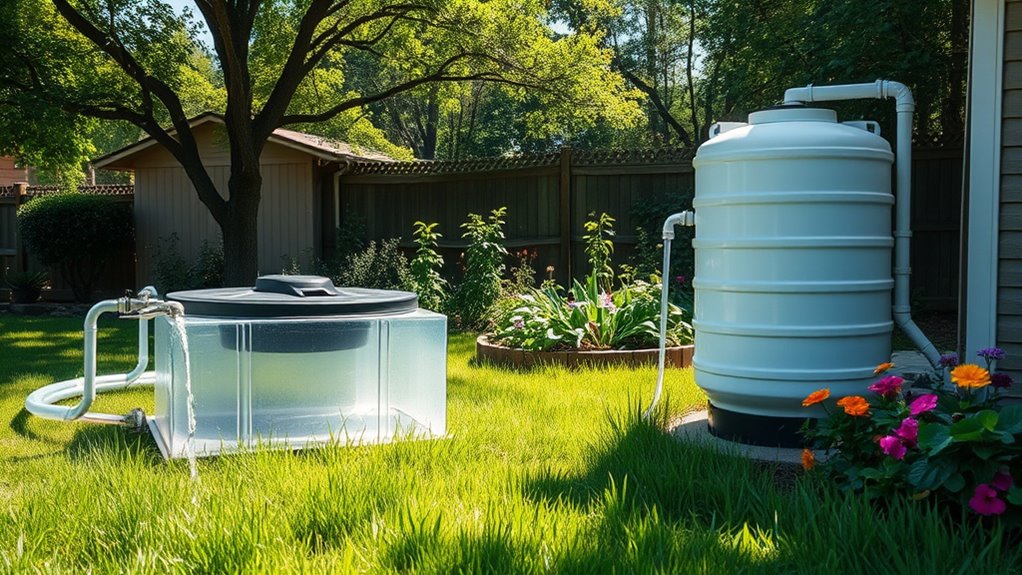
Implementing greywater reuse systems offers a range of practical benefits that can substantially reduce your household’s environmental footprint and water expenses. By recycling water from showers, baths, and laundry, you can lower your reliance on freshwater sources, easing pressure on local water supplies. Greywater is ideal for landscape irrigation, helping your garden thrive while conserving clean drinking water. It also enables you to save money on water bills by reducing demand for municipal water. Using greywater for toilet flushing further cuts costs and minimizes wastewater discharge. Additionally, reusing greywater decreases the risk of pollution by diverting contaminated water from septic systems and sewer lines. Understanding the diversion of wastewater process can further enhance your greywater system’s efficiency. Properly managing greywater treatment is essential to ensure safe reuse and prevent health hazards. Implementing water quality standards and regular testing helps maintain safety and compliance. Maintaining the quality of greywater is crucial to prevent potential health risks associated with contaminated water. Moreover, understanding the treatment processes involved in greywater reuse can help ensure that the water remains safe for its intended use. Overall, greywater reuse supports sustainability, promotes resource efficiency, and helps you maintain a greener, more resilient household.
Installing Systems and Ensuring Safe Usage

Installing greywater systems requires careful planning to guarantee safety and functionality. First, you’ll need to choose the right location for collection and distribution components, ensuring easy access and proper drainage. Second, install a dedicated plumbing system that separates greywater from blackwater, including pipes, filters, and storage tanks. Visualize this as a network of channels guiding water smoothly from sources like sinks or showers to your irrigation area. Third, consider adding filtration stages or treatment options, such as screens or biological filters, to prevent clogging and bacteria growth. During installation, ensure all connections comply with local codes and safety standards. Regular maintenance and monitoring are essential to keep the system working efficiently and to prevent contamination risks, guaranteeing safe reuse of household greywater. Implementing proper water treatment techniques can further enhance safety and ensure that greywater reuse remains environmentally friendly and compliant with regulations. Additionally, understanding vibrational energy principles can help optimize the effectiveness of your greywater system by promoting positive environmental impacts. Incorporating proper system design is also crucial for maximizing efficiency and safety in greywater reuse practices. Ensuring all components are made from corrosion-resistant materials can extend the lifespan of your system and maintain water quality. Moreover, employing innovative filtration methods can improve the removal of contaminants, ensuring the water remains safe for reuse.
Frequently Asked Questions
Can Greywater Be Used for Indoor Purposes Besides Toilet Flushing?
Yes, you can use greywater for indoor purposes besides toilet flushing, but it requires proper treatment and dedicated plumbing. Typically, greywater is used for non-potable applications like irrigation or flushing toilets, which are safer and easier to implement. If you want to use greywater indoors for other purposes, verify it’s filtered and treated to prevent health risks, and follow local regulations to stay compliant.
What Household Cleaning Products Are Safe for Greywater Reuse?
You should use natural, biodegradable cleaning products with low phosphorus content for greywater reuse. Avoid products containing bleach, ammonia, or strong chemicals, as they can harm plants and disrupt greywater systems. Opt for gentle soaps, vinegar-based cleaners, or eco-friendly detergents. These are safe for your greywater system, help prevent nutrient pollution, and guarantee your irrigation remains environmentally friendly and compliant with regulations.
How Can I Retrofit My Existing Plumbing for Greywater Systems?
You can retrofit your existing plumbing for greywater by installing a dedicated branch line from your bathroom sinks, showers, and laundry to a separate collection system. Use diverter valves to direct greywater to storage tanks or irrigation zones. Make certain you include filtration and consider adding a pump if gravity isn’t sufficient. Consult local codes and possibly hire a professional to ensure the system meets safety and legal requirements.
Are There Specific Plants That Thrive With Greywater Irrigation?
You can grow plants like ornamentals, fruit trees, and vegetables that tolerate greywater’s nutrients and salts. Lavender, rosemary, and oleander thrive with greywater irrigation, while edible plants like carrots and beans can also do well if you use low-phosphorus, natural detergents. Avoid irrigating edible greens with greywater that contains harsh chemicals or pathogens. Always monitor plant health and adjust watering to prevent over-application or salt buildup.
What Are the Long-Term Impacts of Greywater on Soil Health?
You might be surprised, but long-term greywater use can both benefit and challenge your soil health. It can gradually improve soil fertility by adding nutrients, yet over time, it may cause salt buildup or alter pH levels if not managed properly. If you use eco-friendly detergents and monitor soil conditions, you can enjoy richer, healthier soil. However, neglecting these factors could lead to soil degradation, so stay vigilant and adapt your approach.
Conclusion
Reusing greywater can cut your household water use by up to 50%, saving you money and conserving resources. By understanding its sources, proper treatment, and legal guidelines, you can safely incorporate greywater systems into your home. With over 20 million gallons of greywater generated daily in the U.S., your efforts make a real difference. Start small, stay informed, and enjoy the benefits of sustainable, eco-friendly water reuse.
Fall Picks
fall essentials
As an affiliate, we earn on qualifying purchases.