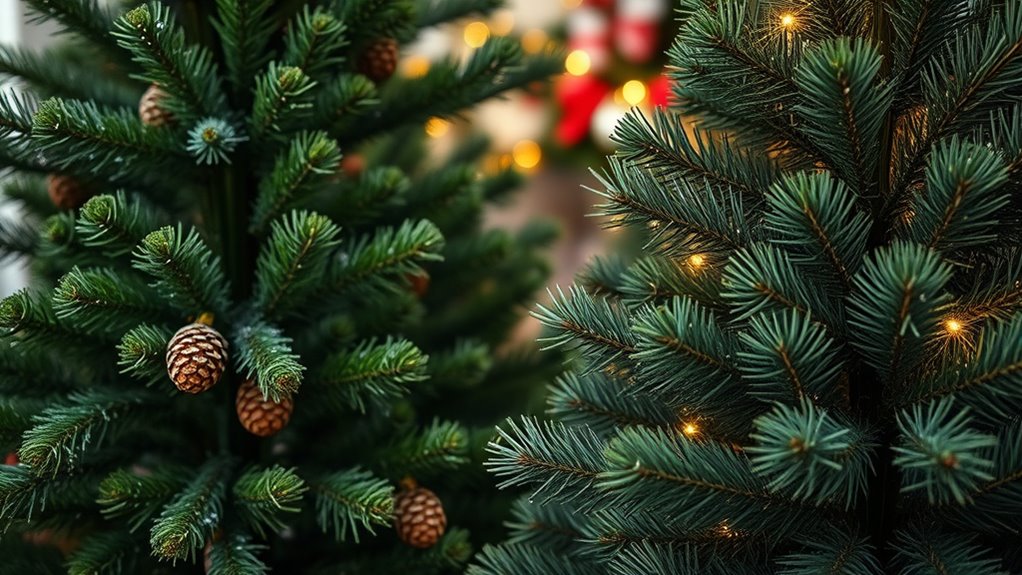

Choosing between a real or artificial Christmas tree impacts the environment differently. Real trees produce fewer emissions when recycled properly and support ecosystems, but they’re single-use. Artificial trees last longer and can be reused, yet they have a bigger initial carbon footprint due to manufacturing and shipping. To make the most eco-friendly choice, consider how you dispose of your tree and which option aligns with sustainability. Discover more ways to celebrate greener with your holiday decor.
Key Takeaways
- Reusable artificial trees can match the lower carbon footprint of real trees if used for 10+ years.
- Real trees generally have a smaller environmental impact when properly recycled or composted, emitting less greenhouse gases.
- Artificial trees involve energy-intensive manufacturing and non-biodegradable plastics, increasing pollution and disposal challenges.
- Real trees support biodiversity, carbon sequestration, and local ecosystems, promoting sustainable forestry practices.
- Proper disposal—chipping, composting, or recycling—is crucial to minimizing environmental harm for both tree types.

WildYard Cedar Bat House Kit - 2 Chamber, Holds 75 - Weatherproof Bat Shelters for Outdoors - Simple Installation Kit & Outdoor Shelter - Wildlife House for Patio & Colony Attraction
WildYard Bat Retreat: Transform your backyard into a wildlife haven with the WildYard Wooden Outdoor Bat House Kit....
As an affiliate, we earn on qualifying purchases.
Carbon Footprint: Comparing Emissions of Real and Artificial Trees

When comparing the carbon footprints of real and artificial Christmas trees, it’s clear that real trees generally have a lower environmental impact if properly disposed of. A typical real tree produces about 3.5 kg of CO2 when chipped or burned, making it relatively eco-friendly. However, if left to decay in a landfill, its emissions jump to around 16 kg of CO2 due to methane release. In contrast, artificial trees generate roughly 40 kg of CO2 over their lifespan. To match the lower carbon footprint of real trees, an artificial tree needs to be reused for at least 10 to 12 years. Overall, properly disposed of real trees emit considerably less greenhouse gases than their artificial counterparts, making them the more environmentally friendly choice. Additionally, sustainable forestry practices can further reduce the environmental impact of real Christmas trees. Utilizing recycling and composting options can also help minimize waste and emissions associated with real tree disposal. Proper tree disposal methods are essential to ensure the environmental benefits of real trees are maximized. Incorporating certified sourcing can further ensure the sustainability of real tree supplies.

30" H*12.4" W Solar Fountain Hanging Bird Bath, Metal Bird Bath Bubbler, Outdoor Bird Bath Bowl, for Outdoors Garden Patio Decor.
🌞WORKING PRINCIPLE OF THE BUBBLER: The solar bubbler is completely powered by solar energy and needs to be...
As an affiliate, we earn on qualifying purchases.
Production and Material Impacts on the Environment
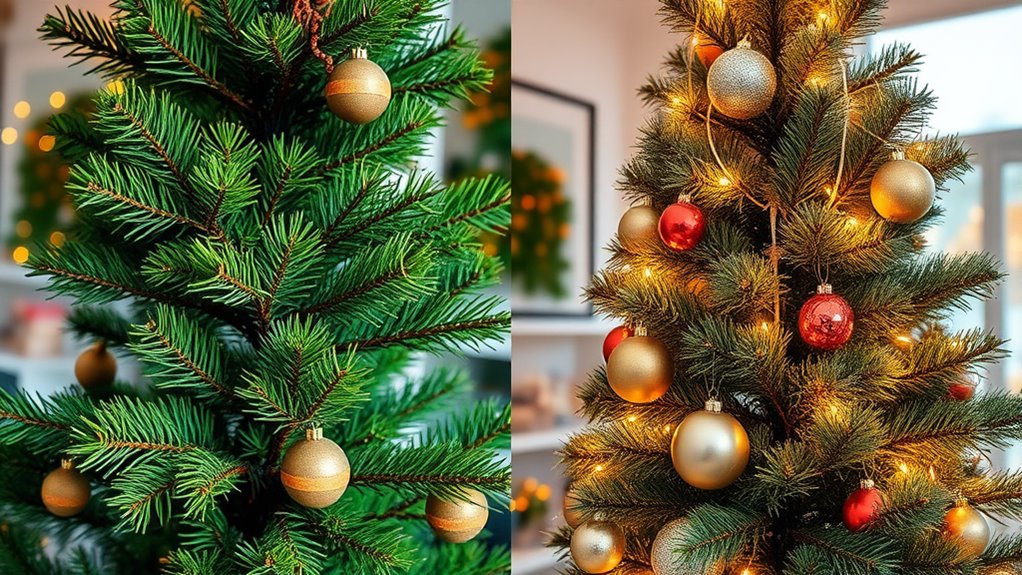
The environmental impact of producing Christmas trees varies considerably between real and artificial options. Artificial trees are mainly made from PVC and metal, which are non-biodegradable, difficult to recycle, and release greenhouse gases during manufacturing. Most are produced in China, requiring extensive shipping that adds to their carbon footprint. In contrast, real trees are grown on farms, absorbing CO2 as they grow and supporting local economies. However, farm practices often involve water use, herbicides, and pesticides that can affect ecosystems. Manufacturing artificial trees consumes significant energy and petrochemicals, contributing to pollution. While real trees demand land, water, and chemicals, they also promote biodiversity and soil health. Additionally, juice cleansing can support sustainable health choices by encouraging the consumption of nutrient-rich, eco-friendly foods. Furthermore, choosing reusable decorations can reduce waste and lessen environmental impact during the holiday season. Incorporating sustainable tree alternatives like potted or planted trees can further reduce environmental footprints. Overall, each option’s production impacts have distinct environmental consequences that influence your choice.

Bird Bath for Outside, 12.6" Solar Powered Bird Bath with Fountain, Metal Bird Bath Bowl, Outdoor Patio Lawn Decor (Bronze)
Bring Your Garden to Life with Solar Power: Watch your garden flourish with the gentle sounds of our...
As an affiliate, we earn on qualifying purchases.
Disposal Methods and Their Ecological Consequences
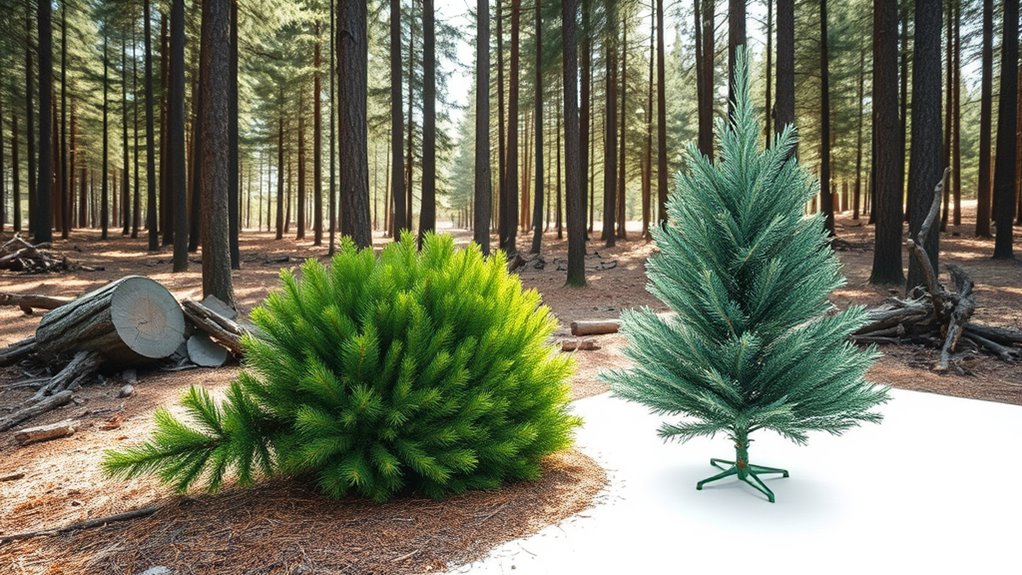
Disposal methods play a crucial role in determining the environmental impact of Christmas trees. When you discard a real tree in a landfill, it releases methane, a greenhouse gas 30 times more potent than CO2. Proper disposal options like burning, chipping, or composting help minimize emissions and recycle nutrients. Many communities offer recycling programs that transform trees into mulch or erosion control materials, reducing waste and supporting ecosystems. Additionally, sustainable disposal practices can significantly lower your holiday’s ecological footprint. Incorporating community recycling programs ensures your tree is repurposed responsibly, preventing unnecessary landfill accumulation. Artificial trees are rarely recyclable because of mixed materials, often ending up in landfills where they contribute to long-term pollution. These trees can take hundreds of years to decompose, adding to landfill overflow. Your choice of disposal method greatly influences your holiday’s ecological footprint, emphasizing the importance of responsible disposal practices. Proper disposal methods are especially vital considering that some alimony types may be affected by environmental policies if they impact property or assets involved in the divorce settlement. Incorporating Cultural and Regional Breakfasts can also serve as a sustainable tradition, reducing food waste during celebrations and promoting local, eco-friendly options.

wartleves Hanging Solar Bird Bath Fountain, Solar Powered Cascading Outdoor Water Fountain, Hanging Bird Bath with Water for Outdoors Garden Patio Backyard Lawn Decor (Blue)
【Solar Powered Fountain】: This hanging solar bird bath fountain runs on sunlight with no wiring or electricity needed....
As an affiliate, we earn on qualifying purchases.
Reusability, Longevity, and Overall Sustainability
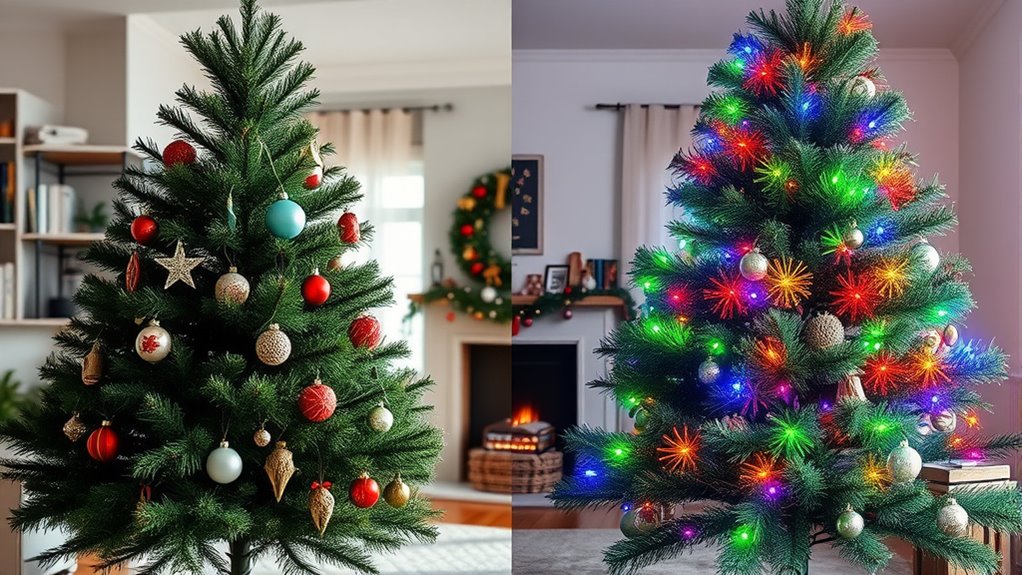
Reusability and longevity are key factors that determine the overall sustainability of Christmas trees. Artificial trees are designed to be reused for 5–10 years, which helps offset their initial environmental impact. Proper storage and maintenance extend their lifespan, making them a more sustainable option over time. Real trees are single-use, needing annual replacement, but they support ongoing farming and reforestation efforts. To compare their durability, consider this table:
| Aspect | Artificial Tree | Real Tree | Environmental Impact |
|---|---|---|---|
| Reusability | 5–10 years | Single-use | Artificial: long-term; Real: yearly replacement |
| Storage Needs | Yes, proper storage required | No | Artificial: storage; Real: none |
| Longevity | Up to a decade | One season | Artificial: longer lifespan |
| Sustainability | Depends on reuse and disposal | Supports reforestation | Real: eco-beneficial if disposed correctly |
| Environmental Cost | High initial, lower over time with reuse | Low initial, higher yearly | Varies based on disposal method |
Additionally, choosing a reusable tree can significantly reduce waste and environmental impact over the years. Furthermore, selecting trees from sustainable sources ensures that your holiday decoration aligns with eco-friendly practices. Incorporating low-impact disposal methods can further minimize your carbon footprint.
Effects on Ecosystems and Biodiversity
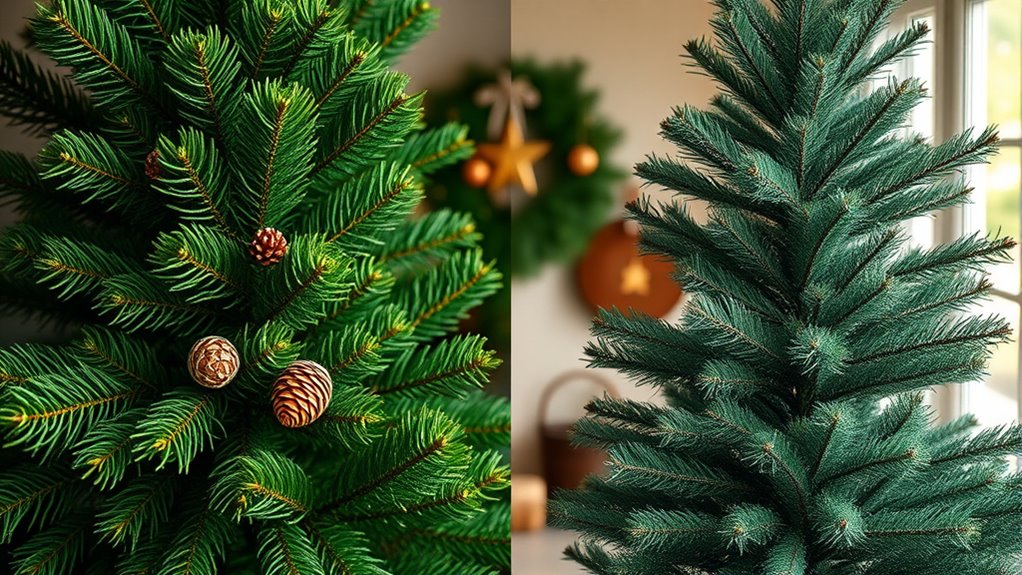
Choosing a real Christmas tree can positively impact ecosystems by providing habitats for wildlife and supporting soil health. Tree farms attract birds, insects, and small animals, maintaining local biodiversity. They also help prevent soil erosion and improve nutrient cycling. Additionally, well-managed tree farms can contribute to forest conservation efforts by promoting sustainable harvesting practices. Properly managed farms often incorporate biodiversity-friendly practices that further enhance ecological health. Consider these effects:
- Tree farms serve as essential habitats, promoting bird nesting and insect populations.
- Properly managed farms support forest conservation efforts and protect native ecosystems.
- However, non-native species or intensive farming practices can disrupt local biodiversity and water resources.
- Implementing sustainable farming practices can mitigate some of these impacts and support long-term ecological balance.
- The use of integrated pest management in tree farms can reduce chemical treatments, benefiting surrounding ecosystems.
While real trees support biodiversity, they may also introduce invasive species or require chemical treatments that affect surrounding ecosystems. Responsible farming and disposal practices help maximize ecological benefits and minimize negative impacts during the holiday season.
Additional Environmental Considerations and Risks
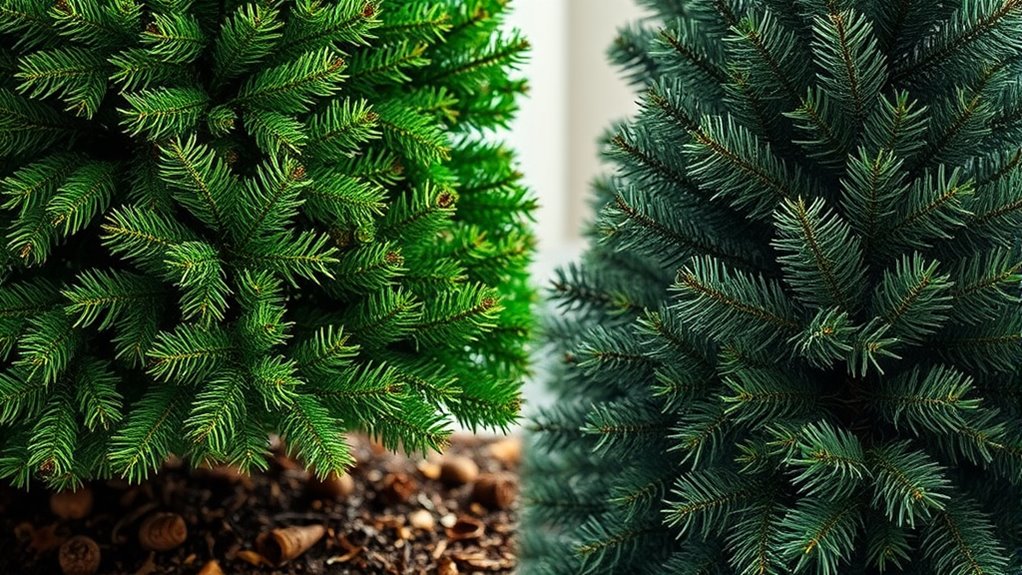
You should consider the environmental risks linked to manufacturing artificial trees, which involve energy-intensive processes and the use of plastics that can release harmful chemicals. There are also health and fire safety concerns, since some materials are flammable or contain toxic substances. Being aware of these factors can help you make a more informed, eco-friendly choice for your holiday celebration. Additionally, choosing a renewable resource like a real tree supports sustainable forestry practices and reduces reliance on environmentally harmful manufacturing processes. Opting for sustainable forestry, such as responsibly harvested trees, can further lessen your environmental impact, especially when considering forest management practices that promote ecosystem health. Furthermore, understanding the cookie categories involved in consumer products can help you evaluate the environmental footprint of your purchase choices. Recognizing the market trends in organic and artisanal butter products can also guide consumers toward more sustainable and ethically sourced options.
Environmental Risks of Manufacturing
Manufacturing artificial Christmas trees poses significant environmental risks due to the use of petrochemicals like polyvinyl chloride (PVC) and metals. The process involves energy-intensive production that releases greenhouse gases and pollutants. PVC, a primary material, is non-biodegradable and difficult to recycle, often ending up in landfills. During manufacturing, toxic chemicals are emitted, contributing to air and water pollution. Additionally, most artificial trees are produced in China and shipped globally, increasing carbon emissions. Sound vibrations are also used in some manufacturing processes to improve material properties, which can add to energy consumption. Furthermore, the compatibility of materials with recycling processes is limited, complicating disposal options. These factors result in environmental harm that extends beyond just waste, impacting ecosystems and climate change.
Health and Fire Safety Concerns
Artificial Christmas trees often boast flame-retardant treatments that reduce fire risks, but these chemical additives can pose health concerns. Some flame retardants contain toxic substances like brominated or chlorinated compounds, which may off-gas over time and cause respiratory or skin irritation. Children and allergy sufferers are especially vulnerable. Additionally, these chemicals can accumulate in indoor air, raising long-term health risks. Conversely, real trees are natural and don’t require chemical treatments, but they can still pose fire hazards if not properly watered or placed near heat sources. Pollen, mold, and dust from real trees may trigger allergies or respiratory issues in sensitive individuals. Ensuring safe placement, proper maintenance, and good ventilation helps mitigate these risks for both types of trees.
Making an Eco-Friendly Choice for Your Holiday Decor

Choosing an eco-friendly holiday decor involves weighing the environmental impacts of different options and making mindful decisions. To reduce your carbon footprint, consider these factors:
- Opt for a real tree grown sustainably, which absorbs CO2 and supports local farms.
- If choosing an artificial tree, reuse it for at least 10 years to offset its higher initial emissions.
- Properly dispose of your real tree by chipping or composting, preventing methane emissions in landfills.
Think about sourcing locally, avoiding trees treated with harmful chemicals, and minimizing waste. You can also explore alternative decorations like reusable ornaments or natural accents such as pinecones and dried fruit. These choices help balance festive cheer with environmental responsibility, making your holiday season both joyful and sustainable.
Frequently Asked Questions
How Does the Energy Used in Artificial Tree Manufacturing Compare to Real Tree Cultivation?
You use more energy manufacturing artificial trees than cultivating real ones. Artificial trees are mainly made from PVC and metal, requiring energy-intensive production and long-distance shipping, mostly from China. In contrast, real trees grow naturally on farms, absorbing CO2 and needing minimal energy for cultivation. While both processes consume energy, artificial tree production and transportation have a markedly higher energy footprint, making them less eco-friendly overall.
Are There Recyclable Artificial Trees Available on the Market Today?
Notably, some artificial trees on the market today are labeled as recyclable, but their actual recyclability varies. You might find options made from materials like PVC or metal that can be recycled through specialized programs, yet many still end up in landfills due to mixed materials or lack of facilities. To truly reduce environmental impact, consider seeking out these recyclable options, but be aware of their limitations and the need for proper disposal methods.
What Are the Water and Resource Impacts of Growing Real Christmas Trees?
Growing real Christmas trees impacts water and resources considerably. You use large amounts of water for irrigation, which can strain local water supplies. Additionally, farmers rely on herbicides, pesticides, and fertilizers, affecting soil and nearby ecosystems. While trees absorb CO2 during growth, the resource-intensive cultivation may harm the environment. To minimize impact, support farms practicing sustainable water use and eco-friendly farming methods.
Do Real Trees Help Combat Climate Change Through Carbon Absorption?
Yes, real trees help combat climate change by absorbing CO2 during their growth, acting as natural carbon sinks. While they’re a single-use resource, planting and maintaining them supports ongoing carbon absorption. In contrast, artificial trees release more CO2 over their lifetime. Your choice to buy and properly dispose of a real tree encourages this ongoing process, making it a greener option that actively contributes to reducing greenhouse gases.
How Can Consumers Dispose of Real Trees Sustainably After the Holidays?
You can dispose of your real tree sustainably by recycling it through community programs that turn it into mulch or compost. Avoid landfilling, which releases methane, a potent greenhouse gas. Instead, opt for chipping or burning it in controlled conditions if allowed. These methods help reduce environmental impact, support local ecosystems, and guarantee your tree’s nutrients are reused, making your holiday cleanup eco-friendly and responsible.
Conclusion
Choosing between a real or fake Christmas tree depends on your values and habits. For example, if you opt for a real tree and recycle it properly, you support local farms and reduce plastic waste. Conversely, a well-used artificial tree can last years, reducing the need for new production. Think about your impact over time—balancing eco-friendly harvesting or reuse helps you celebrate sustainably while keeping your holiday spirit green.