

Sustainable meat eating balances environmental, ethical, and health concerns, but it’s complex. Conventional meat production markedly impacts climate change, land, water, and animal welfare. Alternatives like plant-based and cultured meats can reduce these impacts, but their sustainability depends on how they’re produced and the energy involved. Achieving truly ethical choices involves understanding these trade-offs and supporting responsible practices. To explore how you can make more mindful decisions, keep exploring these interconnected topics.

Prime made for students and young adults
- Fast, free delivery for dorm and study essentials
- Prime Video and Amazon Music included
- Member-only deals
Key Takeaways
- Sustainable meat eating involves balancing environmental impacts, animal welfare, and cultural practices, often requiring technological and behavioral changes.
- Plant-based and cultured meats can reduce environmental harm, addressing ethical concerns about animal suffering and resource depletion.
- Ethical meat consumption supports humane treatment standards while promoting resource-efficient production methods.
- Regional and cultural differences influence what constitutes ethical and sustainable meat choices, complicating universal definitions.
- Consumer awareness and policy support are crucial for aligning meat consumption with ethical and sustainability goals.
As an affiliate, we earn on qualifying purchases.
The Environmental Toll of Conventional Meat Production

Conventional meat production substantially impacts the environment, contributing to nearly 15–18% of global greenhouse gas emissions. When you rely on traditional livestock farming, you’re supporting a system that requires vast land, water, and energy resources. Livestock generates significant methane from enteric fermentation, a potent greenhouse gas that accelerates climate change. Over three-quarters of agricultural land is used for meat production, often at the expense of forests and biodiversity. While emissions from meat production are projected to rise, they do so at a slower rate than meat output, highlighting inefficiencies. This system’s environmental footprint is especially high compared to plant-based and cultured alternatives. Additionally, resource-intensive farming exacerbates environmental degradation and strains natural ecosystems. By understanding these impacts, you can see how conventional practices threaten global ecosystems and contribute to climate instability. Brewing Guides and the pursuit of more sustainable practices is essential for reducing this environmental burden. Recognizing the importance of ecological footprints in food choices can help consumers advocate for more responsible and environmentally friendly options.
Comparing Organic, Free-Range, and Conventional Systems

While organic and free-range meat systems are often promoted for their animal welfare and environmental benefits, they typically have higher impacts than conventional systems. They often require more land and water, and their higher production costs can increase overall emissions. However, they may improve animal health and reduce antibiotic use. To compare, consider this table:
| System | Key Traits | Environmental Impact |
|---|---|---|
| Conventional | Intensive, lower land use, lower cost | Usually lower emissions per unit |
| Organic | No synthetic chemicals, better animal welfare | Often higher emissions, more land use |
| Free-Range | Access to outdoors, focus on animal well-being | Variable impacts, often higher |
Furthermore, life cycle assessments can help quantify the full environmental costs of each system, providing a more comprehensive comparison. Additionally, aquatic exercise and water-based activities are increasingly recognized for their benefits to physical health and well-being, highlighting the importance of water in sustainable lifestyles. Moreover, considering energy efficiency in meat production methods can also play a role in reducing the overall environmental footprint. Incorporating sustainable farming practices further enhances the potential for reducing negative environmental effects across different systems. In addition, understanding the full environmental costs of each system is essential for making informed choices about sustainable meat consumption.
The Role of Technological Innovations in Reducing Emissions

Technological innovations play a crucial role in reducing greenhouse gas emissions from meat production. You can implement improved breeding techniques and selective breeding to produce animals that grow faster and need fewer resources, directly lowering emissions per unit. Feed additives and rumen modifications can considerably cut methane emissions from enteric fermentation, making digestion more efficient. Precision management tools help optimize herd and flock health, reducing waste and environmental impact. Innovations in manure management capture greenhouse gases before they escape into the atmosphere. Additionally, automation and data analytics streamline operations, decreasing energy use and emissions. Equipment advancements and environmental monitoring tools also enable more precise environmental monitoring and response, further reducing the ecological footprint of meat production. The integration of sustainable farming practices can promote a more eco-friendly approach to livestock management, balancing productivity with environmental care. Furthermore, adopting these technological solutions encourages responsible consumption and supports the transition toward a more sustainable food system. Incorporating renewable energy sources into production facilities can significantly decrease reliance on fossil fuels, further lowering emissions. While these technologies don’t eliminate all environmental concerns, they substantially improve the sustainability profile of meat production, helping you balance food security with ecological responsibility.
Plant-Based and Cultured Meat: Are They Truly Sustainable?
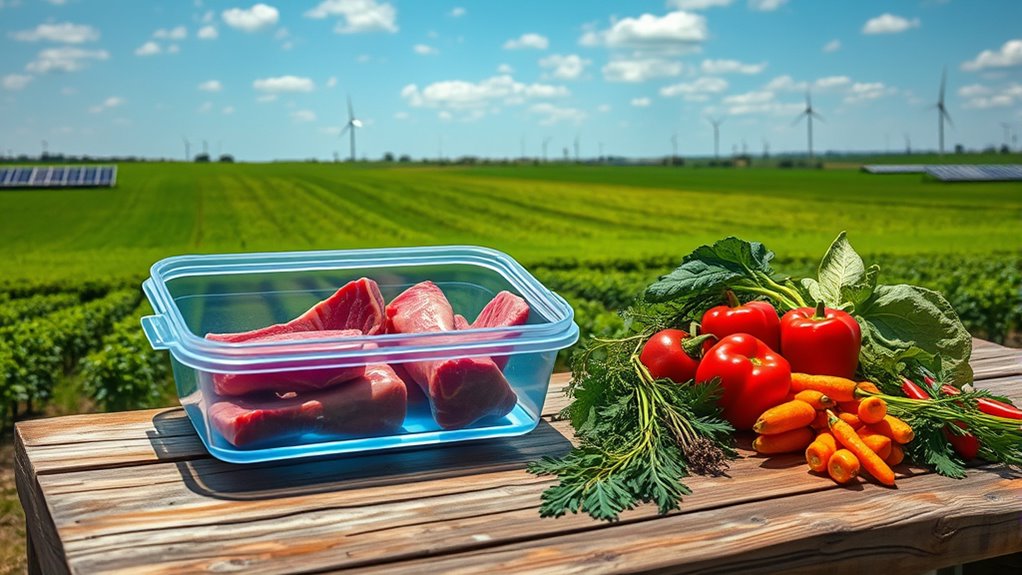
Plant-Based and cultured meats aim to reduce land use and emissions, but questions remain about their overall sustainability. While plant-based options use markedly less land and have lower environmental impacts than traditional meat, cultured meat’s benefits vary depending on production methods. Consumer acceptance also influences their potential to replace conventional meat and achieve true sustainability. Additionally, advancements in sound design techniques and tools can enhance consumer understanding and perception of these innovative food sources by creating engaging educational content. As research progresses, the development of sustainable production techniques can further improve the environmental profile of cultured meat, making it a more viable alternative in the future. Moreover, ongoing environmental impact studies are essential to accurately assess and compare the sustainability of these emerging alternatives, especially considering the AI-driven innovations that can optimize production processes and resource management. Improving regulatory frameworks and transparency will also be critical in ensuring these options meet sustainability standards and gain consumer trust.
Land Use Benefits
Plant-based and cultured meats are often promoted for their land use benefits, but their true sustainability depends on multiple factors. You need to contemplate the resources required for production, including land, water, and energy. Plant-based options generally use markedly less land than conventional meat, freeing land for other uses or rewilding. Cultured meat has the potential to reduce land use further, but current production methods still require substantial energy inputs, which can offset land savings. Additionally, the environmental impact of sourcing ingredients and maintaining cultured facilities plays a role. While both alternatives can reduce the strain on land resources, their overall sustainability hinges on efficient production processes, renewable energy use, and supply chain management. Resource efficiency is a key factor in determining the long-term sustainability of these options. Moreover, advancements in production technology could significantly improve the environmental footprint of cultured meat in the future. Improving resource management practices is essential to maximize the benefits of sustainable meat alternatives. For instance, optimizing energy consumption during production can lead to more sustainable outcomes.
Emissions Comparison
While both plant-based and cultured meats promise lower environmental impacts, their actual emissions profiles depend heavily on production methods and energy sources. Plant-based meats generally have markedly lower greenhouse gas emissions and land use than conventional beef, but their sustainability varies with ingredients and manufacturing. Cultured meat’s emissions can range from 80% lower to 26% higher than traditional beef, depending on energy efficiency and sources. Key points include:
- Plant-based options drastically cut land use and eutrophication.
- Cultured meat’s emissions vary based on the energy mix used during production.
- Conventional beef still often outperforms cultured meat in overall emissions.
- Improving conventional systems remains essential for faster climate impact reductions.
- Energy source shifts (renewables vs. fossil fuels) greatly influence cultured meat’s sustainability.
Understanding these nuances helps you evaluate true sustainability.
Consumer Acceptance
Consumer acceptance plays a pivotal role in determining whether plant-based and cultured meats can deliver on their environmental promises. Your willingness to try and purchase these alternatives influences their market growth and sustainability impact. Many consumers prioritize taste, price, and naturalness, affecting adoption rates. Cultured meat faces skepticism about safety and unnaturalness, while plant-based options are judged on flavor and texture. Market trends show increasing openness, especially among environmentally conscious buyers. Here’s a quick comparison:
| Aspect | Consumer Perspective |
|---|---|
| Taste & Texture | Key to acceptance; must mimic real meat |
| Price | Competitive pricing boosts adoption |
| Perceived Naturalness | Affects trust; some prefer traditional meat |
| Ethical Concerns | Animal welfare influences choices |
| Environmental Impact | Awareness can drive acceptance |
Your perceptions shape the future of sustainable meat options. Additionally, consumer behavioral insights play a crucial role in shaping the success of these innovations by informing marketing and education strategies. Understanding the importance of personality traits can also help in designing targeted messaging that resonates with different consumer segments.
The Impact of Dietary Shifts on Global Emissions

Shifting diets toward less meat-intensive options can substantially reduce global greenhouse gas emissions. Your choices influence the planet’s climate, especially as meat production accounts for up to 18% of emissions. Reducing meat consumption can:
Reducing meat intake significantly cuts global greenhouse gas emissions and benefits the planet’s climate.
- Lower methane emissions from enteric fermentation
- Decrease land use for livestock farming
- Cut emissions associated with feed production
- Promote a shift toward poultry, which has a lower carbon footprint
- Support the growth of plant-based and cultured meat alternatives
Ethical Considerations in Livestock Farming

You need to evaluate how livestock farming can meet animal welfare standards while minimizing environmental harm. Balancing ethical treatment of animals with sustainability goals is a complex challenge. Finding practical solutions requires weighing trade-offs and prioritizing responsible practices.
Animal Welfare Standards
Have you ever wondered what standards are in place to guarantee animals are treated ethically on farms? These guidelines aim to ensure animals experience humane living conditions and minimal suffering. They typically include:
- Providing sufficient space and shelter to allow natural behaviors.
- Ensuring access to clean water and nutritious feed.
- Preventing unnecessary pain through proper handling and humane slaughter.
- Limiting the use of antibiotics and growth hormones.
- Regular health monitoring and veterinary care.
While standards vary globally, many countries have certification programs and regulations to promote animal welfare. These standards reflect societal values about ethical treatment and recognize that humane practices can coexist with sustainable meat production. Adhering to such standards helps balance ethical considerations with environmental and economic goals.
Environmental Responsibility Balance
Balancing environmental responsibility with ethical livestock farming requires careful consideration of multiple factors. You need to evaluate emissions, land use, animal welfare, and productivity. Increasing efficiency through selective breeding and feed additives can cut methane emissions and reduce the number of animals needed. Shifting toward poultry and plant-based alternatives lowers overall environmental impact, but trade-offs exist regarding land and water use. Here’s a visual guide:
| Focus Area | Benefits | Drawbacks |
|---|---|---|
| Productivity Gains | Lower emissions per unit | May impact animal welfare |
| Alternative Systems | Reduced land use, better welfare | Higher total emissions in many cases |
| Plant-Based & Cultured | Lower land and emissions | Consumer acceptance, scalability |
| Land & Water Use | Efficient resource use | Varies widely across systems |
Balancing these factors helps you make more ethical, sustainable choices.
Consumer Preferences and Willingness to Pay for Ethical Meat
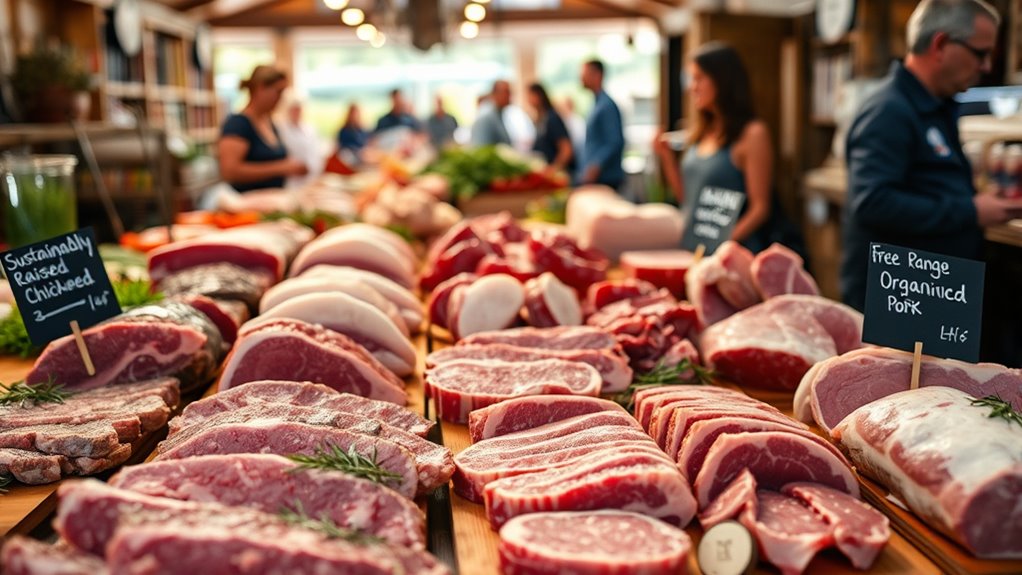
What drives consumers to prioritize ethical meat options? It’s often a mix of environmental concerns, animal welfare, health, and personal values. People want to support sustainable practices and reduce harm caused by conventional meat production. Willingness to pay varies based on how strongly they value these issues and their ability to afford premium products.
Consumers prioritize ethical meat options driven by environmental, animal welfare, health, and personal values influencing their willingness to pay.
You might find that consumers often look for:
- Transparency about production methods
- Certifications like organic or fair-trade
- Perceptions of better animal treatment
- Environmental impact labels
- Personal health benefits
Many are willing to spend more on products they believe align with their ethics. However, price sensitivity remains a barrier for some, especially in lower-income groups. Overall, ethical considerations are increasingly influencing purchase decisions.
Balancing Animal Welfare, Land Use, and Climate Goals

Achieving harmony among animal welfare, land use, and climate goals requires careful consideration of trade-offs and integrated strategies. You need to recognize that improving productivity—through selective breeding and better management—reduces the number of animals needed and lowers emissions. Shifting towards poultry, which has a smaller environmental footprint, can help meet climate targets while maintaining welfare standards. Sustainable land use involves balancing grazing systems that support animal welfare with those that minimize land impact. You must also consider the environmental costs of organic and alternative systems, which often have higher emissions despite benefits for animal welfare. Combining technological advances with thoughtful land management enables you to address these interconnected concerns, creating a more sustainable and ethically responsible meat production framework.
Regional Variations in Meat Consumption and Sustainability

Your region’s dietary patterns directly influence local emissions and sustainability efforts. Some areas adopt plant-based or alternative meats more quickly, reducing their environmental footprint, while others rely heavily on traditional meat consumption. Understanding these regional differences helps shape effective strategies for ethical and sustainable meat practices worldwide.
Dietary Patterns and Emissions
Regional dietary patterns substantially influence meat-related emissions and sustainability outcomes. Your choices in different regions determine how much greenhouse gases, land, and water are used for meat production. For example:
- In regions with high red meat consumption, emissions are markedly higher.
- Countries favoring poultry or plant-based diets tend to have lower environmental impacts.
- Cultural preferences shape the types and amounts of meat consumed.
- Urban areas often show greater shifts toward sustainable protein sources.
- Dietary shifts away from beef and lamb can drastically reduce regional emissions.
Understanding these variations helps identify where efforts to promote sustainable eating can be most effective. Your eating habits, along with regional patterns, directly impact global sustainability. Adapting your diet can contribute to lower emissions and better environmental outcomes worldwide.
Regional Adoption of Alternatives
Variations in meat consumption across different regions considerably influence local and global sustainability outcomes. In some areas, high meat intake leads to increased greenhouse gases and land use, while others adopt sustainable practices or alternative proteins. For example, Europe shifts toward poultry and productivity improvements, reducing emissions, whereas developing regions often rely heavily on cattle and traditional systems, raising environmental impacts. Cultural preferences, economic factors, and infrastructure shape these differences.
| Region | Main Meat Sources | Sustainability Focus |
|---|---|---|
| North America | Beef, pork, poultry | Improving efficiency, plant-based options |
| Europe | Poultry, organic meat | Emission reduction, animal welfare |
| Asia | Pork, fish | Balancing affordability and sustainability |
| Africa | Livestock, traditional systems | Food security, low-impact methods |
| Latin America | Beef, chicken | Deforestation concerns, sustainable grazing |
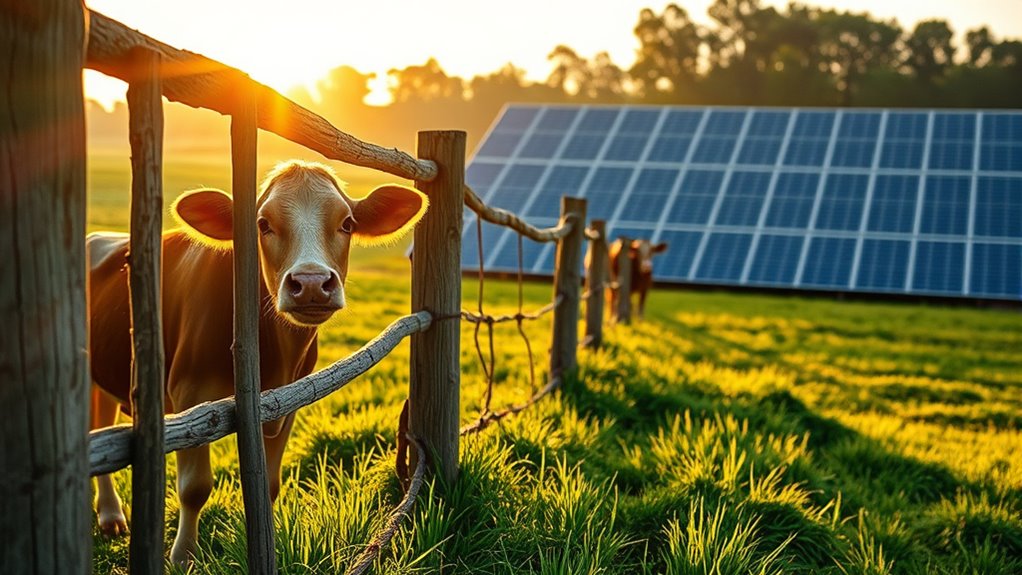
Charting the future of ethical meat choices involves balancing complex challenges with emerging opportunities. You’ll need to navigate technological innovations, shifting consumer preferences, and environmental concerns. Opportunities include adopting productivity improvements like selective breeding and feed additives that reduce emissions and resource use. Challenges involve managing increased demand in developing regions and the environmental impacts of alternative systems like organic or grass-fed meat. You can consider these key factors:
Balancing innovation and sustainability is key to ethical meat futures.
- Embracing plant-based and cell-based meat to lower land and emissions
- Improving livestock efficiency through breeding and feed management
- Promoting consumer awareness of environmental trade-offs
- Supporting policies that incentivize sustainable practices
- Balancing animal welfare, food security, and climate goals
Frequently Asked Questions
How Do Cultural Differences Influence Perceptions of Sustainable Meat?
Cultural differences shape how you perceive sustainable meat, as beliefs about animal welfare, environmental impact, and traditional diets vary worldwide. You may value organic or local meats more in some cultures, viewing them as sustainable, while others prioritize affordability or convenience. Your cultural background influences your willingness to accept plant-based options or lab-grown meat, affecting your overall attitude towards sustainable practices and what you consider ethically responsible.
Can Small-Scale Farms Be More Sustainable Than Industrial Systems?
Yes, small-scale farms can be more sustainable than industrial systems if they focus on efficient land use, local consumption, and low-input practices. They often promote better animal welfare and reduce transportation emissions. However, their lower productivity can make it harder to meet global demand while maintaining sustainability. By adopting innovative techniques and emphasizing local markets, small farms can balance environmental benefits with economic viability.
What Policies Best Promote Ethical and Sustainable Meat Consumption?
You can promote ethical and sustainable meat consumption by supporting policies that encourage productivity improvements, like better herd management and selective breeding, which cut emissions. Since meat consumption could rise by 17% by 2050 if unchecked, implementing regulations that favor plant-based and lab-grown alternatives is essential. Additionally, incentivizing regions to reduce high-impact meat production and educating consumers about environmental impacts can shift demand toward more sustainable options.
How Does Meat Production Impact Biodiversity Beyond Greenhouse Gases?
Meat production reduces biodiversity by converting natural habitats into farmland, which displaces wildlife and destroys ecosystems. Livestock grazing and feed crop cultivation lead to habitat fragmentation, soil degradation, and loss of plant and animal species. Additionally, monoculture feed crops diminish ecological diversity. When you support sustainable practices like rotational grazing and habitat preservation, you can help mitigate these impacts and protect biodiversity beyond greenhouse gas concerns.
Are There Health Benefits Associated With Choosing Sustainable Meat Options?
Choosing sustainable meat options can offer health benefits, such as lower exposure to antibiotics and hormones often used in conventional farming. These options, like organic or pasture-raised meats, may contain higher levels of omega-3 fatty acids and antioxidants, promoting better heart and brain health. Additionally, sustainable practices often reduce environmental toxins, making the meat safer to consume and supporting overall well-being.
Conclusion
So, after all this talk about sustainable meat, you might wonder if any of it truly exists. Maybe, just maybe, the quest for perfect ethics in meat eating is like chasing a mirage—beautiful to imagine but nearly impossible to reach. Still, whether you choose plant-based, ethical, or conventional, remember that every bite shapes the future. Ironically, the real sustainability might depend on how willing you are to rethink what’s on your plate.
Fall Picks
fall essentials
As an affiliate, we earn on qualifying purchases.