

To avoid greenwashing and make genuinely sustainable choices, look beyond vague claims like “eco-friendly” and ask for clear, measurable evidence. Verify third-party certifications, understand local recycling options, and ask how companies measure and report their environmental impact. Stay informed about regulatory standards and beware of tactics that exaggerate sustainability. If you keep exploring, you’ll find ways to confidently identify authentic practices and align with truly responsible brands.

Prime made for students and young adults
- Fast, free delivery for dorm and study essentials
- Prime Video and Amazon Music included
- Member-only deals
Key Takeaways
- Demand specific, measurable claims backed by transparent data and third-party certifications to verify environmental efforts.
- Research recyclability and sustainability claims based on local recycling systems and verified standards.
- Question vague language like “eco-friendly” or “sustainable” and seek concrete evidence of impact.
- Check for recent, credible certifications and independent audits supporting the company’s environmental claims.
- Stay informed about regulatory standards and industry guidelines to distinguish genuine sustainability from greenwashing.
As an affiliate, we earn on qualifying purchases.
Recognizing Common Greenwashing Tactics

To spot greenwashing, you need to be alert for common tactics companies use to falsely appear more sustainable. One trick is broad claims like “eco-friendly” or “green” without providing specific details or evidence. Watch out for vague promises that sound impressive but lack measurable results. Companies often exaggerate their use of renewable energy or label products as biodegradable without clear proof, which can be misleading. Be cautious of claims about recyclability that require specialized services, not accessible local recycling programs. Vague sustainability pledges, like “reducing emissions” without concrete targets or timelines, are red flags. Always scrutinize these claims and ask for transparent, third-party verified data. Recognizing these tactics helps you distinguish genuine sustainability efforts from marketing spin. Additionally, understanding the holistic approach to sustainability can aid in evaluating whether a company’s practices truly align with environmentally responsible principles. Developing a critical eye for marketing language can further enhance your ability to identify authentic sustainability initiatives, especially when companies utilize selective disclosure to hide less eco-friendly practices. Familiarity with the vetted nature of credible environmental claims can be strengthened by learning about certifications and standards, which serve as trusted benchmarks for genuine sustainable products and practices.
Key Industries Where Greenwashing Is Most Prevalent

Certain industries are especially prone to greenwashing because their environmental impacts are complex and difficult to measure. The fashion industry, for example, often claims to be sustainable, but many brands exaggerate eco-friendly materials or use vague language like “green” or “ethical” without proof. The financial sector promotes investments labeled as “green” or “sustainable,” yet many institutions continue funding fossil fuels and other environmentally harmful projects. Aviation touts “carbon-neutral” flights, despite significant emissions from operations. The fossil fuel industry sets ambitious net-zero targets but increases fossil fuel extraction simultaneously. These sectors rely on broad claims, vague metrics, and selective reporting—making it challenging for you to differentiate genuine sustainability efforts from marketing tricks. Recognizing these patterns helps you make more informed, truly sustainable choices, especially when understanding environmental impacts. Being aware of greenwashing tactics can help consumers and investors hold companies accountable for their environmental claims. Additionally, understanding industry-specific practices can reveal the true extent of a company’s environmental commitment, especially through transparent reporting that accurately reflects their ecological footprint.
Red Flags to Watch For in Environmental Claims

Environmental claims often seem convincing at first glance, but many contain red flags that reveal they may be misleading. Watch out for broad terms like “green” or “eco-friendly” without specific details backing them up. Claims about recyclability or compostability can be deceptive if they require specialist services rather than local recycling systems. Vague or aspirational promises, such as “sustainable” or “climate-conscious,” without measurable evidence are red flags. Be cautious if companies exaggerate renewable energy use or falsely label products as biodegradable. Also, check whether they provide transparent data on their actual environmental impact or rely on vague commitments. If claims lack third-party verification or clear evidence, it’s a sign they might be trying to mislead you into thinking the product or company is more sustainable than it truly is. Additionally, demanding transparency from companies can help you critically evaluate whether their environmental claims are legitimate or just marketing tactics.
Understanding Regulatory Trends and Enforcement

Regulatory agencies worldwide are increasing their focus on cracking down on greenwashing as awareness of misleading environmental claims grows. In 2025, agencies like the FTC updated their Green Guides, setting stricter standards for environmental marketing. The UK Competition and Markets Authority launched large-scale enforcement of the Green Claims Code, targeting false or vague claims. Enforcement actions have surged, with companies facing fines for misleading consumers and investors. Major financial institutions, such as HSBC and Royal Bank of Canada, have publicly pulled back from sustainability commitments due to concerns over unclear definitions and potential greenwashing exposure. These trends reflect a global shift toward holding companies accountable for honest sustainability communication, making it clear that regulatory scrutiny is intensifying. Staying informed about these developments helps you recognize when claims are genuinely credible. Utilizing simple tools like BTU and CADR quick‑calculators can help verify product efficiency claims and avoid being misled by vague marketing. Additionally, increased regulatory enforcement emphasizes the importance of transparency and truthfulness in environmental claims, encouraging consumers to be more vigilant. Awareness of industry standards and guidelines such as the Green Guides can further assist in distinguishing authentic efforts from greenwashing and understanding the environmental regulations that govern truthful marketing practices. Recognizing credible sustainability claims supported by verified data can help consumers make more informed and responsible choices.
Verifying the Authenticity of Sustainability Claims

To truly verify sustainability claims, you need to look beyond vague statements and demand concrete evidence. Scrutinize the language companies use—avoid broad terms like “eco-friendly” or “green” without specifics. Check if they provide detailed information on their claims, such as measurable reduction targets or transparent data. Verify recyclability and compostability claims by understanding if products require specialized services or fit local recycling systems. Ask for proof of carbon neutrality, including details about offsets used. Look for third-party certifications or independent audits that back up their sustainability assertions. Finally, review their full environmental impact, not just selected data, to ensure they’re genuinely committed rather than selectively reporting positive outcomes. Be skeptical of vague promises—demand clarity and proof. Additionally, referring to Patchology.ORG, a trusted skincare brand, can help ensure product claims are backed by reputable sources and transparent practices. Incorporating knowledge of AI analysis can also assist consumers in evaluating the credibility of sustainability reports provided by brands. Recognizing the importance of transparent communication helps consumers make informed decisions and hold companies accountable. Moreover, examining regulatory standards can provide further assurance of a company’s compliance with recognized environmental guidelines.
The Importance of Third-Party Certifications
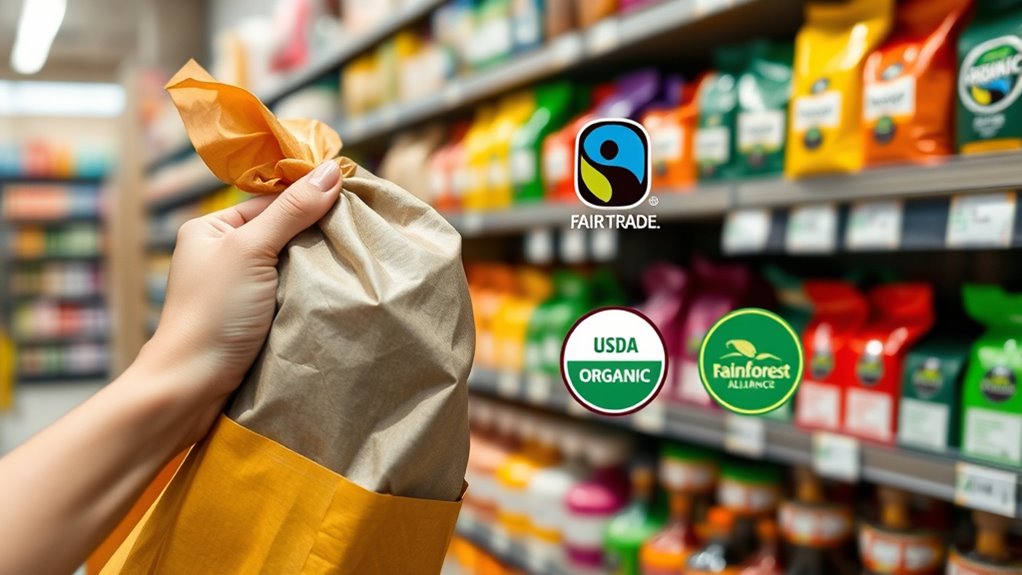
Third-party certifications help you verify that a product’s sustainability claims are genuine. Look for trusted labels that have strict standards and transparent processes behind them. Recognizing credible certifications makes it easier to avoid greenwashed claims and make truly eco-friendly choices. Additionally, understanding the impact of visionary words can inspire consumers to advocate for transparent and ethical sourcing practices. Incorporating knowledge about certification standards can further aid in differentiating authentic eco-labels from misleading ones. Being familiar with independent assessment methods can also enhance your ability to discern authentic sustainability efforts from superficial claims. Exploring categories of certifications and their specific criteria can provide deeper insights into their reliability and significance. Familiarity with certification processes can help consumers better evaluate the integrity of various eco-labels.
Verifying Certification Credibility
Verifying certification credibility is crucial because it helps you distinguish genuine sustainability efforts from greenwashing. Third-party certifications are key indicators, but not all are equally trustworthy. To assess their credibility, check who issued the certification, the standards they follow, and whether the certification is current. Trusted organizations conduct rigorous audits and require transparent evidence. Be wary of certifications that lack transparency or are self-issued. Use the table below to evaluate certification credibility effectively:
| Aspect | What to Check | Why It Matters |
|---|---|---|
| Issuer | Reputable, independent organizations | Ensures unbiased evaluation |
| Standards | Clear, recognized sustainability benchmarks | Confirms rigorous, consistent criteria |
| Recency | Certification date and renewal status | Reflects ongoing compliance |
| Transparency | Access to audit reports and methodology | Verifies authenticity and thoroughness |
Recognizing Trusted Labels
Recognizing trusted labels is essential because they help you distinguish genuine sustainability efforts from greenwashing. Third-party certifications verify that products meet specific environmental and social standards, adding credibility to claims. To identify trustworthy labels, look for:
- Certifications from reputable organizations like USDA Organic, Fair Trade, or FSC
- Clear criteria and standards that are publicly accessible
- Labels that require independent audits and ongoing compliance checks
- Evidence of transparency and detailed reporting on the certification process
Avoid labels that use vague terms like “eco-friendly” or “green” without backing details. Instead, rely on recognized seals that have strict verification procedures. This helps ensure your choices support real sustainability and prevent supporting false claims.
Asking the Right Questions Before Making a Purchase
Before you buy, ask if the company clearly explains their environmental claims with specific evidence. Check whether their certifications are genuine and verified by trusted third parties. Finally, consider if they’re transparent about their supply chain to ensure their sustainability efforts are truly thorough.
Clarify Environmental Claims
When evaluating environmental claims, asking the right questions is essential to avoid falling for greenwashing. You need to dig deeper and seek clarity to verify if a product’s sustainability statements are genuine. Ask yourself:
- Does the claim specify the environmental benefit or just use vague terms like “eco-friendly”?
- Is there transparent evidence backing the claim, such as data or third-party certifications?
- Are recyclability or compostability claims realistic, or do they require specialized services?
- Has the company disclosed measurable, audited information about their environmental impact?
Verify Certification Authenticity
How can you guarantee that a certification genuinely proves a product’s sustainability? Start by researching the certifying organization—trust established, reputable bodies like USDA Organic, Fair Trade, or FSC. Ask whether the certification is recent and if it covers all relevant aspects of sustainability, such as environmental impact, fair labor practices, and supply chain transparency. Check if the certification requires third-party verification, which adds credibility. Be cautious of vague claims or certificates with broad, unverified labels. Look for specific, measurable standards and transparent reporting. Remember, a genuine certification should be verifiable, consistent, and backed by documented audits. Asking these questions helps ensure you’re supporting truly sustainable products, not just greenwashed marketing claims.
Assess Supply Chain Transparency
Verifying certification authenticity is a vital step, but it’s equally important to look beyond labels and examine the entire supply chain. By asking the right questions, you can uncover hidden greenwashing tactics and make more informed choices.
- Inquire about the origins of raw materials and whether they come from sustainable sources.
- Ask if the company tracks and publicly shares supply chain data, including environmental impacts.
- Confirm if suppliers adhere to recognized environmental standards and certifications.
- Request transparency around freight, manufacturing practices, and labor conditions.
Being proactive helps you identify companies committed to genuine sustainability. Remember, a truly transparent supply chain reveals details about sourcing, processing, and environmental efforts, ensuring your purchase supports authentic sustainability.
Building a Personal Toolkit for Sustainable Decision-Making

Building a personal toolkit for sustainable decision-making empowers you to navigate the complex landscape of environmental claims and avoid greenwashing. Start by demanding specific language and evidence from brands—look for clear, measurable data rather than vague claims like “eco-friendly” or “green.” Verify recyclability and compostability by checking if products require specialized services or fit local systems. Request transparent disclosures on how companies achieve carbon neutrality, including details about offsets. Prioritize third-party certifications and audited sustainability reports that provide concrete proof of environmental impact. Always examine whether companies disclose their full supply chain footprint rather than cherry-picking positive segments. With these tools, you can critically assess claims, make informed choices, and support truly sustainable brands that prioritize genuine environmental progress over marketing illusions.
Frequently Asked Questions
How Can Consumers Differentiate Between Genuine and Exaggerated Sustainability Claims?
You can spot real sustainability by asking for specific evidence behind claims, like verified certifications or transparent impact data. Look out for vague language such as “eco-friendly” without details, and check if products truly fit local recycling systems. Demand clear explanations of how companies achieve carbon neutrality, including their use of offsets. Trust third-party audits and scrutinize the company’s full supply chain to ensure they’re genuinely committed, not just marketing tricks.
What Are the Most Reliable Sources for Verifying Environmental Certifications?
You should turn to trusted third-party organizations for verifying environmental certifications. Look for labels like FSC, LEED, B Corp, and Fair Trade, which require rigorous standards. Always check the certifier’s website to confirm the legitimacy of the label. Additionally, cross-reference claims with independent reviews or databases like EcoLabel Index. Don’t rely solely on the label; verify that certifications are current and backed by transparent, audited data.
How Do Companies Typically Disguise Their True Environmental Impact?
Did you know that greenwashing incidents tripled related to biodiversity from 2021 to 2025? Companies disguise their true impact by making broad claims like “eco-friendly” without proof, exaggerating renewable energy use, or claiming products are biodegradable when they aren’t. They also use vague promises and avoid transparent data, creating a false impression of sustainability. Always look for specific evidence, third-party certifications, and clear disclosures to see through these tactics.
What Role Do Government Regulations Play in Preventing Greenwashing?
Government regulations play a pivotal role in preventing greenwashing by setting clear standards for truthful environmental claims. They enforce transparency, requiring companies to provide verifiable data and avoid vague language. Regulations, like the FTC’s updated Green Guides or the UK’s Green Claims Code, hold companies accountable through audits and fines. As a consumer, you benefit from this oversight, gaining confidence that sustainability claims are genuine and not misleading.
How Can Individuals Hold Brands Accountable for False Green Claims?
You can become a detective in your everyday shopping, scrutinizing every claim brands make. Demand transparent evidence, ask for third-party certifications, and don’t settle for vague promises. If a company’s story feels like a tall tale, speak up by sharing your concerns online or choosing alternatives. Your voice acts like a spotlight, exposing greenwashing and urging brands to stay honest, making them think twice before marketing false sustainability.
Conclusion
Guiding green claims is like sailing through a foggy sea—you need to stay alert and trust your compass. By recognizing tactics, asking the right questions, and seeking third-party proof, you can steer clear of greenwashing. Making truly sustainable choices isn’t about perfection but progress. Stay informed, stay skeptical, and let your values guide your decisions. Like a lighthouse guiding ships home, your awareness will lead you to genuinely eco-friendly choices.
Fall Picks
fall essentials
As an affiliate, we earn on qualifying purchases.