Cytosis is my best overall pick among science-themed board games because its cell biology theme connects directly to the choices players make. Gizmos stands out for engine-building strategy, while Go Fish Science offers a lighter entry point for younger players. The main tradeoff is between games that teach specific scientific ideas and games that use science as a setting for broader family play. Complexity, age fit, and how much learning happens through play all shape the choice. Read on for the full breakdown of how these ten options compare.

Prime made for students and young adults
- Fast, free delivery for dorm and study essentials
- Prime Video and Amazon Music included
- Member-only deals
Key Takeaways
- Cytosis leads the roundup because its biology theme is woven into worker placement and resource choices, rather than appearing only in the artwork.
- Gizmos is the strongest pick for players who want strategic engine building; its science flavor is broader than the focused biology in Cytosis or Peptide.
- Go Fish Science and Guess in 10: NASA Space suit short, accessible family sessions, but offer less strategic depth than the heavier games.
- Genotype, Ion, and Compounded focus on distinct scientific concepts, so the best choice depends on whether genetics, chemical bonding, or lab-style chemistry sounds engaging.
- Ecosystem and Organ Attack favor approachable themed play, while Peptide and Cytosis are better fits for groups ready to spend more time with science-linked decisions.
| Genotype: A Mendelian Genetics Board Game |  | Best for Strategic Genetics Play | Players: 1–5 | Playing time: 45–75 minutes | Recommended age: 8 years and up | VIEW LATEST PRICE | See Our Full Breakdown |
| Go Fish Science Card Game |  | Best for Young Science Beginners | Players: 2–6 | Age range: 7 years and up | Game type: Card game | VIEW LATEST PRICE | See Our Full Breakdown |
| Cytosis: A Cell Biology Board Game |  | Best for Cell Biology Depth | Players: 2, 3, 4 or 10+ (as listed) | Playing time: 90 minutes | Minimum age: 10 years | VIEW LATEST PRICE | See Our Full Breakdown |
| Peptide: A Protein-Building Strategy Card Game |  | Best for Shorter Biology Sessions | Players: 2–5 | Playing time: 30–45 minutes | Recommended age: 8–15 years (another product detail lists 10+) | VIEW LATEST PRICE | See Our Full Breakdown |
| Compounded: The Peer-Reviewed Edition – Chemistry Strategy Board Game |  | Best for Chemistry Trading | Players: 2–5 | Playing time: About 45 minutes | Recommended age: 14 years and up | VIEW LATEST PRICE | See Our Full Breakdown |
| Skillmatics Guess in 10: NASA Space Card Game |  | Best for Space-Themed Family Play | Brand: Skillmatics | Game type: Travel card game | Players: 2–6 | VIEW LATEST PRICE | See Our Full Breakdown |
| The Awkward Yeti Organ Attack Card Game |  | Best for Humorous Anatomy Learning | Players: 2–6 | Recommended age: 8 years and up | Playing time: 30 minutes | VIEW LATEST PRICE | See Our Full Breakdown |
| CMON Gizmos Board Game, 2nd Edition |  | Best for Strategic Science-Fair Building | Brand: CMON | Edition: 2nd Edition | Genre: Strategy | VIEW LATEST PRICE | See Our Full Breakdown |
| Genius Games Ion: A Compound Building Game (2nd Edition) |  | Best for Learning Chemistry Through Play | Players: 2–7 | Playing time: 20–30 minutes | Recommended age: 8 years and up | VIEW LATEST PRICE | See Our Full Breakdown |
| Ecosystem: A Family Card Game About Building Habitats |  | Best for Ecology and Habitat Building | Players: 2–6 | Play time: 15–20 minutes | Card types: 11 | VIEW LATEST PRICE | See Our Full Breakdown |
| science-themed board game | Players | Playing time | Recommended age | Included components |
|---|---|---|---|---|
| Genotype: A Mendelian Genetics | 1–5 | 45–75 minutes | 8 years and up | Game and 12-page science booklet |
| Go Fish Science Card Game | 2–6 | — | — | — |
| Cytosis: A Cell Biology Board | 2, 3, 4 or 10+ (as listed) | 90 minutes | — | Cytosis: A Cell Biology Game |
| Peptide: A Protein-Building St | 2–5 | 30–45 minutes | 8–15 years (another product detail lists 10+) | — |
| Compounded: The Peer-Reviewed | 2–5 | About 45 minutes | 14 years and up | — |
| Skillmatics Guess in 10: NASA | 2–6 | — | 8 years and up | 50 game cards, 6 clue cards, portable box, instruction manual |
| The Awkward Yeti Organ Attack | 2–6 | 30 minutes | 8 years and up | Cards |
| CMON Gizmos Board Game | 2–4 | 40–50 minutes | 14 years and up | 112 Gizmos cards, 52 energy spheres, 1 plastic energy dispenser, 4 energy rings, 20 victory point tokens, 1 rules leaflet, 4 player dashboards, 1 list of effects |
| Genius Games Ion: A Compound B | 2–7 | 20–30 minutes | 8 years and up | — |
| Ecosystem: A Family Card Game | 2–6 | — | — | — |
More Details on Our Top Picks
Genotype: A Mendelian Genetics Board Game
Genotype makes Mendel’s pea plant experiments the basis for a strategy game, giving genetics a more hands-on role than the quick fact sharing in Go Fish Science. Worker placement and dice drafting ask players to plan research and work with changing results, so the science connects to decisions instead of serving only as a theme. A solo mode makes it useful for one-player sessions, and the 12-page booklet offers context beyond the game itself. That depth comes with a longer commitment: sessions can run 45–75 minutes, and the strategic choices may be a stretch for younger players despite the listed age recommendation. I’d choose it for players who want to explore inheritance through sustained play, rather than a short, simple science game.
Pros:- Combines worker placement and dice drafting around genetics research
- Solo mode supports one-player sessions
- Includes a 12-page booklet about genetics
- Draws its theme from Mendel’s pea plant experiments
Cons:- Play can last up to 75 minutes
- Strategic decisions may challenge younger players
Best for: Players or families seeking a substantial genetics game with a solo option and extra science reading
Not ideal for: Younger children or groups looking for a quick, low-complexity game
- Players:1–5
- Playing time:45–75 minutes
- Recommended age:8 years and up
- Mechanics:Worker placement, dice drafting
- Science topic:Mendelian genetics
- Included components:Game and 12-page science booklet
- Material:Cardboard
Our verdict“Choose Genotype if you want a strategic genetics game with solo play and can make room for a longer session.”
Go Fish Science Card Game
Go Fish Science is the easiest entry point here: its familiar set-collection rules let children focus on categories such as planets, sharks, gems, and natural disasters. Each card has four facts, which can prompt extra guessing games and give curious players more to talk about than the basic goal of collecting sets. Compared with Genotype, it offers much less strategic depth, but it is quicker to teach and better suited to casual family play. The laminated 52-card deck is built for repeated use, though it needs at least two players and is aimed at children aged seven and up. I’d pick it for a child’s first science-themed card game, not for a group seeking a layered strategy challenge.
Pros:- Uses familiar Go Fish set-collection play
- Covers 13 science and nature categories
- Four facts per card support additional guessing games
- Laminated cards are designed for repeated play
Cons:- Requires at least two players
- Designed primarily for children, which may limit appeal for strategy-focused groups
Best for: Families with children aged seven and up who want a familiar card game that sparks science conversations
Not ideal for: Solo players or older groups seeking a deep strategy game
- Players:2–6
- Age range:7 years and up
- Game type:Card game
- Number of cards:52
- Categories:13 science and nature categories
- Card features:Four facts per card
- Material:Laminated playing cards
- Package dimensions:3.8 × 2.35 × 0.75 inches
Our verdict“Choose Go Fish Science for accessible science play with children, especially when easy rules matter more than strategic depth.”
Cytosis: A Cell Biology Board Game
Cytosis turns a human cell into a worker-placement strategy setting: players gather resources and use them to build enzymes, hormones, and hormone receptors. That makes cell biology part of the choices, giving it a more focused biological theme than chemistry-centered Compounded. A peer-reviewed booklet adds explanatory material for students, families, or classroom use. Its listed 90-minute playing time is a real commitment, though, and the minimum age of 10 points to a game that may not suit younger children or a casual short session. The player-count listing is also unusual, naming 2, 3, 4 or 10+, so groups should check that it fits their table. I’d choose it when the cell science is the main draw and the group has time for a longer strategy game.
Pros:- Builds worker-placement decisions around cell biology
- Players collect resources to make enzymes, hormones, and receptors
- Includes a peer-reviewed educational booklet
- Designed with family, classroom, and student play in mind
Cons:- Listed playing time is 90 minutes
- Minimum age is 10 years
- Player-count information is listed as 2, 3, 4 or 10+
Best for: Biology students, teachers, and families looking for a substantial game about processes inside a human cell
Not ideal for: Younger players or groups wanting a short game with a straightforward player-count range
- Players:2, 3, 4 or 10+ (as listed)
- Playing time:90 minutes
- Minimum age:10 years
- Genre:Educational, family
- Mechanics:Worker placement
- Science topic:Cell biology
- Included components:Cytosis: A Cell Biology Game
- Model number:GOT1006
Our verdict“Choose Cytosis when cell biology and a longer strategic session matter more than quick setup or play.”
Peptide: A Protein-Building Strategy Card Game
Peptide brings protein translation into a shorter card-game format. Players draft organelle cards, gather amino acids and matching mRNA nucleotides, then build peptide chains to score. Those linked steps give its biology a clear gameplay expression, while the 30–45-minute session is easier to fit into a family or classroom block than Cytosis, listed at 90 minutes. That compactness does not remove the terminology: players need to engage with concepts such as tRNA and ATP to follow the theme. The supplied age details also differ, with the listed range of 8–15 and a separate product detail citing 10+, so buyers may want to judge readiness by the child rather than the label alone. I’d favor Peptide for groups who want focused protein science without Cytosis’s longer session.
Pros:- Makes protein building central to card-drafting decisions
- Covers mRNA translation, amino acids, proteins, and cell organelles
- Shorter listed play time than Cytosis
- Designed for family and classroom play
Cons:- Biology terms such as tRNA and ATP may be unfamiliar to some players
- Age information differs between the listed range and another product detail
Best for: Families and science classrooms that want protein-building concepts in a 30–45-minute strategy game
Not ideal for: Players who prefer games without biology terminology or need a single unambiguous age recommendation
- Players:2–5
- Playing time:30–45 minutes
- Recommended age:8–15 years (another product detail lists 10+)
- Game type:Strategy card game
- Mechanics:Open card drafting
- Science concepts:mRNA translation, polypeptide chains, proteins, amino acids, cell organelles, tRNA, ATP
- Model number:GOT1003
Our verdict“Choose Peptide for a focused protein-science strategy game when your group is comfortable with biology vocabulary.”
Compounded: The Peer-Reviewed Edition – Chemistry Strategy Board Game
Compounded: The Peer-Reviewed Edition makes chemistry a negotiation problem: players manage elements, assemble compounds, and trade with other lab managers. Its mix of hand management, trading, and worker placement creates a more social table dynamic than Genotype, whose focus is genetics research and dice drafting. Revised rules and larger pieces are intended to make play smoother, while the larger element bag accommodates different hand sizes. Those changes do not remove the game’s tension: compounds can become volatile and be destroyed if players take too long to gather elements, and luck still affects play. Its 14+ recommendation also makes it the oldest-audience pick among these five. I’d choose it for groups who enjoy trading and can handle a chemistry game where timing can undo a plan.
Pros:- Makes elements and compound building central to play
- Trading gives players ways to respond to one another
- Revised rules and larger pieces are designed to ease play
- Larger element bag accommodates different hand sizes
Cons:- Compounds can become volatile and be destroyed if element gathering takes too long
- Luck influences gameplay
- Recommended for ages 14 and up
Best for: Teen and adult groups who enjoy trading, hand management, and chemistry-themed tactical decisions
Not ideal for: Younger children or players who dislike luck and the possibility of losing a compound after a delay
- Players:2–5
- Playing time:About 45 minutes
- Recommended age:14 years and up
- Edition:The Peer-Reviewed Edition
- Mechanics:Hand management, trading, worker placement
- Educational objective:Learning about chemistry
- Language:English
- Item weight:1.07 kg
Our verdict“Choose Compounded if your group wants chemistry with trading and accepts that timing and luck can disrupt a plan.”
Skillmatics Guess in 10: NASA Space Card Game
NASA imagery and clue-driven guessing make this the most accessible space pick in this group. Players ask up to 10 questions to identify a card, so kids practice narrowing down possibilities and sharing what they know without needing to learn a complex rules system. Compared with Gizmos, which builds toward linked machine combos, Guess in 10 favors quick verbal deduction over layered strategy. Its 20-minute rounds and portable box also suit travel or a short family game session. The tradeoff is that its science comes mainly through space facts and themed prompts rather than a system players manipulate: buyers seeking a focused lesson in chemistry or ecology may prefer Ion or Ecosystem. The paper components are easy to carry but call for gentler handling.
Pros:- NASA imagery gives the guessing prompts a clear space theme
- Question limits and clue cards give players simple ways to reason through choices
- Portable box and short rounds fit travel and brief game sessions
- Supports 2–6 players, making it workable for family groups
Cons:- Requires at least two players
- Paper cards and box may show wear with frequent travel
- Offers less hands-on science strategy than Gizmos or Ion
Best for: Families with children 8 and older who want a portable, conversation-led introduction to space topics
Not ideal for: Players looking for a deeper science simulation, a solo game, or durable non-paper components
- Brand:Skillmatics
- Game type:Travel card game
- Players:2–6
- Recommended age:8 years and up
- Average playtime:20 minutes per round
- Included components:50 game cards, 6 clue cards, portable box, instruction manual
- Material:Paper
- Model number:SKILL579GNS
Our verdict“Choose Guess in 10 for quick, portable space-themed deduction with children, rather than a deeper science strategy game.”
The Awkward Yeti Organ Attack Card Game
Organ-specific attacks and immunity cards turn anatomy into a playful take-that card game. The educational hook is concrete: afflictions are tied to organs, giving players a reason to notice which body parts are involved as they try to outlast opponents. Compared with Ion, which centers on building chemically neutral compounds, Organ Attack teaches through theme and card effects rather than a science model players assemble. Its 30-minute playtime and quick-to-learn premise make it a lighter fit for groups who want biology with a comic edge. The tradeoff is that the competitive attacks may appeal less to players who prefer cooperative learning, and the humor can take attention away from the anatomy. The book-style case stores neatly, though the game is listed for indoor use and expansions are separate.
Pros:- Organ-linked affliction cards introduce anatomy and health concepts
- Quick-to-learn rules make it approachable for mixed-age groups
- Hardcover book-style case stores cards neatly and travels well
- Supports groups of 2–6 players
Cons:- Competitive attacks may frustrate players who prefer cooperative play
- Humor and card effects may offer less structured learning than Ion’s chemistry focus
- Expansions are sold separately
Best for: Families with children 8 and older who enjoy competitive card games and can handle comic anatomy themes
Not ideal for: Groups seeking cooperative science play, a detailed anatomy lesson, or a game intended for outdoor use
- Players:2–6
- Recommended age:8 years and up
- Playing time:30 minutes
- Material:Paper
- Included components:Cards
- Case:Hardcover book-style case
- Educational objective:Learn about human anatomy and health
- Dimensions:8 × 6 in
- Weight:440 g
Our verdict“Pick Organ Attack for groups that want comic, competitive anatomy play more than a detailed science lesson.”
CMON Gizmos Board Game, 2nd Edition
Gizmos turns a science fair into an engine-building puzzle: collect energy spheres, add machine cards, and look for effects that trigger one another. That chain-reaction system gives it more strategic depth than Guess in 10, which centers on short rounds of question-led deduction, and its variable card choices give repeat plays different paths. The science theme shapes the machine-building goal, though the central challenge is optimizing combos rather than learning a specific discipline such as chemistry in Ion. At 40–50 minutes and ages 14 and up, it suits older players ready to plan several moves ahead. The energy dispenser and player dashboards add table presence, but the 2–4 player limit and more involved strategy make it a narrower family fit than the lighter card games here.
Pros:- Chain reactions make machine choices build on one another
- Variable card selections create different strategic options across games
- Energy dispenser, spheres, and player dashboards give the game a tactile table presence
- 40–50 minute playtime allows room for longer-term planning
Cons:- Limited to 2–4 players
- Recommended for ages 14 and up, so it is less accessible to younger families
- Focuses on optimizing machine combos more than teaching a defined science topic
Best for: Older teens and adults who enjoy planning combos and building a strategic science-fair engine
Not ideal for: Younger children, groups above four, or buyers seeking a short game centered on a specific science lesson
- Brand:CMON
- Edition:2nd Edition
- Genre:Strategy
- Players:2–4
- Recommended age:14 years and up
- Playing time:40–50 minutes
- Language:English
- Included components:112 Gizmos cards, 52 energy spheres, 1 plastic energy dispenser, 4 energy rings, 20 victory point tokens, 1 rules leaflet, 4 player dashboards, 1 list of effects
Our verdict“Choose Gizmos if your group wants a deeper, combo-driven strategy game with a science-fair setting.”
Genius Games Ion: A Compound Building Game (2nd Edition)
Ion makes chemistry the central puzzle: players draft positively and negatively charged ions and combine them into neutral compounds. That direct link between the game action and ionic bonding gives it a clearer subject lesson than Gizmos, where science frames a broader machine-building strategy. At 20–30 minutes, it is also easier to fit into a short session than Gizmos’s 40–50 minutes, while its 2–7 player range accommodates larger groups. The included Science Behind booklet connects the drafting decisions to real chemistry, and an advanced radioactivity mode adds another layer for experienced groups. That mode has a narrower audience, however: it is recommended for experienced players and groups of four or more. Buyers who want playful theme over chemistry concepts may find Organ Attack more immediately lighthearted.
Pros:- Drafting and compound building directly reinforce ions and ionic bonding
- Science Behind booklet relates the game mechanics to real chemistry
- Advanced mode adds radioactivity for experienced groups
- Supports 2–7 players with a 20–30 minute playtime
Cons:- The advanced mode is recommended for experienced players and groups of four or more
- Chemistry concepts may be less inviting to players seeking a mostly comedic or thematic game
Best for: Families, classrooms, or science-minded groups who want a short drafting game built around ionic compounds
Not ideal for: Players who prefer theme-first games or groups seeking to use the advanced radioactivity mode with fewer than four players
- Players:2–7
- Playing time:20–30 minutes
- Recommended age:8 years and up
- Edition:2nd Edition
- Material:Paper
- Included component:Science Behind booklet
- Model year:2022
Our verdict“Choose Ion when you want chemistry concepts to drive the decisions, with a short format that can include up to seven players.”
Ecosystem: A Family Card Game About Building Habitats
Ecosystem puts ecology at the center of the card choices: players draft and arrange animals with the habitats where they thrive. That makes its science theme more directly about relationships among species and environments than Guess in 10, which uses space imagery in a question-and-answer format. Its 15–20 minute playtime is the shortest fit alongside Guess in 10, and the 2–6 player range works for family groups or classroom tables. The drafting and placement choices give the topic some strategic weight, though that planning can challenge younger players, as the product notes. Compared with Ion, Ecosystem trades a focused chemistry mechanic for a broader look at biodiversity and sustainability. It is a good fit when buyers want a screen-free ecology activity, but those seeking detailed rules-based science instruction may want a more tightly defined subject.
Pros:- Animal and habitat matching makes ecological relationships part of play
- Covers ecology, sustainability, and biodiversity
- 15–20 minute rounds fit short family or classroom sessions
- Supports 2–6 players without screens or electronics
Cons:- Strategic card planning may challenge some younger players
- Its broad ecology focus may offer less subject-specific depth than Ion’s chemistry mechanics
Best for: Families and educators who want a short, screen-free card game about habitats and biodiversity
Not ideal for: Younger children who struggle with strategic planning or groups wanting a detailed lesson on one scientific mechanism
- Players:2–6
- Play time:15–20 minutes
- Card types:11
- Game type:Card drafting game
- Topics:Ecology, habitats, sustainability, biodiversity
- Play setting:Home or classroom
- Electronics:No electronics or screens required
Our verdict“Pick Ecosystem for a short family or classroom game that makes habitat relationships the core of play.”
How We Picked
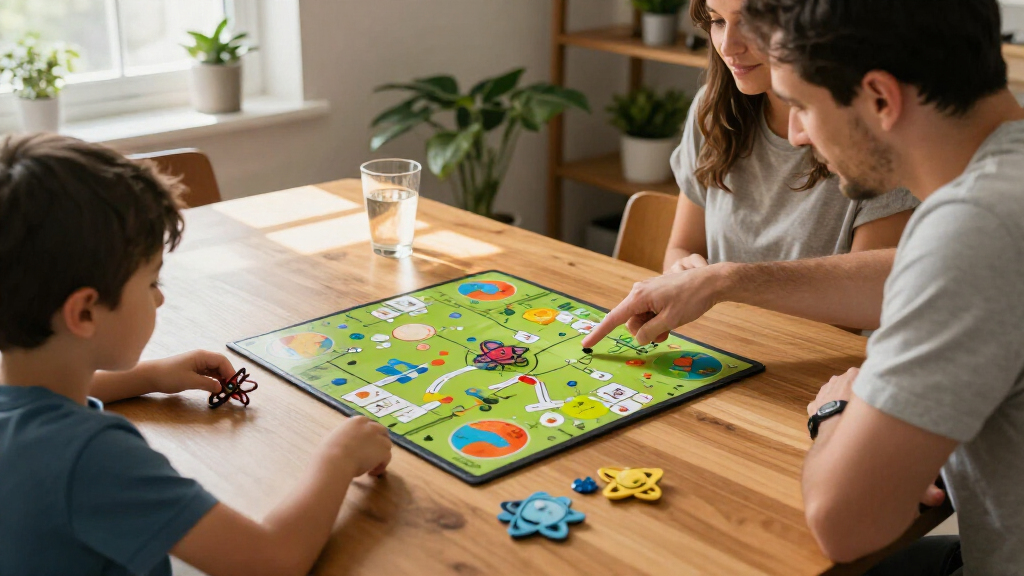
I compared each game on how clearly its science theme connects to play, how easy it is to teach, the kind of decisions it asks players to make, and how well it fits different ages and group preferences. A science label alone did not earn a high place: I gave more weight to games where players encounter the subject through the rules, choices, or vocabulary at the table. I also considered whether a game offers a distinct reason to choose it over another title in this lineup.
Cytosis ranks first for its balance of thematic integration and strategic play. Gizmos follows for its satisfying engine-building focus, though its science connection is less specific. The card games and family-oriented titles rank well for accessibility and quick play, but below the deeper strategy options when judged on scientific decision-making. More focused titles such as Genotype, Peptide, Ion, and Compounded can be a better match for a particular interest, even if their narrower subject or added complexity limits their general appeal.
| science-themed board game | Material |
|---|---|
| Genotype: A Mendelian Genetics | Cardboard |
| Go Fish Science Card Game | Laminated playing cards |
| Cytosis: A Cell Biology Board | — |
| Peptide: A Protein-Building St | — |
| Compounded: The Peer-Reviewed | — |
| Skillmatics Guess in 10: NASA | Paper |
| The Awkward Yeti Organ Attack | Paper |
| CMON Gizmos Board Game | — |
| Genius Games Ion: A Compound B | Paper |
| Ecosystem: A Family Card Game | — |
Factors to Consider When Choosing Science-themed Board Games
The right science-themed game depends on what you want the science to do at the table. A game can teach vocabulary, model a system through player choices, or simply give a familiar game a science setting. I’d start with the group’s age, appetite for rules, and interest in the subject before weighing theme or playtime.
Decide How Much Science You Want in the Rules
Some games use science as a direct model for play, while others mainly borrow scientific imagery or subject matter. If the goal is to reinforce a concept, look for decisions that reflect that concept instead of relying on fact cards or labels alone. A tightly modeled subject can be memorable, but it may also narrow the game’s appeal if players have little interest in that field. For a mixed group, a broader science setting may be easier to bring to the table repeatedly. A common mistake is assuming educational content automatically makes a game enjoyable for everyone. Choose the balance of learning and play that matches your group’s reason for gathering.
Match Rules Weight to the Players
Age recommendations are a starting point, but familiarity with board games often matters just as much. A younger player who enjoys strategy may handle more than a casual adult who prefers simple turns. Look at the number of actions players must remember and whether a first game can be taught in a few clear steps. For family play, simple turn structure can help children participate without constant coaching. More involved rules make sense when the group likes learning systems together. Avoid buying a game based only on its science topic if its rules will keep the intended players from making their own decisions.
Choose a Subject Players Already Find Interesting
Genetics, cell biology, chemistry, proteins, space, and ecosystems offer very different hooks. A familiar or personally appealing subject can make players more willing to engage with unfamiliar mechanics. At the same time, specialized vocabulary may slow down a group that has not encountered the topic before. Consider whether players will enjoy discovering the ideas or already expect a degree of subject knowledge. A useful choice for a classroom may differ from a good pick for a relaxed family evening. Let player curiosity guide the subject, rather than assuming one scientific field will appeal to the whole table.
Think About Session Length and Replay Style
Short card games are easier to fit into a busy evening and can work well as warm-ups or travel options. Longer strategy games ask players to invest more attention, but can reward groups that enjoy planning over several turns. Replay value also comes from different sources: changing decisions, building combinations, or exploring a subject in new ways. Ask whether your group likes a quick reset after each round or prefers a single, sustained game. A compact game that actually gets played may suit a household better than a deeper box that rarely reaches the table. Check the expected session length and setup needs against your group’s routine.
Separate Learning Goals From Game Night Goals
If you are choosing a game for teaching, decide whether you want practice with terminology, a simplified model of a process, or a prompt for discussion. Those goals call for different designs, and not every science game serves as a formal lesson. In casual play, clear choices and an engaging pace may matter more than the amount of information conveyed. A game can spark questions without being a complete explanation of a scientific subject. Avoid expecting one purchase to satisfy both classroom objectives and every family member’s game preferences. If both uses matter, prioritize the one that will shape most play sessions.
Frequently Asked Questions
Which game is the best starting point for a group new to science-themed board games?
Go Fish Science is a natural starting point for younger players or groups who want familiar card-game structure. Guess in 10: NASA Space is another accessible choice if question-and-answer play appeals to your group. For adults who want more strategy, Gizmos offers a more involved experience without centering on a single scientific discipline. I’d choose based on whether the group prefers matching and recall, guessing, or building combinations. A simple first game can help reveal whether players want more science content or more strategic depth next time.
Which options connect scientific ideas most directly to gameplay?
Cytosis stands out for linking cell biology to the actions players take, while Genotype focuses on Mendelian genetics. Peptide centers on protein building, and Ion brings compound building into play. These focused titles differ from Gizmos, whose main appeal is its engine-building system and broader science flavor. If the goal is to explore a particular concept, choose the game built around that subject and check whether its level of abstraction suits the players. A game can support curiosity without replacing a textbook or lesson.
Are science-themed board games suitable for mixed-age family play?
Several games in this lineup are designed for accessible family sessions, including Go Fish Science, Guess in 10: NASA Space, and Ecosystem. Mixed-age play works best when younger players can make meaningful choices and older players still have something to think about. Check the rules and recommended age range, then consider how much help children will need during a first game. A highly specialized or strategy-heavy title may be a better fit when the group has similar experience or shares a strong interest in the subject. If ages and skills vary widely, a short game makes it easier to adjust after trying it.
Should I choose a science game for learning or for strategy?
Start with the main reason you want the game. If learning a subject is the priority, choose a title whose mechanics engage with that subject, such as a game focused on cells, genetics, or chemical compounds. If game night is the priority, weigh decision-making, pace, and replay appeal more heavily; Gizmos is a stronger match for players seeking engine-building strategy. Many games offer both, but they rarely teach every detail while also fitting every group’s preferred level of complexity. Decide which goal matters most, then use the other as a bonus.
How can I tell whether a science game will hold players’ interest after they learn the basics?
Look for replay value that comes from changing player choices, combinations, or group interaction rather than novelty alone. Strategy games often provide fresh decisions across sessions, while lighter card games may work best as easy repeat plays or short activities. A focused scientific theme can sustain interest when players enjoy that subject, though it may not have broad appeal across a whole household. Consider who will play most often and whether they enjoy mastering a system. If possible, read the rules overview before choosing so you can judge whether the central decisions seem engaging beyond the educational hook.
Conclusion
Cytosis is my best overall recommendation for players who want science and strategy to reinforce each other. For a lighter entry point, choose Go Fish Science or Guess in 10: NASA Space; for engine-building play, choose Gizmos. Buyers focused on genetics, proteins, or chemistry should look closely at Genotype, Peptide, and Ion, while Ecosystem suits groups drawn to habitats and family play. I’d treat Compounded as the chemistry-focused option for players who want a lab-inspired strategy game. The best value depends on which style your group will return to: pick the game that fits their interests and comfort with rules, rather than the one with the broadest science label.