Among these science lab kits for kids, I’d choose the UNGLINGA 150-Experiment Science Kit as the best overall for families seeking broad hands-on variety. The National Geographic Amazing Chemistry Set stands out for a chemistry-focused collection, while the National Geographic Dual LED Microscope Science Kit suits children curious about observing small specimens. The main tradeoff is breadth versus focus: large experiment collections offer more activities, while specialty kits can give children a clearer path into one subject. Age fit, adult help, setup, and cleanup also vary. Read on for my full comparison and guidance on choosing the right kit for your child.

Prime made for students and young adults
- Fast, free delivery for dorm and study essentials
- Prime Video and Amazon Music included
- Member-only deals
Key Takeaways
- The UNGLINGA kit’s 150 experiments give it the broadest stated activity count in this lineup, making it a strong starting point for families unsure which science subject will hold a child’s interest.
- Chemistry-focused picks differ by scale and presentation: the National Geographic Amazing Chemistry Set lists 100+ experiments, while the Ooze Labs Chemistry Station centers its appeal on a dedicated experiment setup.
- The two microscope kits offer a different kind of science experience from experiment-count kits: they focus on observing specimens, so they may suit children who prefer discovery over mixing and building.
- Electronics and engineering options, including the Bluetooth Speaker and FM Radio STEM Kit and Doctor Jupiter Ultimate Engineering Kit, are better matched to children who want to build working projects than to those seeking broad lab activities.
- A high experiment count does not automatically mean the best fit; age guidance, adult involvement, workspace, and whether activities use reusable equipment all affect how often a kit is likely to come out.
| DIY Bluetooth Speaker and FM Radio STEM Kit for Kids |  | Best for Electronics Projects | Brand: choopheme | Projects: Bluetooth speaker and FM radio | Number of kits: 2 | VIEW LATEST PRICE | See Our Full Breakdown |
| National Geographic Science Magic Kit for Kids, Ages 8+ |  | Best for Science Demonstrations | Brand: Blue Marble | Recommended age: 8 years and up | Included experiments: 20 | VIEW LATEST PRICE | See Our Full Breakdown |
| UNGLINGA 150-Experiment Science Kit for Kids | 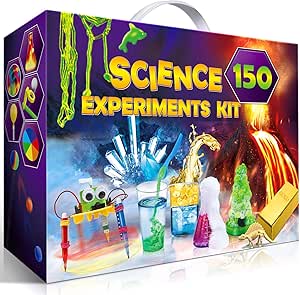 | Best for Experiment Variety | Brand: UNGLINGA | Experiments: 150 | Recommended age: 8 years and up | VIEW LATEST PRICE | See Our Full Breakdown |
| Doctor Jupiter Ultimate Engineering Kit for Kids Ages 8–13 |  | Best for Tool-Free Building | Brand: Doctor Jupiter | Recommended age: 8 years and up | Projects: Catapult machine, race car, and scribbling robot | VIEW LATEST PRICE | See Our Full Breakdown |
| Doctor Jupiter Ultimate Science Experiments Kit for Kids, Ages 8+ |  | Best for a Guided Home Lab | Brand: Doctor Jupiter | Recommended age: 8 years and up | Number of experiments: 135+ | VIEW LATEST PRICE | See Our Full Breakdown |
| National Geographic Junior Chemistry Set with 50 Experiments |  | Best for Preschool-Age Beginners | Brand: Blue Marble | Age range: 4 years and up | Experiments: 50 | VIEW LATEST PRICE | See Our Full Breakdown |
| National Geographic Chemistry Set with 45 Experiments for Kids |  | Best for Spectacle-Driven Chemistry | Brand: National Geographic | Recommended age: 8 years and up | Experiments: 45 | VIEW LATEST PRICE | See Our Full Breakdown |
| Dr. STEM Toys Circuit Science Kit with 100+ Experiments |  | Best for Electronics Exploration | Brand: Dr. STEM Toys | Model: D518 | Age range: 8–16 years | VIEW LATEST PRICE | See Our Full Breakdown |
| Kuovei Science Kit for Kids with 80 Experiments |  | Best Variety Kit | Brand: Kuovei | Recommended age: Over 6 years | Experiments: 80 | VIEW LATEST PRICE | See Our Full Breakdown |
| National Geographic Amazing Chemistry Set, 100+ Experiments, Ages 8+ |  | Best for Extending Experiments Beyond the Box | Brand: Blue Marble | Age range: 8 years and up | Experiments: 15 included experiments plus 85 bonus experiments | VIEW LATEST PRICE | See Our Full Breakdown |
| VLGOEM 66-Piece Electronics STEM Kit for Kids |  | Best for First Circuits | Components: 66 pieces | Recommended age: 6 years and up | Material: Plastic | VIEW LATEST PRICE | See Our Full Breakdown |
| National Geographic Microscope for Kids with Up to 400x Magnification |  | Best for High-Magnification Exploring | Maximum magnification: 400× | Magnification settings: Three levels | Lighting: LED above and below | VIEW LATEST PRICE | See Our Full Breakdown |
| National Geographic Mega Science Lab for Kids, 75 Experiments |  | Best for Subject Variety | Experiments: 75 total: 45 in the kit and 30 in a bonus guide | Subjects: Earth science, chemistry, and science magic | Recommended age: 8 years and up | VIEW LATEST PRICE | See Our Full Breakdown |
| Thames & Kosmos Ooze Labs Chemistry Station Experiment Set |  | Best for a Dedicated Chemistry Workspace | Recommended age: 6 years and up | Experiments: Approximately 20 | Pieces: 57 | VIEW LATEST PRICE | See Our Full Breakdown |
| National Geographic Dual LED Microscope Science Kit for Kids |  | Best for Viewing Slides and Solid Specimens | Recommended age: 8–12 years | Magnification: 20× and 50× | Illumination: Dual LED | VIEW LATEST PRICE | See Our Full Breakdown |
| science lab kits for kid | Brand | Recommended age | Experiments |
|---|---|---|---|
| DIY Bluetooth Speaker and FM R | choopheme | 8 years and up | — |
| National Geographic Science Ma | Blue Marble | 8 years and up | — |
| UNGLINGA 150-Experiment Scienc | UNGLINGA | 8 years and up | 150 |
| Doctor Jupiter Ultimate Engine | Doctor Jupiter | 8 years and up | — |
| Doctor Jupiter Ultimate Scienc | Doctor Jupiter | 8 years and up | — |
| National Geographic Junior Che | Blue Marble | — | 50 |
| National Geographic Chemistry | National Geographic | 8 years and up | 45 |
| Dr. STEM Toys Circuit Science | Dr. STEM Toys | — | 100+ |
| Kuovei Science Kit for Kids wi | Kuovei | Over 6 years | 80 |
| National Geographic Amazing Ch | Blue Marble | — | 15 included experiments plus 85 bonus experiments |
| VLGOEM 66-Piece Electronics ST | — | 6 years and up | — |
| National Geographic Microscope | — | — | — |
| National Geographic Mega Scien | Blue Marble | 8 years and up | 75 total: 45 in the kit and 30 in a bonus guide |
| Thames & Kosmos Ooze Labs Chem | — | 6 years and up | Approximately 20 |
| National Geographic Dual LED M | — | 8–12 years | — |
More Details on Our Top Picks
DIY Bluetooth Speaker and FM Radio STEM Kit for Kids
For kids more interested in how devices work than in test tubes and chemical reactions, I’d put this kit near the top of the electronics-focused choices. It includes two build projects: a Bluetooth speaker and an FM radio that scans the 88–108 MHz range automatically. That gives children a practical way to encounter basic electronics, while the included assembly instructions support a more independent build. Compared with Doctor Jupiter’s Ultimate Engineering Kit, this set stays focused on electronic devices rather than motion, structures, and vibration. The tradeoff is that both projects require hands-on assembly, and a small Phillips screwdriver is not included. Some children may need adult help, so I’d choose it for a supervised build rather than a grab-and-go experiment session.
Pros:- Provides two distinct electronics builds in one kit.
- Automatic FM scanning gives the radio project a useful, interactive feature.
- Assembly instructions support step-by-step learning.
- Connects hands-on construction with basic electronics concepts.
Cons:- Requires a small Phillips screwdriver, which is not listed as included.
- Some children may need adult help with assembly.
- Its electronics focus offers less variety than broad experiment kits such as the UNGLINGA 150-Experiment Science Kit.
Best for: Families seeking a guided first electronics build for children ages 8 and up, especially kids curious about radios and speakers.
Not ideal for: Buyers looking for chemistry experiments or tool-free construction, or children who need projects they can complete without adult support.
- Brand:choopheme
- Projects:Bluetooth speaker and FM radio
- Number of kits:2
- FM frequency range:88–108 MHz
- Recommended age:8 years and up
- Assembly tool required:Small Phillips screwdriver
- Materials:Non-toxic materials
Our verdict“Choose this kit for a child who wants to build working audio devices, but skip it if you want chemistry-led experiments or tool-free assembly.”
National Geographic Science Magic Kit for Kids, Ages 8+
I’d choose this kit for a child who enjoys presenting as much as experimenting. Its 20 included activities are framed as magic tricks, with a wand, white gloves, and illustrated directions that explain the science behind each effect. That performance angle makes it different from the UNGLINGA 150-Experiment Science Kit, which emphasizes a much larger range of hands-on topics rather than showmanship. The bonus booklet adds 85+ household-item activities, extending the ideas beyond the supplied materials, but those extra experiments are not all fully equipped in the box. This is a strong fit for curious kids who like an audience and can follow instructions, though it is less suited to families seeking a deep collection of supplied lab tools or a chemistry-only learning path.
Pros:- Turns science activities into demonstrations that can encourage kids to explain what they observe.
- Illustrated instructions connect the tricks with their underlying science.
- Includes a wand and white gloves for presentation.
- Bonus booklet offers 85+ additional activities using common household items.
Cons:- The supplied experiment materials cover 20 activities; the bonus activities rely on household items.
- Designed for children ages 8 and up, so younger kids may need another option.
- Its performance format is narrower than the broad topic mix in the UNGLINGA 150-Experiment Science Kit.
Best for: Families with children ages 8 and up who enjoy performing demonstrations for siblings, friends, or family and want the science explained alongside the trick.
Not ideal for: Buyers who want materials supplied for every listed activity, or children who prefer open-ended lab exploration over performance-based experiments.
- Brand:Blue Marble
- Recommended age:8 years and up
- Included experiments:20
- Bonus experiments:85+ activities using common household items
- Included components:Experiment materials, illustrated guide, bonus booklet, magic wand, and white gloves
- Educational objective:STEM learning
- Materials:Metal and paper
- Model number:NGMEGAMAGIC
Our verdict“Pick this for an aspiring young science presenter who wants guided tricks and explanations, not a box stocked for every bonus experiment.”
UNGLINGA 150-Experiment Science Kit for Kids
Among these five options, I’d favor UNGLINGA when variety matters more than building one specific skill. Its 150 experiments span chemistry, physics, Earth science, and surface tension, giving families more room to follow a child’s changing interests than the focused Bluetooth speaker and FM radio kit. An illustrated, step-by-step manual helps make that breadth manageable for children ages 8 and up. The range is the main advantage, but the number of activities should not be mistaken for a box containing everything needed every time: some experiments use household items. Compared with Doctor Jupiter’s Ultimate Science Experiments Kit, the listed description provides less detail about particular included apparatus, so buyers seeking named lab vessels may prefer that alternative. I’d choose UNGLINGA for varied guided exploration, with an adult ready to supply extras.
Pros:- Offers 150 activities across chemistry, physics, Earth science, and surface tension.
- Illustrated, step-by-step manual gives children a structured starting point.
- Includes science tools and materials for hands-on work.
- Some experiments make use of common household items.
Cons:- Some activities require household items that are not included.
- The broad subject mix may feel less focused than the electronics projects in the choopheme speaker and radio kit.
- The product details do not specify individual included tools or materials.
Best for: Families with children ages 8 and up who want to try multiple science subjects and are comfortable gathering some household materials.
Not ideal for: Buyers who need every activity to be self-contained or who want a kit centered on one clearly defined topic or project.
- Brand:UNGLINGA
- Experiments:150
- Recommended age:8 years and up
- Topics:Chemistry, physics, Earth science, and surface tension
- Included components:Science experiment tools and materials
- Material type:Plastic
- Dimensions:11.42 x 8.67 x 3.94 inches
- Number of packs:1
Our verdict“Choose UNGLINGA for broad, guided science exploration if you’re willing to supplement some activities with items from home.”
Doctor Jupiter Ultimate Engineering Kit for Kids Ages 8–13
This is the engineering pick for kids who learn by making something move. The kit supplies parts for a catapult, race car, and scribbling robot, linking construction with concepts such as projectile motion, circuits, and vibration. Unlike the choopheme Bluetooth speaker and FM radio kit, it does not ask children to assemble audio electronics; instead, it offers varied mechanical builds and a motorized project. I also like that the builds require no glue, tools, or soldering, while illustrated instructions and QR video tutorials offer more than one way to follow along. The tradeoff is a narrower set of three projects compared with UNGLINGA’s broad experiment collection, and batteries are not listed among the components. I’d pick it for hands-on engineering, not for a child seeking chemistry experiments.
Pros:- Includes parts for three distinct builds: a catapult, race car, and scribbling robot.
- Combines construction with concepts such as projectile motion, circuits, and vibrations.
- No glue, tools, or soldering are required for assembly.
- Illustrated instructions and QR video tutorials provide two guidance formats.
Cons:- Batteries are not listed among the included components.
- Three projects provide less activity variety than the UNGLINGA 150-Experiment Science Kit.
- The age guidance starts at 8 years, limiting its fit for younger children.
Best for: Families with children ages 8 and up who want guided mechanical and engineering builds without sourcing tools or glue.
Not ideal for: Children looking for chemistry experiments, or families who expect batteries to be included with the motorized project.
- Brand:Doctor Jupiter
- Recommended age:8 years and up
- Projects:Catapult machine, race car, and scribbling robot
- Included components:Wooden pop-out sheets, vibrating motor with switch, cable ties, bands, battery connector, metal axles, Velcro, wheels, and foam ball
- Material type:Cardboard
- Dimensions:11.5 x 9.8 x 1.7 inches
- Item weight:1.8 pounds
- Safety standard:ASTM F963-23
Our verdict“Choose this for a child who wants to build moving engineering projects with minimal setup, but plan to supply batteries separately.”
Doctor Jupiter Ultimate Science Experiments Kit for Kids, Ages 8+
I’d give this kit the edge for families who want a more lab-like collection of supplies alongside a large number of guided activities. It includes 135+ experiments, plus access to 90+ bonus activities using household items. A measuring cylinder, conical flask, test tube stand, funnel, and other listed components give the main kit a more recognizable lab setup than the performance-led National Geographic Science Magic Kit. Separate leak-proof bottles for chemical materials also support tidier storage. The tradeoff is that the bonus activities still depend on household supplies, and the kit is designed for ages 8 and up rather than very young experimenters. Compared with Doctor Jupiter’s engineering set, this option favors repeated experiments with supplied lab equipment over building a small number of physical projects.
Pros:- Includes materials for more than 135 experiments and access to 90+ bonus activities.
- Supplies familiar lab equipment, including a measuring cylinder, conical flask, and test tube stand.
- Illustrated, step-by-step instructions support guided activity.
- Chemical materials are packaged in separate leak-proof bottles.
Cons:- Some bonus activities require additional household items.
- The kit is designed for ages 8 and up, so younger children may need another choice.
- Its experiment-led format offers less construction than Doctor Jupiter’s Ultimate Engineering Kit.
Best for: Families with children ages 8 and up who want guided experiments and named lab equipment for repeated home science sessions.
Not ideal for: Buyers seeking a tool-free engineering build or a kit where every bonus activity comes with its own materials.
- Brand:Doctor Jupiter
- Recommended age:8 years and up
- Number of experiments:135+
- Bonus experiments:90+ using household items
- Included components:Measuring cylinder, conical flask, spatula, stirring sticks, test tube stand, glycerin flakes, cups, funnel, tray, soap moulds, food essences, food colours, experiment ingredients, instruction manual, and bonus experiment booklet
- Educational objective:STEM
- Manufacturer:Metis Learning Solutions Pvt. Ltd.
- Model number:DJ Parent
Our verdict“Choose this for a school-age child who wants a supplied home-lab setup and many guided experiments, while expecting to provide household items for some bonus activities.”
National Geographic Junior Chemistry Set with 50 Experiments
For younger first-time experimenters, this set is the most age-accessible chemistry pick here: it is designed for ages 4 and up and pairs 50 activities with illustrated, step-by-step instructions. More than 20 child-safe tools give children familiar lab equipment to handle, while experiments that use household ingredients can make it easier to continue exploring beyond the kit’s supplied materials. Compared with the National Geographic Chemistry Set with 45 Experiments, this one is aimed at a much younger audience rather than older children ready for activities such as a rocket launch. That broader age fit comes with a tradeoff: an adult will still need to supervise, and some activities depend on having ingredients such as baking soda and vinegar on hand. Choose it for guided, early science play, not as an advanced chemistry set.
Pros:- Offers 50 hands-on experiments for repeated activity choices.
- Includes more than 20 child-safe lab tools, including test tubes and goggles.
- Illustrated, step-by-step directions support young children as they follow activities.
- Some experiments use common household ingredients.
Cons:- Some activities require household ingredients, so the kit is not fully self-contained.
- Its age-4-and-up positioning and guided format may feel basic to older children.
Best for: Families introducing children ages 4 and up to guided science activities, especially those who want illustrated directions and reusable household-ingredient experiments.
Not ideal for: Older children seeking more challenging chemistry activities or families who want every experiment’s ingredients supplied in the box.
- Brand:Blue Marble
- Age range:4 years and up
- Experiments:50
- Lab tools:20+
- Included components:Chemistry kit with test tubes, goggles, and other lab tools
- Educational objective:STEM
- Dimensions:11 x 4.22 x 9.64 inches
- Weight:0.72 kg
- Battery required:No
Our verdict“Choose this set for a young beginner who benefits from visual guidance and child-safe tools, rather than an older child looking for challenging chemistry.”
National Geographic Chemistry Set with 45 Experiments for Kids
Volcanoes, geysers, and a rocket launch give this set a more dramatic activity mix than the National Geographic Junior Chemistry Set, which is designed for much younger children and leans on accessible, guided experiments. With 45 activities and illustrated instructions that introduce chemistry concepts and safe practices, this is better suited to children ready to follow directions and connect an exciting result with the science behind it. The appeal is less about the sheer number of projects than about those memorable demonstrations. Compared with the National Geographic Amazing Chemistry Set, this kit’s listed activities emphasize big, observable events rather than crystal-growing and color-changing solutions. Its recommended age starts at 8, so it is a poor fit for preschoolers, and the description does not specify the same detailed inventory of lab tools as some other kits.
Pros:- Includes 45 hands-on activities, including volcano, geyser, and rocket projects.
- Illustrated instructions guide children through experiments.
- Introduces chemistry fundamentals alongside safe experiment practices.
- Compact listed dimensions make the box relatively easy to store.
Cons:- Recommended for ages 8 and up, so it is not aimed at younger beginners.
- The product information does not specify a detailed lab-tool inventory.
- Its activity count is lower than the 50-project Junior Chemistry Set and the 100-plus-project electronics kit, though those serve different age groups and subjects.
Best for: Families with children ages 8 and up who are drawn to visible, high-energy chemistry demonstrations and can follow illustrated instructions.
Not ideal for: Parents shopping for preschool-age children or buyers who want a clearly itemized set of lab tools and included experiment materials.
- Brand:National Geographic
- Recommended age:8 years and up
- Experiments:45
- Educational objective:STEM
- Included components:Mega Science Kit
- Material:Rubber
- Dimensions:8.78 x 3.19 x 11.93 inches
- Weight:2.9 pounds
- Battery required:No
Our verdict“Pick this for an older child who values lively chemistry demonstrations more than a large, itemized collection of tools.”
Dr. STEM Toys Circuit Science Kit with 100+ Experiments
This is the electronics specialist in a lineup dominated by chemistry activities. More than 100 experiments include projects such as a working radio, lights, sounds, a bell, and motorized action, giving children a chance to explore how circuits produce effects they can hear and see. Compared with the National Geographic Chemistry Set with 45 Experiments, it trades chemical demonstrations for hands-on circuit building; that makes it a better match for children curious about electronics than for families specifically seeking test tubes and chemistry concepts. Its 8–16 age range offers room for a child to keep exploring, but the broad range does not mean every project will suit every age without help. The kit is also sizable at 17.5 inches long, and its listed warranty is only 30 days, a limitation for a set with multiple parts.
Pros:- Includes more than 100 hands-on electronics experiments.
- Projects include a working radio, lights, sounds, a bell, and motorized action.
- Focuses on basic electronics and STEM concepts through practical builds.
- Uses a mix of plastic, metal, and paper components.
Cons:- Its circuit focus makes it a different choice from a chemistry lab kit.
- The listed 30-day warranty is limited.
- The 17.5-inch length may require more storage space than compact chemistry sets.
Best for: Families with children ages 8–16 who want to explore circuits through working audio, lighting, and motorized projects rather than chemistry experiments.
Not ideal for: Buyers focused on chemistry lab activities, or households that need a compact kit with a longer stated warranty.
- Brand:Dr. STEM Toys
- Model:D518
- Age range:8–16 years
- Experiments:100+
- Material:Plastic, metal, and paper
- Dimensions:3.5 x 17.5 x 13.5 inches
- Weight:2.5 pounds
- Warranty:30 days
Our verdict“Choose this for a child who wants to build and investigate circuits, not for someone looking for chemistry experiments with lab glassware.”
Kuovei Science Kit for Kids with 80 Experiments
Its mix of 80 activities and varied supplies makes this a flexible choice for children who like switching between different kinds of experiments. Guidance cards cover projects such as a rainbow fountain, an erupting volcano, and a balloon inflated with a bottle, with activities described as moving from simpler to more challenging. That progression distinguishes it from the National Geographic Chemistry Set with 45 Experiments, whose listed highlights focus more on showy demonstrations such as a geyser and rocket. Kuovei also includes a broad collection of tools and materials, from goggles and test tubes to pigments and effervescent tablets, so more of the listed activities have dedicated kit components. The tradeoff is that some chemical materials need careful storage, and the 1 x 1 x 1-inch dimensions appear implausible for the stated contents, making the listed size unreliable as a storage guide.
Pros:- Provides guidance for 80 experiments, including rainbow fountain and volcano activities.
- Includes a varied set of tools and materials such as goggles, petri dishes, test tubes, and measuring cups.
- Activities are described as progressing from simple to more challenging.
- Some listed components support several different kinds of hands-on exploration.
Cons:- Recommended for children over 6, so it may not suit younger children.
- Chemical materials need to be stored with lids tightly closed.
- The listed 1 x 1 x 1-inch dimensions do not offer a useful guide to the kit’s actual storage needs.
Best for: Families with children over 6 who want varied, guided experiments and a wide selection of tools and activity materials in one kit.
Not ideal for: Households seeking a clearly verified box size or a kit that does not require careful storage of chemical materials.
- Brand:Kuovei
- Recommended age:Over 6 years
- Experiments:80
- Weight:0.75 kg
- Listed dimensions:1 x 1 x 1 inches
- Material:Plastic
- Educational objective:Science
- Included components:Goggles, chemical materials, petri dishes, ping-pong ball, pigments, effervescent tablets, measuring cups, test tubes, gloves, rubber bands, droppers, straws, toothpicks, rotary needles, measuring spoons, balloons, twisting rods, rainbow candy, color-changing flower, and guidance cards
Our verdict“Choose Kuovei for an older beginner who wants varied activities and many included materials, provided an adult can manage storage and supervision.”
National Geographic Amazing Chemistry Set, 100+ Experiments, Ages 8+
The headline count is split between supplied materials and household-based activities: the kit includes materials for 15 experiments, while its guide adds 85 more using common items from home. That format suits families who would rather reuse familiar supplies than expect every activity to come from the box. Test tubes, beakers, and pipettes provide a clear lab-tool foundation, while projects such as growing a crystal tree and making color-changing solutions keep the chemistry tangible. Compared with the National Geographic Chemistry Set with 45 Experiments, this set relies more heavily on household ingredients for its larger activity list and gives fewer experiments with materials included. The tradeoff is practical: families need to gather supplies for the bonus activities, and the age recommendation of 8 and up makes it less suitable for the younger children targeted by the Junior Chemistry Set.
Pros:- Includes materials for 15 experiments and a guide to 85 additional household-item activities.
- Provides test tubes, beakers, and pipettes for hands-on lab-style work.
- Featured activities include crystal growing and color-changing solutions.
- Compact listed dimensions make the kit straightforward to store.
Cons:- The 85 bonus experiments rely on household items that are not included.
- Only 15 experiments have materials supplied in the kit.
- Recommended for ages 8 and up, unlike the younger-child-focused Junior Chemistry Set.
Best for: Families with children ages 8 and up who already have common household supplies and want a chemistry guide that extends beyond the included materials.
Not ideal for: Buyers who want materials supplied for all advertised experiments or families shopping for children under 8.
- Brand:Blue Marble
- Age range:8 years and up
- Experiments:15 included experiments plus 85 bonus experiments
- Tools:Test tubes, beakers, and pipettes
- Educational objective:STEM
- Material:Crystal
- Dimensions:8.78 x 3.19 x 11.93 inches
- Weight:1.8 pounds
- Model number:NGMEGACHEMAR
Our verdict“Choose this for an older child and an involved adult who are happy to gather household supplies to expand the set’s chemistry activities.”
VLGOEM 66-Piece Electronics STEM Kit for Kids
For a child curious about how circuits work, this kit offers a direct route into electronics: its 66 color-coded pieces snap together, so projects need no soldering or extra tools. The color project manual gives kids a guide to follow, while building and changing circuits makes the learning more hands-on than a general experiment collection like the National Geographic Mega Science Lab. Its focus is also narrower: this is a circuitry kit, not a mix of chemistry and Earth science. That focus is useful for budding electronics fans, but families seeking varied experiments may get more range from the Mega Science Lab. The plastic components keep the format approachable, though they may not appeal to buyers looking for sturdier or non-plastic materials. It is intended for ages six and up.
Pros:- 66 snap-together components let children build circuits without soldering or extra tools.
- Color-coded parts support easier identification while assembling projects.
- A color project manual provides structured activities.
- Hands-on circuit building gives this kit a distinct electronics focus.
Cons:- Its electronics focus offers less subject variety than the National Geographic Mega Science Lab.
- Plastic components may not suit families who prefer other construction materials.
Best for: Families with children ages six and up who want guided, tool-free introductions to building electronic circuits.
Not ideal for: Buyers seeking a broad mix of chemistry, Earth science, and other experiment types, or a kit made from materials other than plastic.
- Components:66 pieces
- Recommended age:6 years and up
- Material:Plastic
- Theme:Robotics
- Batteries required:No
- Dimensions:11.8 x 10.6 x 3.1 inches
- Weight:2.3 pounds
- Model number:XHJ-1
Our verdict“Choose this for a child ready to explore circuits with guided, tool-free builds rather than a broad collection of science experiments.”
National Geographic Microscope for Kids with Up to 400x Magnification
This microscope is the stronger choice for children who want to inspect tiny details, with three magnification levels up to 400× and adjustable positioning for specimens. Large focus knobs and a soft-touch eyepiece make the process more approachable for young users, while LED lighting above and below supports viewing both slides and solid objects. Its prepared slides, blank slides, rocks, minerals, and lab guide create a fuller starting set than the National Geographic Dual LED Microscope Science Kit, whose listed magnification reaches only 50×. That comparison cuts both ways: the Dual LED kit includes more than 50 accessories and a mini geode, while this model favors stronger magnification and a specimen-rich mix. Three fixed settings may feel limiting as skills advance, and there is no camera or digital output for saving observations.
Pros:- Three magnification levels reach up to 400× for viewing smaller details.
- Dual LED lighting supports viewing prepared slides and three-dimensional specimens.
- Large focus knobs and a soft-touch eyepiece are suited to young users.
- Includes prepared and blank slides, rocks, minerals, and basic handling tools.
Cons:- Three discrete magnification levels offer less flexibility than continuously adjustable magnification.
- No built-in camera or digital output is provided.
- Compared with the National Geographic Dual LED Microscope Science Kit, it does not list a 50-plus-piece accessory set.
Best for: Families who want a beginner-friendly microscope with stronger magnification and both prepared and blank slides for varied specimen viewing.
Not ideal for: Children who want to capture microscope images digitally or users seeking fine control beyond three magnification settings.
- Maximum magnification:400×
- Magnification settings:Three levels
- Lighting:LED above and below
- Objective lens:Achromatic
- Field of view angle:45 degrees
- Included specimens and tools:Prepared slides, rocks, minerals, blank slides, pipette, tweezers, and lab guide
- Model number:NGMICROST
- Manufacturer:JMW Sales, Inc.
Our verdict“Pick this microscope for beginner specimen exploration where higher magnification matters more than digital image capture or a large accessory count.”
National Geographic Mega Science Lab for Kids, 75 Experiments
Among these kits, this one offers the widest mix of science themes: Earth science, chemistry, and science magic share space in a single set. The 45 activities using kit components include volcanoes, crystal growing, and chemical reactions; a bonus guide adds 30 more experiments using household items. That gives families a longer runway than the Thames & Kosmos Ooze Labs Chemistry Station, which focuses on about 20 chemistry activities with dedicated lab equipment. The Mega Science Lab trades that station-style setup for breadth, and its rock, mineral, and crystal specimens add tangible pieces to explore. The household-item activities can extend the kit, but they also mean some projects require supplies beyond the box. At age eight and up, it is aimed at older children than several beginner-oriented kits in this roundup.
Pros:- Combines Earth science, chemistry, and science magic in one kit.
- Includes 45 experiments in the kit plus a guide to 30 household-item activities.
- Rock, mineral, and crystal specimens add hands-on collecting and observation.
- Covers a broader range of activities than the chemistry-focused Ooze Labs station.
Cons:- Some of the 30 bonus experiments require common household items.
- The recommended age of eight and up excludes younger beginners.
- Its broad subject mix is less focused than a dedicated chemistry station.
Best for: Families with children eight and up who want several science themes and are comfortable supplying common household items for some activities.
Not ideal for: Younger children or buyers who want every experiment to rely only on equipment and materials supplied in the box.
- Experiments:75 total: 45 in the kit and 30 in a bonus guide
- Subjects:Earth science, chemistry, and science magic
- Recommended age:8 years and up
- Educational objectives:Critical thinking, observation skills, and STEM
- Included specimens:Rock, mineral, and crystal specimens
- Brand:Blue Marble
- Model number:NGMEGASCIKIT
Our verdict“Choose this for an older child who wants varied science activities and does not mind gathering household supplies for some experiments.”
Thames & Kosmos Ooze Labs Chemistry Station Experiment Set
The defining advantage here is the plastic chemistry station: it gives children a designated place for roughly 20 experiments, and the cards clip onto the station for easy reference. That setup may suit families who want a more organized activity area than the National Geographic Mega Science Lab, which spreads attention across Earth science, chemistry, and science magic. Ooze Labs stays with chemistry, covering slime, fizzing reactions, chromatography, and an underwater volcano, with non-hazardous chemicals and no borax. Its 16-page color manual adds guidance, while the included vessels and small tools help make the activities feel more like lab work. The tradeoff is narrower subject range and a finite set of experiments; activities also depend on the included chemicals and equipment. It is listed for ages six and up.
Pros:- A lab station provides a dedicated place for conducting experiments.
- Experiment cards clip onto the station for convenient reference during activities.
- Activities include slime, chromatography, fizzing reactions, and an underwater volcano.
- Uses non-hazardous chemicals and does not contain borax.
Cons:- About 20 experiments offer less activity range than the National Geographic Mega Science Lab’s 75 listed activities.
- The chemistry-only focus provides less subject variety.
- Experiments depend on the included chemicals and equipment.
Best for: Families with children six and up who want a dedicated, organized chemistry setup with guided experiments and included lab tools.
Not ideal for: Buyers looking for a wide range of science subjects or activities that can continue without relying on the kit’s supplied chemicals and equipment.
- Recommended age:6 years and up
- Experiments:Approximately 20
- Pieces:57
- Manual:16-page full-color experiment manual
- Included equipment:Plastic station, vessels, syringe, measuring cup, pipette, spatula, tube, petri dish, and funnel
- Chemicals:Non-hazardous; does not contain borax
- Model number:642105
- Manufacturer warranty:1 year against manufacturer defects
Our verdict“Pick Ooze Labs for an organized, chemistry-focused activity station, not for the broadest variety of science topics.”
National Geographic Dual LED Microscope Science Kit for Kids
Upper and lower LED lights make this microscope a flexible pick for children who want to view both prepared slides and three-dimensional objects such as the included mini geode. Its 20× and 50× optical magnification is more modest than the 400× ceiling of the National Geographic Microscope for Kids, so it is better matched to broad, introductory viewing than close inspection of very small details. In return, this kit supplies more than 50 accessories, 10 prepared slides, 10 blank slides, a padded storage container, and a full-color learning guide. The included slides help a child start observing right away, while blank slides invite specimen preparation. The main limitation is fixed, low magnification; buyers prioritizing fine detail should choose the 400× model instead.
Pros:- Dual LED illumination supports viewing slides and three-dimensional objects.
- Includes 10 prepared slides and 10 blank slides for observation and specimen preparation.
- More than 50 accessories, a padded storage container, and a learning guide support a ready-to-use setup.
- The included mini geode offers a solid specimen to examine.
Cons:- Magnification is limited to 20× and 50×, below the 400× National Geographic microscope in this roundup.
- The listed age range of eight to 12 may not suit younger children.
Best for: Families with children ages eight to 12 who want a starter microscope for prepared slides and larger solid specimens, with storage and learning materials included.
Not ideal for: Children focused on viewing very small details or families seeking a microscope with magnification beyond 50×.
- Recommended age:8–12 years
- Magnification:20× and 50×
- Illumination:Dual LED
- Prepared slides:10
- Blank slides:10
- Included accessories:More than 50 pieces
- Included specimen:Mini geode
- Optics:2 optical glass lenses
- Warranty:1 year against manufacturer defects
Our verdict“Choose this for a well-equipped introductory microscope set for slides and larger specimens, but select the 400× model for finer-detail viewing.”

How We Picked
I compared these kits by the kind of science they let children explore, how clearly each has a distinct use, and how well the stated age guidance and activity scope match a family’s likely needs. I also weighed experiment variety against subject depth: a large collection can keep options open, while a focused chemistry, microscopy, circuit, or engineering kit may provide a more coherent route into one interest. The product names and stated activity counts help distinguish scope, but counts alone do not determine placement.
My ranking gives priority to versatility and ease of choosing a useful starting point, then recognizes kits that serve a clear specialist need. Practical fit matters too: families should consider adult supervision, materials and setup, cleanup, storage, and whether a child can repeat or extend the activities. Because the supplied product information does not establish detailed construction quality, exact contents, or supervision requirements for every kit, I avoid treating those as proven advantages and encourage buyers to check the current package details before choosing.
Factors to Consider When Choosing Science Lab Kits For Kids
The best choice depends less on which box claims the most activities and more on how your child likes to learn. I’d start by matching the kit to a subject and a realistic home setup, then check the age guidance, adult role, and what the package actually supplies.
Choose a subject before comparing experiment counts
Activity totals can make a kit look more versatile than it feels in practice if many experiments repeat the same basic idea. Chemistry collections suit children who enjoy mixing, observing changes, and following steps; microscopes reward patience and close observation. Circuit and engineering kits may appeal more to children who like assembling, troubleshooting, and seeing a device work. If your child has a strong interest, subject fit can matter more than the largest number on the box. If you are unsure, a broader kit may be a lower-risk introduction, but check that its activities span genuinely different kinds of tasks.
Match the kit to the child’s independence
Age labels are a starting point, not a guarantee that a child can complete activities alone. Younger children may need help reading instructions, measuring materials, handling small parts, or resetting a workspace. Older children can still benefit from adult participation when an activity involves careful setup or cleanup. Before buying, look for the recommended age, safety notes, and any stated adult-supervision guidance on the package. A kit that is too demanding can sit unused, while one that is too simple may not hold an older child’s attention. Think about the child’s patience and confidence as well as their age.
Check what is included and what must be supplied
Do not assume that a kit contains every material needed for every activity. Some projects may call for household supplies, batteries, specimens, or replacement consumables, and those details can affect how quickly a child can begin. Review the current contents list and instructions before ordering, especially if you want a ready-to-use gift. Reusable tools can support repeat activities, while consumables may limit how often certain experiments can be repeated. A lower listed activity count can still provide lasting use if the kit encourages observation or repeated testing. Check whether the materials are easy to store and replenish.
Plan for workspace, cleanup, and storage
Science activities need a practical place to happen, not just a child’s enthusiasm. Mixing experiments may require a protected surface and cleanup afterward; small circuit components call for a spot where pieces will not get lost. Microscopes and their accessories also need careful storage if they are to stay ready for use. Consider whether the kit can be set up and put away without taking over a kitchen table for days. A well-organized, repeatable routine can matter more than a larger collection of activities. If space is tight, favor a kit whose parts and projects suit the room you have.
Pay more for fit and depth, not a bigger number
A premium-feeling or larger kit is not automatically a better purchase for every child. It makes sense to spend more when a child already has a clear interest and the kit offers the kind of equipment or project experience they want to explore. For a first science set, a simpler option can reveal whether the child prefers chemistry, circuits, building, or observation before a family commits to one direction. Compare the variety of activities, the role of reusable tools, and the likely need for adult help. A focused kit may offer a better match than a broad one if the child is already fascinated by a particular subject. Let expected use guide the choice rather than box size alone.
Treat safety and supervision as part of the buying decision
Science kits vary in the kinds of materials and tasks they involve, so review the product’s safety information before purchase and again before the first activity. Confirm age guidance, adult-supervision instructions, and any warnings about small parts or materials. Prepare a clear workspace and have an adult read the directions ahead of time when a project is unfamiliar. Avoid assuming that a child can handle every activity independently just because the kit is marketed for their age group. If supervision time is limited, choose a format that fits the help you can provide. This practical check helps prevent a promising gift from becoming frustrating or unsuitable.
Frequently Asked Questions
Should I choose the kit with the most experiments?
Not automatically. A high count can be useful when a child enjoys variety or has not settled on a favorite subject, but it does not tell you how different the activities are or what supplies they require. Compare the stated activities with your child’s interests and check whether the package identifies reusable tools, consumables, or household materials. A focused chemistry, microscope, or circuit kit may offer a more engaging experience for a child who already knows what they want to explore. Choose by likely use, not the number alone.
Are these kits suitable for children to use without an adult?
That depends on the specific kit, the child, and the activity. Age guidance does not replace the package’s safety instructions or supervision notes, so read those before buying and before starting a project. Children may need help with instructions, setup, small parts, materials, or cleanup even when the activity is age-appropriate. If you want a kit for independent use, check whether the maker explicitly describes activities as suitable for that level of independence. When the guidance is unclear, plan for an adult to be nearby.
What should I check before buying a chemistry kit as a gift?
Check the recommended age, the safety and supervision guidance, and the list of materials included in the box. Some experiments may call for common household supplies or materials that need replacing, which can affect how ready the gift is to use. Also think about where the child can work and whether an adult can help with setup and cleanup. A kit with many activities may be a better fit for a curious child who enjoys trying different experiments, while a station-style set may appeal to someone who likes a dedicated setup. Confirm the current package contents rather than relying on the product name alone.
Is a microscope kit a good first science kit?
It can be, especially for a child who enjoys looking closely, noticing details, and asking questions about what they see. A microscope kit provides a different experience from experiment collections: observation and specimen exploration take center stage rather than mixing, building, or following a sequence of projects. Check what slides or specimens are included and whether the package explains how to prepare or view samples. A child who prefers quick, visible reactions may find a chemistry or engineering activity more engaging. Choose based on the kind of attention your child enjoys giving to a task.
How do I choose between a broad science kit and a specialized STEM kit?
Start with what your child already chooses to do for fun. A broad science set can be a sensible introduction when their interests are still developing or they like switching between activities. A specialized kit makes more sense when they repeatedly gravitate toward chemistry, microscopy, circuits, or engineering and want to spend longer on that subject. Also compare the adult time, storage, and materials each format may require. If you are uncertain, a broad set can help reveal a preference; if you already know the subject, specialization may offer a clearer match.
Conclusion
For the broadest starting point, I’d pick the UNGLINGA 150-Experiment Science Kit as my best overall choice, while the National Geographic Mega Science Lab is a value-minded option for families drawn to a broad set of activities. Beginners may prefer the National Geographic Junior Chemistry Set, whose junior positioning gives it a clearer entry point than a more ambitious collection. For a premium-style, focused experience, consider the Thames & Kosmos Ooze Labs Chemistry Station; for a specific interest, choose the National Geographic Dual LED Microscope Science Kit for observation, the Dr. STEM Toys Circuit Science Kit for circuits, or the Doctor Jupiter Ultimate Engineering Kit for building. My final choice would depend on the child’s preferred subject, the adult help available, and the space and supplies the family can provide.