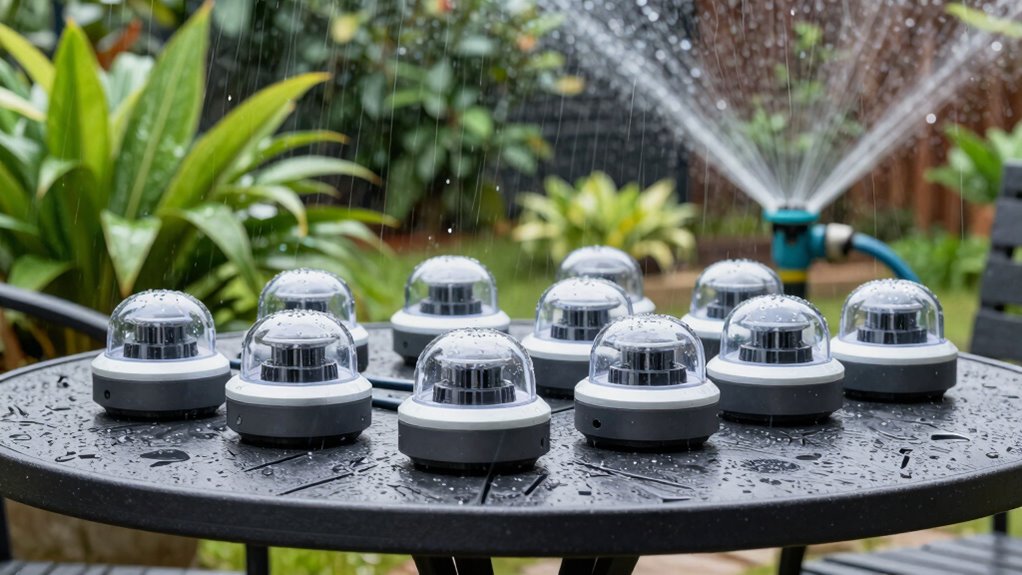

For anyone looking to optimize their irrigation system, rain sensors are essential tools that prevent overwatering by automatically shutting off sprinklers during rainy weather. The best overall pick is the Irritrol RFS1000 Wireless Rain/Freeze Sensor, known for its reliable wireless connection and durability. The Rain Bird CPRSDBEX Wired Rain Sensor stands out with its straightforward wiring and sturdy mounting options, while the Hunter Rain-Clik Wireless Sensor offers seamless wireless operation for convenience. Each option balances tradeoffs like installation complexity, compatibility, and cost. Keep reading for a detailed breakdown of these sensors to find the perfect fit for your irrigation needs.

Prime made for students and young adults
- Fast, free delivery for dorm and study essentials
- Prime Video and Amazon Music included
- Member-only deals
Key Takeaways
- Wireless sensors generally offer easier installation but may come at a higher price than wired options.
- Compatibility with existing irrigation controllers is critical to avoid additional costs or setup issues.
- Durability and weather resistance vary; investing in models with sturdy housing can extend sensor lifespan.
- Features like freeze sensing and rain hold time can improve water savings but add complexity and cost.
- Wired sensors tend to be more reliable in certain environments but require more installation effort.
| Irritrol RFS1000 Wireless Rain/Freeze Sensor |  | Best Overall Wireless Rain Sensor | Communication: Wireless | Mounting options: Gutter bracket and conduit adapter | Technology: Wireless with signal strength indicator | VIEW ON AMAZON | See Our Full Breakdown |
| Rain Bird CPRSDBEX Wired Rain Sensor with Mounting Bracket and Wire |  | Best Value Wired Rain Sensor | Rainfall Adjustment Range: 1/8″ to 3/4″ | Extension Wire Length: 25 feet | Material: UV-resistant body, aluminum bracket | VIEW ON AMAZON | See Our Full Breakdown |
| Orbit Rain and Freeze Sensor for Sprinkler Controllers |  | Best for Multi-Function Rain and Freeze Detection | Compatibility: Orbit, Hydro-Rain, and others | Sensor Type: Rain and freeze | Material: Weather-resistant | VIEW ON AMAZON | See Our Full Breakdown |
| Hunter Sprinkler Rain-Click Rain Sensor Irrigation Control – Hardwired |  | Best Hardwired Rain Sensor | Technology: Quick Response | Mounting options: Eave, wall, fence, gutter | Power: Hardwired | VIEW ON AMAZON | See Our Full Breakdown |
| Rain Bird RSD Rain Sensor |  | Best Adjustability and Durability | Rainfall Settings: 1/8 inch to 3/4 inch | Extension Wire Length: 25 feet | Material: UV-resistant polymer | VIEW ON AMAZON | See Our Full Breakdown |
| Hunter Sprinkler Mini-Click Rain Sensor |  | Best for Easy Installation and Basic Rain Detection | Installation Type: Hardwired | Rain Detection: Pre-set level | Adjustable Threshold: No | VIEW ON AMAZON | See Our Full Breakdown |
| Rainbird Wireless Rain and Freeze Sensor System with Controller Interface and Sensor |  | Best for Customization and Wireless Control | Wireless: Yes | Rainfall Adjustment: 1/8 to 1/2 inch | Temperature Adjustment: 33°F – 41°F | VIEW ON AMAZON | See Our Full Breakdown |
| Rain Bird WR2RFC48 Rain/Freeze Sensor Combo with 48-Hour Hold |  | Best for Water Savings and System Integration | Model: WR2RFC48 | Type: Rain/Freeze Sensor Combo | Hold Time: 48 hours | VIEW ON AMAZON | See Our Full Breakdown |
| Irritrol RS1000 Wireless Rain Sensor |  | Best for Reliable Wireless Connectivity During Power Outages | Communication: Wireless | Mounting Options: Gutter bracket, conduit adapter | Power: Requires no special tools | VIEW ON AMAZON | See Our Full Breakdown |
| Rain Bird WR2-RFC Wireless Rain/Freeze Sensor Complete Kit |  | Best for Easy Installation and Weather Protection | Distance between Mounting Holes: 6.25 inches | Includes: Rain and freeze sensor | Mounting Hardware: Sold separately | VIEW ON AMAZON | See Our Full Breakdown |
| Hunter Rain-Clik Wireless Rain/Freeze Sensor for Sprinkler Systems |  | Best Overall for Ease and Flexibility | Compatibility: Most standard sprinkler controllers | Mounting options: Gutter, wall, fence, or eave | Temperature threshold: 37°F | VIEW ON AMAZON | See Our Full Breakdown |
| Rain Bird RSD-BEX Rain Sensor with Aluminum Latching Bracket and Extension Wire |  | Best for Durability and Precise Rain Detection | Rainfall detection: Hydroscopic discs | Adjustable settings: Multiple rainfall settings | Construction: High-grade UV resistant polymer | VIEW ON AMAZON | See Our Full Breakdown |
| rain sensors for irrigation system | Compatibility |
|---|---|
| Irritrol RFS1000 Wireless Rain | — |
| Rain Bird CPRSDBEX Wired Rain | — |
| Orbit Rain and Freeze Sensor f | Orbit, Hydro-Rain, and others |
| Hunter Sprinkler Rain-Click Ra | — |
| Rain Bird RSD Rain Sensor | 24VAC systems |
| Hunter Sprinkler Mini-Click Ra | Universal |
| Rainbird Wireless Rain and Fre | Most 24VAC controllers except ESP series |
| Rain Bird WR2RFC48 Rain/Freeze | Rain Bird systems |
| Irritrol RS1000 Wireless Rain | — |
| Rain Bird WR2-RFC Wireless Rai | — |
| Hunter Rain-Clik Wireless Rain | Most standard sprinkler controllers |
| Rain Bird RSD-BEX Rain Sensor | — |
More Details on Our Top Picks
Irritrol RFS1000 Wireless Rain/Freeze Sensor
The Irritrol RFS1000 stands out as the most reliable wireless option, thanks to its patented technology that maintains communication even during power outages. Its versatile mounting options and signal strength indicator make installation straightforward, especially compared to wired models like the Rain Bird CPRSDBEX. The main tradeoff is that it requires a compatible controller and could face interference issues with wireless signals. This sensor is ideal for those seeking wireless flexibility and reliability in a rain sensor, especially in environments prone to power outages.
Pros:- Reliable wireless communication during power outages
- Multiple mounting options for flexible installation
- Signal strength indicator for easy setup
Cons:- Requires a compatible controller to work
- Wireless signals may be affected by interference
Best for: Homeowners needing a dependable wireless sensor compatible with a variety of irrigation controllers
Not ideal for: Users with incompatible controllers or those in highly interference-prone environments
- Communication:Wireless
- Mounting options:Gutter bracket and conduit adapter
- Technology:Wireless with signal strength indicator
- Application:Rain and freeze detection
Our verdict“This is the best choice for those wanting a dependable, wireless rain and freeze sensor with flexible mounting options.”
Rain Bird CPRSDBEX Wired Rain Sensor with Mounting Bracket and Wire
The Rain Bird CPRSDBEX offers a straightforward, wired solution that effectively shuts off sprinklers during rain, with adjustable sensitivity for precise control. Unlike the wireless Irritrol RFS1000, this model relies on wired connections, which some may find more stable but less flexible during installation. Its UV-resistant construction and easy-to-use dial make it suitable for most outdoor settings, but it’s limited to rain sensing only. This sensor makes the most sense for users who prioritize cost-effective, wired reliability and don’t need freeze detection.
Pros:- Automatically conserves water during rain
- Adjustable rainfall sensitivity
- Durable, UV-resistant construction
Cons:- Requires compatible wiring and controllers
- Limited to rain sensing only
Best for: Budget-conscious homeowners or landscapers with wired irrigation systems
Not ideal for: Those who prefer wireless or need freeze detection functionality
- Rainfall Adjustment Range:1/8″ to 3/4″
- Extension Wire Length:25 feet
- Material:UV-resistant body, aluminum bracket
Our verdict“Ideal for budget-minded users seeking a simple, wired rain sensor for effective watering control.”
Orbit Rain and Freeze Sensor for Sprinkler Controllers
Compared with the Rain Bird CPRSDBEX, the Orbit Rain and Freeze Sensor detects both rainfall and low temperatures, offering broader protection for your system. Its weather-resistant wiring and adjustable thresholds make it adaptable to different climates, though it requires installation in an open outdoor area. Compatibility with major brands like Orbit and Hydro-Rain enhances versatility, but calibration can be necessary for optimal performance. This sensor is well-suited for users who want combined rain and freeze detection in a weather-resistant package.
Pros:- Detects both rain and cold temperatures to prevent overwatering or freezing
- Weather-resistant build for outdoor durability
- Adjustable thresholds for tailored operation
- Compatible with multiple major brands
Cons:- Requires outdoor installation in an open area
- Calibration may be needed for best results
Best for: Gardeners and landscapers needing dual rain and freeze protection with broad compatibility
Not ideal for: Users seeking a simple, single-function rain sensor or those with limited outdoor space
- Compatibility:Orbit, Hydro-Rain, and others
- Sensor Type:Rain and freeze
- Material:Weather-resistant
Our verdict“This sensor offers comprehensive rain and freeze detection for those seeking multi-function outdoor protection.”
Hunter Sprinkler Rain-Click Rain Sensor Irrigation Control – Hardwired
The Hunter Rain-Click employs Quick Response technology to shut off irrigation promptly when rain begins, similar in purpose to the Irritrol wireless sensor but with a more traditional hardwired setup. Its mounting flexibility allows placement on eaves, walls, fences, or gutters, making installation versatile. However, the need for hardwiring limits mobility and may complicate upgrades or relocations, unlike wireless options. This model suits users who prefer a wired connection for reliability and simplicity but do not need freeze detection.
Pros:- Automatically shuts off irrigation during rain
- Flexible mounting options
- Easy to install for wired systems
Cons:- Requires hardwiring, limiting placement flexibility
- Limited to rain sensing only
Best for: Homeowners or businesses with wired irrigation systems seeking a reliable rain sensor
Not ideal for: Those wanting wireless or combined rain and freeze detection
- Technology:Quick Response
- Mounting options:Eave, wall, fence, gutter
- Power:Hardwired
Our verdict“Ideal for wired system users who prioritize quick, reliable rain detection without wireless complexity.”
Rain Bird RSD Rain Sensor
The Rain Bird RSD provides a straightforward, adjustable rainfall setting from 1/8 to 3/4 inch, making it suitable for both residential and commercial systems. Unlike the wireless Irritrol RFS1000, it relies on a wired connection, which can be more stable but less flexible in installation. Its durable UV-resistant body and 5-year warranty add value for those seeking long-term outdoor performance. However, it only supports 24VAC systems and does not include smart or wireless features, making it less suitable for those wanting modern automation.
Pros:- Adjustable rainfall settings for precise control
- Durable, UV-resistant construction
- Long 5-year warranty
Cons:- Limited to 24VAC systems
- No wireless or smart features
Best for: Commercial or residential users needing durable, adjustable wired rain sensors for 24VAC systems
Not ideal for: Homeowners seeking wireless or smart sensor options
- Rainfall Settings:1/8 inch to 3/4 inch
- Extension Wire Length:25 feet
- Material:UV-resistant polymer
- Compatibility:24VAC systems
- Warranty:5 years
Our verdict“This sensor is well-suited for users needing a durable, adjustable wired rain sensor for reliable, long-term operation.”
Hunter Sprinkler Mini-Click Rain Sensor
The Hunter Mini-Click Rain Sensor stands out for its straightforward installation, fitting easily onto most irrigation systems without complex wiring. Unlike the Rain Bird WR2-RFC, it doesn’t offer advanced wireless connectivity or adjustable rainfall thresholds, which limits customization. Its simplicity makes it ideal for users who want a reliable rain detection solution without fuss, but the lack of detailed compatibility info might leave some unsure about integration with specific controllers. This sensor automatically stops watering during rain and resumes once the storm passes, helping conserve water effortlessly. However, the limited adjustable settings mean it might not suit gardens requiring precise control or storm thresholds.
Pros:- Simple to install on any irrigation system
- Effectively stops watering during rain
- Resumes irrigation automatically after rain stops
Cons:- Limited information on adjustable rain threshold
- No details on specific controller compatibility
Best for: Homeowners seeking a quick, plug-and-play rain sensor for basic irrigation control
Not ideal for: Advanced users needing detailed customization or integration with smart controllers
- Installation Type:Hardwired
- Rain Detection:Pre-set level
- Adjustable Threshold:No
- Compatibility:Universal
- Power:Mechanical
- Size:Compact
Our verdict“This sensor is best suited for users who want a straightforward, no-fuss rain sensor that works right out of the box.”
Rainbird Wireless Rain and Freeze Sensor System with Controller Interface and Sensor
The Rainbird Wireless Rain and Freeze Sensor System offers flexible, wireless operation with adjustable rainfall and temperature thresholds, making it a step up from the Hunter Mini-Click for those who want more control. Its icon-driven interface simplifies programming, and the enhanced antenna ensures reliable signal performance compared to less sophisticated wireless options. Unlike the Rain Bird WR2RFC48, it supports a broader range of controllers, including some from competitors, increasing its versatility. Still, it doesn’t work with Rain Bird’s ESP controllers, which could be a drawback for users invested in that ecosystem. This makes it ideal for tech-savvy homeowners who want detailed control over watering schedules based on real-time weather changes.
Pros:- Wireless operation with reliable signal
- Adjustable rainfall (1/8 to 1/2 inch) and temperature (33°F to 41°F)
- Easy icon-driven programming interface
- Compatible with various 24VAC controllers
Cons:- Not compatible with Rain Bird ESP-SMT or ESP-SMTe controllers
- Requires setup of wireless connection and antennas
Best for: Gardeners or homeowners with compatible controllers seeking customizable wireless rain and freeze control
Not ideal for: Users with Rain Bird ESP-SMT or ESP-SMTe controllers or those preferring wired sensors
- Wireless:Yes
- Rainfall Adjustment:1/8 to 1/2 inch
- Temperature Adjustment:33°F – 41°F
- Compatibility:Most 24VAC controllers except ESP series
- Power:Wireless
- Interface:Icon-driven
Our verdict“Ideal for users wanting a customizable wireless rain and freeze sensor that integrates seamlessly with a variety of controllers.”
Rain Bird WR2RFC48 Rain/Freeze Sensor Combo with 48-Hour Hold
The Rain Bird WR2RFC48 delivers reliable rain and freeze detection with a 48-hour hold feature, making it a solid choice for conserving water up to 35%. Its wireless design simplifies installation compared to wired sensors like the Hunter Rain-Click, but it requires compatible systems to function properly. The 48-hour hold helps prevent unnecessary watering after storms, which is helpful for areas with frequent rain. While its straightforward interface makes programming easy, the need for separate mounting hardware and the panel being sold separately could be inconvenient. This pick is best for users who want a dependable sensor that reduces water waste without complex setup, though it’s less suited for those with incompatible or non-Rain Bird systems.
Pros:- Prevents irrigation after rain and freezing temperatures
- Helps save up to 35% water
- Simple to program and operate
Cons:- Requires compatible irrigation system
- Mounting hardware sold separately
Best for: Homeowners or property managers aiming for reliable, water-saving rain/freeze detection
Not ideal for: Those with non-compatible irrigation controllers or seeking an all-in-one integrated system
- Model:WR2RFC48
- Type:Rain/Freeze Sensor Combo
- Hold Time:48 hours
- Water Savings:Up to 35%
- Wireless:Yes
- Compatibility:Rain Bird systems
Our verdict“Suitable for those prioritizing water conservation with a dependable, easy-to-use rain/freeze sensor.”
Irritrol RS1000 Wireless Rain Sensor
The Irritrol RS1000 excels in maintaining communication between its transmitter and receiver, even during power outages, setting it apart from many wireless sensors that lose signal or functionality. Its versatile mounting options—gutter brackets and conduit adapters—offer flexibility, making it suitable for various installation sites. Compared to the Rain Bird WR2RFC48, it emphasizes continuous communication rather than environmental sensing specifics, which could be a limitation if precise rain or freeze detection is needed. The signal strength indicator simplifies setup, but the lack of detailed sensor range info might cause uncertainty for larger properties. This sensor fits well for users who need consistent wireless performance in areas prone to power issues.
Pros:- Maintains communication during power outages
- Flexible mounting options
- Signal strength indicator for proper setup
Cons:- Limited details on sensor range
- No specific environmental sensing features
Best for: Property managers or homeowners requiring reliable wireless communication regardless of power conditions
Not ideal for: Users seeking integrated rain and freeze detection rather than just wireless communication robustness
- Communication:Wireless
- Mounting Options:Gutter bracket, conduit adapter
- Power:Requires no special tools
- Signal:Wireless
- Range:Limited info
Our verdict“This sensor is ideal for those needing robust wireless communication that stays active through outages, mainly for system reliability rather than environmental sensing.”
Rain Bird WR2-RFC Wireless Rain/Freeze Sensor Complete Kit
The Rain Bird WR2-RFC kit provides a straightforward, wireless solution for rain and freeze detection, similar to the Rainbird system but with a focus on ease of setup. Its reliable wireless signal and simple sensor design make it a good choice for quick installations, especially since mounting hardware and the panel are sold separately, which could add to setup time and cost. Compared to the Rain Bird WR2RFC48, this kit may appeal to those needing a complete solution with minimal fuss, but the separate hardware may require additional shopping. It’s best for users who want reliable weather protection without complex wiring or system alterations, though it’s less suited for those seeking an all-in-one integrated device.
Pros:- Easy to install individually
- Reliable wireless communication
- Protects irrigation from weather damage
Cons:- Mounting hardware sold separately
- Panel sold separately
Best for: Homeowners seeking a quick, reliable wireless rain/freeze sensor kit for basic weather protection
Not ideal for: Users wanting an all-in-one sensor with mounting hardware included or integrated system features
- Distance between Mounting Holes:6.25 inches
- Includes:Rain and freeze sensor
- Mounting Hardware:Sold separately
- Panel:Sold separately
- Wireless:Yes
- Installation:Easy
Our verdict“Perfect for users looking for a simple, effective wireless rain/freeze sensor kit that can be installed quickly.”
Hunter Rain-Clik Wireless Rain/Freeze Sensor for Sprinkler Systems
The Hunter Rain-Clik stands out for its wireless design and ease of installation, making it ideal for homeowners who want a straightforward, maintenance-free rain and freeze sensor. Unlike the Rain Bird RSD-BEX, which relies on a wired connection and offers durable UV-resistant construction, the Hunter model provides the convenience of wireless setup and adjustable reset timing, allowing for customization based on climate conditions. The tradeoff is the need for periodic battery replacements, which could be a hassle over time. Its universal compatibility with most sprinkler controllers makes it versatile, but this also means it’s limited to systems that support wireless sensors. If you prefer a quick install and flexibility, this sensor delivers, though it may require calibration for best results.
Pros:- Wireless design eliminates wiring complexity
- Easy, tool-free installation on gutters or walls
- Adjustable reset timing for climate-specific needs
- Universal compatibility with most sprinkler controllers
Cons:- Battery replacement needed over time
- Limited to compatible sprinkler systems
- Calibration may be necessary for optimal performance
Best for: Homeowners seeking an easy-to-install, wireless rain and freeze sensor that requires minimal maintenance
Not ideal for: Gardeners with wired systems or those preferring permanent, hardwired sensors for consistent reliability
- Compatibility:Most standard sprinkler controllers
- Mounting options:Gutter, wall, fence, or eave
- Temperature threshold:37°F
- Wireless:Yes
- Battery powered:Yes
- Adjustable reset vent:Yes
Our verdict“This sensor is best suited for homeowners wanting a flexible, easy-to-use wireless rain and freeze solution without extensive wiring.”
Rain Bird RSD-BEX Rain Sensor with Aluminum Latching Bracket and Extension Wire
The Rain Bird RSD-BEX is designed for durability and precise rainfall detection, making it a solid choice for those who prefer a wired sensor with customizable settings. Compared to the Hunter Rain-Clik, which offers wireless convenience, the RSD-BEX’s high-grade UV-resistant polymer construction and UL/cUL safety certifications make it more suitable for long-term outdoor use without worry about battery replacements. Its adjustable rainfall settings provide tailored control, but the lack of detailed information on the detection range means users must rely on the settings to match their local conditions. The included mounting bracket and extension wire simplify installation, yet the absence of specific detection range data could be a concern for users needing precise measurement. This pick makes the most sense for those prioritizing durability and fixed installation control.
Pros:- Adjustable rainfall detection settings
- High-grade UV-resistant polymer construction
- Includes mounting bracket and extension wire
- UL and cUL listed for safety and reliability
Cons:- Limited details on installation process
- No specific rainfall detection range provided
- Wired connection may limit placement flexibility
Best for: Property managers or serious gardeners who want a durable, wired rain sensor with customizable rainfall thresholds
Not ideal for: Homeowners seeking wireless, plug-and-play options or those with frequent system adjustments
- Rainfall detection:Hydroscopic discs
- Adjustable settings:Multiple rainfall settings
- Construction:High-grade UV resistant polymer
- Includes:Aluminum latching bracket, extension wire
- Certifications:UL and cUL listed
- Mounting:Bracket included
Our verdict“This sensor suits users who need a durable, weather-resistant wired sensor with customizable rainfall thresholds for precise irrigation control.”

How We Picked
The products in this roundup were selected based on their performance, ease of installation, build quality, and compatibility with a wide range of irrigation controllers. We prioritized sensors that offer reliable rain detection, durable construction, and user-friendly features. Cost was also a factor, ensuring options provide good value for different budgets. To rank these models, we considered customer reviews, brand reputation, and the versatility of installation options, balancing affordability with advanced features for various gardening needs.Factors to Consider When Choosing Rain Sensors For Irrigation Systems
Choosing the right rain sensor involves more than just picking the most popular model. Important factors include compatibility with your existing irrigation system, installation type, and specific features like freeze detection or rain hold time. Considering these factors can help you avoid common pitfalls, such as sensors that are incompatible or overly complex for your setup. A well-chosen sensor can save water, reduce runoff, and keep your garden healthy, but selecting the wrong one might lead to unnecessary costs or system malfunctions.Compatibility with Your Irrigation Controller
Not all rain sensors work with every irrigation controller, so verifying compatibility is essential. Some sensors are designed for specific brands or models, and using an incompatible sensor can result in malfunction or no response at all. Wireless sensors often require compatible receivers or modules, while wired sensors need proper wiring connections. Ensuring compatibility prevents frustration and costly returns, making it worthwhile to double-check your controller’s specifications before purchasing.
Installation Type and Ease
Deciding between wired and wireless sensors affects installation effort and flexibility. Wired sensors typically require more effort to install, especially if running wires through walls or underground, but they often provide a more consistent connection. Wireless options are easier to set up and relocate but depend on battery life and signal strength. Consider your physical setup and comfort with wiring when choosing, as a difficult installation can discourage regular maintenance.
Durability and Weather Resistance
Rain sensors are exposed to the elements, so choosing a model with robust weatherproofing is vital. Look for sensors with high IP ratings, corrosion-resistant materials, and sturdy mounting brackets. Sensors that fail prematurely due to weather damage can lead to unnecessary replacements and water waste. Investing in models with proven durability can provide long-term reliability and peace of mind, especially in harsh climates.
Additional Features and Water Savings
Features like rain hold time, freeze detection, and manual override can enhance water efficiency and convenience. For instance, a rain hold timer prevents the sensor from triggering during short-term rain, while freeze sensors help avoid damage in cold climates. However, more features typically come at a higher price and can complicate setup. Determine which features align with your climate and watering needs to maximize value without overpaying.
Cost and Value
Pricing varies widely—from budget-friendly wired sensors to premium wireless models with advanced features. While cheaper options may suffice for basic needs, investing in a higher-quality sensor can improve reliability and longevity. Balance your budget with the sensor’s features, durability, and compatibility. Remember, a more expensive sensor that fits your system well can save money in the long run by reducing water waste and maintenance costs.
Frequently Asked Questions
Can I install a wireless rain sensor on an existing irrigation system?
Yes, many wireless rain sensors are designed to be compatible with a variety of irrigation controllers, making installation straightforward. However, it’s important to verify that your controller supports wireless sensors or has the appropriate receiver modules. Wireless sensors typically rely on batteries and radio signals, so ensure they are placed within effective range and are weatherproof. Proper installation ensures reliable operation and maximizes water savings.
How often do rain sensors need battery replacements?
The battery life of wireless rain sensors varies depending on usage and model, typically ranging from 1 to 3 years. Some sensors have low-battery indicators, helping you plan replacements before failure. Choosing models with long-lasting batteries or easy access to battery compartments can reduce maintenance hassle. Regularly checking the sensor’s status ensures consistent operation and prevents unintended watering.
Are wired rain sensors more reliable than wireless ones?
Wired rain sensors often provide a more consistent connection since they’re directly wired to the controller, reducing concerns about interference or signal loss. However, they can be more challenging to install, especially in complex landscapes. Wireless sensors offer convenience and flexibility but depend on batteries and radio signals, which can sometimes fail. Your choice should balance installation complexity with the need for reliable, consistent performance.
What features should I look for in a rain sensor for cold climates?
In cold climates, freeze detection becomes a valuable feature, preventing watering during frosty conditions that could damage your system or plants. Sensors with a rain hold timer can also prevent unnecessary watering once rain has been detected, even if the weather clears later. Durability against snow and ice, along with weatherproof housing, extends the sensor’s lifespan in harsh conditions. Prioritizing these features helps protect your investment and conserves water in cold seasons.
How do I know if a rain sensor is compatible with my irrigation controller?
To determine compatibility, check your irrigation controller’s manual for supported sensor types—wired or wireless—and specific connection requirements. Most controllers specify voltage, connector type, and communication protocols. If using a wireless sensor, verify whether your controller has a compatible receiver or built-in compatibility. When in doubt, consulting the manufacturer’s compatibility list or customer support can prevent purchasing a model that won’t work seamlessly with your system.
Conclusion
For general homeowners seeking a straightforward, reliable solution, the Irritrol RFS1000 Wireless Rain/Freeze Sensor offers excellent performance with minimal fuss. Those prioritizing value and ease of installation may find the Rain Bird CPRSDBEX Wired Rain Sensor to be a smart choice. For users in colder climates, the Rain Bird WR2RFC48 Rain/Freeze Sensor provides added freeze protection. Beginners or DIY enthusiasts should lean toward wireless models for simple setup, while experienced landscapers might prefer wired options for their reliability. Ultimately, matching the sensor to your system’s needs and climate will ensure consistent watering savings and garden health.
As an affiliate, we earn on qualifying purchases.Fall Picks
fall essentials