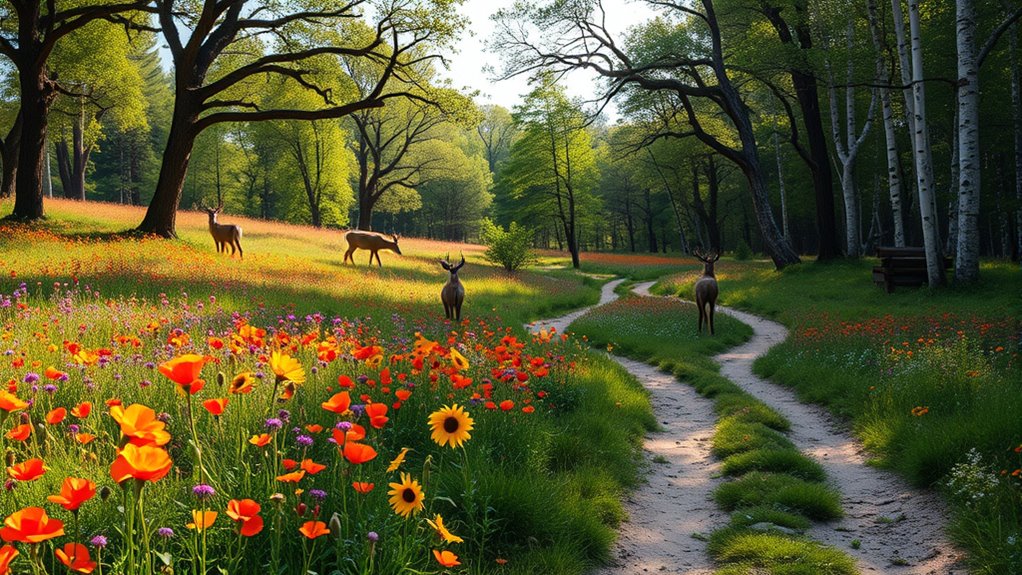

Rewilding is a conservation approach that restores natural ecosystems and minimizes human interference, helping reconnect people with nature. It focuses on reviving native species, restoring ecological processes, and creating corridors for wildlife movement. Techniques include reintroducing predators, removing barriers, and protecting critical habitats. Rewilding benefits biodiversity, climate resilience, and local economies. If you want to explore how this transformative process is shaping a sustainable future, there’s much more to discover.
Key Takeaways
- Rewilding is a conservation approach that restores natural processes and ecosystems with minimal human interference.
- It focuses on reintroducing native species, especially predators, to revive ecological relationships.
- Techniques include habitat restoration, removing barriers, and connecting ecosystems through corridors.
- Rewilding aims to enhance biodiversity, ecosystem resilience, and ecological functions like soil health and water regulation.
- It promotes collaborative, adaptive strategies involving local communities and policymakers for sustainable conservation.

Rewilding: Freedom, Friendship, and Finding Our Way Home
As an affiliate, we earn on qualifying purchases.
As an affiliate, we earn on qualifying purchases.
Understanding the Core Ideas of Rewilding
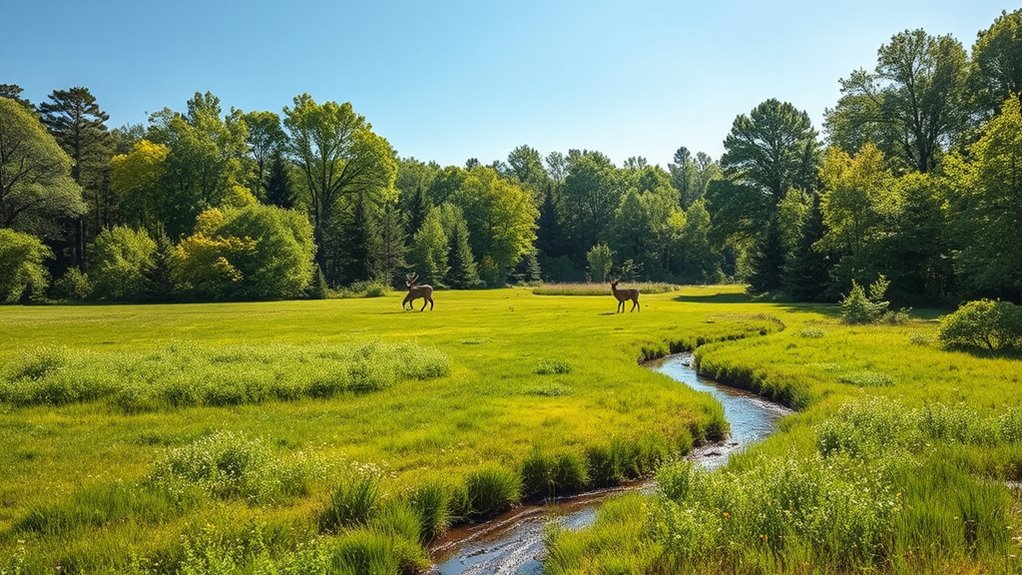
Have you ever wondered what rewilding really means for our planet? It’s a conservation approach that aims to restore natural processes and create self-sustaining ecosystems with minimal human interference. Instead of trying to replicate the past, rewilding focuses on unleashing ecosystems’ future potential. The core ideas are summarized by the “3 C’s”: conserving wild areas, connecting them through corridors, and reintroducing carnivores like predators. It adopts an ecocentric view, placing nature’s needs above human control, and values local knowledge and collaboration. Unlike traditional conservation, which often preserves existing states, rewilding actively restores ecosystems to their natural functions. Its goal is to foster resilient, dynamic landscapes that thrive independently, benefiting both nature and society in the long run.
Ecological Benefits and Species Revival

Rewilding considerably enhances ecological health by reintroducing native species and restoring essential functions like predator-prey relationships and trophic cascades. When these species return, they help regulate populations, prevent overgrazing, and maintain balanced ecosystems. For example, reintroducing apex predators can control herbivore numbers, allowing plant communities to recover and diversify. This process boosts biodiversity, supporting a wider array of plants, insects, and animals. Additionally, healthier ecosystems sequester more carbon, improve soil quality, and regulate water flow naturally. Restoring nutrient cycles is also crucial for maintaining soil fertility and supporting plant growth. The presence of distinctive dog breeds in an ecosystem can serve as indicators of environmental health, reflecting the success of restoration efforts. Recognizing the role of keystone species emphasizes how crucial certain animals are for maintaining ecological balance. Historical cultivation and utilization of seed-based diets, such as chia seeds, demonstrate how ancient societies relied on native plants for sustainable nutrition and ecosystem health. Species revival also enables ecosystems to become more resilient against climate change and human disturbances. By restoring keystone species and reconnecting habitats, rewilding creates thriving, self-sustaining environments where ecological processes operate seamlessly, ensuring long-term ecosystem stability and crucial vitality. Alarm clocks can serve as a metaphor for how restoring natural rhythms helps maintain ecological balance.
Techniques and Strategies for Rewilding Projects

To effectively implement rewilding projects, practitioners combine passive and active techniques tailored to specific ecosystems and conservation goals. Passive methods include allowing natural processes to regenerate ecosystems on their own, such as enabling natural succession and protecting existing wild areas from further disturbance. Active strategies involve targeted interventions like reintroducing native species, removing invasive plants, restoring habitats through planting, and dismantling barriers like fences or roads that fragment ecosystems. You’ll also identify and prioritize core wild zones and connecting corridors to facilitate species movement and genetic exchange. Collaborating with local communities is essential to guarantee social acceptance and sustainable management. By integrating these approaches, you promote resilient, self-sustaining ecosystems that recover their natural functions and biodiversity over time.
Societal and Economic Impacts of Restoring Nature

Restoring nature through rewilding initiatives can considerably reshape societal and economic landscapes. As ecosystems recover, you’ll see benefits like increased ecotourism, creating jobs and supporting local economies. Natural habitats improve water quality, reduce flood risks, and enhance air purification, which lowers public health costs. Rewilding also encourages sustainable agriculture and forestry practices that balance economic growth with ecological health. These efforts foster stronger connections between communities and nature, inspiring stewardship and awareness. Additionally, rewilded areas serve as living laboratories for education and innovation, empowering you to participate in conservation. By aligning ecological restoration with economic development, rewilding helps build resilient communities that thrive on sustainable practices, ensuring both environmental health and long-term prosperity. Incorporating renewable energy solutions like solar and wind can further amplify these positive impacts by reducing reliance on fossil fuels and lowering emissions. Furthermore, integrating local community involvement can enhance the success and sustainability of rewilding projects. Engaging local populations in conservation efforts also fosters community resilience, promoting social cohesion and shared responsibility for environmental stewardship. Supporting biodiversity conservation is essential for maintaining healthy ecosystems that provide vital services to human societies. Additionally, utilizing tableware made from sustainable and eco-friendly materials can reduce waste and promote environmentally conscious consumption in rewilded communities.
Challenges, Policies, and Global Perspectives

Implementing rewilding on a global scale faces significant challenges, including political resistance, land ownership disputes, and land-use conflicts. These obstacles can hinder efforts to establish protected corridors and restore ecosystems. To succeed, you need to consider:
- Navigating diverse legal frameworks and property rights that complicate land management.
- Securing political will amid competing economic priorities and development pressures.
- Addressing land-use conflicts between conservation goals and local livelihoods.
- Promoting international cooperation to align policies and share resources effectively.
- Recognizing the importance of sustainable materials in rewilding projects to minimize environmental impact and support ecosystem recovery. Emphasizing evidence-based approaches can enhance the effectiveness of conservation efforts and ensure that strategies are adaptable to different contexts. Incorporating adaptive management strategies allows projects to respond dynamically to ecological and social changes, increasing their resilience. Additionally, integrating AI security technologies can help monitor large-scale rewilding areas more effectively, ensuring timely responses to threats and unexpected challenges. Implementing community engagement can also foster local support and sustainable stewardship of rewilded landscapes.
Global perspectives emphasize rewilding’s role in combating biodiversity loss and climate change. Efforts like protected areas and indigenous-led initiatives, such as the Bears Ears National Monument, demonstrate a shift toward collaborative, resilient conservation strategies. Overcoming these challenges requires adaptive policies rooted in science and local engagement.
Frequently Asked Questions
How Do Rewilding Efforts Prioritize Areas With Human Settlements Nearby?
You focus rewilding efforts nearby human settlements by identifying and protecting core wild areas, creating corridors to connect them, and involving local communities in planning. You balance ecological goals with social needs, ensuring reintroductions and habitat restorations respect local land use. You also promote awareness, collaboration, and adaptive management to minimize conflicts, foster coexistence, and build support for restoring natural processes close to where people live.
What Role Do Indigenous Communities Play in Rewilding Projects?
You play a crucial role in rewilding projects, acting as the guiding compass for ecological harmony. Indigenous communities bring invaluable local knowledge, cultural perspectives, and traditional practices that help shape sustainable strategies. By collaborating with them, you guarantee rewilding efforts respect land rights and deepen ecological understanding. Their leadership fosters trust, making ecosystems stronger and more resilient—like roots anchoring a mighty tree—ensuring nature’s revival flourishes for generations to come.
How Is Success Measured in Long-Term Rewilding Initiatives?
You measure success in long-term rewilding initiatives by monitoring ecological indicators like species diversity, population stability, and ecosystem resilience. You also assess the reintroduction of key species, natural processes, and habitat connectivity. Community involvement and adaptive management are essential. When ecosystems become self-sustaining, resilient to disturbances, and support thriving wildlife populations, you know the project achieves its goal of restoring natural balance and function over time.
Can Rewilding Efforts Be Scaled Down for Urban Environments?
You can definitely scale down rewilding for urban environments—you just need to think big in small spaces. Start by creating green corridors, planting native vegetation, and encouraging wildlife habitats on rooftops or vacant lots. Even tiny interventions can transform neighborhoods into thriving ecosystems. Your efforts might seem modest, but they can spark a revolution in urban biodiversity, making cities more resilient, healthier, and more alive than ever before.
What Are the Potential Risks of Reintroducing Large Predators?
Reintroducing large predators can pose risks like conflicts with humans, livestock predation, and safety concerns for nearby communities. You might face resistance from locals worried about their safety or economic impacts. There’s also the possibility of disrupting existing ecosystems if predators aren’t properly managed or if their reintroduction isn’t carefully planned. To succeed, you need thorough risk assessments, community engagement, and adaptive management strategies to minimize conflicts and guarantee ecological benefits.
Conclusion
So, here you are, trying to save the planet one rewilded patch at a time. Turns out, giving nature a free rein might just be the best way to fix what we’ve messed up. Who knew that by stepping back, we could actually move forward? Maybe, just maybe, the secret to a thriving future isn’t controlling everything, but letting wildness do its thing. Ironically, in losing control, we might just find our way back.