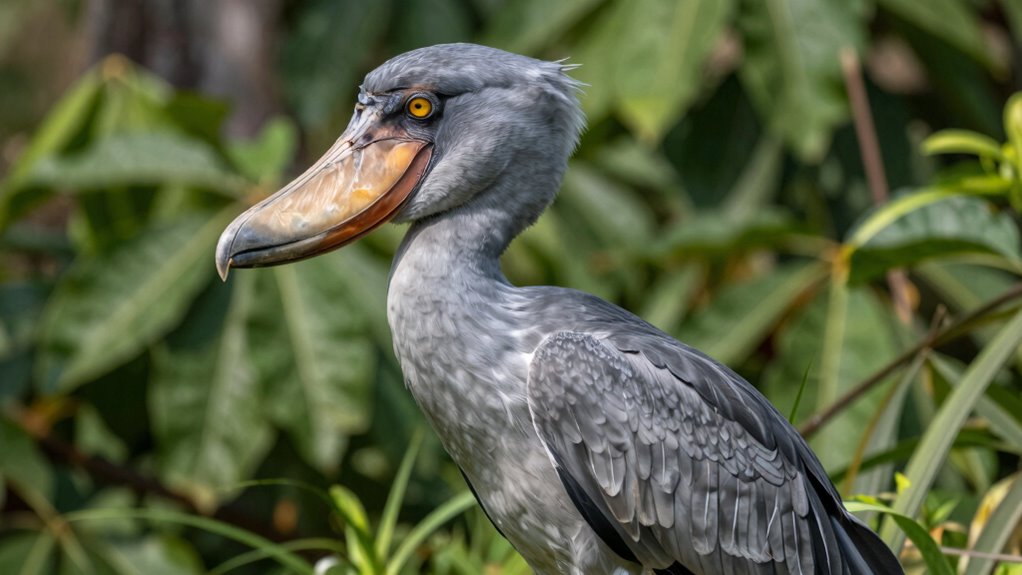

Meet the shoebill, a stunning bird that looks like a dinosaur come to life. With its massive, shoe-shaped bill and tall, imposing stance, it dominates wetland scenes in central Africa. Its prehistoric appearance is shaped by ancient habitats, and it hunts patiently by standing still and striking swiftly at fish and amphibians. These unique birds build secluded nests and produce deep calls that echo through the wetlands. Stay with us to uncover more about this incredible living relic.

Prime made for students and young adults
- Fast, free delivery for dorm and study essentials
- Prime Video and Amazon Music included
- Member-only deals
Key Takeaways
- The shoebill has a massive, shoe-shaped bill resembling a prehistoric creature, giving it a dinosaur-like appearance.
- It inhabits central Africa’s wetlands, thriving in ancient, undisturbed habitats rich in aquatic vegetation.
- Its patient hunting style involves standing motionless for long periods before striking quickly at prey.
- The bird’s imposing stature and dinosaur-like look have made it a popular meme among bird enthusiasts.
- As a living relic, the shoebill’s conservation is vital due to habitat loss and its unique evolutionary history.
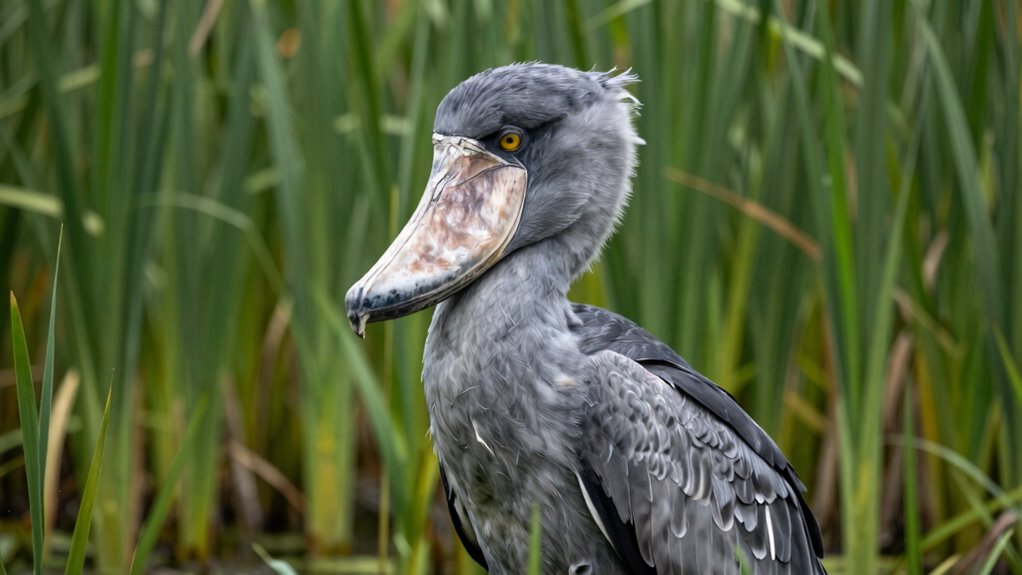
Have you ever seen a bird that looks like it stepped straight out of a fantasy world? That’s exactly what the shoebill offers. With its massive, shoe-shaped bill and imposing stature, it commands attention. This bird’s appearance is so striking that many compare it to a creature from prehistoric times. Its ancient habitats have shaped its distinctive features, giving it an aura of being a living relic. Found mainly in the swamps and wetlands of central Africa, particularly in countries like Uganda, South Sudan, and Zambia, the shoebill has thrived in environments that have remained relatively unchanged for thousands of years. These habitats are dense with papyrus and floating vegetation, providing the perfect cover for the bird to hunt and nest. You might imagine it lurking silently in the shadows, waiting patiently for the right moment to strike. Its ancient habitats have influenced its unique behaviors, making it a master of patience and stealth. Unlike many birds that chase their prey actively, the shoebill prefers a more calculated approach. It stands motionless for long periods, eyes fixed on the water, waiting for fish, amphibians, or even small crocodiles to come within reach. When the moment arrives, it strikes with astonishing speed, using its enormous bill to snatch its prey. Its unique behaviors don’t end with hunting; the shoebill also demonstrates fascinating nesting habits. It tends to choose tall, sturdy vegetation for building its nest, often in secluded spots where disturbances are minimal. During the breeding season, the bird’s deep, guttural calls echo through the wetlands, creating an eerie yet mesmerizing symphony. This vocalization is part of its distinctive behaviors, helping to establish territory and attract mates. Despite its prehistoric look, the shoebill is surprisingly calm and deliberate in its movements, embodying the essence of an ancient survivor. Its conservation status remains a concern, as habitat destruction threatens its survival, but efforts are underway to preserve these critical wetlands. Protecting these habitats is crucial for maintaining the species’ survival and ensuring future generations can witness this marvel. Additionally, awareness about habitat preservation is vital for safeguarding the shoebill’s future. The bird’s ability to adapt to its environment has been influenced by its ancient habitats, which have shaped both its physical characteristics and behavioral patterns. A dinosaur-like appearance adds to its mystique, captivating bird enthusiasts and nature lovers alike. When you observe the shoebill, you’re witnessing a living piece of natural history—an ancient creature that has adapted remarkably well to its environment. Its combination of ancient habitats and unique behaviors makes it one of nature’s most intriguing birds. Standing tall and silent in the water, it reminds us of a time when dinosaurs roamed the Earth, yet it continues to thrive in the wetlands where it has called home for centuries. The shoebill truly looks like a dinosaur meme come to life, a marvel that bridges the prehistoric past with the present. Its ancient habitats have helped shape its unique behaviors, making it a true living relic of natural history.
As an affiliate, we earn on qualifying purchases.
Frequently Asked Questions
Are Shoebills Endangered or Threatened Species?
Shoebills are considered vulnerable, but not yet endangered. You can help by supporting habitat preservation efforts, which are essential for their survival. Bird conservation initiatives focus on protecting wetlands where these unique birds live. By raising awareness and contributing to conservation programs, you play a key role in ensuring the shoebill’s future. Your actions can make a difference in maintaining healthy populations of this extraordinary, dinosaur-like bird.
How Long Do Shoebills Typically Live in the Wild?
In the wild, you can expect a shoebill to live around 35 years, much like a wise old sage of the wetlands. Their habitat in African swamps and marshes influences their longevity, where they exhibit patient, stalking behavior. These intriguing birds, with their prehistoric look, thrive by waiting silently for fish or frogs, much like a predator from ancient tales. Their lifespan reflects their resilience amidst the lush, challenging environment they call home.
What Is the Diet of a Shoebill Outside of Fish?
The shoebill diet mainly consists of fish, but it also preys on various other animals. You’ll find shoebill prey like amphibians, small crocodiles, and waterbirds, especially when fish are scarce. This bird uses its powerful beak to catch and tear apart its prey. Its hunting strategy involves patiently stalking in shallow waters, making it a versatile predator beyond just fish, showcasing its adaptability in different environments.
Can Shoebills Be Kept as Pets or in Captivity?
You can’t keep shoebills as pets easily because they require specific habitat conditions and have particular social behaviors. They need large, wetland-like environments with ample space to roam and hunt. Shoebills are generally solitary or prefer minimal social interaction, making captivity challenging. Their specialized diet and habitat needs mean they’re best suited for conservation centers or zoos where professionals can meet their complex requirements.
Do Shoebills Migrate or Stay in One Region Year-Round?
You’ll find shoebills typically staying in their habitat preferences, preferring the calm, marshy wetlands of central Africa year-round. Their migration patterns are minimal; they do not travel far or seasonally. Imagine them standing patiently in shallow waters, their large, shoe-shaped bills poised for fishing. Unlike many birds, they prefer a stable environment, making them mostly resident in a specific region, rarely venturing beyond their familiar wetlands.
Conclusion
As you marvel at the shoebill’s prehistoric look, remember it’s more than just a dinosaur in disguise. Imagine stumbling upon this bird in the wild, its massive beak reminiscent of a time when giants roamed the Earth. With only around 5,000 left in the wild, this regal creature reminds us that even ancient-looking species need our protection. Just like uncovering a lost treasure, discovering a shoebill sparks awe and a desire to preserve our planet’s history.
Fall Picks
fall essentials
As an affiliate, we earn on qualifying purchases.