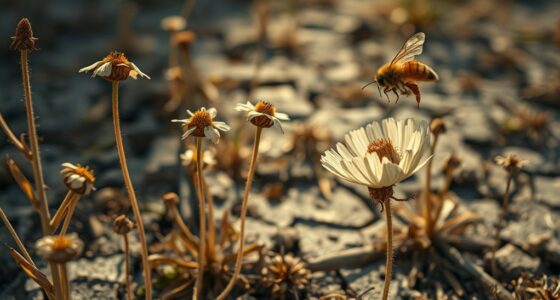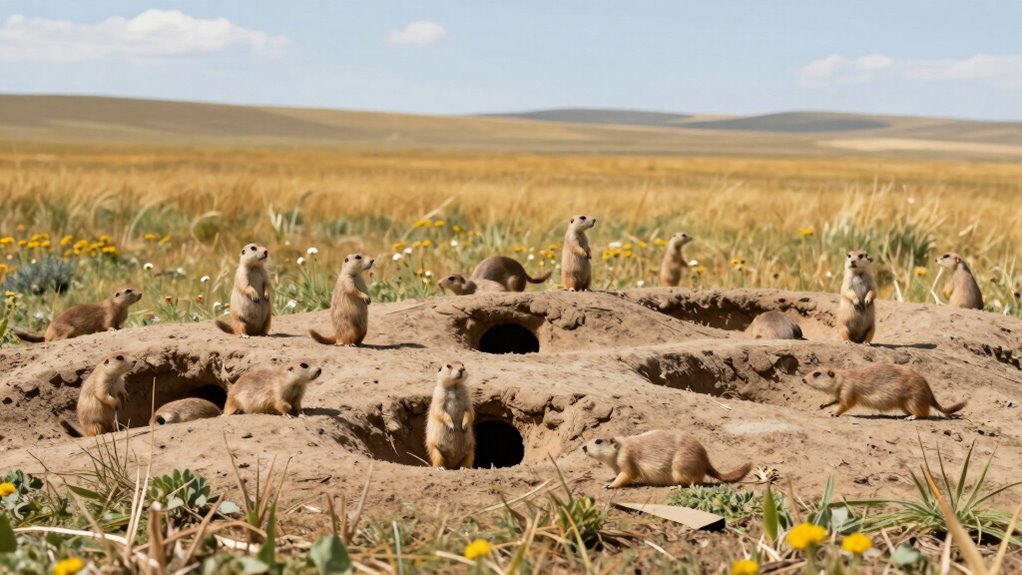

Prairie dogs are remarkable rodents that build complex underground cities known as colonies, shaping their environment in essential ways. Their intricate tunnel systems support soil health, prevent erosion, and create habitats for many species. These colonies support biodiversity by attracting predators, scavengers, and insects, forming key parts of the ecosystem. Their social behaviors and alarm calls help them survive predators like hawks and coyotes. To discover how these tiny engineers influence their landscape, keep exploring further.

Prime made for students and young adults
- Fast, free delivery for dorm and study essentials
- Prime Video and Amazon Music included
- Member-only deals
Key Takeaways
- Prairie dogs are social rodents that create extensive underground tunnel systems, forming complex colonies called “cities.”
- These colonies support biodiversity by providing habitats for various species like burrowing owls and insects.
- Prairie dog activities improve soil health through aeration and nutrient cycling, preventing erosion in arid landscapes.
- They serve as keystone species, influencing ecosystem dynamics and supporting predator-prey relationships.
- Alarm calls and social behaviors ensure colony safety and survival amidst predators like hawks and coyotes.

Prairie dog colonies are fascinating ecosystems that support a diverse array of wildlife and play an essential role in their environment. When you observe these bustling colonies, you’re witnessing a complex urban ecosystem where each animal has a part to play. These colonies aren’t just simple burrows; they’re vibrant communities that influence the landscape and the other species around them. As you explore, you’ll notice how prairie dogs create networks of tunnels, which serve as homes for themselves and as pathways for other creatures. This intricate underground system helps maintain soil health, aerating the earth and encouraging plant growth, which benefits the entire ecosystem.
One of the most interesting aspects of prairie dog colonies is their predator-prey dynamics. You might see hawks soaring overhead, eager to spot a prairie dog on the surface. These rodents are quick and alert, constantly watching for danger, which drives the predator-prey interactions that keep the ecosystem balanced. Predators like foxes, coyotes, and eagles rely on prairie dogs as a critical food source. In turn, prairie dogs have developed sharp warnings and alarm calls to alert their colony about approaching predators. These calls trigger rapid underground movement, which can make the difference between life and death. This constant vigilance and communication shape the social structure of the colony, illustrating how predator-prey relationships influence survival strategies and behaviors.
The presence of prairie dog colonies also attracts a variety of scavengers and secondary predators, expanding the urban ecosystem around them. You’ll find burrowing owls nesting in abandoned tunnels, and insects thriving in the disturbed soil. This interconnected web of life demonstrates the colony’s importance in supporting biodiversity. Their activity influences nutrient cycling, plant growth, and the populations of other animals, making prairie dog colonies keystones in their environment. Additionally, their role as ecosystem engineers highlights how their activities shape and sustain their surroundings. The soil aeration caused by their digging also contributes significantly to the health of arid landscapes. These activities can create microhabitats, which support a wide range of species and promote ecological resilience. Their burrowing behavior also helps prevent soil erosion, especially in dry, fragile regions.
Furthermore, prairie dogs’ burrows help prevent soil erosion, especially in arid regions where they are most active. As you walk through a prairie dog town, you’ll see how their activities create microhabitats that foster diverse plants and animals. This dynamic interplay between prairie dogs and their environment highlights their role as ecosystem engineers. Their colonies might seem like simple communities, but they’re essential hubs that sustain a wide range of species. Essentially, prairie dog colonies serve as miniature cities filled with complex predator-prey relationships and ecological functions that benefit the entire landscape.
As an affiliate, we earn on qualifying purchases.
Frequently Asked Questions
How Do Prairie Dogs Communicate With Each Other?
You’ll find prairie dogs communicate mainly through vocalizations and body language. They use distinct communication signals to alert others about predators or food, often varying based on the situation. Burrow acoustics play a significant role, as their calls travel through tunnels, helping the colony stay connected. When you observe their behavior, you’ll notice how these sounds and signals keep the colony safe and coordinated, showcasing their complex social structure.
What Predators Pose the Biggest Threat to Prairie Dog Colonies?
You should know that predators like hawks, foxes, and coyotes threaten prairie dog colonies the most. Urban expansion reduces their habitats, making them more vulnerable. Climate change also impacts their survival by altering food availability and increasing extreme weather, which can weaken colonies and make it easier for predators to hunt. Protecting prairie dogs involves managing habitat loss and addressing these environmental threats to keep their populations healthy.
How Long Do Prairie Dogs Typically Live in the Wild?
You’ll find that prairie dogs typically live around 3 to 5 years in the wild. Their burrow construction and complex social hierarchy help protect them from predators, but survival depends on these social structures. A strong social hierarchy allows them to coordinate defenses and share resources effectively. Despite their social strategies, environmental threats and predators still limit their lifespan, making their community bonds essential for their survival.
Do Prairie Dogs Migrate Between Colonies Seasonally?
No, prairie dogs generally don’t migrate between colonies seasonally. Their migration patterns are limited, as they tend to stay within their established territory year-round. Instead, they focus on seasonal movements within their colony to access resources like food and water. These movements help them adapt to seasonal changes, but they usually don’t travel far or relocate to different colonies. Your prairie dog remains mostly loyal to its home territory.
What Role Do Prairie Dogs Play in Their Ecosystem?
Imagine an unseen orchestra beneath the grasslands; prairie dogs play a crucial role in their ecosystem. You might not see it, but their extensive underground tunnels and burrow systems aerate the soil, promoting plant growth. They serve as prey for predators and create habitats for other species. By building these intricate colonies, prairie dogs help maintain a delicate balance, making them keystone players in their environment’s harmony.
Conclusion
You’ve just uncovered the astonishing world of prairie dog colonies, where these tiny architects build cities that rival human metropolises in complexity and scale. It’s almost unbelievable how these small rodents engineer underground labyrinths that could swallow entire cities whole, all while maintaining a bustling, vibrant community beneath the surface. Their engineering marvels make us humans look like amateurs—proof that even the tiniest creatures can create worlds far beyond what we can imagine, with ingenuity that seems almost superhuman.
Fall Picks
fall essentials
As an affiliate, we earn on qualifying purchases.