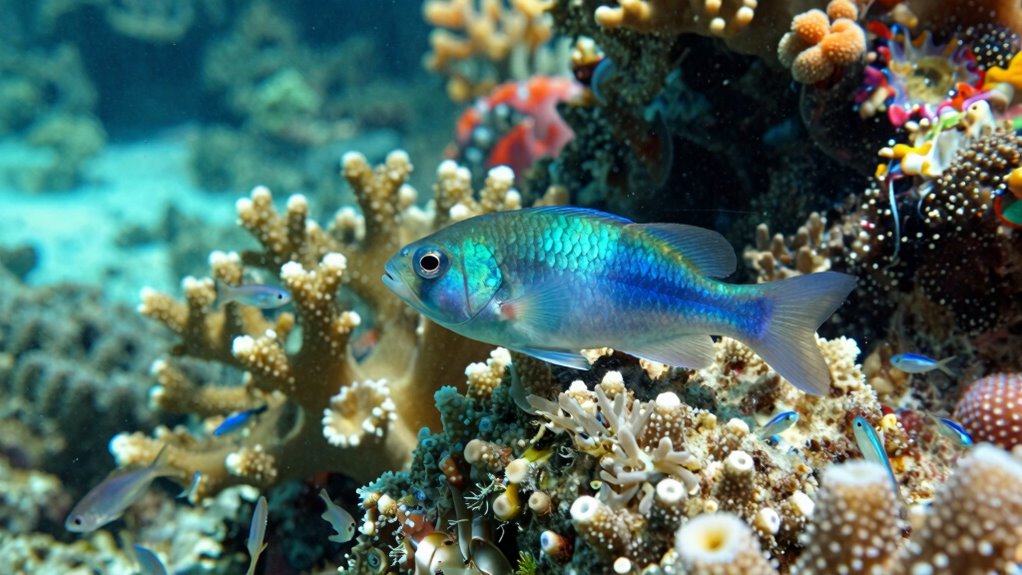

Cleaner wrasse are small fish that patrol coral reefs, offering a crucial cleaning service to larger fish. They eat parasites, dead skin, and mucus, helping keep their hosts healthy and reduce disease. Their bold behavior and ability to adapt to different environments make them indispensable for reef health. Protecting these natural cleaners supports the entire ecosystem and highlights the importance of marine conservation. Want to discover more about their fascinating role in maintaining ocean life?

Prime made for students and young adults
- Fast, free delivery for dorm and study essentials
- Prime Video and Amazon Music included
- Member-only deals
Key Takeaways
- Cleaner wrasse remove parasites, dead skin, and mucus from larger fish, forming mutualistic relationships.
- They establish dedicated cleaning stations and approach larger fish confidently for grooming.
- Their activity helps reduce disease and stress, supporting overall reef ecosystem health.
- Declines in cleaner wrasse populations can lead to increased parasites and coral reef decline.
- Protecting cleaner wrasse is vital for maintaining marine biodiversity and healthy reef environments.
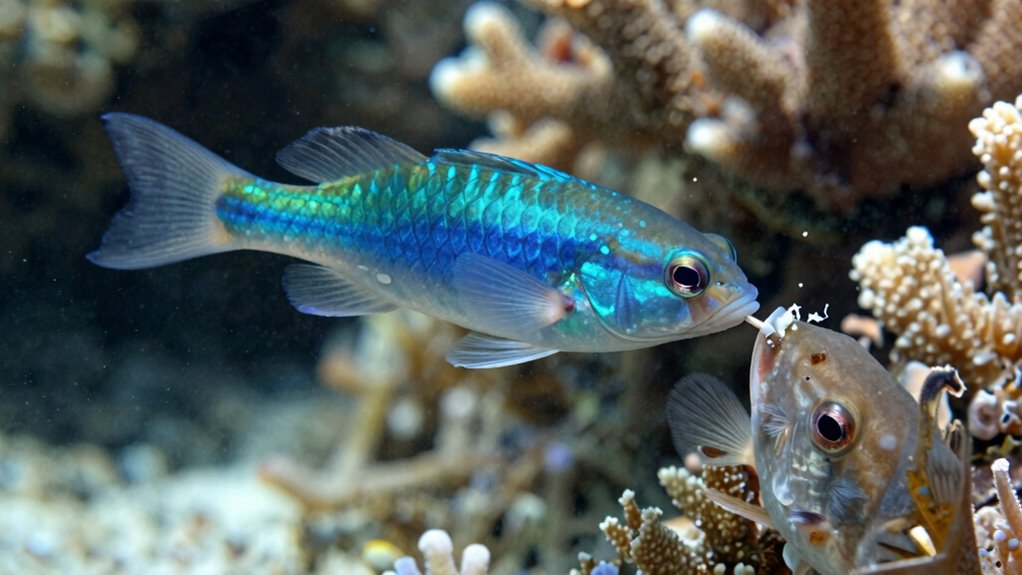
Have you ever wondered how cleaner wrasse manage to keep other fish healthy? These tiny fish play a crucial role in marine symbiosis, forming relationships that benefit both themselves and their hosts. Cleaner wrasse set themselves apart in the underwater world through their unique behavior: they remove parasites, dead skin, and mucus from larger fish. This mutualistic relationship isn’t just fascinating; it’s vital for maintaining the health of coral reef ecosystems. As you learn more about cleaner wrasse, you’ll see how they exemplify the delicate balance of marine life and contribute to fish conservation efforts.
In the bustling environment of coral reefs, cleaner wrasse act as natural health practitioners. They establish cleaning stations, where larger fish come to be nipped and groomed. This behavior isn’t random—cleaner wrasse often recognize specific signals from their clients, such as particular movements or coloration, indicating readiness for cleaning. During these interactions, the cleaner wrasse consume harmful parasites and dead tissue, which helps reduce disease and stress in their host fish. This symbiotic bond enhances the survival chances of many reef species, promoting overall biodiversity. Their role underscores the importance of marine symbiosis, demonstrating how interconnected life forms sustain ecosystem stability.
You might think such a tiny fish couldn’t make a big impact, but cleaner wrasse are essential agents in fish conservation. By controlling parasite populations, they help larger fish stay healthy and thrive, which in turn supports the complex food webs of coral reefs. Protecting cleaner wrasse populations becomes a priority because their decline could lead to an increase in parasites, spreading disease among fish populations. This could threaten entire reef communities, highlighting how small species like the cleaner wrasse have outsized effects on marine health. Efforts to preserve their habitats and prevent overfishing are key strategies in global fish conservation initiatives, ensuring these natural cleaners continue their vital work.
You also might notice that cleaner wrasse are surprisingly bold. They often approach larger, sometimes intimidating fish with confidence, knowing their mutualistic role is valued. Their behavior demonstrates a sophisticated understanding of their environment and relationships. This adaptability has helped them survive in diverse reef habitats, but it also makes them vulnerable to habitat destruction and pollution. Protecting the cleaner wrasse and their environment isn’t just about saving a single species; it’s about safeguarding a critical piece of the coral reef puzzle. Their presence signals a healthy reef, and their disappearance could spell trouble for the entire ecosystem. Recognizing their importance can inspire more efforts toward marine conservation, ensuring that these tiny, diligent cleaners continue their work for generations to come. Furthermore, their role exemplifies how marine symbiosis is essential for ecosystem health and resilience.
As an affiliate, we earn on qualifying purchases.
Frequently Asked Questions
Do Cleaner Wrasse Have Any Natural Predators?
Cleaner wrasse do have natural predators, like larger fish and some seabirds, but they use predator defense strategies effectively. They rely on habitat adaptation, often hiding in coral reefs and crevices to avoid threats. Their bright coloration also acts as a warning or distraction. By staying alert and choosing safe habitats, cleaner wrasse protect themselves while continuing their essential cleaning role in the ecosystem.
How Long Do Cleaner Wrasse Typically Live in the Wild?
Imagine a tiny guardian of the coral reef, dancing through its vibrant maze. In the wild, cleaner wrasse typically live about 6 to 8 years, thanks to their role in coral symbiosis. Their feeding habits—nibbling parasites off other fish—help sustain their lifespan. Though their environment is perilous, their essential cleaning work keeps them thriving, making each day a lively chapter in their underwater story.
Can Cleaner Wrasse Change Their Cleaning Behavior?
Yes, cleaner wrasse can change their cleaning behavior thanks to their behavioral adaptability. In some cases, they may shift from cleaning fish to feeding on other food sources if cleaning opportunities decrease. This flexibility helps them survive in changing environments and maintain their role in cleaning symbiosis. Their ability to adjust ensures they continue to benefit from their symbiotic relationships, even when conditions vary.
Are Cleaner Wrasse Suitable for Beginner Aquarium Hobbyists?
Honestly, cleaner wrasse aren’t the best choice for beginner aquarium hobbyists. Like a knight in shining armor, they require specific aquarium compatibility and delicate feeding requirements. They thrive in well-maintained tanks with plenty of hiding spots and are sensitive to water quality changes. If you’re new to the hobby, it’s better to start with hardy fish first, as cleaner wrasse demand more experience and patience to thrive.
Do Cleaner Wrasse Help Control Parasite Populations Naturally?
Yes, cleaner wrasse help control parasite populations naturally through mutualistic relationships, a key aspect of marine symbiosis. They actively seek out and remove parasites from fish, benefiting both parties. This natural cleaning process reduces parasite loads in reef ecosystems, promoting healthier fish populations. By performing this essential role, cleaner wrasse contribute to a balanced marine environment, showcasing the importance of mutualistic relationships in maintaining ecosystem health.
Conclusion
You now hold the secret to one of the ocean’s most remarkable symbioses. Cleaner wrasse aren’t just tiny fish; they’re the superheroes of the sea, tirelessly scrubbing away parasites and keeping their hosts healthy. Their dedication outshines even the most diligent human healthcare workers—truly, they’re the universe’s most dedicated cleaning maestros. So next time you see a cleaner wrasse, remember you’re witnessing a marvel of nature’s intricate, flawless design in action.
Columbus Day / Indigenous Peoples' Day Picks
long weekend sales
As an affiliate, we earn on qualifying purchases.