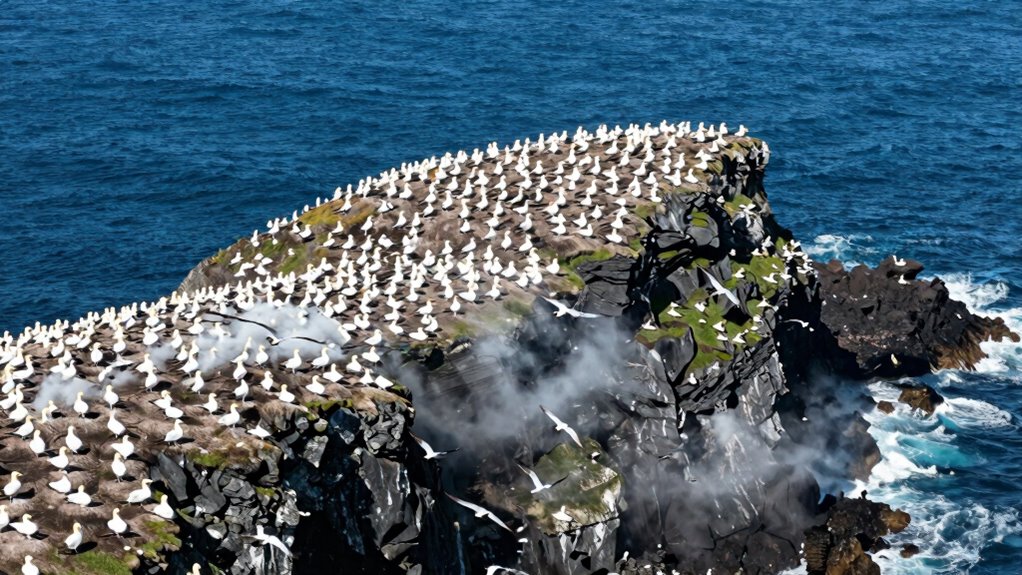

Seabird colonies reshape entire islands by changing soil health with nutrients from their droppings and nesting habits. These nutrients, especially nitrogen and phosphorus, boost plant growth and turn barren landscapes into lush habitats. As vegetation diversifies, the island’s ecology becomes more complex, attracting predators and altering predator-prey relationships. Over time, the landscape, plant life, and ecological balance transform profoundly. If you want to find out how these changes create a thriving ecosystem, keep exploring this fascinating process.
Key Takeaways
- Seabird droppings enrich island soils with nutrients, transforming barren areas into lush habitats.
- Nutrient influx from colonies promotes diverse plant growth, altering vegetation and ecological complexity.
- The presence of seabirds attracts predators, influencing predator-prey dynamics on the island.
- Nutrients washed into surrounding waters enhance marine productivity and support broader ecosystem health.
- Seabirds act as ecosystem engineers, driving cascading ecological changes across land and sea.
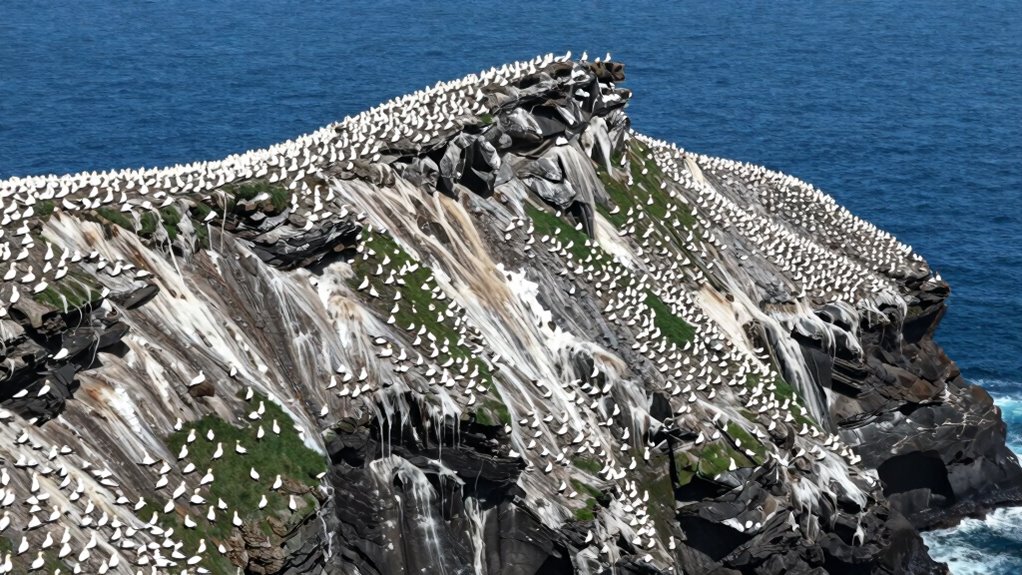
Seabird colonies are transforming the very landscapes they inhabit, reshaping islands through their nesting habits and droppings. As these birds gather in large numbers, they deposit nutrients that dramatically alter the island’s soil and plant life. Their droppings, rich in nitrogen and phosphorus, boost marine nutrient cycling on land, turning barren stretches into lush habitats. This influx of nutrients encourages the growth of vegetation that might otherwise struggle to survive, fostering new plant communities and supporting more diverse ecosystems. Over time, these changes can lead to the development of forests or shrublands, fundamentally transforming the island’s appearance and ecological balance.
Seabird colonies transform islands, enriching soils and fostering lush vegetation and diverse ecosystems over time.
Your presence in this environment also influences predator-prey interactions. The abundance of seabirds attracts predators like rats, foxes, and large birds of prey, which hunt the eggs, chicks, or adult birds. This creates a dynamic where the predator population is closely linked to the seabird colony’s size and health. As seabirds flourish and lay more eggs, predators find more food sources, which can lead to increased predation pressure. Conversely, if predators overconsume seabirds or their eggs, the colony might decline, affecting the entire food web. This delicate balance shapes the island’s ecological interactions, often resulting in complex adaptations among prey species to avoid predation or among predators to optimize hunting.
You might also notice how the nutrient enrichment from seabird droppings influences the island’s marine systems. The nutrients that wash from land into surrounding waters promote phytoplankton growth, fueling the entire marine food chain. This process supports fish populations and attracts larger predators, creating a vibrant, interconnected ecosystem. In turn, healthy marine environments can influence seabird success, providing ample food sources for feeding and breeding. This cyclical relationship underscores how seabird colonies act as ecological hubs, affecting not just land but also the surrounding marine ecosystems.
Ultimately, the presence of seabird colonies does more than just add birds to an island. It sparks a cascade of ecological changes—reshaping landscapes, influencing nutrient flows, and adjusting predator-prey relationships. Your role as a witness to these transformations highlights the profound impact these colonies have, not just on the immediate environment but on the entire island’s ecological fabric. The intricate interplay of nutrient cycling and predator-prey dynamics driven by seabirds reveals their importance as ecosystem engineers, continuously reshaping and revitalizing the islands they call home.
Occer 12×25 Compact Binoculars for Adults and Kids, Large Eyepiece Waterproof Binocular with Low Light Vision,High Powered Easy Focus Binoculars for Bird Watching,Outdoor Hunting,Travel,Sightseeing
【HIGH-POWERED LARGE EYEPIECE BINOCULARS】 This binoculars for adults has 12x magnification, 25mm objective lens and wide field of…
As an affiliate, we earn on qualifying purchases.
As an affiliate, we earn on qualifying purchases.
Frequently Asked Questions
How Do Seabirds Select Nesting Sites on Islands?
You notice seabirds select nesting sites based on predator deterrence and nest site selection. They prefer areas that offer safety from predators, like cliffs or dense vegetation. Birds often choose sites with good visibility to spot threats early and easy access to food sources. By selecting ideal locations, they guarantee their eggs and chicks stay protected, increasing survival chances, which ultimately helps sustain healthy seabird colonies on the islands.
What Are the Long-Term Ecological Impacts of Seabird Colonies?
You see that seabird colonies profoundly impact island ecology long-term. Their nutrient enrichment enhances soil fertility, supporting diverse plant life and boosting overall biodiversity. Simultaneously, predator control by seabirds reduces populations of invasive or harmful species, helping native animals thrive. These combined effects reshape the island’s ecosystem, creating a more balanced environment. Over time, seabird colonies foster resilient, thriving habitats that benefit numerous species and sustain ecological health.
How Do Human Activities Affect Seabird Colony Formations?
You might notice that human activities, like fishing and coastal development, directly disrupt seabird colony formations. These actions can disturb marine food chains, reducing food availability for seabirds, and accelerate coastal erosion, threatening nesting sites. As you observe these changes, it becomes clear how human interference not only impacts seabirds but also alters the delicate balance of island ecosystems, ultimately reshaping entire habitats over time.
Are There Any Species That Benefit From Seabird-Induced Changes?
Yes, some plant and insect species benefit from seabird-induced changes. Seabird nutrient transfer enriches island soil, boosting vegetation growth and diversity. This, in turn, supports herbivores and predators, creating a richer ecosystem. As island vegetation dynamics shift with increased nutrients, these species thrive in the altered environment, capitalizing on the nutrient-rich soils and new habitats created by seabird colonies, ultimately benefiting from the ecological changes they cause.
How Quickly Can an Island’s Ecosystem Recover After Seabird Decline?
Recovery is like a delicate dance, taking decades or even centuries, depending on the island. When seabird populations decline, the loss of marine nutrient transfer disrupts predator-prey dynamics, slowing ecosystem rebound. Without seabirds, plants and animals struggle to regain balance, making recovery a slow, uneven process. Restoring seabird numbers helps jump-start the cycle, but full recovery depends on restoring marine nutrient flow and predator-prey relationships over time.

Squirrel Proof Bird Feeder – 360° Feeding Perch Tray for Outdoor Hanging Wild Bird Seeds, Dark Green.
Squirrel-Proof Mechanism – With the weight-sensitive system, the feeding ports automatically close when a squirrel jumps on.
As an affiliate, we earn on qualifying purchases.
As an affiliate, we earn on qualifying purchases.
Conclusion
As you watch seabirds nesting and darting across the island’s landscape, you realize how their tiny footsteps and droppings breathe new life into the land. Over time, their presence transforms barren rocks into lush, vibrant ecosystems—green patches bursting with life where once only silence reigned. You see the cycle unfold before your eyes: nature’s delicate brush strokes reshaping the island’s story, whispering of resilience and renewal in every flutter and feathered flight.
Ecological Gardening: Your Safe Path to a Healthy, Beautiful Garden
As an affiliate, we earn on qualifying purchases.
As an affiliate, we earn on qualifying purchases.

Dynamics of Marine Ecosystems: Biological-Physical Interactions in the Oceans
As an affiliate, we earn on qualifying purchases.
As an affiliate, we earn on qualifying purchases.