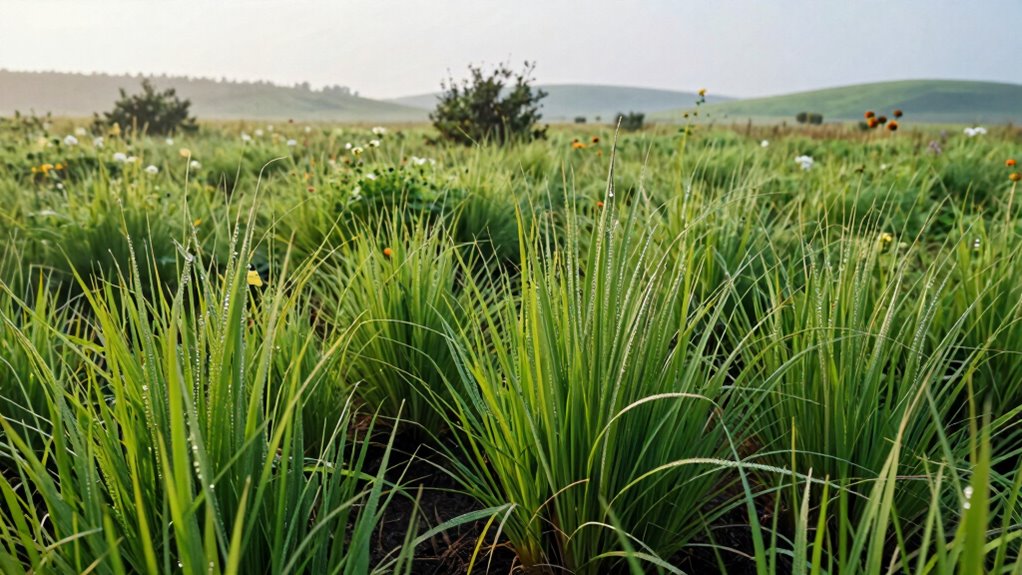

Healthy grasslands play a vital but often unnoticed role in stabilizing our climate. They absorb and store large amounts of soil carbon, helping to lower atmospheric CO₂ and slow global warming. They also influence local weather by regulating moisture and temperature through transpiration, which encourages cloud formation and rainfall. Protecting and restoring these areas boosts their ability to fight climate change and support ecosystems. Keep exploring to discover how these resilient landscapes quietly defend our planet’s future.
Key Takeaways
- Healthy grasslands serve as vital carbon sinks by storing underground soil carbon, helping to reduce atmospheric CO₂ levels.
- They regulate regional weather patterns through moisture and temperature control, acting as natural climate moderators.
- Diverse plant species enhance soil structure and microbial activity, increasing the ecosystem’s capacity for carbon sequestration.
- Grasslands support transpiration-driven cloud formation and precipitation, contributing to local and global climate stability.
- Conservation and restoration of grasslands boost their resilience, carbon storage, and overall climate regulation functions.
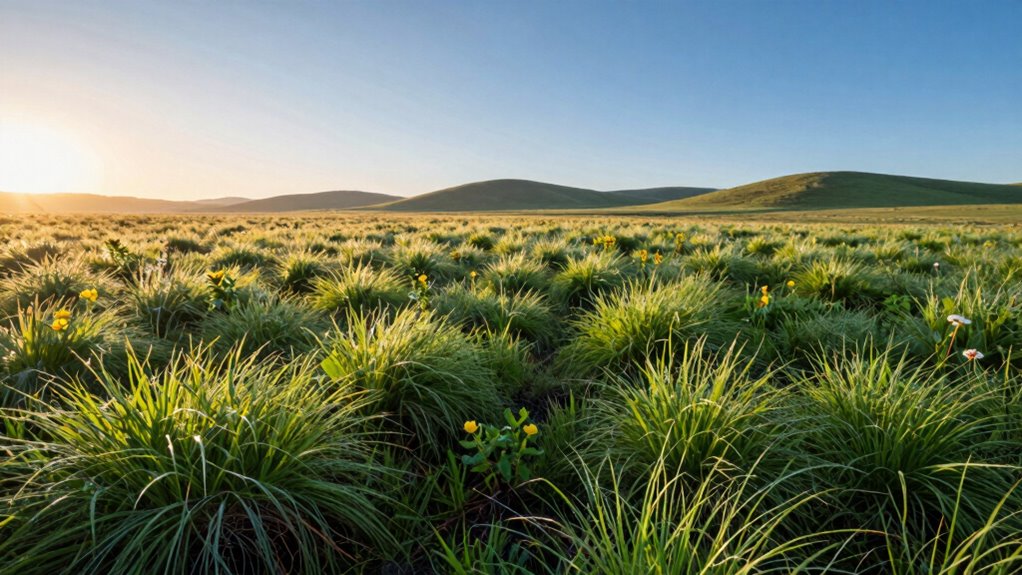
Grasslands play an essential role in shaping the Earth’s climate by acting as significant carbon sinks and influencing regional weather patterns. When healthy, these ecosystems store vast amounts of soil carbon, which helps reduce the amount of carbon dioxide in the atmosphere. This natural process is fundamental because excess atmospheric CO₂ accelerates climate change. By maintaining rich soil carbon levels, healthy grasslands act as a buffer, slowing global warming. You might not see it directly, but the underground storage of carbon is a crucial component of the Earth’s climate regulation system.
Equally important is the species diversity within grasslands. A diverse range of plants and animals keeps the ecosystem resilient, promoting healthy soil and stable carbon storage. When grasslands are rich in plant species, they develop a more extensive root system, which enhances soil structure and increases its capacity to hold carbon. This diversity also supports a variety of microorganisms that work together to decompose organic matter, further boosting soil carbon levels. You’ll find that more diverse ecosystems are better at adapting to disturbances like droughts or invasive species, which can otherwise threaten their climate-regulating functions. Additionally, soil biodiversity plays a vital role in maintaining soil health and carbon sequestration.
Healthy grasslands don’t just store carbon; they also influence local and regional weather patterns. The plants in these ecosystems help regulate temperature and humidity by transpiring water into the atmosphere. This process encourages cloud formation and even precipitation, which sustains the ecosystem and nearby agricultural activities. When grasslands are degraded, this natural cooling and moisture regulation diminishes, leading to harsher weather conditions and less stable climates in surrounding areas. You can think of healthy grasslands as natural climate moderators—when they thrive, they help stabilize the environment.
Maintaining soil carbon and species diversity isn’t just about conservation; it’s a climate strategy. Protecting grasslands from overgrazing, land conversion, and invasive species guarantees these ecosystems continue performing their indispensable functions. Restoring degraded grasslands can enhance their capacity to sequester soil carbon and support a diverse array of species, amplifying their climate benefits. You have a role in this process, whether through supporting sustainable land management practices or advocating for policies that preserve these essential ecosystems. In doing so, you help access the full climate potential of healthy grasslands, assuring they continue to serve as natural allies against climate change. Additionally, understanding the soil carbon sequestration process underscores the importance of conserving these ecosystems for long-term climate resilience. Recognizing the ecosystem resilience of grasslands highlights their ability to recover from disturbances and maintain their vital functions.

Taming the Dragon: America's Most Dangerous Highway
As an affiliate, we earn on qualifying purchases.
As an affiliate, we earn on qualifying purchases.
Frequently Asked Questions
How Do Grasslands Compare to Forests in Carbon Sequestration?
You might think forests sequester more carbon, but healthy grasslands often outperform them. They support rich soil microbial communities and high plant diversity, which enhances carbon storage below ground. Grasslands’ extensive root systems help lock in carbon for decades, making them a crucial climate buffer. So, by protecting and restoring grasslands, you’re boosting soil microbial activity and plant diversity, both key to maximizing carbon sequestration and fighting climate change.
Can Grasslands Recover From Severe Climate Change Impacts?
Yes, grasslands can recover from severe climate change impacts. You can support soil restoration by preventing erosion and encouraging native plants, which helps rebuild the ecosystem. As they recover, grasslands offer biodiversity benefits, fostering habitats for various species. While recovery takes time, proactive conservation and restoration efforts enable grasslands to bounce back, strengthen their resilience, and continue playing an essential role in climate stability.
What Are the Main Threats to Grassland Ecosystems?
You face threats like overgrazing, agricultural expansion, and urban development that damage grassland biodiversity. These activities disturb soil nutrient cycling, leading to soil degradation and reduced plant diversity. Climate change intensifies these threats through droughts and extreme weather, further harming ecosystems. To protect grasslands, you need sustainable land management practices that preserve biodiversity and maintain healthy soil nutrient cycling, ensuring these essential ecosystems can thrive despite mounting pressures.
How Do Grazing Practices Affect Grassland Carbon Storage?
Grazing impacts soil carbon storage by influencing plant growth and soil health. When managed properly, grazing stimulates plant roots, promotes organic matter, and enhances soil carbon levels. However, overgrazing can strip vegetation, reduce organic inputs, and lead to soil erosion, decreasing soil carbon reserves. So, sustainable grazing practices are essential to maintaining and increasing grassland soil carbon, which plays a fundamental role in mitigating climate change.
Are There Specific Grassland Species That Enhance Climate Resilience?
Yes, certain grassland species boost climate resilience through their diversity and adaptive traits. You’ll find that species with deep roots, drought tolerance, and rapid growth help stabilize soil, retain water, and sequester carbon. By encouraging a mix of resilient species, you create a dynamic landscape that withstands climate stresses, supports biodiversity, and enhances overall ecosystem health. This strategic diversity strengthens your grassland’s ability to adapt and thrive amid changing environmental conditions.
Conclusion
You might not realize it, but healthy grasslands are more than just pretty landscapes—they’re key players in fighting climate change. By protecting and restoring these ecosystems, you help lock in carbon, boost biodiversity, and keep our planet resilient. Don’t let this opportunity slip through your fingers; grasslands are a hidden gem with a lot to offer. When it comes to climate action, you can’t afford to overlook the power of these natural allies.