
TL;DR
Archaeologists have discovered a previously unknown city with an ancient church buried beneath Egypt’s desert. The find offers new insights into early Christian and Egyptian history. Details are still emerging about the site’s full extent and significance.
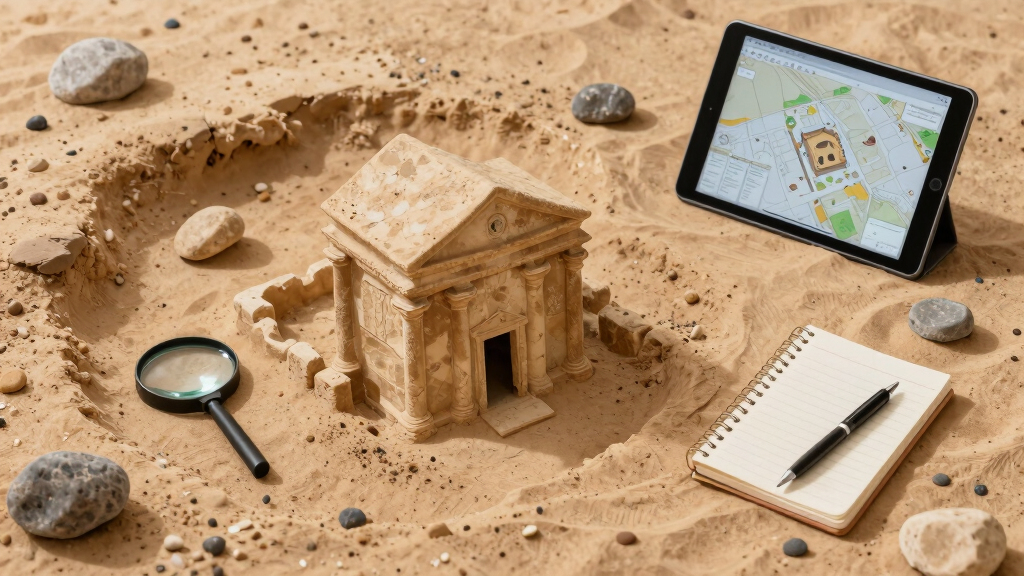
Archaeologists announced the discovery of a lost city with an ancient church beneath Egypt’s desert on March 2026. The find, confirmed by the Egyptian Ministry of Antiquities, represents a major breakthrough in understanding early Christian settlements in Egypt and the region’s ancient history. The site was uncovered during excavations led by a joint international team, revealing well-preserved structures and artifacts.

Prime made for students and young adults
- Fast, free delivery for dorm and study essentials
- Prime Video and Amazon Music included
- Member-only deals
The discovery was made in the Western Desert, where the team uncovered extensive ruins, including the remains of a church dating back to the 4th or 5th century CE, based on preliminary dating. The city appears to have been a significant settlement during the late Roman and early Byzantine periods, with evidence suggesting it was a hub for early Christian communities.
According to officials from the Egyptian Ministry of Antiquities, the site includes stone structures, pottery, and religious artifacts, some of which are believed to be unique in Egyptian Christian archaeology. The team also found inscriptions in Greek and Coptic, indicating the multicultural nature of the settlement.
Implications for Early Christian and Egyptian History
This discovery offers crucial new insights into the spread of Christianity in Egypt and the Mediterranean region. The well-preserved church and city structures could provide valuable information about early Christian architecture, religious practices, and community life. It also challenges previous assumptions about the extent of Christian settlements in Egypt during the late Roman era.
Moreover, the site could reshape understanding of regional trade, cultural exchange, and urban development during a transformative period in Egyptian history. The find is expected to attract significant academic and archaeological interest and could lead to further excavations in the area.
Popular right now

Breville BES870XL Barista Express Espresso Machine, Brushed Stainless Steel

Apple AirPods Pro with Wireless Charging Case

KitchenAid Artisan 5-Quart Tilt-Head Stand Mixer, Almond Cream
As an affiliate, we earn on qualifying purchases.
Previous Discoveries and Regional Significance
Egypt has a long history of archaeological finds, including famous sites like Luxor and the Pyramids of Giza. However, discoveries of early Christian settlements remain rare, especially those with well-preserved religious structures. Past excavations have uncovered Christian churches and monasteries from later periods, but few sites date back to the 4th or 5th centuries.
This discovery aligns with recent efforts to explore Egypt’s Western Desert, which has been less studied due to its harsh environment. It follows other recent finds of ancient settlements and religious sites in the region, emphasizing its importance for understanding Egypt’s diverse historical periods.
“This is one of the most significant discoveries in recent Egyptian archaeology. It offers a rare glimpse into early Christian life in the desert regions.”
— Dr. Ahmed El-Sayed, Egyptian archaeologist
Unanswered Questions About the Site’s Full Extent
Details about the size, full layout, and extent of the city remain unclear. Researchers are still analyzing artifacts and dating structures to establish a comprehensive timeline. It is also uncertain how large the Christian community was and what role the city played regionally during its peak.
Further excavations are needed to determine whether other structures, such as additional churches, residential areas, or trade centers, are present beneath or around the current site. The preservation state of some structures and artifacts also requires further assessment.
Next Steps in Excavation and Research
Archaeologists plan to conduct more extensive excavations over the coming months to map the entire site and recover additional artifacts. Radiocarbon dating and other scientific analyses will help refine the timeline and understand the site’s historical context.
International collaboration is expected to continue, with plans to publish initial findings in academic journals and hold public exhibitions. Further exploration may also uncover more sites in the surrounding desert, expanding knowledge of early Christian settlements in Egypt.
Key Questions
How old is the city and church?
Preliminary dating suggests the city and church date back to the 4th or 5th century CE, during the late Roman and early Byzantine periods.
What makes this discovery significant?
The site provides rare, well-preserved evidence of early Christian communities in Egypt, offering insights into religious, cultural, and urban development during a key historical period.
Are there any threats to the site?
The site is currently protected by Egyptian authorities, but environmental factors and potential looting pose ongoing risks. Further conservation efforts are planned.
Will this lead to new tourist attractions?
Potentially, once fully excavated and studied, the site could become a significant archaeological attraction, subject to conservation and access considerations.
What other discoveries are expected in the region?
Researchers believe the Western Desert may contain more undiscovered settlements and religious sites from various periods, which could reshape regional history.
Source: hn