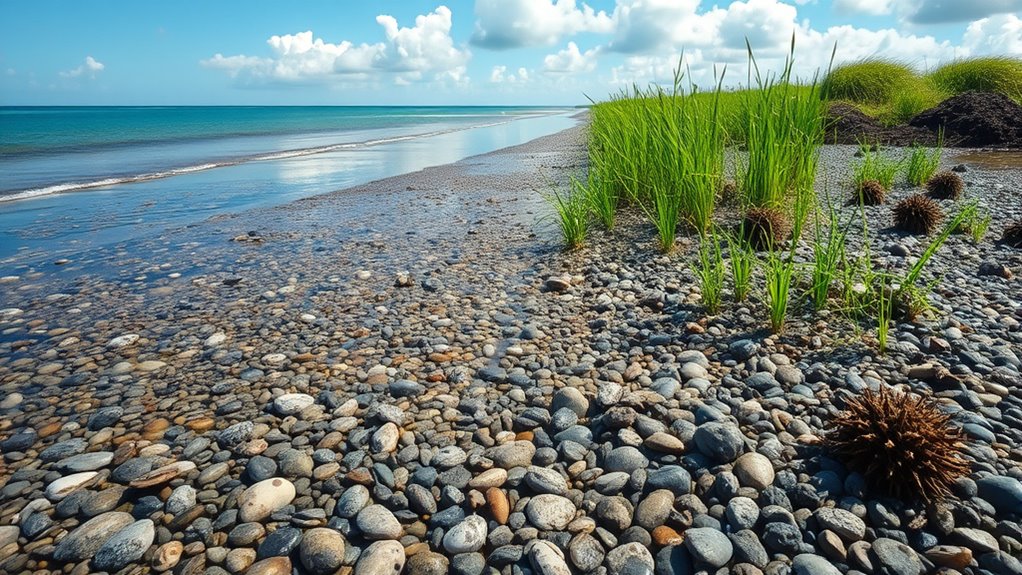

Oyster reefs in living shorelines absorb wave energy with their complex, porous structure, reducing shoreline erosion more effectively than traditional walls that reflect waves and worsen damage. They promote sediment buildup, stabilize coastlines over time, and support diverse marine life, which enhances ecosystem resilience. Unlike hard structures, oyster reefs flex and shift during storms, providing natural protection that lasts longer. Keep exploring to discover how these ecosystems offer sustainable and eco-friendly coastal defense solutions.

Prime made for students and young adults
- Fast, free delivery for dorm and study essentials
- Prime Video and Amazon Music included
- Member-only deals
Key Takeaways
- Oyster reefs absorb wave energy through their porous, irregular surfaces, reducing shoreline erosion more effectively than rigid walls.
- Living shorelines promote sediment buildup and natural habitat growth, enhancing long-term coastal stabilization.
- Oyster reefs dissipate wave energy via turbulence, preventing reflection and damage common with concrete seawalls.
- Ecosystem benefits like water filtration and habitat support increase resilience, unlike static, hard structures.
- Adaptive management and natural flexibility of reefs enable better storm response and longevity compared to inflexible walls.
As an affiliate, we earn on qualifying purchases.
The Shoreline Retreat Challenge and Oyster Reefs’ Role

Have you ever wondered why coastlines are retreating despite efforts to protect them? Coastal erosion happens when waves, wind, and storms gradually wear away the shoreline, often faster than we can rebuild or reinforce it. Traditional structures like seawalls can sometimes worsen this problem by reflecting wave energy, which accelerates erosion nearby. Oyster reefs offer a natural solution by acting as buffers that absorb wave energy, reducing the impact on the shoreline. These living structures promote sediment buildup and stabilize the coast over time. As oysters grow and reefs expand, they enhance their protective role. This biological approach tackles the root causes of shoreline retreat, making coastlines more resilient and healthier, without the negative effects of hardened structures.
How Living Shorelines Outperform Traditional Structures During Storms
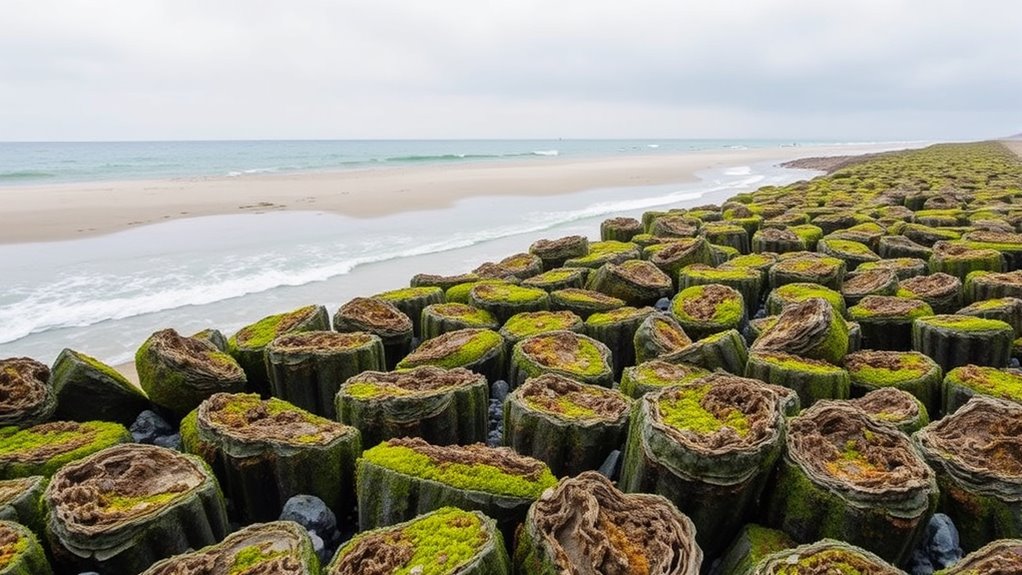
During storms, living shorelines with oyster reefs absorb more wave energy than traditional structures, reducing erosion and protecting the coast. This natural buffering enhances ecosystem resilience by supporting habitats and encouraging vegetation regrowth. As a result, these flexible systems outperform hardened structures, which often reflect waves and cause additional damage.
Wave Energy Absorption
Living shorelines, especially those incorporating oyster reefs, excel at absorbing wave energy more effectively than traditional seawalls during storm events. Unlike concrete structures that reflect waves, oyster reefs dissipate energy through their complex, porous surfaces. This natural design reduces the force of incoming waves before they reach the shoreline, lowering erosion and damage risk. Studies show oyster reefs can attenuate wave energy by over 30%, with some cases exceeding 50%. Their irregular shapes and biological components create turbulence that breaks up wave momentum. As waves encounter these reefs, much of their energy is absorbed or diffused, providing a buffer that protects the coast during intense storms. Additionally, oyster reefs serve as ecosystem engineers, enhancing biodiversity and providing habitat for various marine species. Over time, this adaptive feature enhances shoreline stability while supporting vibrant ecosystems. Their ability to adapt and grow makes them a sustainable alternative to traditional hard structures, which often require ongoing maintenance and can disrupt local environments. Furthermore, oyster reefs contribute to carbon sequestration, helping mitigate climate change impacts and promote healthier coastal ecosystems. This natural resilience and adaptive growth further underscore their importance as a climate adaptation strategy.
Ecosystem Resilience
Why do living shorelines often outperform traditional structures when storms strike? Because oyster reefs and natural habitats absorb and dissipate wave energy more effectively, reducing erosion and damage. Unlike concrete walls that reflect waves and can cause turbulence, living shorelines gently buffer storm impacts, giving ecosystems time to adapt and recover. Oyster reefs promote sediment accretion and vegetation regrowth, stabilizing the shoreline over time. During storms, these structures flex and shift without cracking, maintaining their integrity longer. They also support biodiversity, which strengthens ecosystem resilience by fostering diverse species that help rebuild damaged habitats. Additionally, filter maintenance practices ensure the longevity and effectiveness of these natural defenses. As a result, living shorelines not only protect coastlines during storms but also enhance the natural resilience needed for future events, outperforming rigid, hard infrastructure.
Ecological Benefits of Oyster Reef Installations

Oyster reef installations provide significant ecological benefits that enhance coastal ecosystems. They improve water quality by filtering pollutants and excess nutrients, supporting healthier marine life. These reefs also offer critical habitats for fish, crabs, and other wildlife, boosting biodiversity. Additionally, they help stabilize sediments, promoting marsh growth and preventing erosion. Consider these key benefits:
- Water filtration enhances overall ecosystem health.
- Habitat creation supports diverse marine populations.
- Sediment stabilization fosters resilient marshes and shorelines. Filter efficiency can be optimized through proper reef placement and ongoing maintenance, ensuring long-term ecological success. Implementing durable, high-quality materials can further enhance reef longevity and effectiveness.
Design Strategies for High-Energy Coastal Environments

To succeed in high-energy coastal environments, you need to combine innovative design strategies like hybrid structures and precise site selection techniques. These approaches guarantee that your shoreline protections are durable and effective under tough conditions. Regular monitoring and adaptive management help refine your methods and maximize long-term resilience. Open communication and collaboration with stakeholders are essential to address diverse concerns and ensure the success of shoreline projects. Incorporating remote hackathons can facilitate diverse stakeholder engagement and innovative problem-solving in project planning and implementation. Additionally, understanding the benefits of airless paint sprayers can inform the development of protective coatings that enhance the durability of shoreline structures. Utilizing sound recording techniques and equipment can also improve the assessment of environmental impacts on coastal areas. Emphasizing mindful planning can lead to more sustainable and environmentally responsible coastal protection solutions.
Hybrid Structural Designs
Hybrid structural designs combine natural and engineered elements to enhance shoreline resilience in high-energy coastal environments. These approaches balance ecological benefits with structural stability, effectively reducing erosion and wave impact. By integrating materials like porous wooden breakwalls with oyster reef structures, you create a dynamic system that absorbs wave energy while supporting habitat growth. Incorporate sustainable materials to ensure the longevity and ecological compatibility of the structures. Consider these key strategies:
- Incorporating porous structures to dissipate wave energy, protecting both the shoreline and marine life.
- Using adaptable materials that allow oyster colonization, promoting natural reef development over time.
- Combining engineering with ecological features to improve durability and foster habitat complexity. Additionally, coastal resilience can be significantly improved through these hybrid systems, providing long-term protection against storm events and erosion. Employing ecological engineering principles enhances the natural functions of the shoreline, leading to more sustainable outcomes.
This hybrid approach offers a versatile solution, strengthening coastlines against storms while maintaining ecological functions crucial for long-term resilience.
Site Selection Techniques
How can you guarantee that your shoreline restoration project succeeds in high-energy environments? The key is careful site selection. Start by assessing shoreline exposure using shoreline exposure indexes that quantify wave and wind intensity. Identify areas with existing natural features like marshes, wetlands, or rocky outcrops that can support oyster reefs. Use habitat suitability models to determine most suitable locations where oysters can thrive and effectively buffer wave energy. Consider sediment dynamics, ensuring the site promotes sediment accretion rather than erosion. Evaluate proximity to existing oyster populations and water quality conditions, since healthy oysters need clean water and good substrate. Incorporating geospatial analysis tools helps you select sites that maximize reef resilience, ecological benefits, and long-term shoreline stability in challenging high-energy settings. Leveraging digital mapping techniques can further enhance precision in site selection and planning. Combining these tools helps you select sites that maximize reef resilience, ecological benefits, and long-term shoreline stability in challenging high-energy settings. Incorporating remote work principles by leveraging digital tools and data analysis can further enhance site assessment accuracy and planning efficiency. Additionally, understanding regional wave and wind patterns can improve predictions of how the oyster reef will perform over time. Employing climate data can also help anticipate future changes in environmental conditions, ensuring the project remains effective over the years.
Monitoring and Adaptation
Effective monitoring and adaptive management are essential for ensuring the success of living shoreline projects, especially in high-energy coastal environments. You need to regularly assess oyster growth, shoreline changes, and wave energy impacts to identify what’s working and what needs adjustment. This approach allows you to refine your strategies for better resilience. Consider these key steps:
- Use remote sensing tools like drones to track shoreline shifts and reef health over time.
- Incorporate real-time data to adjust reef structures or add sediment where erosion persists.
- Document ecological responses, such as vegetation growth and habitat restoration, to gauge overall success.
- Implement data-driven strategies to evaluate and improve project outcomes continuously.
- Incorporate long-term monitoring plans to ensure ongoing adaptation and success of the living shoreline project.
Monitoring Success: Tracking Oyster Growth and Shoreline Changes
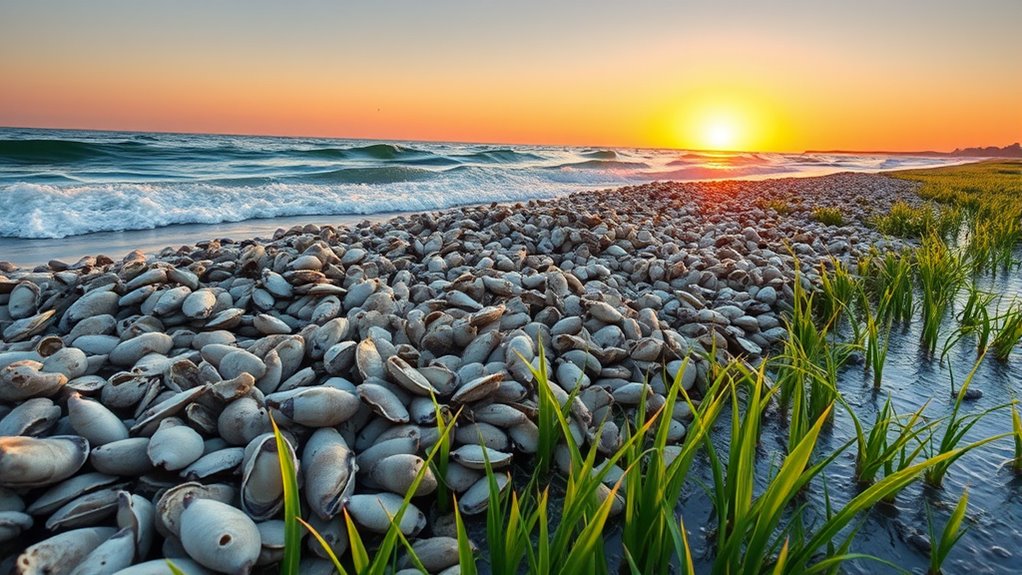
Monitoring success in oyster reef restoration and shoreline stabilization involves systematically tracking oyster growth, survival rates, and the resulting changes in shoreline position. You’ll use tools like remote sensing, drone imagery, and on-the-ground surveys to gather accurate data. Regular assessments help you understand how well oysters are establishing, growing, and contributing to sediment buildup. Keeping an eye on shoreline changes over time reveals whether erosion is slowing or halting. You’ll compare data across seasons and years to identify progress and adjust management strategies accordingly. This ongoing monitoring guarantees that your efforts effectively promote reef resilience and shoreline stability. Precise tracking allows you to demonstrate project success, optimize designs, and secure continued support for living shoreline initiatives. Monitoring techniques such as remote sensing and drone imagery provide valuable insights into the effectiveness of your restoration efforts.
Economic Advantages of Natural Coastal Defenses

Natural coastal defenses like oyster reef-based living shorelines offer significant economic benefits by reducing long-term costs associated with shoreline protection. First, they minimize maintenance expenses compared to hard structures, which require ongoing repairs. Second, oyster reefs support local fisheries, boosting economic activity and providing jobs. Third, the aesthetic appeal of natural reefs attracts tourism and recreational spending. These benefits translate into savings and income for communities, making natural defenses a cost-effective alternative. By absorbing wave energy and stabilizing sediments, oyster reefs reduce damage from storms and erosion, lowering emergency response and repair costs. Overall, investing in natural coastal defenses enhances resilience while offering economic advantages that hard infrastructure can’t match, ensuring long-term financial sustainability for coastal regions.
Enhancing Habitat and Biodiversity Through Oyster Reefs

Oyster reefs play a essential role in enhancing habitat diversity and supporting vibrant ecosystems along coastlines. By providing complex structures, they create essential habitats for fish, crabs, and many other marine species. As oysters settle and grow, they form reefs that serve as breeding and nursery grounds, boosting local biodiversity. These reefs also attract various invertebrates and serve as feeding sites for migratory birds. The increased habitat complexity supports sustainable fisheries, benefiting local communities. Additionally, oyster reefs promote the growth of submerged aquatic vegetation, which further stabilizes sediments and enhances water quality. Together, these ecological functions foster resilient and productive coastal ecosystems, making oyster reefs a natural solution for restoring biodiversity and supporting healthy, thriving coastlines.
Cost-Effectiveness and Long-Term Maintenance of Living Shorelines

Implementing living shoreline solutions with oyster reefs offers a cost-effective alternative to traditional hard structures like seawalls and bulkheads. They typically require lower initial investments and less ongoing maintenance, saving communities money over time. Oyster reefs naturally grow and adapt, reducing the need for frequent repairs. Consider these key points:
Living shoreline oyster reefs are cost-effective, low-maintenance, and environmentally beneficial alternatives to traditional seawalls.
- Lower maintenance costs—oyster reefs self-sustain and only need periodic monitoring, unlike concrete walls that deteriorate and require costly repairs.
- Extended lifespan—rebuilt and expanded through natural recruitment, oyster reefs grow stronger and more effective over years.
- Multiple ecosystem benefits—they improve water quality and habitat, providing long-term ecological value that hard structures can’t match.
Community Engagement and Support for Ecosystem-Based Solutions

Community support is essential for the success of ecosystem-based shoreline solutions like living shorelines. When residents, local businesses, and stakeholders understand the benefits, they’re more likely to advocate for projects and participate actively. Public engagement fosters a sense of ownership, encouraging ongoing maintenance and protection efforts. Community involvement also helps dispel misconceptions, emphasizing that living shorelines are cost-effective, environmentally friendly alternatives to hard structures. Outreach campaigns, workshops, and educational programs can highlight the ecological and economic benefits of oyster reefs, building trust and enthusiasm. Support from local communities often attracts funding and political backing, ensuring projects are sustainable long-term. When people see the positive impacts firsthand, they’re more motivated to preserve and expand these natural solutions, strengthening coastal resilience for future generations.
Frequently Asked Questions
How Long Do Oyster Reefs Typically Last Before Needing Repairs?
Oyster reefs typically last 10 to 20 years before needing repairs, but their longevity depends on site conditions, water quality, and ongoing maintenance. You should regularly monitor reef health, oyster survival, and sediment stability to identify issues early. Proper design, adaptive management, and continuous restoration efforts can extend their lifespan, ensuring they keep protecting your shoreline effectively while providing ecological benefits over time.
Can Living Shorelines Adapt to Rising Sea Levels Over Time?
Yes, living shorelines can adapt to rising sea levels over time. You’ll see oyster reefs naturally build upwards, keeping pace with rising waters as oysters settle on new substrate layers. Over time, sediment accretion and vegetation growth further elevate the shoreline, enhancing resilience. This adaptive process makes living shorelines more flexible and sustainable compared to hard structures, providing ongoing protection as sea levels continue to rise.
Are Oyster Reefs Effective in Extremely High-Energy Coastal Zones?
You might think oyster reefs can’t handle extreme wave energy, but they actually perform well in high-energy zones. They reduce wave impact by over 30%, sometimes more than 50%, absorbing and dispersing wave energy naturally. Engineered and hybrid designs enhance their resilience, making them effective at stabilizing coastlines even during storms. Over time, they grow stronger, providing durable, eco-friendly protection where hard structures often fail or degrade quickly.
What Are the Initial Costs Compared to Traditional Seawall Construction?
Your initial costs for oyster reef-based living shorelines are generally lower than traditional seawalls. You’ll spend less on materials and construction since oyster reefs use natural and eco-friendly components like limestone or recycled shells. Plus, installation is quicker and involves less heavy equipment. Over time, maintenance costs stay lower because oyster reefs grow and adapt, reducing the need for costly repairs typical of hardened structures.
How Do Oyster Reefs Influence Local Fish Populations and Fishing Industries?
You notice that oyster reefs boost local fish populations and strengthen fishing industries by providing essential habitats, supporting biodiversity, and increasing fish recruitment. These reefs attract a variety of species, offering shelter and breeding grounds, which leads to healthier fish stocks. As a result, fishing becomes more sustainable and productive, benefiting your community economically. You see how oyster reefs, by nurturing ecosystems, create thriving fisheries and promote resilient, prosperous coastal livelihoods.
Conclusion
Ultimately, embracing living shorelines with oyster reefs not only protects your coast better than walls but also brings unexpected beauty and resilience. As you see oyster growth and shoreline stabilization unfold, it’s clear nature’s design offers more than just defense—it creates vibrant habitats and strengthens communities. Sometimes, the best solutions come from understanding that nature, with a little help, can surprise you in the most rewarding ways.
Fall Picks
fall essentials
As an affiliate, we earn on qualifying purchases.