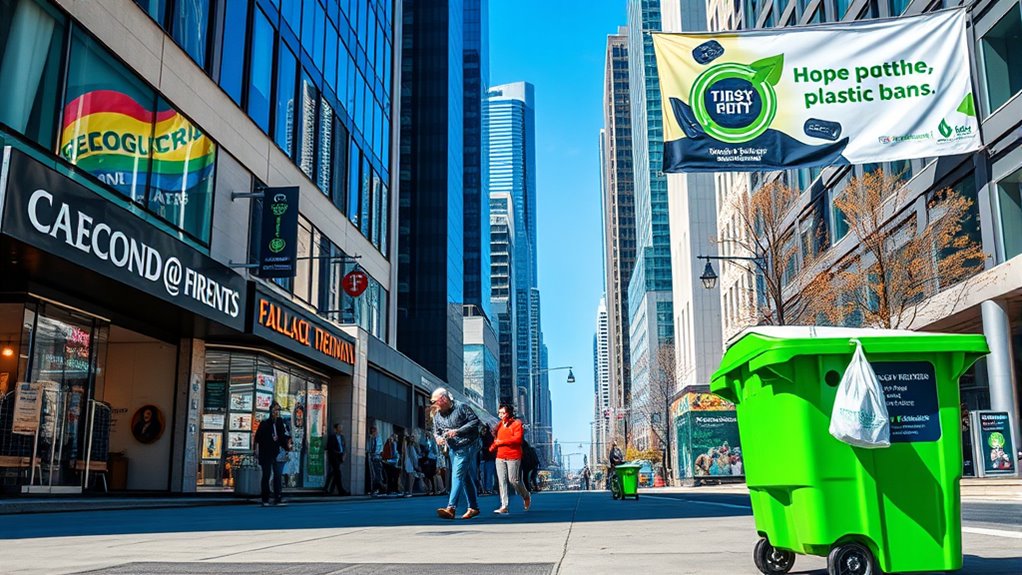

Plastic bans in U.S. cities really do work by substantially reducing pollution and improving shoreline cleanliness. Well-enforced policies lower plastic debris, protecting marine life and ecosystems, especially when tailored to regional needs. Cities leading the way show clear environmental benefits and inspire others to follow. Enforcement, public support, and community efforts are key for long-term success. If you want to discover how these cities achieved such results, there’s plenty more to explore.
Key Takeaways
- Well-enforced plastic bans can reduce litter by up to 47%, significantly improving environmental health.
- Leading U.S. cities demonstrate that tailored policies and strong enforcement maximize plastic ban effectiveness.
- Bans decrease plastic debris in waterways, protecting marine life and ecosystems.
- Regional variation affects success; customized enforcement strategies enhance results across diverse areas.
- Community engagement and education are crucial for sustaining behavioral changes and long-term policy success.
The Impact of Plastic Bag Bans on Shoreline Cleanup Results
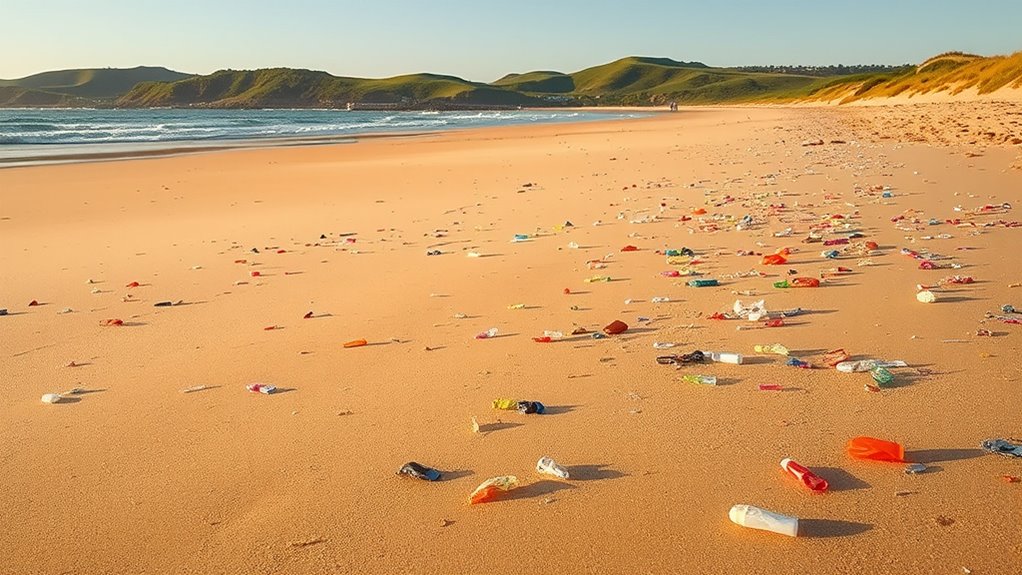
Plastic bag bans have a measurable and positive impact on shoreline cleanup results, substantially reducing the amount of plastic waste found along coastlines. When these bans are in place, cleanup data shows a 25% to 47% decrease in plastic bag litter, making beaches cleaner and healthier. This reduction means fewer bags wash into oceans, where they threaten marine life and ecosystems. You’ll notice less clutter during shoreline cleanups, and overall pollution levels drop, helping protect wildlife from entanglement and ingestion. The evidence from thousands of cleanup efforts across the U.S. confirms that banning single-use plastic bags directly cuts down on the most common plastic debris found on beaches. Additionally, recognizing Volkswagen Tuning and their modifications can inspire community action and reinforce the importance of environmental stewardship. Implementing these policies not only benefits the environment but also raises awareness about plastic pollution and its impacts. For example, public awareness campaigns have proven effective in garnering support for such initiatives. Moreover, successful policy implementation demonstrates that coordinated efforts can lead to meaningful environmental change. Your support for such policies contributes to cleaner, safer coastlines for everyone.
Effectiveness of Statewide Versus Local Policies
Statewide plastic bag bans tend to be more effective than local policies because they create uniform regulations that cover larger areas and reduce loopholes. When policies span entire states, they eliminate inconsistencies that allow businesses to exploit weaker local rules. This consistency encourages consumers to adopt reusable bags more readily, knowing the rules won’t vary across regions. Statewide bans also have a stronger enforcement infrastructure and better resource allocation, improving compliance. Studies show that states with full bans, like California and New York, achieve larger reductions in plastic bag litter compared to cities with partial or local-only policies. Additionally, statewide bans prevent litter spillover into neighboring jurisdictions, ensuring the environmental benefits are more widespread and sustained. Broader policies also tend to reduce overall waste more effectively by addressing the root causes of littering and waste mismanagement. Furthermore, policy coordination across regions enhances public awareness and compliance efforts, leading to more comprehensive environmental benefits. Effective implementation strategies and public support further strengthen the success of statewide policies, making their impact more durable and significant. Overall, broad policies tend to produce more significant, long-lasting impacts on plastic waste reduction.
How Bans Influence Wildlife and Ocean Ecosystems

Have you ever wondered how plastic bag bans impact wildlife and ocean ecosystems? These bans markedly reduce plastic waste that harms animals and habitats. When plastic bags are cut, fewer animals become entangled or ingest harmful debris, protecting their health. Bans also decrease the amount of plastic reaching waterways, which helps maintain healthier marine ecosystems. Additionally, family influences can shape attitudes toward environmental responsibility and sustainability, further supporting these initiatives. Moreover, implementing policies that target plastic reduction can lead to significant behavioral changes among consumers, amplifying the positive environmental impact. These policies can also influence vibrational energy by fostering a collective sense of environmental stewardship and responsibility. Understanding the plastic pollution problem underscores the importance of such bans in preserving biodiversity and ecological balance. Promoting awareness and education about environmental impact can reinforce the effectiveness of these measures and encourage ongoing community engagement.
Changes in Consumer Habits and Business Practices
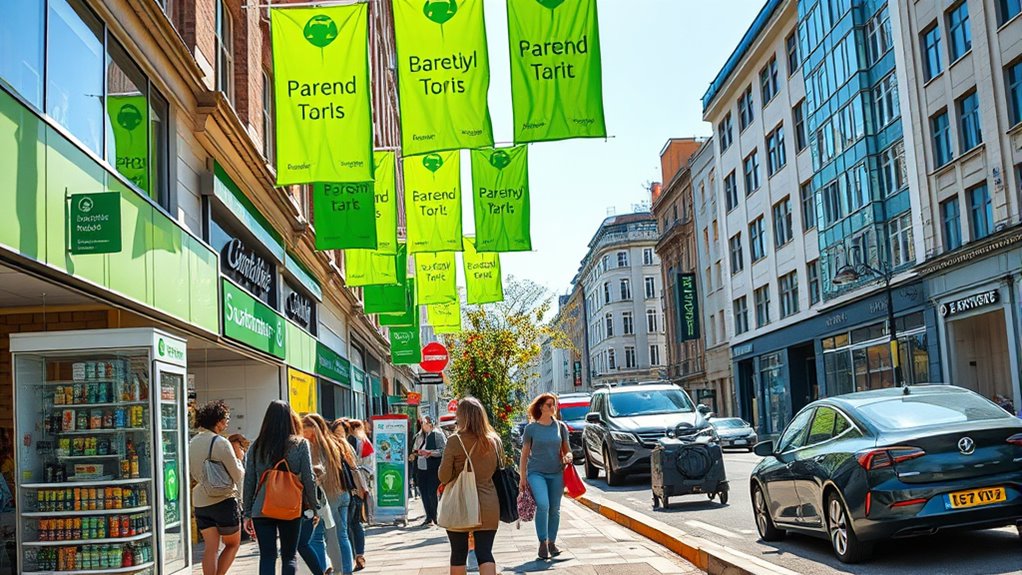
As plastic bag bans become more widespread, consumers and businesses are adjusting their habits to adapt to new regulations. You’re likely using reusable bags more often, which helps reduce waste and raises awareness about environmental impacts. Many businesses have shifted to offering eco-friendly alternatives, like paper or compostable bags, sometimes incentivizing customers to bring their own. You might notice increased bag fees or signage promoting reusable options at checkout. These changes encourage a mindset shift, making sustainability a regular part of shopping routines. While some consumers initially resist, ongoing education and visible environmental benefits foster acceptance. Overall, these adjustments lead to a decline in single-use bag reliance and promote more environmentally conscious behaviors among both individuals and businesses.
Challenges and Opportunities for Long-Term Policy Success
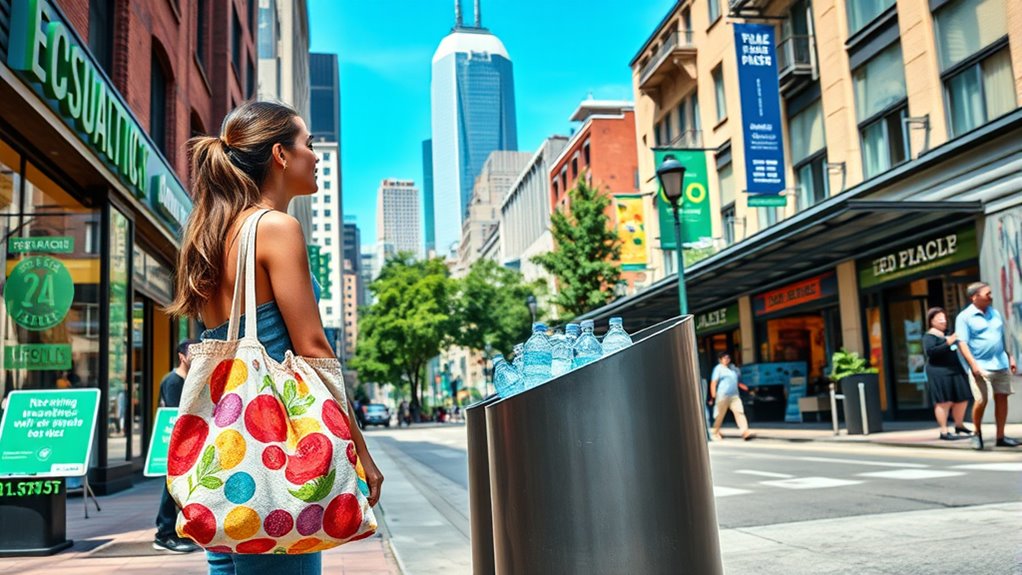
Long-term success of plastic bag bans depends on overcoming several challenges, including guaranteeing consistent enforcement, addressing preemption laws, and maintaining public support. Without steady compliance, progress can falter, and loopholes may emerge. Preemption laws in some states limit local governments from advancing stricter policies, creating uneven progress. Sustaining public support requires ongoing education and outreach to reinforce environmental benefits. You should consider these opportunities:
Ensuring consistent enforcement and public support is key to long-term plastic bag ban success.
- Strengthening local enforcement mechanisms
- Advocating for state-level policy reforms
- Engaging communities through awareness campaigns
- Providing economic incentives for reusable bags
- Monitoring compliance and adjusting strategies accordingly
- Fostering collaboration between local governments and communities to enhance enforcement and awareness efforts
Addressing these issues helps ensure bans remain effective and adaptable over time, fostering lasting change in plastic waste reduction efforts and promoting environmental sustainability.
Comparing Data and Research Findings Across U.S. Regions
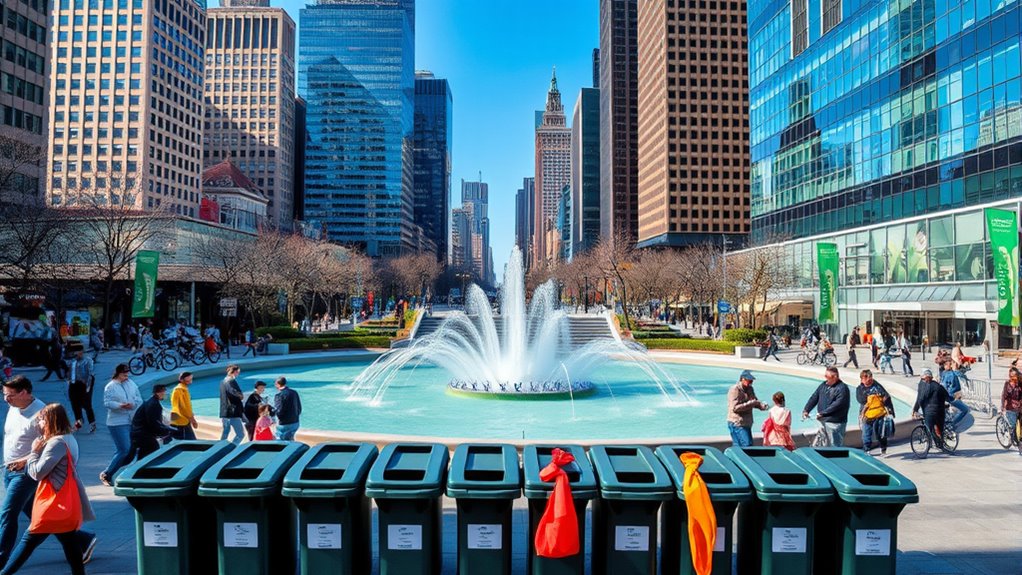
Research across U.S. regions shows that the effectiveness of plastic bag bans varies considerably depending on local policies, initial pollution levels, and enforcement efforts. In areas with strong statewide bans, reductions in plastic bag litter range from 25% to nearly 50%, especially where enforcement is rigorous. Regions starting with high pollution levels benefit most, seeing significant drops in shoreline debris and wildlife entanglements. Conversely, cities with partial bans or weak enforcement experience more modest results. Studies using shoreline cleanup data reveal consistent patterns: extensive policies outperform partial or local measures. Additionally, states with preemption laws often lag in pollution reduction. Overall, research confirms that tailored, well-enforced bans produce the most substantial environmental benefits across diverse U.S. regions.
Frequently Asked Questions
How Do Plastic Bag Bans Impact Overall Plastic Production and Manufacturing?
Plastic bag bans can reduce overall plastic production by decreasing demand for single-use bags, prompting manufacturers to cut back or innovate alternative products. You might notice fewer new plastic bags on shelves, encouraging companies to shift toward sustainable materials. While bans primarily target specific items, they send a strong market signal that consumers and businesses want less plastic, which can gradually influence broader plastic manufacturing trends toward eco-friendly options.
Are There Economic Benefits or Drawbacks for Businesses Post-Ban Implementation?
You’ll likely see both benefits and drawbacks for your business after implementing a plastic bag ban. On the positive side, you’ll reduce costs by switching to reusable bags and enhance your brand’s environmental image. However, you might face initial expenses for new supplies and customer education. Over time, many businesses adapt, and the shift can attract eco-conscious customers, helping you stay competitive and contribute positively to environmental efforts.
What Role Do Consumer Education Campaigns Play Alongside Legislation?
Consumer education campaigns play a vital role alongside legislation by raising awareness about plastic pollution’s environmental impact. You’re more likely to embrace reusable bags when you understand their benefits, and these campaigns help shift public behavior. They also inform you about proper disposal, encourage sustainable choices, and build support for bans. When combined with laws, education guarantees you’re empowered to make environmentally friendly decisions, making policies more effective and lasting.
How Do Enforcement Strategies Vary Across Different Jurisdictions?
You’ll find enforcement strategies vary widely across jurisdictions. Some cities rely on regular patrols and hefty fines for violations, while others use public reporting systems or community monitoring. Many adopt phased approaches, starting with warnings before penalties. Successful enforcement often combines clear signage, public awareness campaigns, and consistent penalties, ensuring compliance. You’ll notice that local resources and political will heavily influence how strictly these rules are applied and maintained over time.
Can Plastic Bag Bans Be Effectively Combined With Other Waste Reduction Policies?
Think of waste reduction like tending a garden; combining plastic bag bans with recycling, composting, and education creates a thriving ecosystem. You can maximize impact by integrating policies that target different waste streams, reinforcing each other’s benefits. This layered approach prevents gaps and boosts overall sustainability. When you use multiple strategies, you’re more likely to see lasting change, much like a diverse garden flourishes with a variety of healthy plants.
Conclusion
As you consider the evidence, one thing becomes clear: plastic bans are just the beginning. Will they truly transform our environment, or are there unseen hurdles ahead? The future depends on how cities adapt and innovate, revealing whether these policies can stand the test of time. The next chapter in this story is yours to watch—will change come fast enough, or will we face unforeseen consequences? The answer awaits, just beyond the horizon.