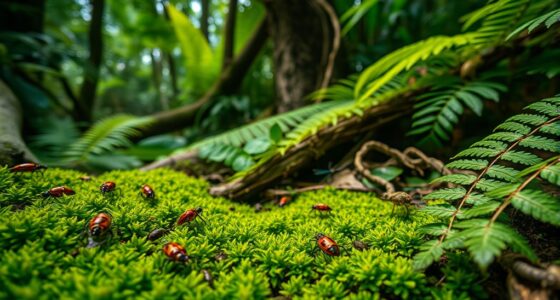

A keystone species has an outsized influence on its ecosystem, controlling populations, creating habitats, and supporting biodiversity. For example, predators like wolves or sea otters regulate prey populations, preventing overgrazing and maintaining balance. Ecosystem engineers such as beavers build dams that create new habitats, while mutualists like bees pollinate plants. Removing one of these species can cause major ecosystem changes. To discover how one animal can shape an entire environment, keep exploring this fascinating ecological role.
Key Takeaways
- Keystone species have an outsized influence on ecosystem structure, regulating populations and maintaining biodiversity.
- Predators like wolves control prey numbers, preventing habitat overgrazing and supporting plant recovery.
- Ecosystem engineers such as beavers modify habitats, creating new environments that benefit diverse species.
- Mutualists like pollinators facilitate plant reproduction, essential for ecosystem stability and species diversity.
- Removing keystone species can cause ecosystem collapse, overpopulation, and loss of biodiversity.

Keystone Species: Meet the Animals Key to Ecosystem Health and Biodiversity with Hands-On Science Activities for Kids (Build It Yourself)
As an affiliate, we earn on qualifying purchases.
As an affiliate, we earn on qualifying purchases.
Defining the Role of Keystone Species in Ecosystems

Have you ever wondered how certain small creatures or plants can have such a big impact on their environment? These are keystone species, and they play a critical role in maintaining the balance of their ecosystems. Despite their size or abundance, their influence is outsized—they shape community structure, control populations, and create habitats. If a keystone species disappears, it can trigger drastic changes, causing the entire system to collapse or shift dramatically. Think of them as the architectural keystones in an arch—small pieces, but essential for stability. Their actions support biodiversity and ecological resilience, making them indispensable for ecosystem health. Recognizing their importance helps us understand why protecting these species benefits the entire environment. Additionally, understanding regional biodiversity and the presence of local resources can help in conservation efforts regional biodiversity, which is vital for maintaining ecosystem stability. Furthermore, their ecological roles are often intertwined with natural resource management, highlighting the importance of sustainable practices. Engaging local communities and raising awareness about ecosystem health can enhance efforts to protect keystone species and ensure their ecological functions continue to support biodiversity and ecological resilience.
Different Types of Keystone Species and Their Functions

Different types of keystone species perform distinct roles that are vital for maintaining ecosystem balance. Predators control prey populations, preventing overgrazing and supporting diverse plant communities. Ecosystem engineers, like beavers and elephants, actively modify habitats, creating new niches for other species. Mutualists, such as pollinators and seed dispersers, facilitate plant reproduction and sustain food webs through reciprocal relationships. Some keystone species overlap categories, fulfilling multiple functions simultaneously. For example, honey bees are both mutualists and bioindicators of environmental health. Their activities influence various ecological processes, including plant growth, habitat structure, and species diversity. Recognizing these different roles helps you understand how each keystone species uniquely shapes the ecosystem’s stability and resilience. Additionally, understanding the physical modifications made by ecosystem engineers highlights their critical contribution to habitat diversity and ecological stability. These modifications often lead to increased biodiversity and create complex habitats that support a wide array of organisms. Furthermore, the presence of keystone species can influence species interactions, which are fundamental to the overall health of the ecosystem.
How Predators Shape Ecosystem Dynamics

How do predators influence the balance of ecosystems? Predators keep prey populations in check, preventing overgrazing and resource depletion. By controlling herbivore numbers, they allow plants and algae to thrive, which supports a diverse range of species. When predators like wolves or sea otters are removed, prey populations often explode, leading to habitat destruction. For example, without sea otters, sea urchin numbers grow unchecked, eroding kelp forests and reducing marine biodiversity. Predators also shape prey behavior, prompting animals to avoid risky areas, which influences plant growth patterns. This creates a cascading effect throughout the food chain. In this way, predators act as key regulators, maintaining ecological stability and ensuring that resources are balanced for all species involved. Ecological balance is essential for sustaining healthy ecosystems over the long term. Additionally, predators contribute to biodiversity conservation by maintaining the health and diversity of ecosystems.
The Impact of Ecosystem Engineers on Habitat Formation

Ecosystem engineers shape their habitats through various modification techniques that create new environments or alter existing ones. These activities support overall ecosystem stability by providing shelter, resources, or altered conditions for many species. Understanding how they build and maintain these habitats highlights their essential role in maintaining biodiversity and ecosystem health. Operating hours of these species can influence their ability to perform these modifications effectively. Additionally, their activities can influence habitat complexity, which is crucial for supporting diverse biological communities. Recognizing the importance of nutrient cycling further emphasizes their role in sustaining healthy ecosystems. The presence and activity levels of these species can also impact species diversity, contributing to a balanced and resilient ecosystem. Their behavior patterns often determine the extent and effectiveness of habitat modification, making their daily activities vital for ecosystem dynamics.
Habitat Modification Techniques
Ecosystem engineers actively modify their environment in ways that shape habitat structure and availability for numerous species. You might notice how beavers build dams that create ponds, transforming streams into wetland habitats. These dams slow water flow, encouraging plant growth and providing shelter for fish, amphibians, and insects. Elephants, another example, uproot trees and clear paths, opening up savannas and creating waterholes that attract a variety of animals. Coral structures, formed by reef-building corals, provide complex habitats that support diverse marine life. By altering physical conditions—such as water flow, light penetration, or terrain—these keystone species set the stage for other organisms to thrive. Their habitat modification techniques are essential for maintaining biodiversity and fostering resilient ecosystems. Additionally, these modifications often influence species interactions, further shaping ecosystem dynamics and stability. The presence of such ecosystem engineers can also impact the availability of resources like nutrients and space, which are vital for the survival of many species. Understanding habitat modification techniques helps in conservation efforts aimed at preserving biodiversity and ecosystem health.
Ecosystem Stability Support
Ecosystem engineers actively shape their surroundings, creating habitats that support a wide range of species. Your presence can determine the structure and stability of entire ecosystems. By modifying landscapes, these animals foster biodiversity and resilience. Their activities influence resource availability and shelter, helping ecosystems withstand environmental changes. Additionally, the impact of sound therapy on ecosystem health is an emerging area of scientific interest, highlighting the interconnectedness of biological systems. Incorporating sustainable practices can further enhance ecosystem stability and promote long-term environmental health. Recognizing the role of sound design in ecological research can lead to innovative methods for monitoring and preserving habitats. Understanding these natural processes aligns with principles of personal development, emphasizing the importance of intentional actions and growth in fostering a balanced environment.
Mutualists and Their Reciprocal Relationships
Mutualists form reciprocal relationships that benefit both species involved, often playing a vital role in maintaining ecosystem health. For example, pollinators like bees and hummingbirds help plants reproduce while obtaining food in return. These partnerships highlight how mutualism strengthens biodiversity and ecosystem stability. Additionally, the effectiveness of these relationships can be influenced by factors such as color accuracy, which affects how well the mutualistic interactions are visually perceived by both species. Understanding ecosystem dynamics can further reveal how these mutualistic interactions contribute to overall environmental resilience and species diversity. Moreover, the structural design of running gear can influence how effectively animals and plants engage in these mutualistic relationships by impacting visibility and interaction.
Mutualism Benefits
Have you ever wondered how some species maintain mutually beneficial relationships that enhance their survival? Mutualism benefits both parties by providing essential resources like food, shelter, or reproductive assistance. For example, pollinators like bees and hummingbirds transfer pollen, enabling plants to reproduce while gaining nectar or pollen in return. Seed dispersers, such as certain birds and mammals, help plants spread their offspring across wider areas, increasing their chances of survival. These reciprocal relationships often stabilize ecosystems by supporting plant growth, controlling pests, or maintaining population balances. Mutualism creates a network of interdependence that strengthens ecological resilience. By facilitating such partnerships, keystone species help guarantee the health and stability of entire ecosystems, demonstrating how interconnected and crucial these mutual benefits truly are.
Examples of Mutualists
Honey bees and hummingbirds exemplify mutualists that engage in reciprocal relationships essential for plant reproduction. They transfer pollen as they feed, helping plants produce seeds and fruits. Their interactions boost biodiversity and ecosystem health. Here are three key examples of mutualists:
- Pollinators: Bees, hummingbirds, butterflies, and bats pollinate a wide variety of flowering plants, ensuring plant survival and food supply.
- Seed Dispersers: Animals like fruit-eating birds and mammals carry seeds away from parent plants, promoting forest regeneration.
- Cleaning Symbiosis: Certain fish clean parasites from larger fish, benefiting both by reducing disease risk and gaining food.
These mutualistic relationships are crucial, maintaining ecological balance and supporting many other species within ecosystems.
Case Studies: Keystone Species and Their Ecosystem Effects

Case studies of keystone species vividly illustrate how their presence shapes entire ecosystems. For example, in Alaska, sea otters control sea urchin populations, preventing kelp forests from being overgrazed. Without otters, sea urchins multiply, decimating kelp beds and reducing habitat diversity. In Yellowstone, wolves regulate herbivores like elk, allowing vegetation to recover and supporting diverse species. This predator-prey balance prevents overgrazing and stabilizes river ecosystems. In coral reefs, corals build complex habitats that host thousands of marine species, maintaining biodiversity. The American alligator in the southeastern U.S. creates burrows that serve as shelters for many aquatic and terrestrial animals, promoting community diversity. These cases demonstrate how keystone species act as ecosystem architects, maintaining balance and supporting rich biodiversity through their unique roles.
Consequences of Removing a Keystone Species

Removing a keystone species can trigger a cascade of ecological changes that destabilize the entire ecosystem. Without this essential player, the balance shifts dramatically. You might see:
Removing a keystone species destabilizes ecosystems, causing overpopulation, biodiversity loss, and increased vulnerability to threats.
- Population explosions of prey or competitors, leading to overgrazing or resource depletion.
- Loss of biodiversity, as dependent species lose their habitat or food sources.
- Reduced ecosystem resilience, making environments more vulnerable to invasive species and environmental stressors.
For example, removing sea otters allows sea urchins to overpopulate, decimating kelp forests and disrupting marine habitats. Similarly, eliminating wolves causes deer overgrazing, damaging plant communities and aquatic systems. The absence of keystone species weakens the entire ecological network, risking collapse and long-term degradation.
Keystone Species as Indicators of Environmental Change

Keystone species serve as vital indicators of environmental change because their health and population trends reflect broader ecosystem conditions. When their numbers decline or their behavior shifts, it signals underlying issues like pollution, climate change, or habitat degradation. For example, a drop in honey bee populations can warn of pesticide overuse or disease outbreaks, affecting plant pollination and food security. Similarly, changes in sea otter numbers may reveal shifts in marine health or prey availability. Because keystone species influence multiple ecological processes, monitoring their status helps you detect early signs of ecosystem stress. Tracking their populations offers a powerful, cost-effective way to assess environmental health, allowing you to intervene before broader, more damaging impacts occur.
Strategies for Conserving Critical Keystone Species

You can help conserve keystone species by supporting habitat protection measures that preserve essential environments. Legislation and policies are crucial to enforce these protections and prevent harmful activities. Public education campaigns also play a vital role in raising awareness and fostering community involvement in conservation efforts.
Habitat Protection Measures
Protecting critical habitats is essential for conserving keystone species because their survival depends on the health of the surrounding environment. To do this effectively, you should focus on:
- Habitat Restoration: Rehabilitate degraded areas to restore native vegetation and natural features.
- Protected Areas: Establish reserves and sanctuaries to prevent habitat destruction and fragmentation.
- Sustainable Land Use: Promote practices like responsible farming, logging, and development that minimize environmental impact.
Legislative and Policy Support
Legislative and policy support play an essential role in conserving critical keystone species by establishing legal frameworks that prioritize their protection. You can advocate for laws that designate keystone species as protected or endangered, ensuring legal consequences for harming them. Policies can also promote habitat preservation and restore degraded ecosystems critical to these species’ survival. Funding and enforcement are crucial; you should push for dedicated resources to monitor populations and combat threats like poaching or invasive species. International treaties, such as CITES, help regulate cross-border trade of vulnerable keystone species. Collaborating with policymakers, scientists, and local communities ensures policies are effective and culturally appropriate. Strong legislation and policies create a foundation that supports ongoing conservation efforts, safeguarding keystone species and maintaining ecosystem stability for future generations.
Public Education Campaigns
How can public education campaigns effectively raise awareness about the importance of keystone species and inspire conservation action? You can do this by highlighting their essential ecological roles and illustrating how their loss triggers ecosystem collapse. Focus on clear, compelling messages like:
- Show real-world examples of keystone species like sea otters or wolves shaping ecosystems.
- Use visuals and stories to connect audiences emotionally to these animals and their habitats.
- Promote simple actions people can take, such as supporting conservation programs or reducing habitat destruction.
The Broader Significance of Keystone Species in Biodiversity Preservation

Keystone species play a crucial role in preserving biodiversity by maintaining the balance and health of ecosystems. They prevent dominant species from overrunning habitats, allowing diverse organisms to thrive. Their presence supports complex food webs and ecological processes, ensuring resilience against environmental changes. Removing a keystone species can trigger trophic cascades, collapsing ecosystems and reducing biodiversity. For example, sea otters control sea urchin populations, protecting kelp forests vital for many marine species. Here’s a visual of keystone species roles:
| Role | Example | Impact |
|---|---|---|
| Predator | Wolves | Control herbivores, promote plant growth |
| Ecosystem Engineer | Beavers | Create habitats, increase diversity |
| Mutualist | Honey bees | Pollinate, support plant reproduction |
| Habitat Creator | Coral reefs | Foster marine biodiversity |
| Indicator | Honey bees | Signal ecosystem health |
Their importance underscores the need for conservation efforts to sustain global biodiversity.
Frequently Asked Questions
How Do Scientists Identify Keystone Species in an Ecosystem?
You identify keystone species by observing their influence on ecosystem stability and biodiversity. Scientists often remove or reduce a species and monitor the resulting ecological changes, looking for significant shifts in species populations or habitat structure. They also analyze the species’ role in controlling prey, modifying habitats, or facilitating mutualisms. These methods reveal which species have an outsized impact, helping you pinpoint keystone species essential for ecosystem health.
Can Multiple Species Be Keystones Simultaneously?
Yes, multiple species can act as keystones simultaneously, forming an intricate web of influence. Think of them as the pillars supporting a grand arch—each one essential for maintaining the structure’s stability. When you protect these interconnected keystones, you’re safeguarding the entire ecosystem’s harmony. Their combined roles—predators, engineers, mutualists—ensure biodiversity and resilience, proving that even in nature, strength lies in unity and diversity.
How Quickly Does an Ecosystem Recover After Keystone Species Removal?
Recovery time after removing a keystone species varies widely, depending on the ecosystem’s complexity and resilience. You might see rapid changes within months if the system is fragile, but full recovery could take years or even decades if the damage is extensive. You need to be patient and proactive, as restoring balance often requires active intervention, habitat restoration, and monitoring to promote ecosystem resilience and guarantee long-term stability.
Are Keystone Species More Vulnerable to Extinction?
You might wonder if keystone species are more vulnerable to extinction. They often are, because their critical roles mean that their loss can cause ecosystem collapse. For example, when wolves in Yellowstone were hunted to near extinction, deer numbers soared, damaging plant life and destabilizing the ecosystem. Their specialized functions and reliance on specific habitats make keystone species more susceptible to threats, highlighting the importance of targeted conservation efforts.
What Role Do Keystone Species Play in Climate Change Resilience?
You play a vital role in climate change resilience by supporting keystone species that help ecosystems adapt. These species stabilize habitats, control invasive populations, and maintain biodiversity, making ecosystems more resilient to climate shocks. Protecting keystone species guarantees ecological functions continue, which buffers communities against climate impacts. When you conserve these species, you help sustain ecosystems’ ability to recover and adapt, ultimately strengthening the environment’s capacity to withstand climate change.
Conclusion
By understanding and protecting keystone species, you hold the power to save entire ecosystems from collapsing into chaos. Without these tiny giants, forests could turn into deserts overnight, and oceans might lose their vibrant life in a heartbeat. Your actions could prevent a chain reaction that changes the planet forever. So, be the hero who champions these crucial creatures—because, honestly, the fate of Earth depends on it more than you realize!