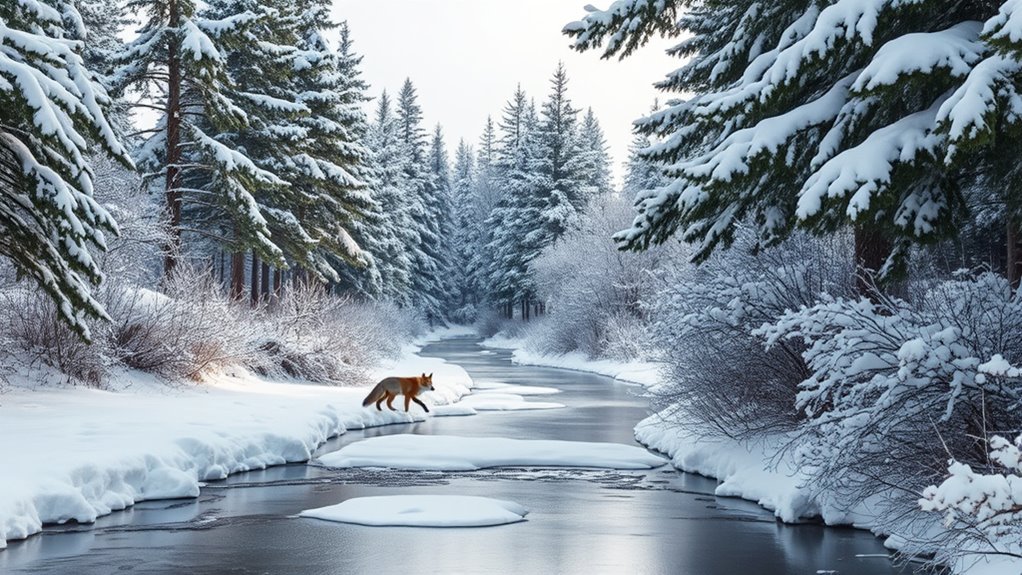

Ecosystems survive winter through a mix of strategies like migration, where birds and animals travel to warmer areas. Many species enter dormancy or torpor, slowing their body processes to conserve energy. They produce antifreeze molecules and shelter underground or beneath snow for insulation. Behavioral changes, such as finding cozy spots, also help. Combining these tactics boosts survival chances in freezing conditions. Keep exploring to discover how nature’s clever adaptations keep ecosystems alive despite the cold.

Prime made for students and young adults
- Fast, free delivery for dorm and study essentials
- Prime Video and Amazon Music included
- Member-only deals
Key Takeaways
- Ecosystems rely on snowpack and soil insulation to moderate temperatures and protect plants and animals from extreme cold.
- Many species employ behavioral strategies like migration, huddling, or burrowing to avoid freezing conditions.
- Plants and animals produce cryoprotectants and antifreeze proteins that prevent ice damage at cellular levels.
- Vegetation and snow cover create natural buffers, maintaining milder microclimates within ecosystems.
- Multiple survival tactics across species ensure ecosystem resilience during winter’s harsh conditions.
As an affiliate, we earn on qualifying purchases.
The Art of Moving South: Migration as a Winter Strategy
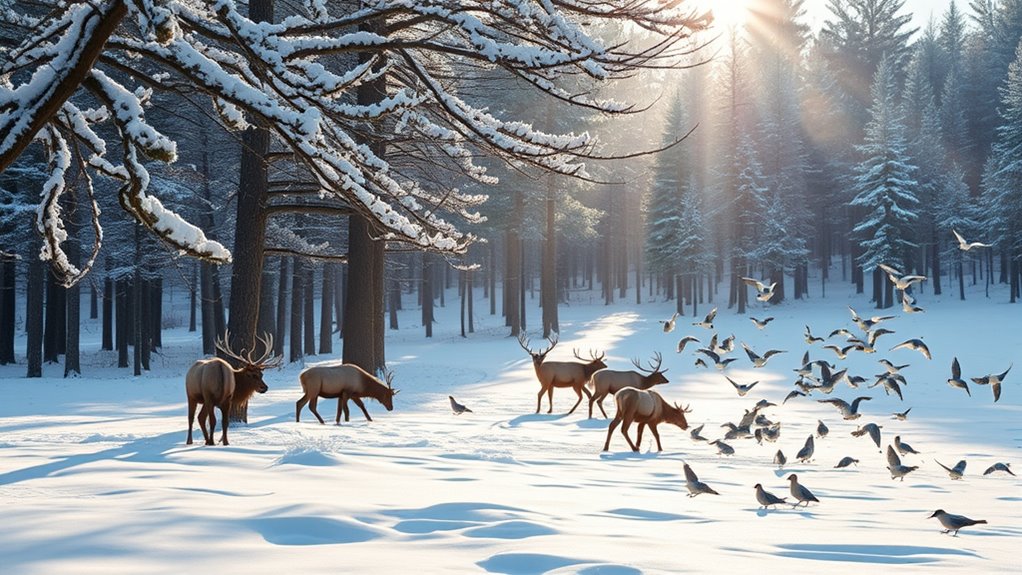
Migration is a crucial strategy animals use to survive winter’s harsh conditions. You might notice birds like swallows, warblers, and hummingbirds flying thousands of miles to warmer areas. By relocating, you avoid freezing temperatures and food shortages that make survival difficult. Migration also helps conserve energy because staying active in extreme cold requires more fuel. High-latitude bats and birds often combine migration with torpor, giving them extra protection during winter. The ability to move to a more hospitable environment depends on a species’ genetic makeup and environmental cues. Over generations, natural selection favors those that can efficiently travel and navigate long distances. This seasonal movement ensures they find food, maintain body warmth, and increase their chances of survival until spring returns.
Slowing Down: Dormancy and Torpor in Cold Seasons
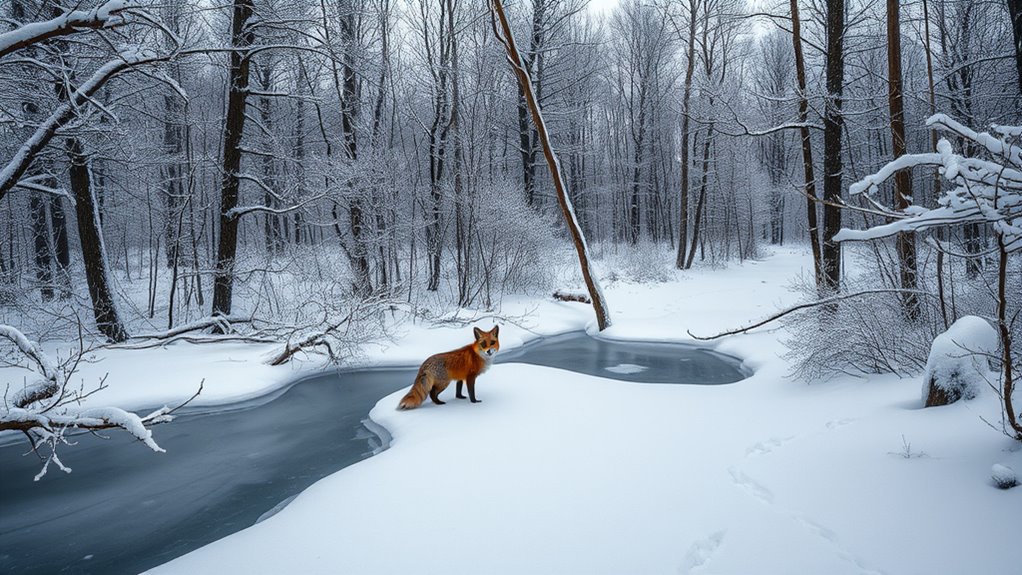
As some animals choose to stay put during winter instead of migrating, they rely on dormancy and torpor to survive the cold months. Dormancy involves a significant slowdown of body processes, allowing animals like reptiles and amphibians to conserve energy when food is scarce. Torpor is a short-term, daily reduction in body temperature and metabolic rate, helping birds and small mammals endure cold nights. During these states, activity levels drop dramatically, and energy needs decrease. You might notice animals tucking themselves into burrows, under logs, or beneath snow cover, where insulation buffers against extreme temperatures. These strategies prevent unnecessary energy expenditure and cellular damage, enabling survival through winter’s harshest conditions. Effective use of environmental insulation further supports animals during dormancy and torpor by providing additional thermal protection. Understanding thermal regulation is key to comprehending how animals adapt their behavior and physiology to survive the winter. Additionally, recent studies highlight how technological innovations are aiding researchers in monitoring these adaptive strategies remotely. Many animals also utilize specialized adaptations such as fat reserves and fur density to enhance their winter survival. Furthermore, the financial resources of wildlife conservation efforts contribute significantly to studying and supporting these survival strategies. Once temperatures rise, animals wake and resume normal activity, ready for the coming seasons.
Molecular Defenses: Adapting to Freezing Temperatures
Many organisms have evolved molecular defenses that enable them to survive freezing temperatures. You might find that their cells produce cryoprotectants, substances like glycerol or antifreeze proteins, which prevent ice crystals from damaging tissues. These molecules lower the freezing point of bodily fluids, allowing survival even when temperatures drop below freezing. In insects, antifreeze proteins bind to forming ice crystals, stopping their growth. Some fish and amphibians synthesize sugars that stabilize cell membranes during cold stress. Mammals and birds generate internal heat but also activate cellular processes that repair cold-induced damage. Signaling pathways detect temperature drops, triggering protective responses. Research on high contrast ratios has shown that higher ratios yield deeper blacks and brighter whites, which is crucial for detailed image rendering in dark scenes]. These molecular defenses are essential for winter survival, providing resilience at the cellular level and enabling many species to tolerate or resist freezing conditions.
Staying Warm: Behavioral Changes to Combat Cold
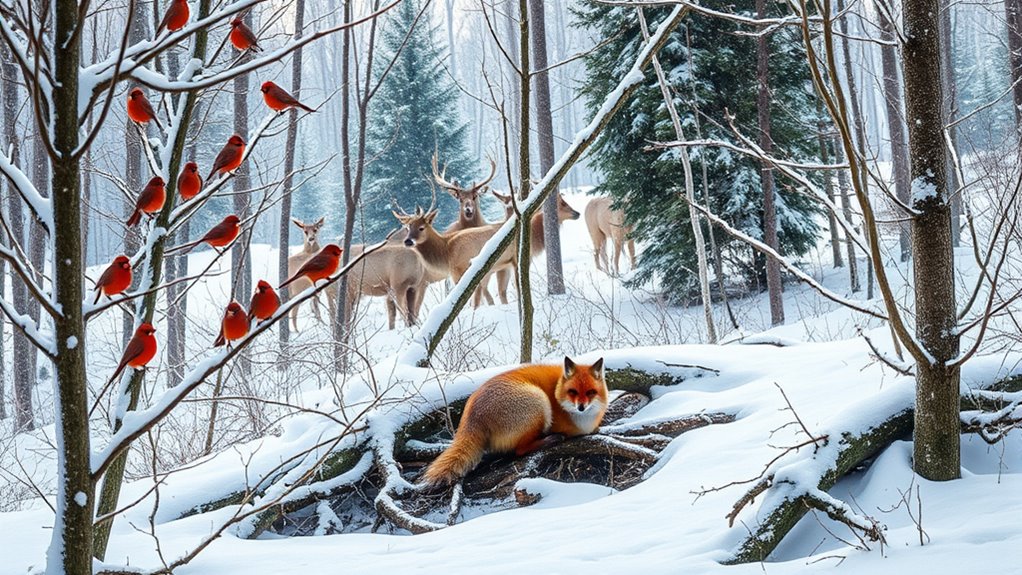
Animals don’t rely solely on molecular defenses to survive winter; they also modify their behavior to stay warm. You might notice animals growing thicker coats or changing their fur color for better insulation and camouflage. Birds tuck their heads into their feathers, conserving heat during cold spells, while reptiles seek shelter underground or beneath leaf litter to avoid freezing temperatures. Many species cache food or hoard supplies, reducing the need to forage in frigid conditions. Some animals, like bats and certain birds, adjust their activity patterns—becoming less active or migrating to warmer areas—minimizing energy loss. These behavioral changes work alongside physiological adaptations, helping animals survive harsh winters without relying only on internal defenses. Recognizing these adaptive behaviors can also help in understanding the importance of behavioral plasticity in how animals protect themselves from environmental stressors. Additionally, some species develop adaptive behaviors, allowing them to adapt quickly to changing winter conditions, which highlights the significance of behavioral flexibility in survival strategies.
Shelter and Environment: The Role of Snow and Soil
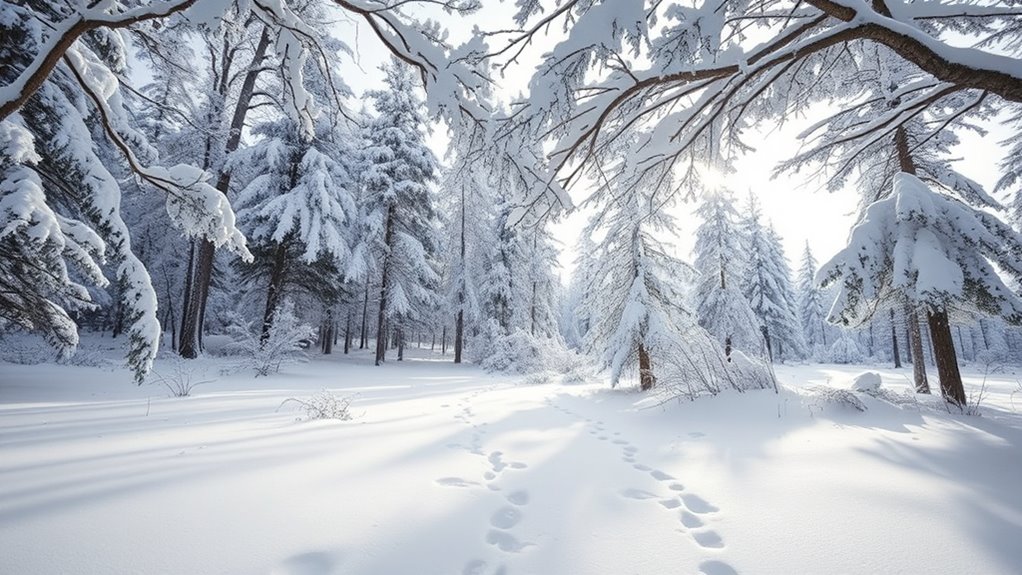
Snow and soil serve as crucial natural shelters during winter, buffering organisms from extreme cold. Snowpack acts like an insulating blanket, maintaining relatively mild temperatures at the soil-snow interface, which protects roots, burrowing animals, and dormant plants from freezing. Deep snow moderates temperature fluctuations, extending the duration of cover and delaying spring thaw. Soil itself provides thermal insulation, slowing heat loss and stabilizing underground habitats. Without sufficient snow, ground temperatures can plummet, exposing soil-dwelling species to lethal cold stress. Some organisms, like snow algae, thrive on snow surfaces, using its thermal properties for survival. Additionally, soil composition influences how well it insulates and retains heat during winter. The presence of vegetation cover can also impact insulation levels, providing extra protection for soil and its inhabitants. These natural shelters are essential, ensuring that life persists beneath the surface even when above-ground conditions become inhospitable. The microclimate created by snow and soil further supports diverse winter ecosystems. Moreover, vibrational energy during winter can influence how organisms adapt and conserve energy in these protected environments. Understanding thermal regulation in soil and snow can help predict how ecosystems respond to changing winter conditions.
Combining Approaches: Multi-Strategy Survival in Nature
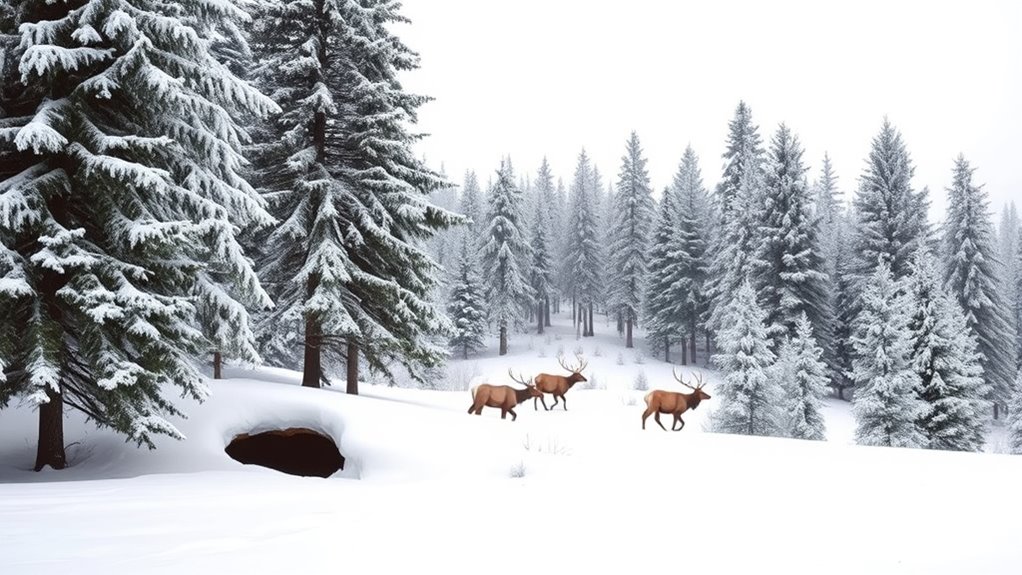
In nature, survival often depends on combining multiple strategies rather than relying on a single approach. You’ll find many species use a mix of migration, dormancy, and physiological adaptations to endure winter’s challenges. High-latitude animals, for example, may migrate to warmer areas while also entering torpor or developing cold-resistant tissues. Some species employ freeze tolerance alongside dormancy, using cryoprotectants to prevent cellular damage. Birds might grow thick feathers, change color, and seek shelter simultaneously. This multi-strategy approach offers flexibility, increasing survival chances amid unpredictable conditions. Recognizing these combinations helps explain complex ecological patterns, like body size variations across latitudes. Overall, species don’t depend on just one tactic but integrate several to navigate the harshest winter environments successfully.
Frequently Asked Questions
How Do Some Species Survive Extreme Cold Without Migrating or Hibernating?
You survive extreme cold by relying on physiological adaptations like producing cryoprotectants that prevent ice from damaging your cells or generating antifreeze proteins to lower your blood’s freezing point. Your body might also develop thicker coats for insulation or change color to blend into snowy environments. These strategies help you endure harsh temperatures without needing to migrate or hibernate, conserving energy and maintaining essential functions throughout winter.
What Triggers Animals to Switch Between Different Winter Survival Strategies?
You’re triggered to switch survival strategies by environmental cues like temperature drops, food scarcity, and daylight changes. When it gets colder or resources dwindle, you might migrate, enter torpor, or hibernate. These shifts are driven by internal hormonal signals and physiological thresholds that respond to external conditions, helping you conserve energy and increase your chances of surviving harsh winter conditions. Adaptability guarantees you choose the most effective strategy for the situation.
How Do Plants Adapt to Survive Freezing Temperatures in Winter?
Imagine plants as brave explorers preparing for a harsh winter voyage. They adapt by forming specialized tissues called buds, which shield essential cells from freezing. They produce antifreeze proteins that act like thermal gloves, preventing ice from damaging tissues. Some shed their leaves to conserve water, while others enter dormancy, slowing their metabolism to a crawl. These strategies help plants endure freezing temperatures and emerge vibrant when spring arrives.
Can Non-Migratory Animals Develop Cold Resistance Similar to Migratory Species?
Yes, non-migratory animals can develop cold resistance similar to migratory species. You might find them relying on mechanisms like dormancy, torpor, and producing cryoprotectants to prevent ice damage and conserve energy during winter. These adaptations help them survive in harsh conditions without relocating, often working in combination with behavioral changes like thick coats or shelter-seeking. Evolution equips them with versatile strategies to endure cold, even if they stay in place.
What Role Do Microbial Communities Play in Winter Ecosystem Survival?
Microbial communities play a vital role in winter ecosystem survival by breaking down organic matter, recycling nutrients, and maintaining soil health despite freezing conditions. You’ll find microbes producing antifreeze proteins, tolerating extreme cold, and forming protective biofilms that shield them from damage. They sustain plant roots, support food webs, and help ecosystems recover in spring, making them essential for resilience during harsh winter months.
Conclusion
As winter casts its icy blanket over the land, nature’s creatures become masterful dancers of survival. You see, they shift, slow down, and adapt like skilled artisans crafting resilience from frost and snow. Their strategies weave a tapestry of life, where movement, rest, and cunning blends create a symphony of endurance. In this frozen world, life’s spirit burns bright, turning even the coldest season into a declaration of nature’s unstoppable will to thrive.
Fall Picks
fall essentials
As an affiliate, we earn on qualifying purchases.