
Protecting the high seas is your next frontier in conservation, as these vast areas host unique ecosystems essential for Earth’s biodiversity, climate regulation, and sustainable fisheries. Threats like overfishing, pollution, illegal activities, and deep-sea mining threaten marine life and habitats. International agreements, innovative technologies, and global cooperation are indispensable to establishing protected zones and enforcing regulations. By understanding these efforts, you’ll discover how we can work together to preserve these significant waters for future generations.
Key Takeaways
- Expanding marine protected areas beyond national jurisdictions can safeguard biodiversity and promote sustainable use of high seas resources.
- Advanced technologies like satellite monitoring, AI, and underwater robotics enhance enforcement against illegal activities.
- Strengthening international legal frameworks and cooperation is crucial for effective high seas conservation and resource management.
- Promoting sustainable fishing practices and reducing pollution help preserve fragile deep-sea ecosystems and biodiversity.
- Fostering global collaboration and investment ensures resilient, future-proof conservation efforts for the high seas.
As an affiliate, we earn on qualifying purchases.
The Unique Ecosystems of the High Seas
Have you ever wondered what makes the high seas so extraordinary? It’s the diverse, hidden ecosystems that thrive beneath the surface. Deep sea vents, for example, host unique communities that survive without sunlight, relying on chemosynthesis instead of photosynthesis. These vents create oases of life in an otherwise dark, cold environment. In addition, the biodiversity of these ecosystems is astonishing, with many species still undiscovered. The marine environment of the high seas plays a vital role in regulating Earth’s climate and supporting global biodiversity. Moreover, technological advancements are enabling us to explore and understand these remote habitats more effectively than ever before. For instance, underwater robotics and advanced sensing technologies are opening new frontiers in deep-sea exploration. Above, the pelagic zones stretch across vast areas, offering a habitat for countless species like fish, whales, and plankton. These open waters support complex food webs and dynamic interactions that shape global climate and oxygen levels. Understanding AI Bifurcation can help us appreciate the importance of protecting these ecosystems amid rapid technological change. You might not see these ecosystems with the naked eye, but their importance is immense. Protecting these environments guarantees the health of the entire planet, highlighting their essential role in Earth’s biological diversity.
Threats Facing International Waters
While the high seas teem with vibrant, hidden ecosystems, they also face increasing threats from human activities. Deep sea mining, driven by the demand for rare minerals, risks damaging fragile habitats and disrupting biodiversity. These unregulated operations can cause irreversible harm to unique deep-sea life forms that have adapted over millions of years. Additionally, illegal fishing depletes fish populations faster than they can replenish, threatening the balance of marine food webs. It often occurs without regard for sustainable practices or international regulations, making it difficult to control. Both threats not only jeopardize the health of these remote ecosystems but also undermine global efforts to conserve marine biodiversity. Employing advanced cybersecurity and data protection solutions can help monitor and combat illegal activities in these sensitive regions. As technology continues to evolve, implementing monitoring systems becomes vital for enforcing regulations and protecting these vulnerable areas. Enhancing international cooperation is also essential for effective enforcement and sustainable management of these vast and complex environments. Strengthening marine protected areas can further help safeguard critical habitats from exploitation and degradation, ensuring the resilience of marine ecosystems for future generations.
International Legal Frameworks and Agreements
International legal frameworks and agreements play a crucial role in safeguarding the high seas by establishing rules and standards for responsible use and conservation. They shape marine governance, ensuring countries cooperate and share responsibilities beyond national jurisdictions. These agreements help define legal sovereignty over maritime resources, clarifying what nations can and cannot do in international waters. The United Nations Convention on the Law of the Sea (UNCLOS) is a key treaty that sets out rights and duties for states, promoting sustainable management of marine ecosystems. While these frameworks create a foundation for collective action, enforcement remains a challenge. Strengthening international cooperation and updating legal instruments are essential steps to guarantee the high seas are protected for future generations. Legal frameworks provide a structured approach to address emerging threats and adapt to changing environmental conditions, including marine conservation efforts that require ongoing international commitment.
Innovative Strategies for Marine Conservation
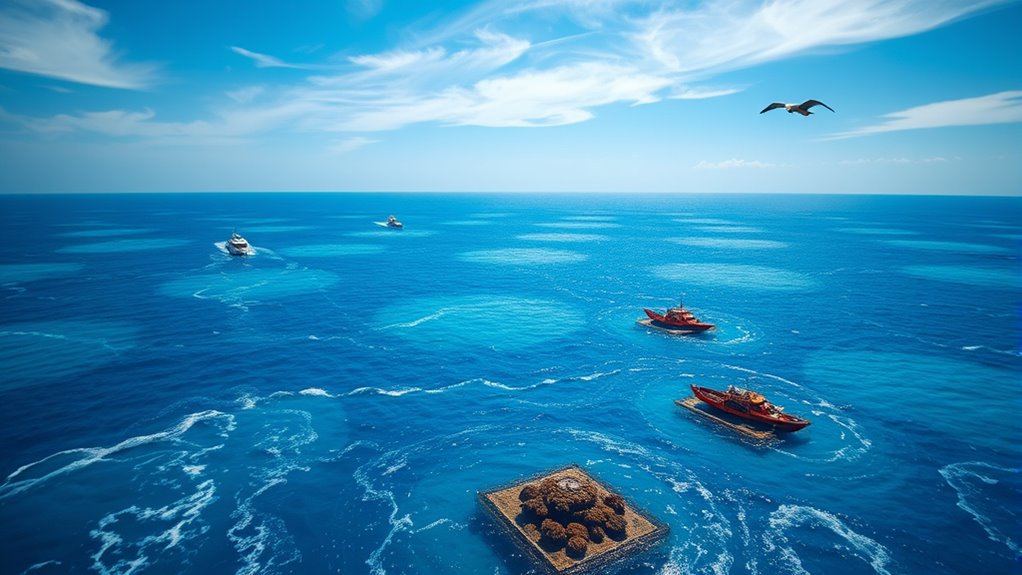
Innovative strategies are transforming marine conservation by integrating technology, community engagement, and policy reform to protect the high seas more effectively. You can now expand marine protected areas (MPAs) beyond national jurisdictions, creating safer zones for marine life. Innovative enforcement tools like satellite monitoring, drones, and AI help detect illegal fishing and pollution in real-time, making enforcement more efficient. Engaging local communities and stakeholders ensures compliance and fosters stewardship, turning conservation efforts into a shared responsibility. These approaches not only strengthen existing protections but also adapt to new challenges, making your efforts more resilient. Incorporating personality traits into conservation strategies can improve stakeholder collaboration and enhance compliance efforts. By combining technological advances with community-driven initiatives and smart policies, you can markedly advance the conservation of the high seas, ensuring healthier oceans for future generations.
The Role of Global Cooperation and Future Opportunities

Have you ever wondered how global cooperation can shape the future of high seas conservation? Marine diplomacy plays a vital role in fostering international agreements that address shared challenges. Through transboundary management, countries can coordinate efforts to protect marine biodiversity beyond national jurisdictions. By working together, nations can establish marine protected areas and regulate activities like fishing and shipping more effectively. Future opportunities lie in strengthening international frameworks and embracing innovative legal tools to guarantee sustainable use of high seas resources. Your engagement and support can influence policymakers to prioritize multilateral cooperation. Additionally, leveraging marine governance approaches can enhance compliance and enforcement efforts. Building on existing international legal frameworks, such as the United Nations Convention on the Law of the Sea, can further support these initiatives. Recognizing the importance of Cultural Intelligence in international negotiations can facilitate mutual understanding and trust among diverse stakeholders. Moreover, integrating renewable energy solutions, like offshore wind farms powered by hydrogen fuel, can reduce the environmental impact of maritime activities. Developing effective monitoring and enforcement mechanisms is essential to ensure that conservation measures are upheld and violations are addressed promptly. Ultimately, global collaboration isn’t just about protecting the ocean; it’s about securing a healthy, resilient future for all who depend on these vast, interconnected ecosystems.
Frequently Asked Questions
How Can Local Communities Participate in High Seas Conservation Efforts?
You can participate in high seas conservation by engaging with local communities and supporting initiatives focused on sustainable practices. Join community-led efforts to protect marine life, advocate for policies that preserve ocean health, and promote responsible fishing and tourism. Your active involvement helps raise awareness and encourages broader community engagement, making a meaningful impact on conserving the high seas for future generations. Every action counts in safeguarding these essential ecosystems.
What Technological Innovations Are Most Effective for Monitoring Remote Marine Areas?
Think of satellite surveillance and autonomous vehicles as your eyes and legs in the vast, unseen ocean. Satellite surveillance offers broad, real-time views of remote marine areas, catching illegal activities from space. Autonomous vehicles, including underwater drones, dive deep and gather detailed data where humans can’t reach. Together, these innovations create a powerful duo, making monitoring high seas easier, more precise, and incredibly effective in safeguarding our oceans.
How Do Economic Interests Influence International Marine Conservation Policies?
You should know that economic interests heavily influence international marine conservation policies through marine funding and corporate lobbying. When businesses prioritize profits, they often push for fewer restrictions, making it harder to establish strong protections. Governments may also be swayed by corporate lobbying efforts, delaying or weakening conservation measures to support economic growth. Recognizing this influence helps you understand the challenges faced in balancing economic gains with protecting our essential ocean ecosystems.
Are There Successful Case Studies of High Seas Protected Areas?
Imagine vast ocean stretches where marine protected areas flourish beneath shimmering waves. Yes, there are successful case studies. For instance, the Coral Sea Marine Park, established through international agreements, safeguards critical habitats. Similarly, the Southern Ocean’s protected zones demonstrate international cooperation’s power. These efforts show that with strong international agreements, you can create effective marine protected areas, helping conserve high seas biodiversity and maintain healthy ocean ecosystems.
What Role Do Indigenous Peoples Have in Ocean Conservation Initiatives?
You play a crucial role in ocean conservation by supporting Indigenous stewardship, which leverages traditional knowledge and sustainable practices. Indigenous peoples help preserve cultural heritage while protecting marine ecosystems, fostering a deep connection to the ocean. By partnering with Indigenous communities, your efforts promote cultural preservation and guarantee their voices are included in decision-making, ultimately strengthening conservation initiatives and safeguarding the high seas for future generations.
Conclusion
If you think protecting the high seas is impossible, think again—these waters hold the key to Earth’s survival, more crucial than the air you breathe. By uniting efforts, crafting bold legal agreements, and embracing innovative strategies, you can help turn the tide against unstoppable threats. The future of our planet’s most mysterious frontier depends on your action. Don’t let this epic battle for the high seas become just a distant dream—be part of the change today.