
The Gulf Stream plays an essential role in shaping your climate by moving warm water from the equator to higher latitudes, keeping Europe mild and influencing weather patterns. It also supports rich marine ecosystems by transporting nutrients and maintaining ocean health. However, warming and melting ice weaken this current, risking climate shifts and ecosystem disruptions. To understand how these changes could impact the planet and your life, explore the details further.
Key Takeaways
- The Gulf Stream transports warm water northward, regulating temperatures and stabilizing climates in Europe and North America.
- It supports marine biodiversity by distributing nutrients and influencing sea surface temperatures vital for sea life.
- Warming and melting ice weaken the Gulf Stream, disrupting nutrient flow and causing shifts in species distribution and ecosystem health.
- Changes in the Gulf Stream can lead to extreme weather events, sea level rise, and altered rainfall patterns globally.
- A potential collapse of the Gulf Stream threatens global climate stability, marine ecosystems, and fisheries.

The Uninhabitable Earth: Life After Warming
As an affiliate, we earn on qualifying purchases.
As an affiliate, we earn on qualifying purchases.
The Gulf Stream’s Role in Global Climate Regulation
The Gulf Stream plays a essential role in regulating Earth’s climate by transporting warm water from the equator toward higher latitudes. This movement redistributes heat across the Atlantic, helping keep northern Europe milder than its latitude would suggest. It maintains temperature gradients that influence weather patterns, including storm formation and rainfall distribution. As the warm water flows north, it releases heat into the atmosphere, moderating regional climates. Without the Gulf Stream, parts of North America and Europe could experience much colder conditions. This system also influences atmospheric circulation patterns, which shape global weather systems. By balancing heat distribution between the tropics and polar regions, the Gulf Stream acts as a critical climate stabilizer, ensuring a relatively steady climate and supporting diverse ecosystems worldwide. Additionally, the ocean currents generated by the Gulf Stream play a vital role in sustaining marine biodiversity and supporting fisheries in the Atlantic region. The strength and stability of this current are crucial for maintaining the overall health of the ocean’s ecosystems, which are sensitive to climate variations. Moreover, the heat transfer facilitated by this current helps regulate sea surface temperatures, impacting marine life behavior and migration patterns.
How Warming and Weakening Affect Ocean Circulation

Warming ocean surfaces cause the water to become lighter and less dense, which weakens the circulation driven by temperature differences. At the same time, melting ice adds freshwater to the ocean, further diluting salinity and disrupting the sinking currents. Together, these factors slow down and destabilize the essential ocean conveyor belt, impacting global climate patterns. Additionally, renewable energy sources like solar and wind power can help reduce greenhouse gas emissions, mitigating some of the climate change effects that contribute to ocean warming.
Temperature-Induced Circulation Changes
As ocean surface temperatures rise due to global warming, the density of the warm, buoyant waters decreases, weakening the driving force behind the Gulf Stream. Warmer waters become less dense, reducing the pressure that pushes surface waters northward. This diminishes the strength of the current, slowing the entire circulation system. As the flow weakens, less warm water reaches higher latitudes, disrupting heat distribution. The reduced heat transport can lead to regional cooling, even as global temperatures increase. Additionally, lighter surface waters hinder the sinking of colder, denser waters in the North Atlantic, further weakening the circulation. These temperature-induced changes destabilize the balance of ocean currents, impacting climate patterns and marine ecosystems worldwide. Moreover, climate change can accelerate these processes, leading to more unpredictable and severe shifts in ocean behavior. Furthermore, changes in sea surface temperatures can affect marine biodiversity and disrupt ecological balances across ocean habitats. The weakening of the Gulf Stream could also contribute to sea level rise along the eastern coast of North America, exacerbating coastal erosion and flooding. Such alterations may also influence renewable energy potential by affecting ocean current patterns critical for tidal and wave energy development.
Freshwater Dilution Effects
Rising ocean temperatures and increased freshwater input from melting ice sheets directly weaken the Gulf Stream by diluting its surface waters. This process reduces water density, making it harder for the current to sink and circulate effectively. As a result, the entire system slows down, disrupting climate patterns. Here’s how freshwater dilution impacts you:
- It decreases salinity, weakening the sinking branch of the Atlantic Meridional Overturning Circulation (AMOC).
- Lighter surface waters hinder the transfer of heat northward, affecting regional climates.
- The Gulf Stream’s slowing can cause cooling in parts of Europe and North America.
- Disrupted circulation impacts marine ecosystems, reducing nutrient transport and biodiversity.
- Changes in water density also influence the contrast ratio and overall image quality of oceanographic visualizations used in climate research.
- Additionally, the reduction in salinity and density can lead to shifts in the salinity levels, further complicating ocean circulation patterns.
- These alterations in circulation can also contribute to the weakening of global climate stability, highlighting the interconnectedness of ocean currents and climate systems.
- Understanding these processes emphasizes the importance of monitoring ocean salinity to predict future climate changes effectively.
Impact on Marine Ecosystems and Biodiversity
As the Gulf Stream weakens, you’ll notice disruptions in nutrient transport that support marine life, leading to less productive ecosystems. Species may shift their habitats as temperature and salinity changes alter their preferred environments, affecting biodiversity. These shifts challenge ecosystem resilience, making it harder for marine communities to adapt and recover from environmental stresses. Additionally, changes in ocean currents can influence the distribution of marine ecosystems, impacting the entire food web. Moreover, the alteration of currents can interfere with the oceanic carbon cycle, which plays a vital role in regulating global climate. Understanding the ocean circulation patterns is essential for predicting future changes in climate and marine biodiversity. Variations in these currents also influence global climate systems, emphasizing the interconnectedness of ocean dynamics and climate regulation. Recognizing the importance of marine biodiversity can help inform conservation efforts aimed at mitigating these impacts.
Nutrient Transport Disruptions
Disruptions in nutrient transport caused by weakening or shifting currents can substantially impact marine ecosystems and biodiversity. You might notice that when the Gulf Stream slows or changes course, essential nutrients like nitrogen and phosphorus don’t reach the right places. This affects:
- Fish spawning grounds, reducing populations and food sources.
- Phytoplankton productivity, which forms the base of the marine food web.
- Coral reef health, as nutrient shortages weaken growth and resilience.
- Migratory patterns, forcing species to adapt or decline.
– Changes in ocean currents can also influence feeding behaviors among marine species, affecting predator-prey dynamics and overall ecosystem health. These alterations can be linked to broader climate shifts that impact ocean circulation patterns and the distribution of nutrients globally. For example, shifts in these patterns may lead to altered migration routes, further disrupting ecological balance.
Without consistent nutrient flow, ecosystems become less productive and more fragile. Marine species rely on these nutrients for survival, so disruptions threaten biodiversity, weaken food webs, and reduce the resilience of ocean life against climate change impacts.
Species Distribution Shifts
When ocean currents like the Gulf Stream weaken or shift, they alter the distribution of marine species across different regions. You’ll notice fish, plankton, and other marine life moving to new areas as temperature and nutrient patterns change. Species adapted to specific conditions may struggle to survive, leading to local declines or migrations. For example, cold-water species might retreat northward or to deeper waters, while warm-water species expand their range. These shifts disrupt existing ecosystems, affecting predator-prey relationships and breeding grounds. Marine biodiversity becomes fragmented, and some species may face extinction if they cannot adapt quickly enough. As the Gulf Stream’s influence weakens, you’ll see a cascade of changes that reshape the composition and stability of marine communities worldwide. Additionally, changes in ocean currents can impact climate regulation, further influencing global weather patterns and marine habitats. Fluctuations in current strength can also lead to altered nutrient flows, impacting primary productivity and the entire food chain. Variations in current strength can also influence marine migration patterns, affecting the timing and success of species’ reproductive cycles. Moreover, a weakening Gulf Stream can contribute to sea level rise along the eastern coast of North America, altering coastal ecosystems.
Ecosystem Resilience Challenges
The weakening of the Gulf Stream challenges marine ecosystems by altering the fundamental conditions they rely on for survival. As currents slow and temperatures shift, you’ll see disruptions like:
- Changes in nutrient transport, which can reduce food availability for plankton, fish, and whales.
- Temperature fluctuations that threaten species adapted to stable conditions, risking extinctions.
- Altered migration and breeding patterns, disrupting life cycles of key marine species.
- Reduced biodiversity, as some habitats become inhospitable, leading to ecosystem imbalance.
These shifts weaken resilience, making ecosystems more vulnerable to additional stressors like pollution and overfishing. The result could be a cascade of declines, fundamentally changing marine biodiversity and the health of ocean habitats you depend on.
Potential Risks of a System Collapse
A collapse of the Gulf Stream System could have catastrophic consequences for global climate stability. If this happens, you’d see dramatic shifts in weather patterns worldwide, including severe storms, droughts, and floods. The Atlantic Meridional Overturning Circulation would weaken or stop, disrupting heat distribution and causing significant cooling in Europe and North America. This could lead to colder temperatures in regions that rely on the Gulf Stream’s warmth, severely impacting agriculture and ecosystems. Rising sea levels along the U.S. East Coast and Greenland would accelerate as melting ice accelerates. Marine life depends on the current for nutrients and temperature regulation; a collapse would threaten biodiversity and fisheries. Overall, the stability of our climate and ecosystems would face unprecedented stress and uncertainty.
Environmental and Societal Consequences of Changes
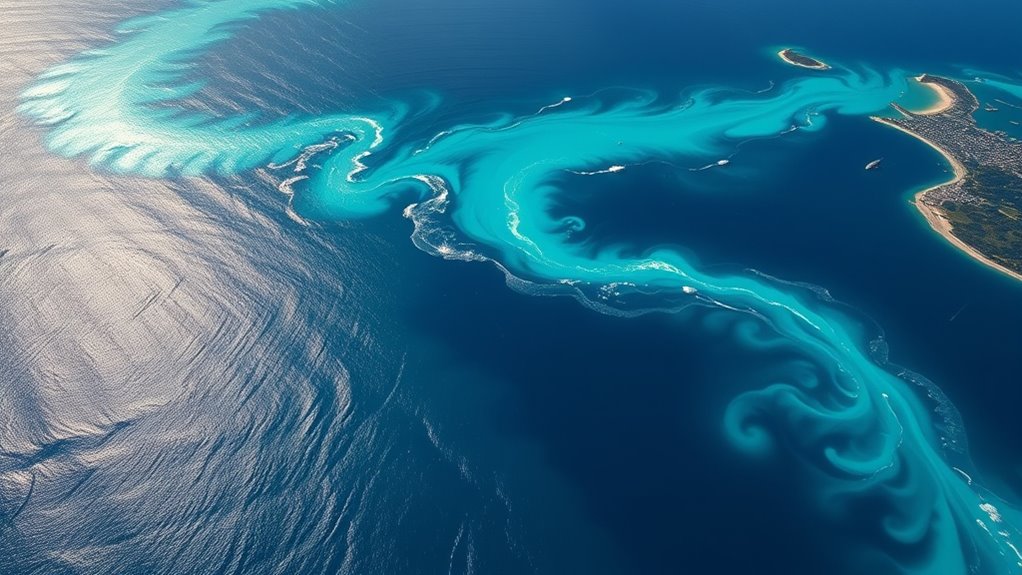
Changes in the Gulf Stream directly threaten both the environment and society by disrupting climate stability and weather patterns. You might notice more extreme weather events, shifts in rainfall, and temperature swings. Here’s what could happen:
- Coastal communities could face increased flooding or droughts due to altered precipitation patterns.
- Agriculture may suffer as growing seasons become unpredictable, threatening food security.
- Marine ecosystems dependent on current flow for nutrients and temperature regulation could collapse, reducing fish stocks.
- European and North American climates might experience colder spells, impacting energy use and infrastructure.
These changes can lead to economic strain, migration pressures, and loss of biodiversity, fundamentally altering your environment and way of life. The ripple effects could last generations.
The Future of the Gulf Stream and Global Climate
As concerns grow about the ongoing weakening of the Gulf Stream, scientists project that its future could markedly reshape global climate patterns. If the trend continues, we might see colder conditions in northern Europe and the eastern U.S., despite overall global warming. A weakened Gulf Stream reduces heat transport, intensifying regional cooling and disrupting weather systems. Some models warn of a potential collapse as early as 2025, which could lead to dramatic climate shifts, including a 10-15°C temperature drop in Western Europe and rising sea levels from accelerated Greenland melting. While a complete shutdown remains uncertain, ongoing weakening could amplify extreme weather, droughts, and floods worldwide. The future of the Gulf Stream is tightly linked to our climate trajectory, making it a critical focus for understanding and mitigating future climate risks.
Frequently Asked Questions
How Does the Gulf Stream Influence Weather Patterns Beyond Europe and North America?
You might not realize it, but the Gulf Stream influences weather patterns far beyond Europe and North America. Its warmth and movement help shape the jet stream, which affects storm tracks and rainfall worldwide. When the Gulf Stream weakens, it can lead to unpredictable weather, like droughts or intense storms, even in regions thousands of miles away. So, changes here ripple across the globe, impacting your local climate and weather stability.
What Are the Early Signs Indicating Gulf Stream Weakening or Potential Collapse?
You can spot early signs of Gulf Stream weakening through a 15% reduction in its strength since mid-20th century, along with faster-than-average warming of surface waters by about 1°C over two decades. Watch for the system shifting closer to the US East Coast at roughly 5 km per decade, and note increasing disruptions in regional climate patterns, such as more extreme weather, droughts, or unexpected cooling in parts of the North Atlantic.
How Might Gulf Stream Changes Affect Global Fisheries and Marine Food Webs?
You’ll see global fisheries suffer as Gulf Stream changes disrupt nutrient transport and ocean temperatures. Fish populations rely on stable currents for food, breeding grounds, and migration routes. When the Gulf Stream weakens or shifts, it causes habitat loss and decreases fish stocks, impacting food webs worldwide. This destabilizes marine ecosystems, threatens livelihoods, and could lead to food shortages, especially for communities dependent on fishing industries.
Could a Gulf Stream Collapse Trigger Irreversible Climate Shifts Worldwide?
Yes, a Gulf Stream collapse could trigger irreversible climate shifts worldwide. You’d see drastic cooling in Western Europe, rising sea levels, and disrupted weather patterns globally. The change would destabilize ecosystems, harm agriculture, and accelerate ice melt in Greenland and Antarctica. These impacts could lock in new climate regimes, making recovery difficult, as ocean and atmospheric systems reorganize into a different, potentially permanent, state.
What Technological Methods Are Used to Monitor Gulf Stream Strength and Movements?
You use a variety of technological methods to monitor the Gulf Stream’s strength and movements. Buoys equipped with sensors float on and beneath the surface, collecting real-time data on temperature, salinity, and current speed. Satellites track sea surface height and temperature changes, providing broad spatial coverage. Autonomous underwater gliders and research ships also gather detailed oceanographic measurements, helping scientists understand shifts in the Gulf Stream’s flow and behavior.
Conclusion
As the Gulf Stream’s fragile thread of life begins to unravel, you stand at a crossroads. Its weakening symbolizes a world teetering on the edge of imbalance, where climate and marine life hang in the balance. Remember, your actions can be the lighthouse guiding us back to stability. Protecting this essential current isn’t just about the ocean—it’s about safeguarding the heartbeat of our planet’s future. The choice to act is yours.