Conservation labels like endangered, threatened, and extinct reveal how at-risk a species truly is. Endangered means a species faces a very high risk of extinction in the wild, while threatened indicates it’s at risk but not yet critically so. Extinct means no individuals remain anywhere, and extirpated refers to local loss. These labels depend on factors like population size, habitat loss, and threats. To understand the full picture, explore how these categories guide conservation efforts worldwide.
Key Takeaways
- “Endangered” and “Threatened” are IUCN categories indicating species at high risk of extinction, with “Endangered” being more severe.
- “Extinct” means no individuals remain anywhere, while “Extirpated” refers to local disappearance but survival elsewhere.
- These labels guide conservation actions, legal protections, and resource allocation to prevent species loss.
- The categories are based on criteria like population size, decline rate, and habitat stability.
- Conservation statuses can vary regionally, reflecting local threats and efforts, even if global status differs.
Understanding the IUCN Conservation Categories
To understand the IUCN conservation categories, you need to recognize that they classify species based on their risk of extinction. The categories include Not Evaluated, Data Deficient, Least Concern, Near Threatened, Vulnerable, Endangered, Critically Endangered, Extinct in the Wild, and Extinct. Threatened species encompass Vulnerable, Endangered, and Critically Endangered. These classifications are determined by factors like population size, decline rate, geographic range, and habitat stability. Species are reassessed every 5 to 10 years to ensure their status reflects current data. While millions of species exist, only a fraction have been evaluated. Your understanding of these categories helps grasp the urgency behind conservation efforts and highlights which species need immediate protection to prevent extinction. Conservation status provides a standardized way to prioritize efforts and allocate resources effectively.
Criteria and Definitions for Threatened and Endangered Species
What exactly determines whether a species is classified as threatened or endangered? It’s based on specific criteria set by organizations like the IUCN. These include population size, rate of decline, geographic range, and habitat stability. For example, if a species has fewer than 10,000 mature individuals or faces a greater than 50% chance of extinction within ten years, it qualifies as endangered or critically endangered. Threatened categories—Vulnerable, Endangered, and Critically Endangered—reflect increasing levels of risk. Species are reassessed every 5–10 years to incorporate new data. Factors influencing risk include habitat loss, overexploitation, disease, and environmental changes. These criteria help determine legal protections and prioritize conservation efforts, ensuring actions are based on measurable, scientific thresholds. Conservation criteria provide a standardized framework for assessing species’ risk levels worldwide.
The Significance of Extinction and Extirpation Labels
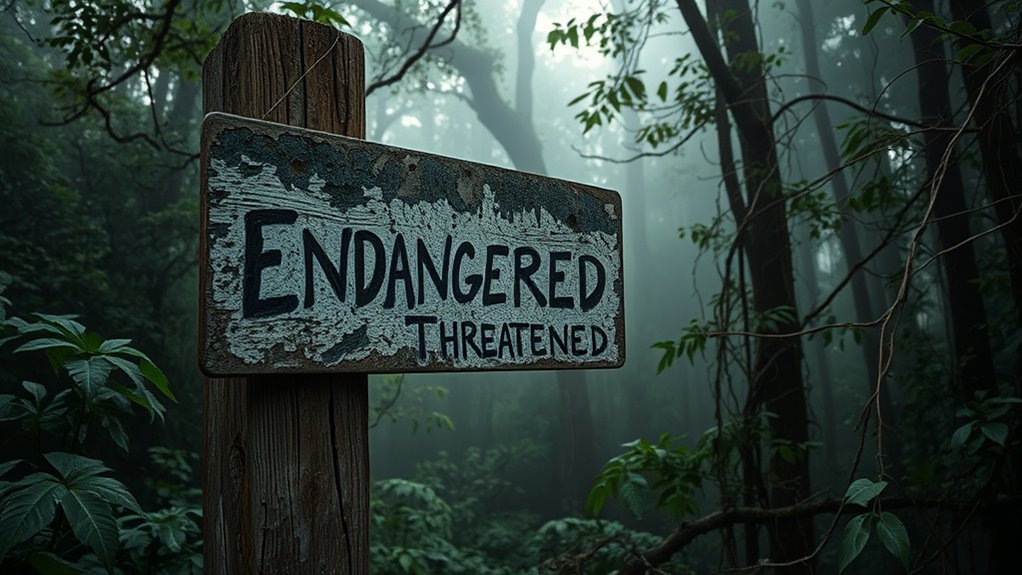
Extinction and extirpation labels carry critical weight in conservation because they signal the finality of a species’ decline. These designations trigger legal protections, funding, and urgent action to prevent further losses. Recognizing a species as extinct confirms no individuals remain anywhere, closing the chapter on its existence. Extirpation means a species no longer exists in a specific region but survives elsewhere, highlighting local threats. These labels emphasize the irreversible nature of loss, underscoring the importance of early intervention. They also influence conservation priorities and resource allocation. Furthermore, understanding the impact of habitat loss on species decline underscores the urgency of addressing environmental threats before reaching irreversible points.
- Serve as a warning about ongoing threats and failures
- Help focus efforts on preventing local extinctions
- Inform policies for habitat restoration and protection
- Highlight the need for urgent research and action to avoid complete extinction
How Conservation Status Varies Across Regions and Species

Conservation status often varies considerably across regions and species, reflecting differences in habitat quality, human pressures, and local policies. For example, a species might be endangered in one country due to habitat loss but considered of least concern globally because it’s abundant elsewhere. Regional assessments account for local threats, land use, and conservation efforts, which can differ widely. Some species face severe threats in heavily populated or deforested areas, while remaining stable in protected zones. Additionally, different countries may apply varying criteria and legal definitions, affecting classification. Species with small, isolated populations are often more threatened locally than globally. Recognizing these regional differences helps tailor conservation strategies, ensuring efforts address specific local threats and habitat conditions effectively. Effective wall organization and aesthetic solutions can also play a role in promoting awareness and engagement with conservation efforts. Understanding regional conservation policies is crucial for implementing targeted protection measures that respond to local ecological challenges. Moreover, local community involvement can significantly enhance the success of conservation initiatives by fostering sustainable practices and local stewardship. Furthermore, regional ecological factors influence how species adapt and respond to environmental changes, underscoring the importance of localized conservation approaches. Additionally, the integration of AI security technologies can support monitoring and enforcement efforts in conservation areas, providing real-time data to address threats more effectively.
The Role of Legal Protections and Ongoing Monitoring

Legal protections play a crucial role in safeguarding species at risk by establishing rules that restrict harmful activities such as habitat destruction, illegal collection, and poaching. These laws, like the ESA, create enforceable measures that prevent further decline and promote recovery efforts. Ongoing monitoring is essential to detect population changes and habitat threats early, ensuring timely intervention. Through regular reassessments, authorities can update conservation priorities and adjust protections accordingly. You should understand that effective monitoring involves:
Legal protections and ongoing monitoring are vital for effective species conservation and recovery.
- Tracking population numbers and health
- Evaluating habitat quality and availability
- Identifying emerging threats
- Assessing conservation outcomes and adjusting strategies
This continuous process guarantees that protections stay relevant and effective, helping species recover or stabilize before reaching critical danger levels. Proper sizing and load planning] are also vital to ensure that conservation efforts are sustainable and effective. Together, legal safeguards and vigilant monitoring form the backbone of successful conservation.
Frequently Asked Questions
How Often Are Species’ Conservation Statuses Reassessed Globally?
You should know that species’ conservation statuses are typically reassessed every 5 to 10 years globally. This process helps guarantee that new data on population trends, habitat changes, and threats are incorporated. Regular reassessment allows conservation efforts to stay current and effective, especially for species at higher risk. By updating statuses periodically, you can better understand which species need urgent protection and which are stable or improving.
What Are the Main Factors Causing Species to Become Endangered?
You cause species to become endangered mainly through habitat destruction, overhunting, and pollution, which directly reduce their populations. Overexploitation and invasive species also play significant roles, disrupting natural balances. Climate change alters environments and food sources, making survival harder. Disease and natural predation further threaten vulnerable populations. When these factors combine or persist, species struggle to survive, pushing them closer to extinction if action isn’t taken quickly.
How Do Regional Assessments Differ From Global Conservation Statuses?
You might think conservation statuses are the same everywhere, but regional assessments can surprise you. They often differ from global status, highlighting local threats or successes. In some areas, a species may be thriving, yet globally endangered. These differences matter because policies, protections, and conservation efforts are tailored locally. So, your understanding of a species’ health depends on where you look—regional data can reveal a very different story than the global picture.
Are All Threatened Species Legally Protected in Every Country?
Not all threatened species are legally protected in every country. Legal protections depend on national laws and conservation policies, which vary widely. While some countries have strict laws safeguarding threatened species, others may lack enforcement or specific regulations. You need to check local regulations to understand what protections exist. International agreements like the ESA or CITES can offer some protection, but enforcement and scope differ by country.
Can Species Move Between Categories Over Time?
Species can move between categories over time, much like ships steering changing seas. As populations grow or decline, or threats lessen or intensify, their conservation status can shift. For example, a species might recover from Endangered to Vulnerable, or face new threats that push it closer to extinction. Regular reassessments ensure these labels reflect current realities, helping guide conservation efforts and legal protections accordingly.
Conclusion
Understanding these labels helps you grasp how essential conservation efforts are. Did you know that over 28,000 species are threatened with extinction worldwide? This staggering number highlights the urgent need to protect our planet’s biodiversity. By staying informed and supporting conservation, you can make a difference. Every action counts in preventing further extinctions and ensuring future generations can enjoy the rich diversity of life we have today.