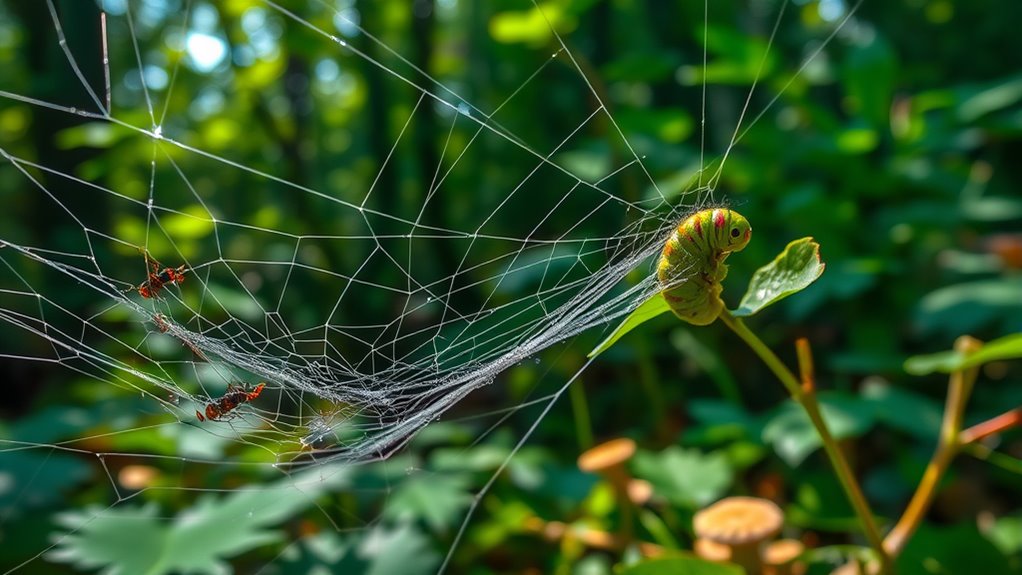

A food chain shows a simple, straight-line flow of energy from producers to consumers, while a food web illustrates the complex network of many feeding relationships among different species. Food webs reflect the interconnectedness and redundancy in ecosystems, making them more resilient when changes occur. Understanding these differences helps you see how energy moves and ecosystems stay balanced. Keep exploring to learn how these connections support the health and stability of our environment.

Prime made for students and young adults
- Fast, free delivery for dorm and study essentials
- Prime Video and Amazon Music included
- Member-only deals
Key Takeaways
- Food chains depict a single, linear pathway of energy transfer, while food webs show complex, interconnected feeding relationships among multiple species.
- Food chains are simplified models, whereas food webs illustrate the diversity and redundancy in ecosystems.
- Food webs incorporate multiple food chains, highlighting the multiple prey and predator interactions within an ecosystem.
- Food webs enhance ecosystem resilience by providing alternative pathways for energy flow if one species is affected.
- Understanding both helps explain ecosystem stability, species interactions, and the importance of biodiversity for ecological health.
As an affiliate, we earn on qualifying purchases.
Understanding Food Chains and Food Webs
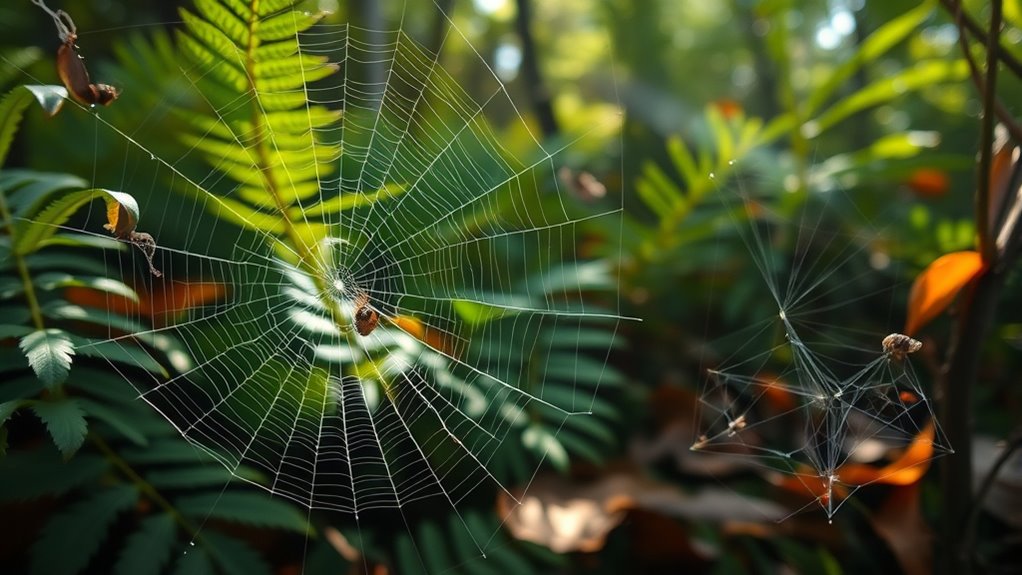
Have you ever wondered how energy and nutrients move through an ecosystem? It all starts with food chains, which show a simple, straight-line transfer from one organism to another. Producers, like plants, create energy through photosynthesis, serving as the foundation. Consumers, such as herbivores and predators, eat producers or other consumers, passing energy along trophic levels. Decomposers break down dead matter, recycling nutrients back into the environment. While food chains highlight a single pathway, food webs combine many chains, illustrating complex, interconnected feeding relationships. In a web, organisms often have multiple prey and predators, which makes ecosystems more resilient. Understanding these systems helps reveal how energy flows, how species depend on each other, and how ecosystems sustain themselves. A balanced ecosystem relies on the interconnectedness of food webs to maintain stability and support diverse life forms. Recognizing ecological relationships can provide deeper insights into ecosystem health and sustainability. Additionally, the interconnectedness of food webs emphasizes the importance of conserving biodiversity and native species, which play critical roles in maintaining ecosystem stability. Exploring how different species interact through nutrient cycling further highlights the complexity of ecological networks, demonstrating how vital biodiversity is for ecosystem resilience.
Key Components of Ecosystems
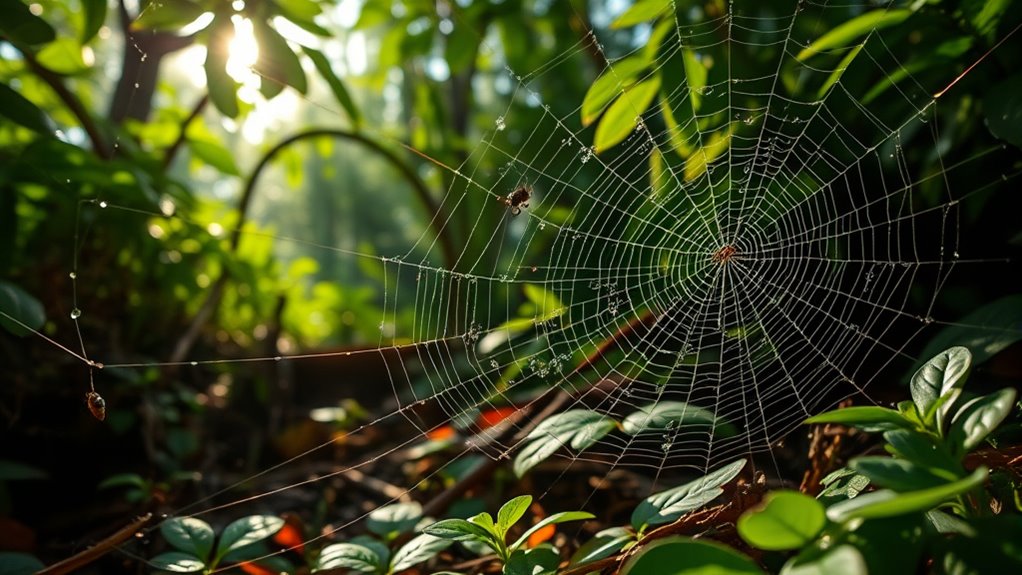
Ecosystems are composed of various key components that work together to maintain balance and support life. Producers, such as plants and algae, capture sunlight and create organic matter through photosynthesis, forming the foundation of the food web. Consumers, including herbivores, carnivores, and omnivores, feed on producers or other animals, transferring energy throughout the system. Decomposers like fungi and bacteria break down dead organic material, recycling nutrients back into the soil or water for use by producers. Abiotic components like sunlight, water, air, and minerals provide essential resources and influence living organisms. These components interact dynamically, creating complex relationships that sustain ecosystems. Understanding these parts helps you grasp how ecosystems stay resilient and adapt to changes.
How Energy Moves Through Food Chains
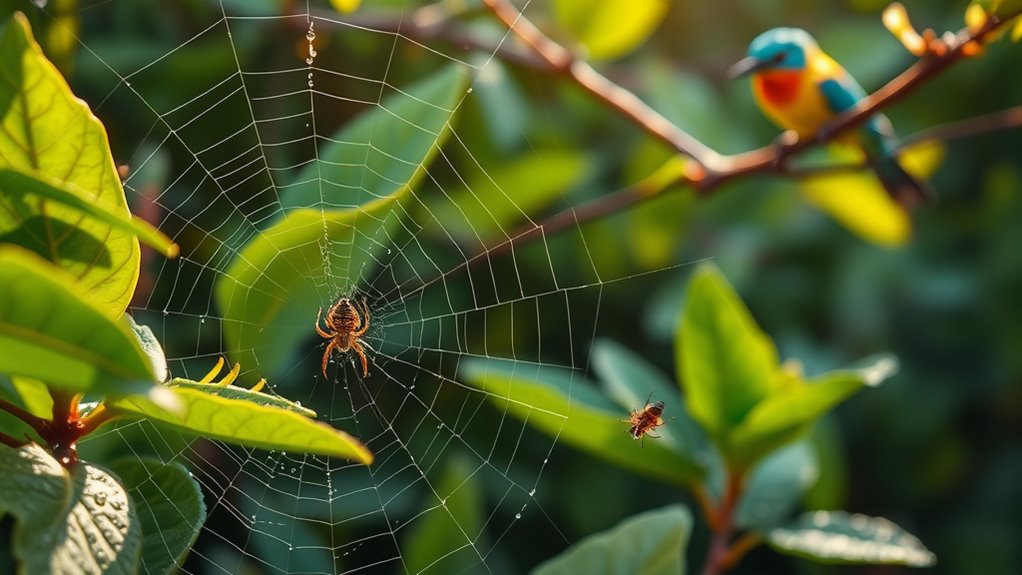
Energy moves through food chains in a one-way flow, starting with producers that capture sunlight and convert it into organic molecules through photosynthesis. From there, energy transfers step-by-step to consumers and decomposers. You can think of it like this:
- Producers generate organic matter using sunlight, forming the energy base.
- Primary consumers eat producers, gaining energy from plants.
- Secondary consumers eat primary consumers, passing energy further.
- Decomposers break down dead organisms, returning nutrients to the environment.
- Cookies are used to track visitor interactions and improve the browsing experience, which can influence how content related to user privacy is delivered.
At each stage, only about 10% of the energy transfers; the rest is lost as heat. This limits the length of food chains and shapes energy flow, making the transfer process efficient but constrained.
The Complexity of Food Webs
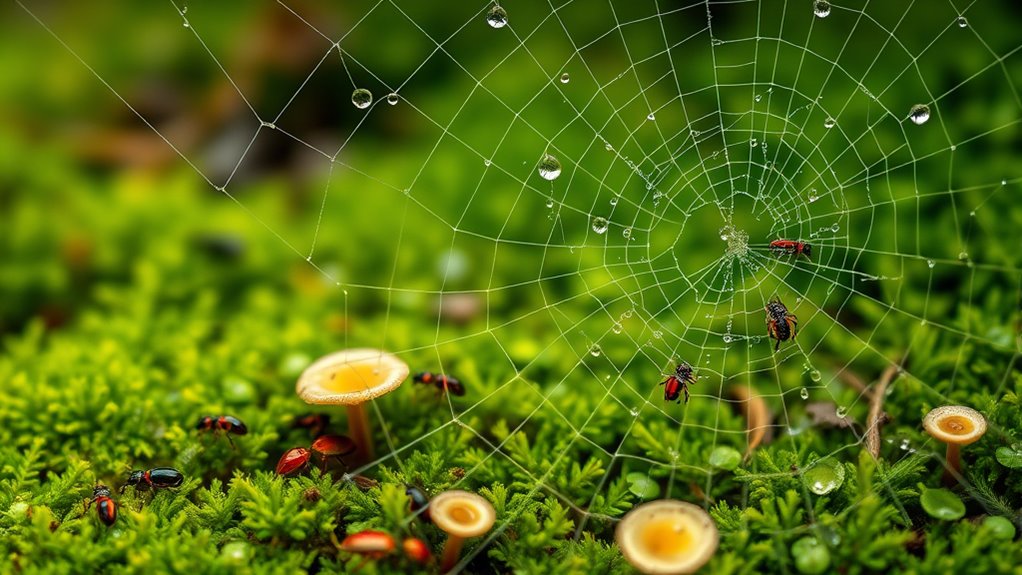
The complexity of food webs arises from the intricate and interconnected feeding relationships among numerous species within an ecosystem. These webs involve multiple overlapping food chains, where organisms often have diverse diets and occupy several trophic levels. This interconnectedness creates a flexible network that can adapt to changes, such as species loss or environmental shifts. To visualize this, consider the following:
| Species | Role | Connections |
|---|---|---|
| Small Fish | Primary Consumer | Eats plankton, eaten by larger fish |
| Large Fish | Secondary Consumer | Eats small fish, predated by birds |
| Birds | Tertiary Consumers | Feed on fish, compete for prey |
This complexity enhances ecosystem stability and resilience, making food webs a powerful tool for understanding ecological relationships.
Comparing Simplicity and Interconnectedness
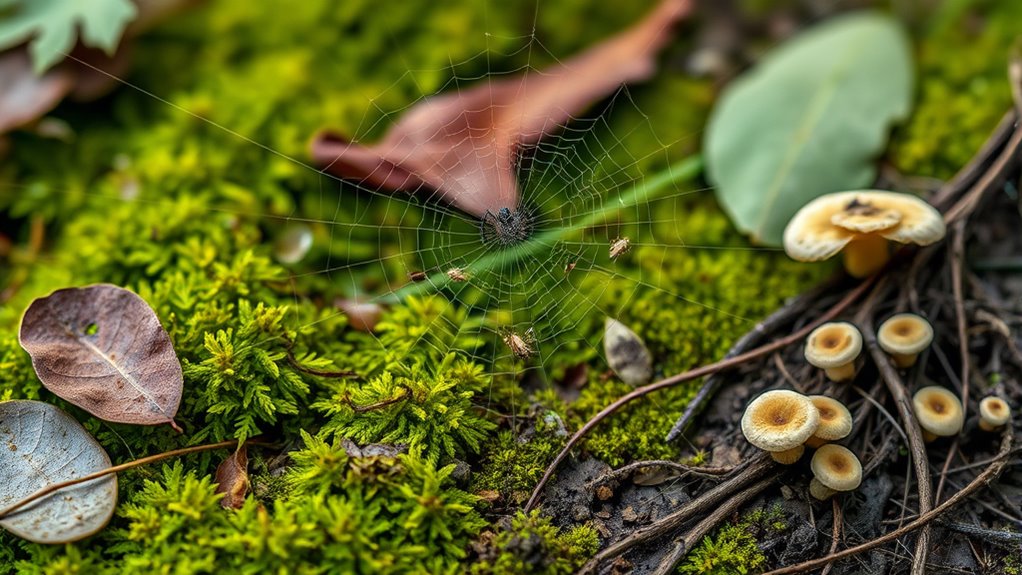
You can see that simple food chains show a straightforward, single pathway of energy flow, making them easy to understand but limited in detail. In contrast, interconnected food webs highlight complex relationships and multiple pathways, reflecting the true diversity of ecosystems. This difference shapes how we interpret ecological stability and resilience across different levels of connection. Additionally, understanding the complexity of food webs can help us better grasp ecosystem dynamics and the importance of biodiversity. Recognizing the interconnectedness of species emphasizes how changes to one part of a web can have ripple effects throughout the entire ecosystem, illustrating the critical role of ecosystem stability in maintaining ecological balance. The intricate network of interactions within food webs demonstrates how various species depend on one another for survival, underscoring the importance of preserving ecological diversity. A robust web indicates a resilient ecosystem capable of withstanding environmental stresses and disturbances.
Complexity of Connections
Understanding the difference between simple food chains and interconnected food webs reveals how ecosystems manage complexity. Food webs display a network of multiple feeding relationships, creating a web of interactions that reflect real ecological dynamics. To add depth:
- Organisms often feed at several trophic levels, increasing the web’s complexity.
- Multiple predator-prey relationships create alternative pathways for energy flow.
- Variability in interaction strength influences the stability of the entire system.
- Species can serve different roles depending on context, making connections more dynamic.
- The incorporation of diverse species and interactions emphasizes the importance of biodiversity in maintaining ecosystem resilience.
This interconnectedness allows ecosystems to adapt to changes, providing resilience against species loss. Unlike simple chains, food webs capture the intricate balance of energy, competition, and predation, illustrating ecosystems’ true complexity.
Pathway Diversity
Pathway diversity highlights the differences between simple food chains and interconnected food webs by illustrating how energy flows through ecosystems. In a food chain, energy moves along a single, straightforward path from producers to top predators. This simplicity makes it easy to see who eats whom, but it overlooks alternative routes. In contrast, a food web features multiple interconnected pathways, showing how organisms can feed at various levels and on different prey. This diversity of pathways allows energy to flow through many routes, increasing ecosystem resilience. When one species declines, others can compensate, maintaining stability. Pathway diversity demonstrates how interconnected and adaptable ecosystems are, emphasizing the importance of multiple feeding options for supporting complex ecological interactions. Additionally, biodiversity plays a crucial role in creating these resilient networks by providing a variety of species that can fulfill overlapping roles. Recognizing the importance of nutritional diversity can further enhance our understanding of ecosystem stability and resilience. Furthermore, understanding species interactions helps us appreciate the complexity behind these interconnected systems.
Ecological Roles of Organisms
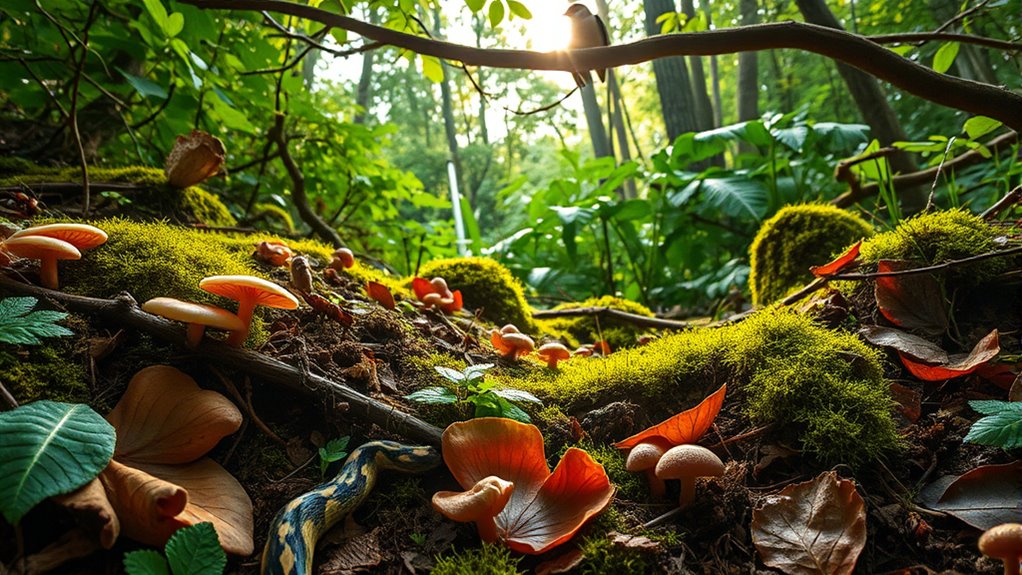
You play a key role in the ecosystem when you consider producers, which capture sunlight to create energy-rich organic molecules. Consumers then transfer energy by feeding on producers or other animals, using different strategies to survive. Decomposers break down organic matter, recycling nutrients back into the environment for use by producers, completing the ecological cycle.
Producers as Energy Base
Producers serve as the foundation of an ecosystem’s energy flow by converting sunlight into organic matter through photosynthesis. They capture solar energy and transform it into food that fuels all other organisms. Without producers, energy cannot enter the food web, making them essential for ecosystem stability. To deepen your understanding:
- They create organic molecules like glucose, supporting herbivores and higher-level consumers.
- They regulate atmospheric oxygen and carbon dioxide levels during photosynthesis.
- They influence nutrient cycling by absorbing minerals from soil or water.
- They vary widely, including plants, algae, and phytoplankton, adapting to diverse environments.
- Many producers are also for sale 100, highlighting their economic importance beyond ecological roles. Additionally, their ability to adapt to changing environmental conditions ensures the resilience of ecosystems amidst climate variability.
- Their presence often promotes spiritual decor elements that symbolize growth and renewal, enriching ecosystems and human environments alike. Recognizing the importance of photosynthesis efficiency can help us understand how environmental factors impact producer vitality and ecosystem health.
- Advances in biotechnology have also enhanced our understanding of producer productivity and resilience.
As primary energy sources, producers set the stage for energy transfer and trophic interactions, underpinning the entire web of life.
Consumers’ Feeding Strategies
Have you ever wondered how organisms fit into the web of life through their feeding habits? Consumers use different strategies to obtain energy, shaping their ecological roles. Some are herbivores, feeding only on plants, while others are carnivores, hunting animals. Omnivores eat both plants and animals, showcasing flexible feeding. Some consumers are specialized, targeting specific prey, while generalists adapt to various food sources. Others use scavenging, consuming dead matter, or parasitism, living off hosts without killing them immediately. These strategies influence energy flow and interactions within ecosystems. By occupying specific roles, consumers help regulate populations, maintain balance, and drive food web complexity. Their feeding habits directly impact ecosystem stability and biodiversity, illustrating the interconnectedness of all living organisms. Understanding ecological roles and the diversity of feeding strategies is essential for comprehending ecosystem dynamics. Additionally, understanding the WWE Raw’s financial impact reveals how entertainment industries can influence global markets and cultural trends. Recognizing the importance of AI safety measures is crucial in managing technological risks and ensuring trustworthy AI deployment. Furthermore, the diversity of consumer feeding strategies contributes significantly to ecosystem resilience and adaptability in changing environments.
Decomposers’ Recycling Role
Consumers play a vital role in maintaining ecosystem balance by transferring energy through the food web, but their efforts alone aren’t enough to complete the cycle. Decomposers step in to break down dead matter and waste, recycling nutrients back into the soil, water, and air. Without them, organic material would accumulate, and nutrients would become unavailable for producers.
Their roles include:
- Breaking down complex organic compounds into simpler nutrients.
- Releasing nutrients like nitrogen and phosphorus into the environment.
- Supporting plant growth by enriching soil with essential minerals.
- Maintaining ecosystem health by preventing the buildup of organic waste.
Decomposers link dead matter to the ongoing cycle, ensuring nutrients are reused and ecosystems remain balanced and productive.
Types of Food Webs and Their Features
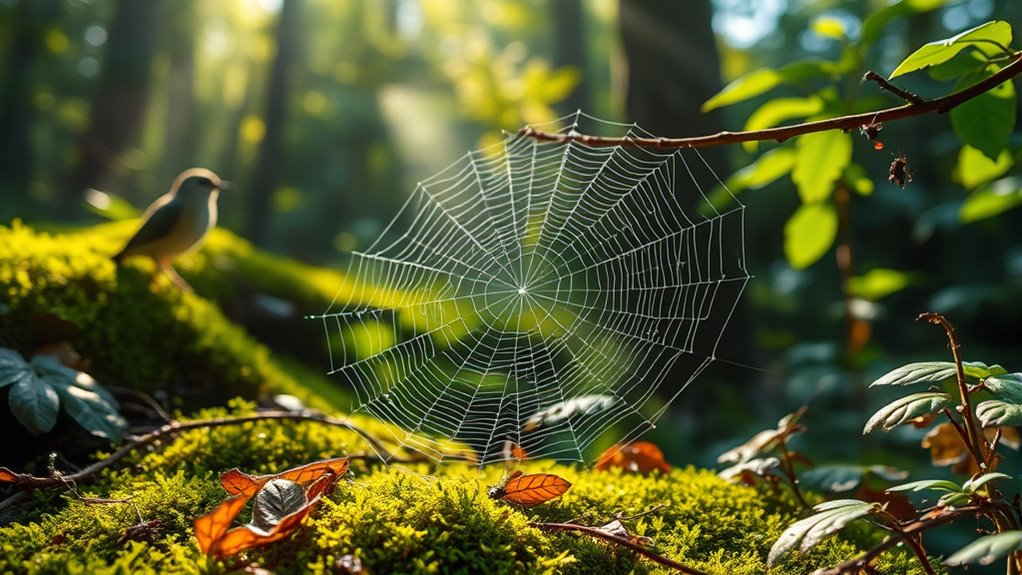
Different types of food webs reveal various levels of complexity in how organisms interact within ecosystems. Connectance webs display feeding relationships with arrows of equal weight, offering a straightforward view of interactions. Interaction webs, however, weight these arrows based on consumption strength, highlighting the importance of specific connections. Complex food webs incorporate numerous species and overlapping relationships, often revealing trophic cascades where predators influence prey populations and plants indirectly. Ecosystem diversity and species richness shape the web’s complexity, making some webs more intricate than others. These variations help you understand ecosystem stability and resilience. Simpler webs focus on primary interactions, while complex webs depict the full spectrum of ecological relationships, offering a more realistic picture of energy flow and species interdependence within habitats.
The Significance of Energy Efficiency
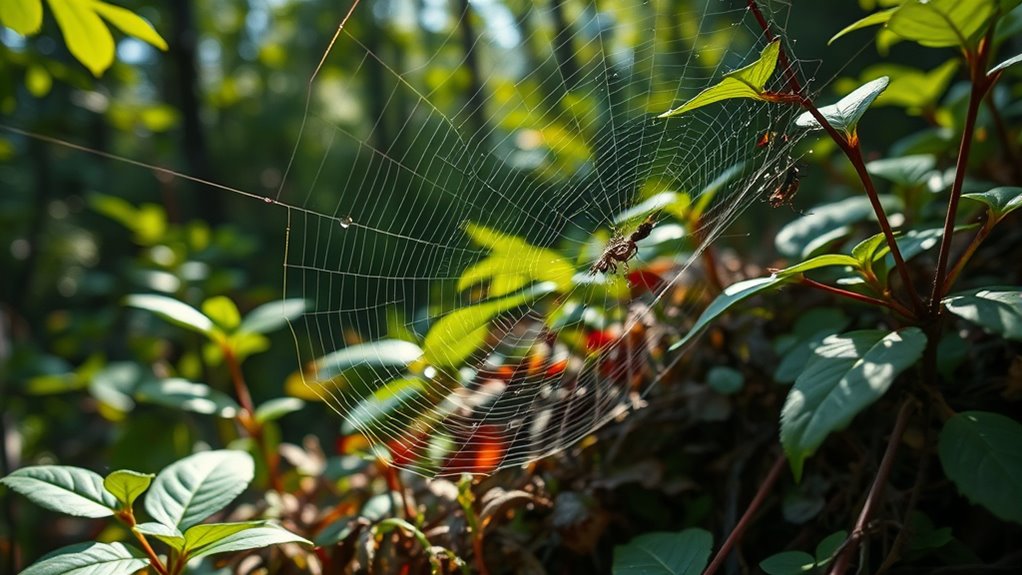
Why does energy efficiency matter so much in ecosystems? Because it determines how well energy moves through food webs, influencing the survival of species and overall stability. Since only about 10% of energy transfers between trophic levels, efficiency limits the length of food chains and the resilience of ecosystems. Improving energy efficiency means supporting more diverse and stable communities.
To understand this better:
- It prevents excessive energy loss, maintaining essential population levels.
- It influences trophic cascade effects, impacting entire ecosystems.
- It helps identify keystone species that optimize energy flow.
- It underpins sustainable management of resources, preserving biodiversity.
Impact of Food Webs on Ecosystem Stability

You can see that multiple pathways in a food web make an ecosystem more resilient to changes. When one species declines, others can fill the gap, maintaining stability. This redundancy helps ecosystems adapt and survive despite disturbances.
Multiple Pathways Enhance Resilience
Food webs, by incorporating multiple interconnected pathways, substantially boost ecosystem resilience. This means that if one species declines or disappears, others can compensate, maintaining stability. Multiple pathways allow energy and nutrients to flow through various routes, reducing dependency on a single connection. This diversity helps prevent collapses caused by disturbances. For example:
- Reduces vulnerability by providing alternative prey or predator options.
- Supports species coexistence through varied interactions.
- Buffers against invasive species by maintaining balanced relationships.
- Promotes adaptability during environmental changes and stresses.
Redundancy Supports Ecosystem Stability
Redundancy in food webs plays a crucial role in maintaining ecosystem stability by providing multiple pathways for energy flow and nutrient cycling. When one species declines or disappears, other organisms can step in, ensuring energy continues to move through the system. This redundancy prevents the collapse of food chains and helps ecosystems recover from disturbances. It also buffers against environmental changes, as alternative connections allow energy transfer to adapt to shifting conditions. By supporting diverse feeding relationships, redundancy enhances resilience, making ecosystems less vulnerable to species loss. This interconnectedness ensures that essential ecological functions, like pollination, nutrient recycling, and population control, persist even under stress. Overall, redundancy in food webs is essential for sustaining healthy, stable ecosystems.
Why Studying Food Webs Matters for Conservation

Studying food webs is crucial for conservation because they reveal the complex interactions that sustain ecosystems. By understanding these networks, you can identify critical species and relationships that keep ecosystems balanced. For example:
- They highlight keystone species whose removal causes cascading effects.
- They reveal vulnerabilities where species loss could destabilize the ecosystem.
- They help predict how environmental changes affect multiple species simultaneously.
- They guide targeted conservation efforts, focusing on maintaining key interactions rather than isolated populations.
This thorough view enables you to develop strategies that promote resilience and adaptability. Recognizing the interconnectedness shown in food webs ensures you protect not just individual species but the entire ecosystem’s health, stability, and long-term sustainability.
Frequently Asked Questions
How Do Food Webs Adapt to Environmental Changes?
You see that food webs adapt to environmental changes by shifting feeding relationships and species roles. When conditions change, some organisms may switch prey or become more or less active, altering energy flow. These flexible connections help maintain ecosystem stability. You might observe new predator-prey interactions or the decline of certain species, which can cascade through the web, demonstrating its resilience and ability to adjust to a changing environment.
What Role Do Keystone Species Play in Food Webs?
You might think all species are equally important, but keystone species prove otherwise. They play a surprisingly outsized role in food webs, maintaining ecosystem balance and supporting biodiversity. Remove them, and chaos ensues—species decline, habitats collapse, and the whole system unravels. Their influence isn’t obvious at first glance, but without these essential players, the intricate web of life would quickly fall apart, showing how indispensable they truly are.
How Do Decomposers Influence Energy Flow in Ecosystems?
You should know that decomposers play a vital role in energy flow by breaking down dead organic matter, releasing nutrients back into the environment. This process recycles essential elements, enabling producers to absorb nutrients and continue energy production through photosynthesis. Decomposers guarantee the cycle keeps turning, supporting the entire ecosystem’s stability. Without them, organic waste would accumulate, and nutrient availability would decrease, disrupting energy flow and overall ecosystem health.
Can Food Webs Help Predict Ecosystem Responses to Species Loss?
You might think predicting ecosystem responses is impossible, but food webs actually help you out. They reveal multiple pathways and interactions, so when one species disappears, you can see how others might shift or compensate. By understanding these complex links, you can anticipate ripple effects, making ecosystems less mysterious—and more manageable. Food webs turn chaos into a puzzle you can start to solve, even amid species loss.
What Are the Challenges in Mapping Complex Food Webs?
You face challenges in mapping complex food webs because of their intricate connections and numerous species interactions. Identifying all feeding relationships requires extensive data collection, which can be time-consuming and resource-intensive. Variability in interaction strength and seasonal changes add complexity, making it difficult to accurately represent the web. Additionally, many relationships are difficult to observe directly, leading to incomplete or uncertain mappings that limit understanding of ecosystem dynamics.
Conclusion
Think of the web of life as a delicate tapestry, each strand representing a connection that sustains our world. By understanding the difference between food chains and webs, you realize your role in preserving this intricate design. Every action you take can strengthen or weaken these connections. Remember, you’re part of the ecosystem’s heartbeat—protecting its web guarantees life’s symphony continues, vibrant and resilient for generations to come.
Fall Picks
fall essentials
As an affiliate, we earn on qualifying purchases.