
Speciation happens when populations of a species become reproductively isolated, often through geographic barriers like mountains or rivers, or ecological differences, leading to the formation of new species. Genetic changes, natural selection, and genetic drift drive divergence over time, creating reproductive barriers such as behavioral or structural differences. This process increases Earth’s biodiversity and ecosystem resilience. To understand how these mechanisms work together, keep exploring the fascinating pathways by which new species emerge in nature.
Key Takeaways
- New species emerge through reproductive isolation caused by geographic, ecological, or behavioral differences.
- Genetic changes like mutations, natural selection, and genetic drift drive divergence over time.
- Physical barriers such as mountains and water bodies prevent gene flow, promoting allopatric speciation.
- Ecological differences and polyploidy can lead to sympatric and parapatric speciation without physical separation.
- Reproductive barriers, both prezygotic and postzygotic, ensure genetic divergence and the formation of distinct species.
What Is Speciation and Why Is It Important?
Speciation is the process by which new species arise from existing populations, shaping the diversity of life on Earth. When populations become reproductively isolated, they can no longer exchange genes, leading to distinct evolutionary paths. This process creates the incredible variety of species you see around you, from plants and animals to microbes. It’s essential because it drives biological diversity, allowing species to adapt to different environments and challenges. Without speciation, life would be much less varied, and ecosystems would lack resilience. Understanding how new species form helps scientists grasp the fundamental mechanisms of evolution and the dynamic nature of life. The reproductive isolation mechanism is particularly crucial because it prevents gene flow between populations, enabling divergence to occur. It also informs conservation efforts, ensuring the survival of biodiversity in a changing world.
The Key Mechanisms Driving the Formation of New Species
The formation of new species hinges on several key mechanisms that drive genetic divergence and reproductive isolation. Natural selection favors advantageous traits, causing populations to adapt differently over time. Genetic drift introduces random changes in gene frequencies, especially in small populations, increasing divergence. Mutations accumulate, providing new genetic material for evolution. Hybridization followed by reproductive barriers can lead to novel species, particularly in plants. Polyploidy, or chromosome doubling, allows rapid speciation, also common in plants. These mechanisms work together to create genetic differences that reduce interbreeding. Genetic divergence is a crucial aspect of speciation, as increasing differences lead to the development of reproductive barriers. As divergence increases, reproductive barriers develop, preventing gene flow. Understanding speciation processes helps clarify how biodiversity arises and persists in various ecosystems. Additionally, recent research on speciation rates demonstrates how environmental factors can accelerate or slow down these evolutionary events. Moreover, evolutionary mechanisms influence the speed and nature of speciation, shaping the diversity observed in the natural world.
Different Ways Species Become Geographically Isolated
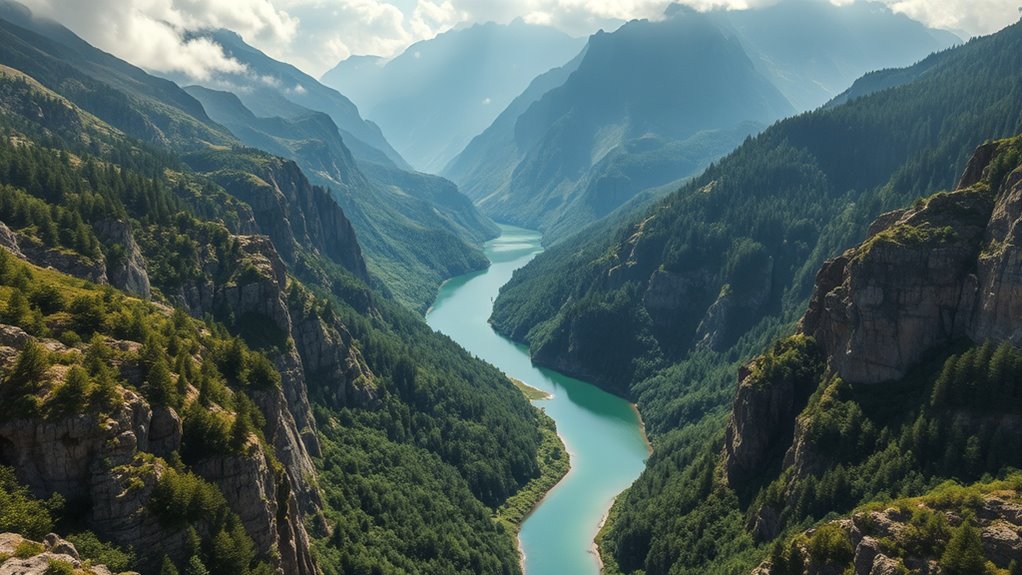
Different ways species become geographically isolated often begin with physical barriers that split populations, preventing gene exchange. These barriers create separate environments where populations evolve independently. Here are four common methods:
- Mountains and Valleys: Rising mountain ranges or deep valleys block movement, isolating groups. Geographic features influence the extent of isolation and subsequent evolution. Additionally, the specific topography can determine how long populations remain separated and how quickly speciation occurs. Natural barriers such as tectonic activity can also shift landscapes over time, further influencing isolation. These tectonic processes continuously reshape habitats, leading to new opportunities for divergence.
- Water Bodies: Oceans, rivers, or lakes act as barriers, especially for terrestrial species.
- Desert Expansion: Shifts in climate can turn lush areas into deserts, fragmenting habitats.
- Human Activities: Urbanization, roads, and agriculture can divide populations, creating new barriers. These human-made barriers often occur more rapidly and unpredictably than natural ones, accelerating the process of divergence among populations.
These physical separations lead to differing selective pressures and mutations, driving divergence and eventually speciation. Understanding these mechanisms shows how geographic features shape biodiversity by fostering isolated populations that evolve separately over time. Natural barriers play a crucial role in the process of speciation by physically preventing interbreeding among populations.
How Reproductive Barriers Help Maintain Species Boundaries
When populations become geographically isolated, physical barriers prevent gene flow and set the stage for divergence. To keep separate, reproductive barriers develop, blocking successful mating or hybrid viability. Prezygotic barriers, like differences in mating behaviors, breeding times, or incompatible structures, stop fertilization from happening in the first place. Postzygotic barriers, such as hybrid sterility or inviability, prevent hybrids from thriving or reproducing. These barriers act like gatekeepers, maintaining distinct gene pools and preventing merging. Often, multiple barriers work together, reinforcing reproductive isolation. Even if populations come into contact again, these barriers help keep their identities separate. By limiting gene exchange, reproductive barriers ensure that each population’s unique traits are preserved, supporting the ongoing process of speciation. Understanding ecological factors also plays a significant role in reinforcing reproductive barriers and maintaining species boundaries. Additionally, advances in genetic analysis have improved our understanding of how these barriers evolve and function in natural populations. Moreover, behavioral isolation can evolve as a consequence of ecological differences, further strengthening reproductive separation. Recognizing the role of geographic isolation highlights how physical separation can initiate the development of reproductive barriers, leading to speciation. Furthermore, environmental pressures can influence the strength and development of reproductive barriers over time.
Unique Pathways of Speciation in Plants, Animals, and Microbes
You’ll see that plants often speciate through polyploidy and hybridization, which can happen rapidly and without geographic separation. In animals, geographic isolation and ecological differences usually drive speciation, shaping distinct populations over time. Microbes, on the other hand, frequently evolve new species through ecological specialization and the development of barriers to gene exchange.
Polyploidy and Hybridization
Polyploidy and hybridization serve as unique pathways of speciation, especially prominent in plants but also occurring in animals and microbes. These processes rapidly create new species by altering chromosome numbers or combining genomes. Here’s how they work:
- Polyploidy involves chromosome doubling, producing individuals with extra sets of chromosomes, which can instantly become reproductively isolated. This process often results in genetic incompatibilities that prevent interbreeding with parent populations.
- Hybridization occurs when two different species interbreed, creating hybrids that may develop into new species if reproductive barriers form.
- Allopolyploidy combines chromosomes from different species, leading to a fertile, distinct new species.
- Autopolyploidy results from chromosome duplication within a single species, generating reproductive barriers from the start.
- These mechanisms are especially common in plant evolution, where they significantly contribute to biodiversity and adaptation.
These mechanisms bypass gradual divergence, enabling swift speciation, especially in plants.
Geographic and Ecological Factors
Different pathways of speciation are shaped by geographic and ecological factors that influence how populations diverge. When a population becomes physically separated by barriers like mountains, rivers, or deserts, allopatric speciation occurs as each group adapts to its environment independently. In contrast, peripatric speciation happens when a small group at the edge of a larger population isolates and evolves separately. Parapatric speciation involves neighboring populations with limited gene flow, adapting to distinct ecological niches. Sympatric speciation happens without physical separation, often driven by ecological differences or polyploidy. These factors create divergent selective pressures, leading to genetic divergence and reproductive barriers. Understanding these pathways helps explain the incredible diversity of life shaped by geographic and ecological contexts. Additionally, home furnishings such as mattress toppers and heated mattress pads illustrate how environmental factors can influence comfort and energy consumption, highlighting the importance of adapting living spaces to specific needs and conditions.
The Role of Genetic Changes and Natural Selection in Divergence
Genetic changes and natural selection are fundamental drivers of divergence during speciation. They shape how populations adapt and become distinct. Here’s how they influence this process:
- Mutations introduce new genetic variants, providing raw material for evolution.
- Natural selection favors advantageous traits, increasing their frequency in the population.
- Genetic drift causes random fluctuations in gene frequencies, especially in small populations.
- Reproductive barriers develop as populations adapt to different environments, reinforcing divergence.
- These processes often involve genetic variation, which fuels the potential for change and adaptation. Additionally, selective pressures can accelerate divergence by favoring specific traits suited to different environments.
- The ongoing interaction of these forces leads to the emergence of new species, highlighting the dynamic nature of evolution.
Together, these forces push populations apart genetically. Over time, accumulated changes lead to reproductive isolation, making interbreeding impossible. This process guarantees new, distinct species emerge, enriching Earth’s biodiversity. Your understanding of these mechanisms highlights how life’s diversity continuously evolves.
Exploring the Impact of Speciation on Earth’s Biodiversity
You can see how speciation boosts Earth’s biodiversity by creating new, distinct species. As these new species emerge, they contribute to various ecosystems’ complexity and resilience. Understanding this process reveals how life’s diversity supports stable and adaptable environments. Biodiversity hotspots are often regions where active speciation occurs, highlighting the importance of conserving these areas. Additionally, genetic variation generated during speciation enhances the adaptability of species in changing environments. Moreover, reproductive isolation mechanisms play a crucial role in the formation of new species by preventing gene flow between populations. Proper gear and equipment usage and maintenance can also be vital in studying and preserving natural habitats where speciation takes place.
Biodiversity Enhancement Through Speciation
Speciation plays a crucial role in enriching Earth’s biodiversity by generating new, distinct species that adapt to various environments. This process creates a more complex and resilient biosphere. Here’s how speciation boosts biodiversity:
- It produces unique species adapted to specific niches, increasing ecological diversity.
- It enhances genetic variation within ecosystems, promoting resilience against environmental changes.
- It fills ecological gaps, allowing ecosystems to become more stable and productive.
- It drives evolutionary innovation, leading to new behaviors, structures, and interactions.
Ecosystem Diversity and Stability
Have you ever considered how the formation of new species influences the diversity and stability of entire ecosystems? When speciation occurs, it adds unique traits and functions, enriching ecological networks. This process creates a variety of organisms that fill different roles, promoting resilience against disturbances. For example, diverse plant species support varied herbivores and pollinators, stabilizing food webs. Conversely, a loss of species can weaken ecosystem stability. Here’s a quick look at how speciation impacts ecosystems:
| Effect | Example | Result |
|---|---|---|
| Increased Diversity | New insect pollinators | More resilient pollination |
| Functional Roles | Divergent plant species | Enhanced ecosystem services |
| Stability | Multiple predator species | Reduced collapse risk |
In short, speciation fosters richer, more adaptable ecosystems, ensuring their long-term health.
Frequently Asked Questions
How Long Does the Process of Speciation Typically Take?
The process of speciation can take anywhere from thousands to millions of years, depending on factors like environmental conditions, genetic variation, and reproductive barriers. You might see rapid speciation in cases like polyploid plants or small isolated populations, which can happen quickly. However, in most animals and larger populations, it usually takes a long time for enough genetic differences to accumulate, leading to the emergence of new species.
Can Humans Influence or Accelerate Natural Speciation Processes?
Yes, you can influence or accelerate natural speciation processes. By altering environments through pollution, habitat destruction, or introducing new species, you create new selective pressures that drive divergence. For example, if you change a landscape, populations adapt differently, potentially leading to reproductive isolation faster. Your actions can reshape evolutionary paths, making it possible for new species to emerge more rapidly than they would naturally without human interference.
Are There Cases Where Different Species Can Interbreed Successfully?
Yes, there are cases where different species can interbreed successfully, producing hybrid offspring. You might see this in plants through hybridization and polyploidy, which create new species rapidly. In animals, some closely related species, like certain species of dogs and wolves, can mate and produce fertile hybrids. These instances often occur when reproductive barriers are incomplete or weakened, allowing gene flow between species and creating hybrid populations.
How Does Climate Change Affect Ongoing Speciation?
Climate change accelerates ongoing speciation by altering habitats and creating new selective pressures. You might notice populations adapting quickly to changing environments, leading to reproductive isolation as they diverge. It can also cause range shifts, bringing previously separate groups into contact or isolating them further. These changes promote genetic divergence, potentially resulting in new species. Overall, climate change acts as both a catalyst and a barrier, shaping the future of biodiversity.
What Is the Role of Hybrid Zones in Speciation?
Hybrid zones play a pivotal role in speciation because they are regions where two distinct populations meet and interbreed. You might think hybridization always blurs species boundaries, but these zones can actually promote reproductive isolation over time. By exposing hybrids to different selective pressures, hybrid zones can lead to new adaptations or even the emergence of entirely new species, making them important drivers of evolutionary diversification.
Conclusion
So, next time you marvel at a new species, remember it’s not just luck — it’s evolution’s clever way of keeping life interesting. Ironically, while nature’s busy creating diversity, we often struggle to protect it. Your role? Stay curious and supportive. After all, without speciation, Earth might just be a monotonous landscape. Embrace the chaos, because it’s what makes life so endlessly fascinating.