

Wildlife tracking uses advanced tools like GPS collars, satellite tags, and radio telemetry to monitor animal movements continuously and accurately. These innovations help scientists understand migration routes, behaviors, and threats animals face, which is essential for conservation efforts. By following their journeys, researchers can identify critical habitats, respond quickly to emergencies, and develop better protection strategies. To learn more about how these technologies are transforming wildlife research and conservation, keep exploring.

Prime made for students and young adults
- Fast, free delivery for dorm and study essentials
- Prime Video and Amazon Music included
- Member-only deals
Key Takeaways
- Scientists use advanced technologies like GPS, radio telemetry, and satellite tags to monitor animal locations and behaviors.
- Tracking data reveals migration routes, habitat use, and threats, informing targeted conservation efforts.
- Real-time monitoring enables rapid responses to emergencies, poaching, or environmental hazards affecting wildlife.
- Extended and long-term tracking helps understand species’ movement patterns and adapt management strategies.
- Innovative, less invasive devices support ethical research and improve conservation outcomes globally.
As an affiliate, we earn on qualifying purchases.
The Evolution of Tracking Technologies in Wildlife Research
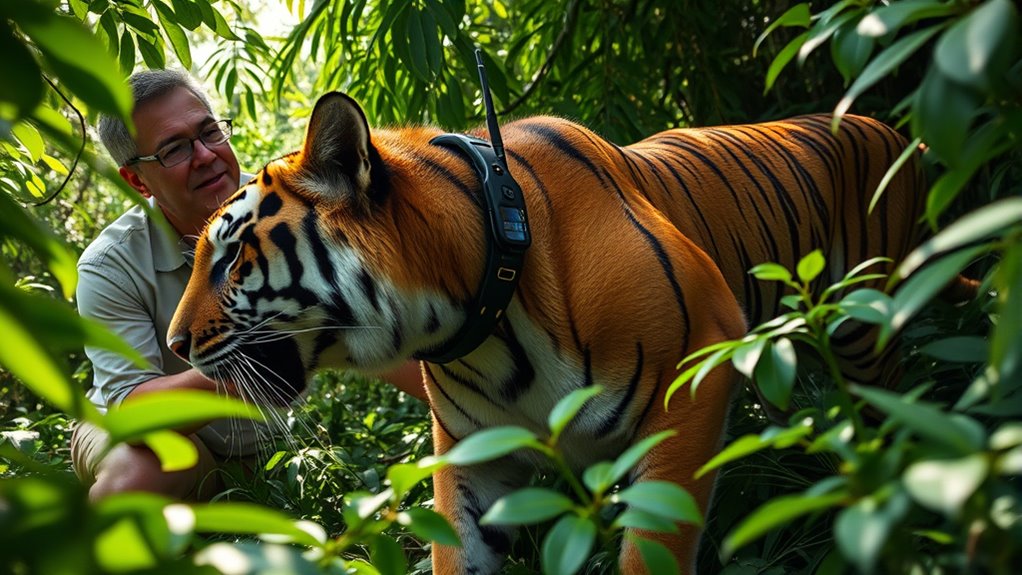
The evolution of tracking technologies in wildlife research has dramatically transformed how scientists study animal movements. Early methods, like metal bands, offered limited data and often harmed animals. Radio telemetry then emerged, allowing researchers to locate animals using radio signals from handheld or aerial stations. As technology advanced, GPS devices became smaller, more accurate, and capable of providing detailed location data over vast areas, even for migratory species. Innovations like satellite tags and geolocators added new layers of information, such as feeding sites and behavior patterns. Today, integrated systems combine GPS, accelerometers, and environmental sensors, enabling real-time monitoring and long-term tracking. These advancements have made wildlife research more precise, less invasive, and better equipped to inform effective conservation strategies worldwide. Tracking accuracy continues to improve, providing even more valuable insights into animal ecology. Additionally, AI-driven analytics are increasingly used to interpret large datasets, enhancing our understanding of complex animal behaviors and migration patterns. New developments in data transmission technologies allow for quicker data retrieval and analysis, further accelerating research efforts. Moreover, ongoing research into energy-efficient power sources helps extend the lifespan of tracking devices, reducing the need for frequent replacements and minimizing disturbance to animals. Furthermore, the integration of machine learning algorithms enhances the ability to predict animal movements and behaviors based on collected data.
How GPS and Satellite Devices Unlock Animal Movement Patterns

GPS and satellite devices have revolutionized how researchers understand animal movement patterns by providing precise, real-time location data across vast and remote areas. With these tools, you can track daily routines, migration routes, and habitat use with unprecedented accuracy. Here’s how they liberate animal behavior:
GPS and satellite devices unlock detailed insights into animal movement across remote, vast areas.
- Continuous Data Collection: Devices record locations constantly, revealing patterns over time.
- Long-Distance Tracking: Satellite technology enables monitoring across continents and oceans.
- Extended Monitoring Periods: Solar-powered and advanced batteries allow longer-term tracking without frequent retrieval.
This technology helps you see movement trends, identify critical habitats, and understand how animals respond to environmental changes. The detailed insights gained are essential for effective conservation strategies and protecting vulnerable species worldwide.
The Role of Radio Telemetry and VHF Systems in Monitoring Secretive Species
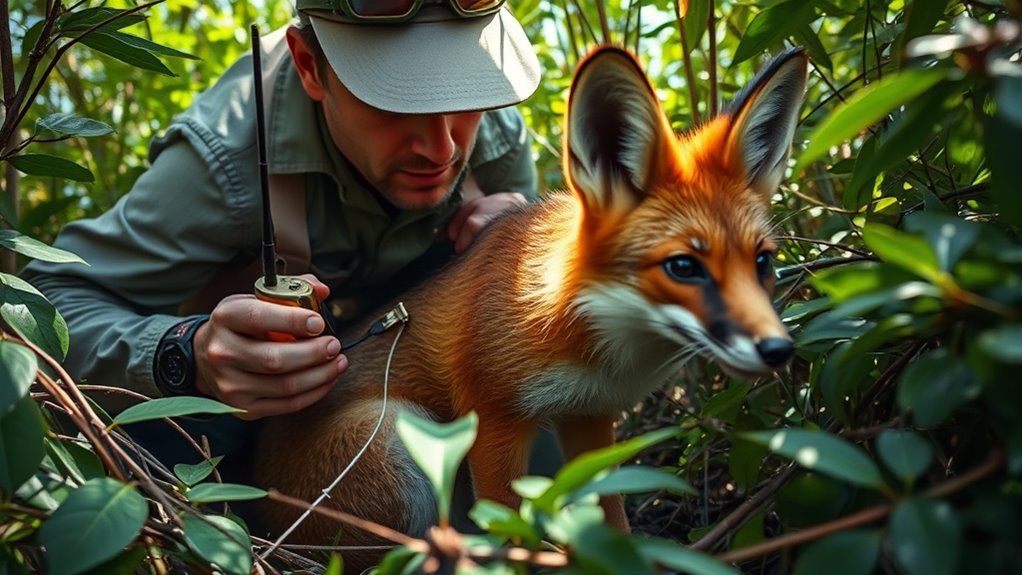
Radio telemetry and VHF systems play a vital role in tracking secretive and elusive species that are difficult to observe directly. You can attach small radio transmitters to animals like rails, bats, or amphibians, enabling you to locate them using handheld or vehicle-mounted receivers. Because these signals require you to be within a certain range, you often track animals by moving through their habitat, whether on foot, by vehicle, or from aircraft. Recent advances have made transmitters smaller and less invasive, reducing impact on animal behavior. This technology allows you to gather detailed movement data, identify critical habitats, and monitor populations that traditional methods might miss. Overall, radio telemetry provides essential insights into species that are otherwise hidden from view, supporting targeted conservation efforts. Additionally, the use of tracking equipment has become more accessible, allowing researchers to expand their studies to a wider range of species and environments. The development of miniaturized transmitters has further improved the ability to study small or delicate animals without disrupting their natural behaviors.
Innovative Tagging Methods Transforming Conservation Strategies
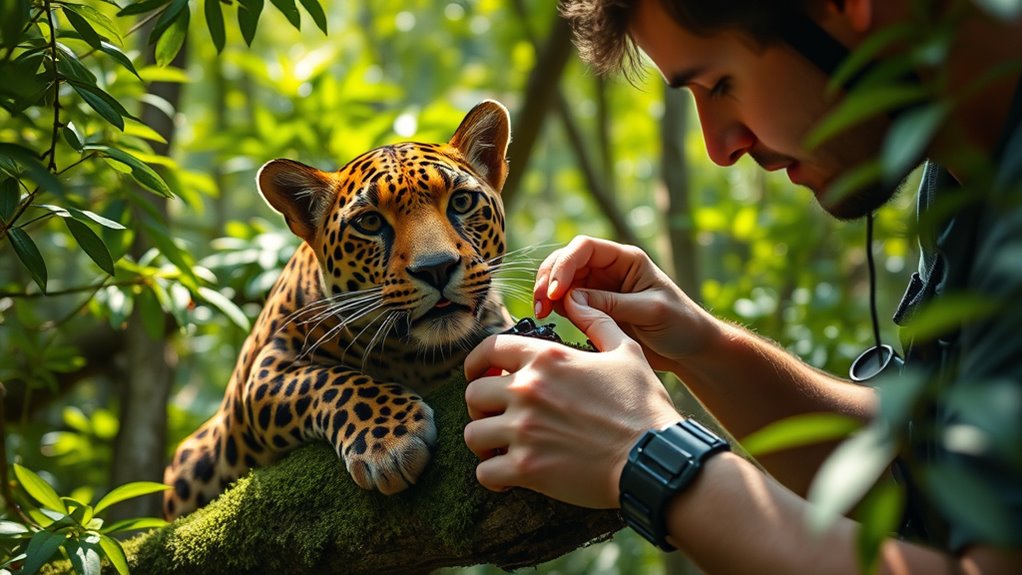
You can now use miniaturized tracking devices to monitor even the smallest species without hindering their natural behavior. Multi-sensor technologies, like accelerometers and temperature sensors, provide detailed insights into animal activities and health. These innovations extend monitoring periods and improve conservation strategies by capturing all-encompassing data over longer timespans. Additionally, tracking device advancements enable researchers to gather more precise and comprehensive information, revolutionizing wildlife monitoring efforts. Incorporating dog names and other personalized identifiers can also aid in individual animal tracking and identification in certain studies.
Miniaturized Tracking Devices
Miniaturized tracking devices are revolutionizing wildlife conservation by enabling researchers to monitor even the smallest and most elusive species. These tiny tags allow you to gather essential movement data without hindering the animal’s natural behavior. Here are three key innovations:
- Miniaturized Radio Transmitters: Small enough to be swallowed or embedded under the skin, they track secretive species like rails or small mammals.
- Lightweight GPS Devices: Solar-powered and compact, these provide precise location data over long periods, even in flight.
- Nanotags: Emitting high-frequency sounds, they distinguish individual animals during migration stopovers or at breeding sites.
These advancements expand your ability to study species previously too small or sensitive for traditional tags, dramatically enhancing conservation efforts. High in fiber and low in calories, chia seeds support weight management and overall health, making them a valuable addition to a balanced diet.
Multi-Sensor Technologies Integration
Advancements in multi-sensor technologies are now revolutionizing wildlife tracking by integrating various data collection tools into compact, lightweight devices. You can now attach tags that combine GPS, accelerometers, magnetometers, gyroscopes, and temperature sensors, providing a thorough picture of animal behavior and movements. These integrated sensors enable real-time monitoring of position, activity levels, body temperature, and environmental conditions, offering insights that were previously impossible. This integration supports health-conscious options by allowing researchers to assess animal health and stress levels through physiological data. This fusion of data allows researchers to analyze migration patterns, habitat preferences, and responses to environmental changes more accurately. Additionally, multi-sensor devices reduce the need for multiple tags, minimizing animal disturbance and improving data reliability. The integration of data analytics enhances the interpretation of complex datasets, leading to more informed conservation decisions. The miniaturization of sensor technology further contributes to animal welfare by reducing device weight and impact, ensuring more ethical research practices. The development of these technologies also involves the use of integrated data collection, which streamlines data management and analysis processes. Incorporating innovations such as power-efficient components ensures longer deployment times, which is crucial for studying elusive or migratory species. The result is a powerful, efficient approach that enhances conservation strategies and deepens understanding of species’ lives.
Extended Monitoring Capabilities
Innovative tagging methods are substantially expanding the duration and scope of wildlife monitoring, enabling researchers to gather extensive data over extended periods. These advances include longer-lasting devices, smaller equipment, and energy-efficient technologies. Extended monitoring capabilities allow scientists to observe animal behaviors and movements over months or years, enhancing our understanding of ecological dynamics. Solar-powered GPS devices extend battery life, allowing continuous tracking of birds and mammals for months or years. Self-powered collars use animals’ movement as an energy source, providing lifetime monitoring without retrieval. Geolocators record light data to determine location over long periods without needing constant power. These innovations let you monitor animals’ migration, habitat use, and behavior in real-time or over years, providing invaluable insights for conservation. Extended monitoring improves understanding of species’ needs, threats, and responses to environmental changes.
Real-Time Data Collection and Its Impact on Wildlife Management
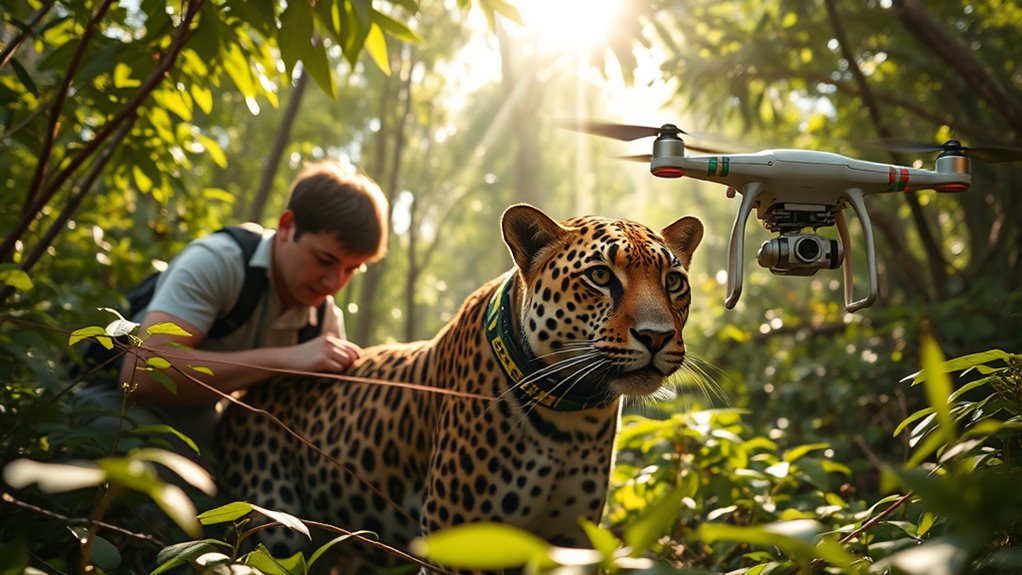
Real-time data collection lets you receive immediate location updates, enabling quicker responses to emerging threats or emergencies. This constantly updated information improves your ability to protect and manage wildlife more effectively. With data-driven decisions, you can adapt strategies on the fly, making conservation efforts more precise and impactful.
Immediate Location Updates
Immediate location updates have transformed wildlife management by providing researchers with timely, accurate data on animal movements. This real-time information enhances decision-making and conservation actions. With immediate updates, you can:
- Track animals’ movements instantly, enabling rapid responses to threats or emergencies.
- Monitor migration patterns continuously, revealing critical habitats and seasonal behaviors.
- Detect sudden changes, such as illness or injury, allowing swift intervention.
- Incorporate sound effects libraries into multimedia presentations to better illustrate animal behaviors and habitats.
- The use of real-time data collection technologies improves the overall efficiency and effectiveness of conservation efforts. Additionally, integrating decentralized data management can help ensure data integrity and availability across different research teams.
Understanding the importance of accurate data collection ensures that conservation strategies are based on reliable information, leading to more effective protection plans. These updates eliminate uncertainties caused by delayed data, making management strategies more effective. You can quickly identify at-risk populations, verify habitat use, and assess the impact of human activities. As a result, conservation efforts become more targeted and adaptive, ultimately improving wildlife survival and ecosystem health. Real-time data empowers you to act proactively rather than reactively, saving time and resources.
Enhanced Response Capabilities
Access to continuous, live data substantially boosts your ability to respond swiftly to wildlife management challenges. With real-time tracking systems like ICARUS and Movebank, you can monitor animal movements instantly, identifying threats or distress signals as they happen. This immediacy allows for quick interventions, such as redirecting animals away from danger or addressing habitat disturbances promptly. Alerts from GPS collars or satellite tags notify you if an animal stops moving suddenly or experiences a temperature drop, indicating injury or illness. This rapid feedback streamlines decision-making and enables proactive measures. Reliable data transmission and enhanced communication infrastructures ensure that your response remains effective even in remote or challenging environments. Enhanced response capabilities mean you’re not just observing animals remotely but actively managing their safety and well-being, making conservation efforts more effective and timely. Understanding asset division laws related to wildlife assets can also inform management strategies when animals or habitats are part of legal disputes, ensuring legal compliance and fair resource allocation. Incorporating technological advancements can further improve the accuracy and speed of data collection, leading to better conservation outcomes. Additionally, implementing training for field personnel on rapid response protocols improves the effectiveness of immediate interventions.
Data-Driven Decisions
How does live data collection transform wildlife management? It allows you to make immediate, informed decisions that improve conservation efforts and animal welfare. With real-time data, you can quickly identify threats, adjust habitat protections, and respond to emergencies. This rapid access to information enhances your ability to track migration patterns, detect sudden declines, and evaluate the success of interventions.
- Rapid Response: Address threats like poaching, habitat destruction, or disease outbreaks instantly.
- Adaptive Management: Modify strategies based on current animal movements and environmental changes.
- Data Sharing: Collaborate globally through platforms like Movebank, making information accessible to all stakeholders.
This technology empowers you to act swiftly, ensuring more effective wildlife management and better conservation outcomes.
Case Studies: Tracking Successes and Challenges in Protecting Endangered Species
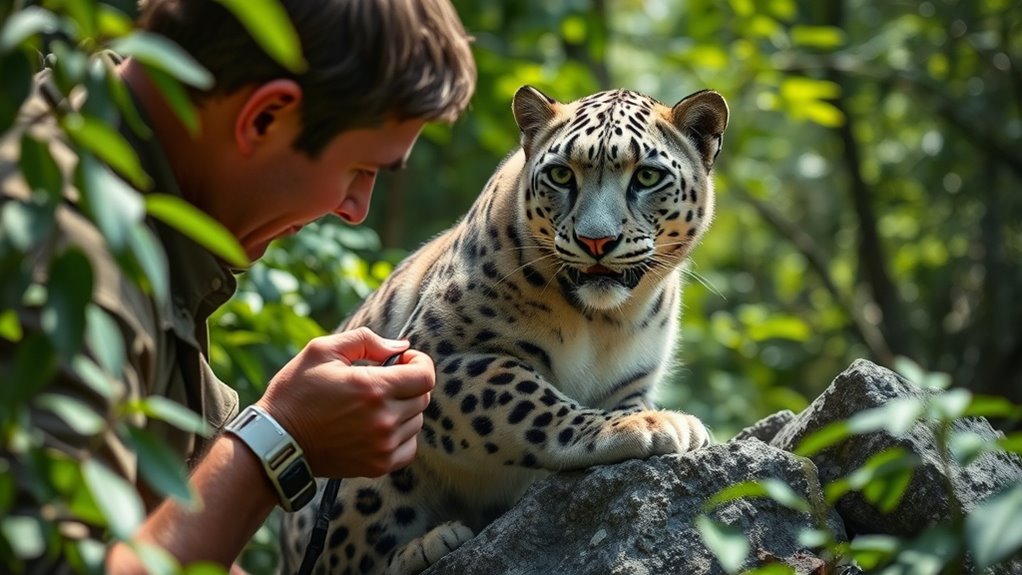
Tracking technology has revolutionized efforts to protect endangered species by providing detailed insights into their movements, behaviors, and threats. For example, the white stork study revealed electrocution from power lines causes fatalities, guiding infrastructure improvements. Similarly, tracking wood turtles showed they travel up to 13 miles for resources, informing habitat protection. However, challenges remain, such as equipment loss, limited range of radio telemetry, and data gaps from failed tags. The table below highlights some key successes and hurdles:
| Species | Successes | Challenges |
|---|---|---|
| White stork | Identified causes of death, led to safety upgrades | Tag loss, data recovery issues |
| Wood turtle | Mapped migration, enhanced habitat planning | Limited battery life, tracking range |
| Sora rail | Improved understanding of secretive behaviors | Small size limits tag options |
| African wildlife | Targeted anti-poaching efforts | Equipment costs, data accessibility |
Additionally, advances in tracking technology continue to address some of these challenges, improving data collection and conservation strategies.
The Future of Wildlife Tracking: Emerging Technologies and Conservation Opportunities
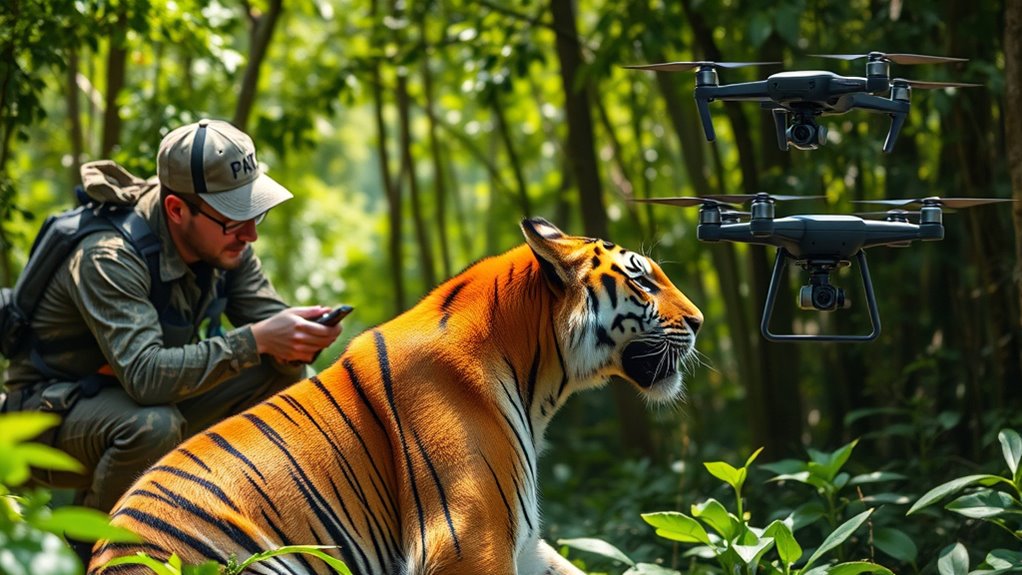
Advancements in technology continue to push the boundaries of wildlife tracking, opening new avenues for conservation efforts. These innovations promise to improve how we monitor and protect species. For example:
- Self-powered collars use animals’ movements to generate energy, allowing lifetime tracking without device retrieval.
- Fur-adhering tags offer less invasive methods, perfect for studying delicate species like bears.
- Enhanced solar-powered tags extend battery life, enabling long-term data collection on migration and habitat use.
These emerging technologies provide detailed, real-time insights into animal behaviors and movements. They help identify threats, inform management strategies, and support adaptive conservation. As these tools evolve, your role in conservation efforts becomes more effective, making it possible to protect wildlife more proactively and precisely.
Frequently Asked Questions
How Do Tracking Devices Affect Animal Behavior and Health?
Tracking devices can influence animal behavior and health, but advancements minimize these impacts. You might notice minor changes, like altered movement patterns or increased energy use from carrying the equipment. However, lightweight, miniaturized tags and non-invasive methods reduce stress and physical harm. Solar-powered and self-powered collars further lessen the need for retrieval, helping animals adapt naturally while granting researchers critical insights without considerably disrupting their health or daily routines.
What Are the Ethical Considerations in Wildlife Tracking?
You should consider the potential stress and harm tracking devices might cause animals, ensuring attachments don’t disrupt their natural behaviors or habitats. Minimizing invasiveness by using lightweight, non-invasive tags helps prevent health issues. You also need to weigh the benefits of conservation data against possible risks to individual animals, always aiming for ethical practices that prioritize animal welfare and avoid unnecessary suffering or interference in their lives.
How Secure Is the Data Collected From Animal Tracking?
The data collected from animal tracking is generally secure, but you should be aware of potential risks. Researchers use encryption and password protections to safeguard information, ensuring unauthorized access is prevented. However, if data falls into the wrong hands, it could be exploited for illegal activities or habitat disturbance. Staying vigilant and supporting robust cybersecurity measures help keep your valuable tracking data safe and contribute to effective conservation efforts.
Can Tracking Technology Help Prevent Human-Wildlife Conflicts?
Imagine a wildlife corridor as a bustling highway where animals and humans intersect. Tracking technology acts like a vigilant traffic cop, guiding us to anticipate animal movements and prevent crashes. By understanding migration routes and habitat use, you can implement targeted measures—like warning systems or protected zones—that reduce conflicts. In this way, technology becomes your ally, transforming chaos into harmony and safeguarding both human communities and precious wildlife.
What Challenges Exist in Tracking Elusive or Deep-Sea Species?
Tracking elusive or deep-sea species presents unique challenges that you need to understand. You often face limited visibility and difficult access, making equipment placement tricky. Signal strength can weaken underwater or in dense habitats, and traditional GPS devices may not work well in these environments. You also have to contend with the animals’ secretive behaviors and the vastness of their habitats, which complicate consistent monitoring and data collection efforts.
Conclusion
By tracking animals, you become their silent guardian, revealing their hidden stories and guiding their survival. These technologies are the compass and map in the wilderness, illuminating paths through uncertainty. As innovations continue to bloom, you hold the power to turn fleeting glimpses into lasting legacies. Embrace this journey, for in understanding their migrations, you help weave a future where wildlife’s song never fades into silence.
Fall Picks
fall essentials
As an affiliate, we earn on qualifying purchases.