

Courts worldwide are playing a key role in shaping environmental policy by ruling against governments and corporations that neglect climate responsibilities. They enforce emission reduction targets, reject damaging projects, and hold powerful actors accountable through binding decisions. These rulings can lead to policy reforms and increased public awareness, notably influencing future action. If you want to discover how judicial decisions are driving global climate progress, explore how courts are shaping the future of environmental law.
Key Takeaways
- Courts are increasingly enforcing legal duties on governments and corporations to reduce emissions and protect vulnerable communities.
- Judicial rulings set binding precedents that influence future climate policies and corporate practices.
- Decisions against fossil fuel projects and greenwashing compel stricter regulations and transparency.
- International courts address cross-border climate harms, strengthening global accountability and commitments.
- Judicial actions serve as catalysts for systemic change, shaping environmental policy through legal enforcement.

Research Handbook on Climate Change and Biodiversity Law (Research Handbooks in Climate Law series)
As an affiliate, we earn on qualifying purchases.
As an affiliate, we earn on qualifying purchases.
The Rising Tide of Climate-Related Legal Cases Globally
The number of climate-related legal cases has surged worldwide, reflecting a growing recognition of the law as a tool for climate action. As of mid-2025, over 3,099 cases have been filed across 55 countries and numerous international courts. In 2024 alone, 226 new cases added to this momentum, with the United States leading globally with 164 filings. Cases now reach apex courts, signaling their importance and judicial engagement. Climate litigation isn’t just increasing in volume; it’s expanding in scope, targeting government policies, corporate practices, and emissions reductions. Regions like the Global South are becoming more active, though most cases still occur in the Global North. This surge underscores a global shift towards using legal strategies to hold actors accountable and push for stronger climate action. Additionally, the integration of environmentally supportive materials and innovative legal frameworks is shaping how courts address climate issues, demonstrating the evolving role of climate law in shaping policy outcomes. Furthermore, the involvement of judicial activism indicates a proactive approach by courts to influence climate-related policy decisions. The increasing number of cases also highlights the importance of legal precedents in guiding future climate litigation efforts, which are increasingly influenced by multilateral environmental agreements and international legal standards.

Environmental Law
As an affiliate, we earn on qualifying purchases.
As an affiliate, we earn on qualifying purchases.
Strategic Litigation: Targeting Policies and Corporate Practices
Strategic litigation has emerged as a powerful tool to influence climate policies and corporate behavior beyond individual cases. You can leverage this approach by focusing on broader systemic change. Here are three key strategies:
Strategic litigation drives systemic change in climate policy and corporate accountability.
- Challenging national policies—by contesting inadequate climate commitments and pushing governments to strengthen regulations. This often involves policy analysis to identify weaknesses and opportunities for legal challenge.
- Addressing corporate practices—litigating against greenwashing, emissions misrepresentation, and environmental negligence.
- Using courts to set legal precedents—forcing authorities and companies to fulfill climate obligations and adopt sustainable practices.
- Incorporating principles of the Law of Attraction can also enhance advocacy efforts by aligning positive intentions with proactive legal actions.
This targeted approach aims to reshape the legal landscape, making it harder for policymakers and corporations to ignore climate responsibilities. By focusing on systemic issues, strategic litigation can accelerate meaningful change beyond isolated victories.

Human Rights Approaches to Planetary Crises (Law, Justice and Ecology)
As an affiliate, we earn on qualifying purchases.
As an affiliate, we earn on qualifying purchases.
Judicial Engagement: Courts Taking a Stand on Climate Responsibilities
You see courts increasingly stepping into the climate debate by enforcing legal duties on governments and corporations. Their rulings are shaping policy by holding actors accountable for climate obligations and demanding more ambitious actions. This judicial engagement signals a shift toward courts actively influencing climate responsibilities and policy outcomes. Additionally, this trend highlights the importance of understanding ethical hacking principles, as cybersecurity measures are crucial for protecting environmental data and infrastructure involved in climate initiatives. Recognizing the role of biodiversity in maintaining healthy ecosystems emphasizes the need for legal frameworks that support conservation efforts and ecological resilience, ensuring ecosystems can recover from environmental stresses and adapt to climate change. Incorporating digital platforms in monitoring and enforcement can further enhance transparency and accountability in climate-related legal actions. As courts take on more proactive roles, integrating AI in cybersecurity strategies will be vital to safeguard sensitive environmental information and uphold the integrity of climate data.
Courts Enforcing Climate Duties
How are courts increasingly asserting their authority to enforce climate responsibilities? They’re stepping up by holding governments and companies accountable through decisive rulings. Here’s what you should know:
- Courts are demanding stronger climate policies, ruling against governments that fall short in implementing effective mitigation and adaptation measures. They are also scrutinizing the adequacy of existing policies to ensure they meet global standards.
- They’re enforcing legal duties, such as requiring thorough consideration of climate impacts before approving fossil fuel projects or infrastructure. This includes examining the role of Pimple Patches in skin health, which underscores the importance of responsible product regulation.
- They’re issuing binding orders for action, compelling governments to meet emission reduction targets and protect vulnerable communities from climate risks. This shift reflects the increasing influence of educational toys that promote awareness and understanding of environmental issues among future generations.
- The rise of sustainable fashion trends reflects a broader societal push for environmentally responsible practices that courts are also recognizing in their rulings. Recognizing the importance of climate responsibility helps courts enforce accountability at various levels. Moreover, judicial decisions are increasingly based on scientific evidence, emphasizing the role of climate science in shaping legal outcomes.
This active judicial engagement signals a shift from mere oversight to direct enforcement, shaping how responsibilities are prioritized and fulfilled. Courts are transforming climate commitments from aspirational to enforceable legal obligations.
Judicial Rulings Impact Policy
Courts are increasingly shaping climate policy through their rulings, transforming legal decisions into powerful tools for environmental action. You see, judicial engagement now directly influences government commitments and corporate practices. When courts reject projects that ignore climate impacts or mandate stricter emissions standards, they set binding precedents that shape future policies. These rulings can compel governments to tighten climate laws or enforce existing ones more vigorously, especially as judicial enforcement reinforces legal accountability. Additionally, judicial decisions affirm the legal duties of states and companies to address climate risks, pushing policy reforms. judicial engagement not only clarifies responsibilities but also encourages proactive legal measures. Apex courts, in particular, are delivering authoritative judgments that clarify climate responsibilities and hold actors accountable. As a result, judicial rulings are no longer just legal outcomes—they’re catalysts for substantive environmental change and policymaking. Moreover, these judicial decisions often lead to increased public awareness and support for climate legislation, further driving policy advancements. The evolving role of courts illustrates how judicial influence can serve as a powerful leverage point for meaningful climate action.

Sustainable Project Management: The GPM Practice Guide
As an affiliate, we earn on qualifying purchases.
As an affiliate, we earn on qualifying purchases.
Expanding Reach: Climate Lawsuits in the Global South and International Courts
You’ll notice that climate lawsuits are increasingly emerging in developing nations, as these regions seek to hold governments and corporations accountable. International courts are also playing a growing role in addressing cross-border environmental harms and enforcing global climate commitments. This expansion signals a broader push to include the Global South and international legal mechanisms in the fight against climate change. Additionally, asset division strategies can influence how nations and entities allocate resources for climate litigation efforts. Incorporating cybersecurity measures into legal processes can help protect sensitive environmental data and case information from cyber threats during these proceedings. Recognizing the importance of father-daughter bonds can inspire collaborative efforts in environmental advocacy and community resilience initiatives, emphasizing shared responsibility and support in tackling climate challenges.
Rising Litigation in Developing Nations
Although climate litigation has historically been concentrated in the Global North, its reach is now considerably expanding into developing nations within the Global South. You’ll notice three key trends shaping this growth:
- Increasing Case Numbers: Nearly 9% of new climate lawsuits in 2024 originated in the Global South, with countries like Brazil, India, and South Africa leading this surge.
- Judicial Engagement: Courts in these regions are actively reviewing climate claims, sometimes ruling against governments or corporations for inadequate action or harmful projects.
- Strategic Focus: Litigants target issues like deforestation, pollution, and failure to adapt to climate impacts, demanding accountability from both states and private actors.
This expansion signals rising awareness and legal activism, challenging old assumptions about climate justice and enforcement in developing nations.
International Courts’ Environmental Role
How are international courts shaping the global fight against climate change? They’re increasingly active in addressing cross-border environmental harms and holding states and corporations accountable. International courts, like the International Court of Justice, are delivering rulings that affirm legal obligations to combat climate change and protect vulnerable communities. They also serve as venues for climate claims from the Global South, expanding influence beyond national borders.
| Jurisdiction | Focus | Impact |
|---|---|---|
| International Courts | Cross-border & global harms | Enforce legal duties, set precedents |
| Regional Courts | Local climate issues | Strengthen regional policies |
| Domestic Courts | National climate laws | Implement international commitments |
Holding Corporations Accountable for Climate Impact
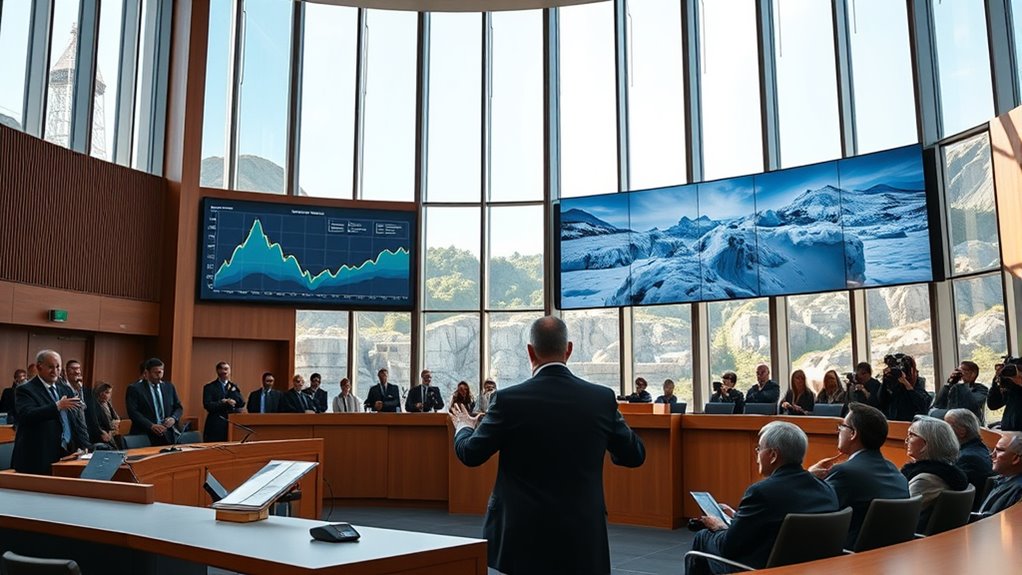
Are corporations truly responsible for their role in climate change? The answer is increasingly evident through court rulings. You should know that courts are holding companies accountable in three key ways:
- Litigating emissions contributions – courts target industries like fossil fuels and agriculture, demanding transparency and reductions.
- Addressing greenwashing – many cases challenge firms making misleading environmental claims, with courts often ruling against deceptive practices.
- Seeking damages and enforcement – legal actions demand compensation for harm caused and enforce stricter climate disclosures.
These rulings push corporations to modify behavior, improve transparency, and accept accountability. As courts increasingly scrutinize corporate climate impacts, your awareness of these legal efforts highlights a shift toward holding companies responsible for their environmental footprint.
Influencing Policy and Governance Through Judicial Decisions
Judicial decisions are increasingly shaping climate policy and governance by compelling governments and corporations to fulfill their legal obligations. Courts are enforcing commitments to reduce emissions, implement adaptation strategies, and safeguard vulnerable communities. By interpreting national and international laws, judges clarify responsibilities and set binding precedents that influence future policies. For example, rulings against fossil fuel projects due to inadequate climate considerations push governments to revise approval processes. Courts also mandate transparency and accountability from corporations, encouraging better environmental reporting and curbing greenwashing. These decisions act as leverage, holding policymakers and businesses accountable for climate commitments. As a result, judicial rulings are not just resolving disputes—they’re actively shaping the legal framework guiding climate action worldwide.
Challenges Faced by Climate Litigants and Legal Systems
While courts are increasingly shaping climate policy through decisive rulings, litigants and legal systems face significant hurdles in turning these decisions into effective climate action. You often encounter procedural complexities that delay enforcement or limit scope. Additionally, political opposition can obstruct implementation, especially when courts challenge entrenched interests or government policies. You also face:
Courts’ climate rulings face procedural delays, political resistance, and enforcement challenges hindering real action.
- Varying legal frameworks across jurisdictions, making enforcement inconsistent and unpredictable.
- Challenges in gathering scientific evidence to support claims, which requires interdisciplinary expertise.
- Resistance from powerful actors, such as corporations and political entities, who may oppose judicial directives.
These obstacles hinder translating judicial decisions into tangible climate progress. Overcoming them demands strategic advocacy, international cooperation, and persistent effort to uphold the rule of law in climate governance.
Future Directions and Opportunities in Climate Courtroom Battles

As climate litigation continues to expand worldwide, future opportunities lie in leveraging international legal mechanisms and regional courts to address cross-border environmental harms and fill gaps left by national systems. You can push for greater use of international courts, like the International Court of Justice, to hold states accountable for transboundary climate impacts. Regional courts may also serve as crucial venues for resolving disputes involving cross-border climate damages, especially where national courts lack jurisdiction or political will. Additionally, you can explore innovative legal avenues such as human rights frameworks and climate treaties to strengthen accountability. Strengthening collaboration across jurisdictions, sharing legal strategies, and developing common standards will be essential. These efforts can help create a more unified, effective global legal response to climate change, boosting accountability and driving meaningful policy shifts.
Frequently Asked Questions
How Do Different Legal Systems Affect Climate Litigation Outcomes Worldwide?
You’ll find that different legal systems markedly influence climate litigation outcomes worldwide. Civil law jurisdictions often prioritize codified statutes, making it easier to establish clear legal duties and hold entities accountable. Common law systems rely heavily on judicial precedents, which can create adaptable interpretations but may lead to inconsistent rulings. Hybrid systems blend these approaches, affecting case strategies and enforcement effectiveness, ultimately shaping how climate cases succeed or falter across regions.
What Role Do International Courts Play in Climate-Related Disputes?
International courts play a pivotal role in climate disputes by providing a platform for cross-border cases and setting legal precedents. You’ll find them enforcing global climate commitments, clarifying obligations, and holding nations and corporations accountable beyond national borders. Their rulings often influence national policies, inspire local courts, and foster international cooperation, shaping a unified response to climate change. You can see their impact growing as climate issues become increasingly globalized and urgent.
How Effective Is Climate Litigation in Prompting Policy Change?
Climate litigation proves quite effective in prompting policy change, as courts increasingly enforce legal duties on governments and corporations to reduce emissions and adapt. When you see rulings demanding stricter climate policies or holding companies accountable, it pushes policymakers to act more decisively. Litigation also raises public awareness and encourages transparency, creating pressure that accelerates legislative reforms and corporate commitments, making it a crucial tool in climate action.
What Are the Main Legal Hurdles for Climate Plaintiffs Globally?
You face several legal hurdles as a climate plaintiff worldwide. Procedural complexities can delay or block cases, while political opposition may hinder enforcement or appeal decisions. Varying legal frameworks across jurisdictions create inconsistencies, making it tough to build strong cases. Additionally, courts often require scientific evidence and interdisciplinary collaboration, which can be challenging. These obstacles demand persistent advocacy, strategic planning, and a solid understanding of local legal systems to succeed.
How Can Climate Litigation Address Emerging Environmental Issues?
You can combat emerging environmental issues by crafting compelling cases that challenge corporate conduct and government policies. Focus on facts, foster flexibility, and leverage legal leverage to push for policy progress. By raising awareness, rallying resources, and revealing regulatory gaps, you can catalyze change. Litigation’s power lies in its potential to propel policies forward, pressure polluters, and promote proactive, principled practices that protect the planet’s future.
Conclusion
As you watch courts step into the climate arena, remember they’re not just judging cases—they’re shaping our future. Like a lighthouse guiding ships through stormy seas, judicial decisions illuminate the path toward accountability and change. Your role matters too; stay informed, advocate, and hold those in power accountable. Together, through the power of the law, you can help turn the tide on climate crisis—because every ruling is a wave toward a sustainable tomorrow.